
 By Layla Zulfa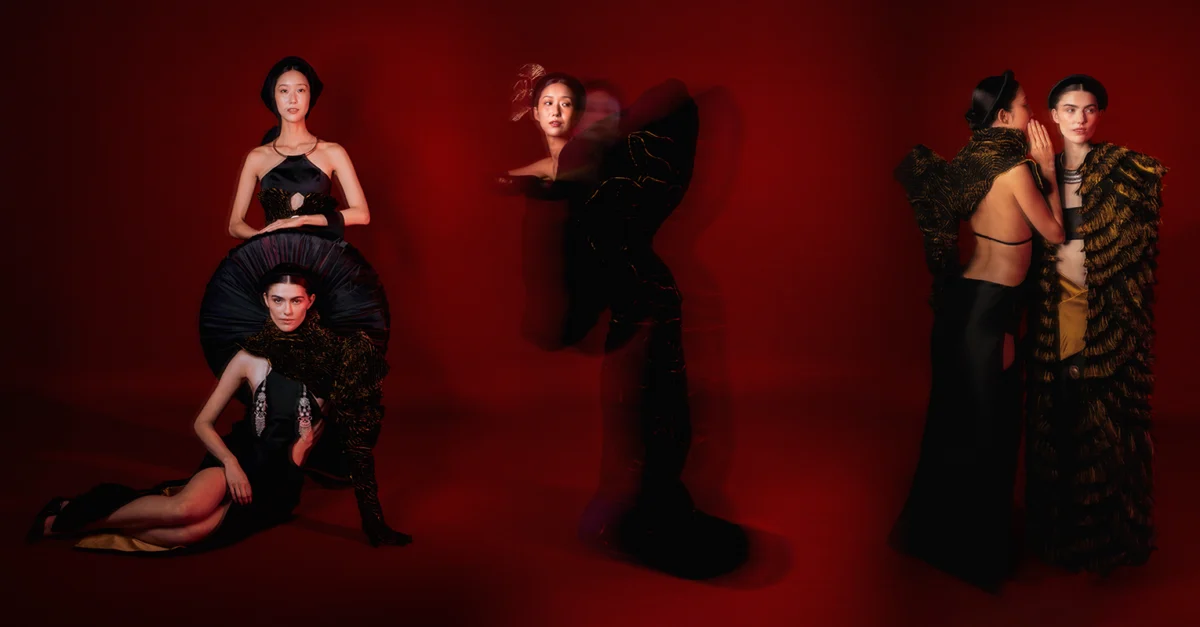
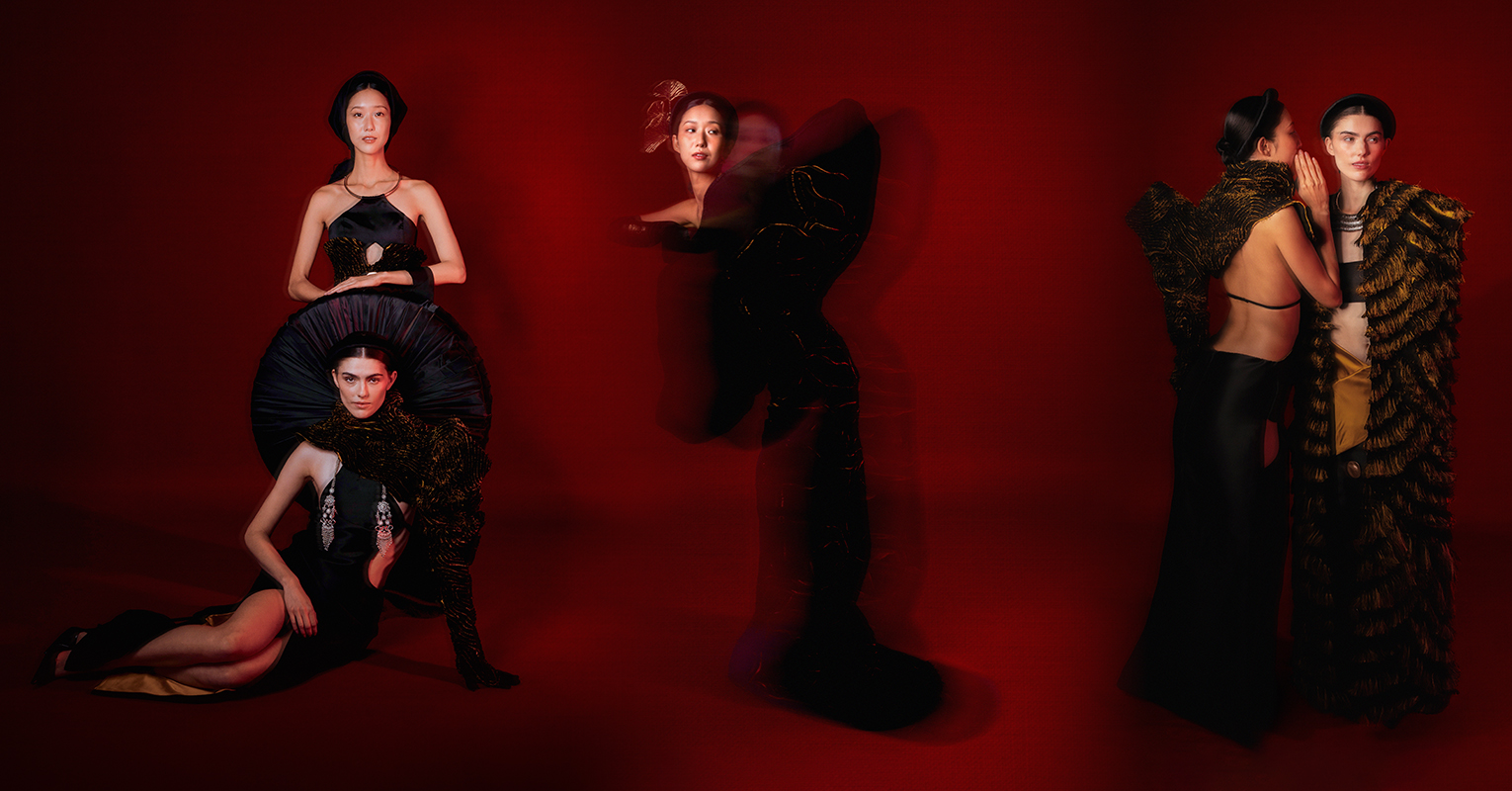
In an era where global visibility for Vietnamese creatives is experiencing a significant surge, a new generation of designers is steadily carving out a distinct niche within the international fashion landscape. Among these emerging talents, DOAN Atelier stands out, with its foundational ethos deeply rooted in honoring history while boldly forging the future. This commitment is intricately woven into the fabric of their latest collection, Nàng Gấm, or Folklore of the Silk Lady. Inspired by traditions passed down through generations, Nàng Gấm is a profound celebration of the enduring beauty and inherent strength of Vietnamese women throughout history, envisioned through a lens that elevates the regality of labor.
The burgeoning recognition of Vietnamese artistry on the global stage is not an overnight phenomenon. It is the culmination of decades of cultural preservation, artistic development, and increasingly, strategic global outreach. From the vibrant street art scene in Ho Chi Minh City to the intricate craftsmanship of traditional textile artisans, Vietnam’s creative output is diverse and rich. The fashion industry, in particular, has seen a growing number of designers and brands gain international acclaim, showcasing a unique blend of traditional aesthetics and contemporary design sensibilities. This movement signifies a pivotal moment for Vietnamese culture, allowing its stories, techniques, and aesthetics to resonate with a wider audience.
Jennie (Gia Linh) Doan, a graduate of Seneca Polytechnic’s Fashion Arts program, unveiled her capstone collection last spring. Her work showcased innovative and bold designs that demonstrably uphold Vietnamese traditions. This collection garnered significant attention, leading to Jennie’s nomination at the recent Canada Arts and Fashion Awards for the prestigious Fashion Design Student Award. This nomination underscores the growing acknowledgment of emerging designers who are successfully bridging cultural heritage with modern fashion sensibilities. The Canada Arts and Fashion Awards, typically held annually, serve as a vital platform for recognizing and celebrating excellence in Canadian and international fashion design, providing a crucial launchpad for promising talent.
EnVi had the opportunity to connect with the creative force behind DOAN Atelier, the sibling duo Jennie and Austin Doan, for an insightful conversation over Zoom. They delved into their familial roots, the genesis of their brand, and the rich lore that underpins the Nàng Gấm collection. Their shared journey into the fashion world is a testament to their shared artistic upbringing and a desire to forge a new path within the creative industries.
The Duo Behind DOAN Atelier: A Symphony of Sibling Creativity
As siblings and dedicated creative partners, Jennie and Austin Doan’s relationship naturally extends into their collaborative endeavors, creating a dynamic synergy that fuels DOAN Atelier. Jennie, the visionary designer, leads the intricate process of articulating and constructing each garment, imbuing them with her unique aesthetic and technical prowess. Austin, acting as the creative director, shapes the overarching vision of their collections, guiding them through layered research, compelling narratives, and evocative editorial photoshoots. This division of labor, born from their innate strengths, allows for a comprehensive and cohesive creative output.
Hailing from Vietnam, the siblings are the inheritors of a family deeply entrenched in the arts, with a lineage spanning three generations of accomplished musicians and dancers. Jennie herself possesses a background in ballet, a discipline that instilled in her a profound understanding of movement, form, and theatricality. Austin, on the other hand, studied traditional music, cultivating a deep appreciation for cultural heritage and its intricate expressions. Their move to Toronto for their studies marked a significant turning point, presenting them with the opportunity to explore new artistic avenues beyond their familial traditions. Austin broadened his creative scope to encompass visual mediums, venturing into the production of music videos, short films, and documentaries. Jennie, meanwhile, discovered her calling in the world of fashion, a path that allowed her to translate her understanding of form and performance into tangible, wearable art.
"We’ve always been so fascinated with fashion, and I think it makes sense because we’re both in the arts," Austin shared during the interview. "We’re both performers ourselves, and so we have that kind of connection to costume design." This intrinsic connection to performance and the visual storytelling inherent in costume design became a foundational element of their creative approach.
Jennie’s years of dance rehearsals provided her with firsthand experience of the captivating world of theatrical costumes. Witnessing the racks of glamorous ensembles and the meticulous craftsmanship behind stage productions sparked an early fascination. She recognized the profound overlap between theatrical costuming and haute couture. In dance, where movement and the human body serve as the primary language, costumes are meticulously designed to accentuate these elements. Jennie applies this principle directly to her own designs, believing that garments must possess a specific dynamism, a capacity to move and be perceived in a particular way. This philosophy forms the very core of DOAN Atelier’s design ethos, emphasizing that fashion is not merely about aesthetics but also about the interplay between the garment, the wearer, and the space they inhabit.
The Lore Behind Nàng Gấm: A Tapestry of Vietnamese Women and Silk
Drawing inspiration from a family steeped in classical art forms and the generational inheritance of craft, Jennie and Austin turned their gaze towards traditional Vietnamese arts, beginning with the timeless stories that had always resonated within their family. The collection’s title, Folklore of the Silk Lady, directly references the legends, myths, and tales that shaped their childhood. Jennie found particular inspiration in the histories of Vietnamese heroines, from the formidable Trưng Sisters, 1st-century military commanders who led pivotal rebellions against Chinese rule, to resilient maidens featured in fairytales like Tấm and Cám, often referred to as the Vietnamese Cinderella. These narratives, alongside the personal stories of their past and upbringings shared by their grandparents and parents, fueled Jennie’s desire to pay homage to the custodians of folklore: the women who carry histories forward and embody strength through generations.
"I wanted to dive deeper into how women dressed up in the past and what they normally wore," Jennie explained. "I got inspired by áo dài, our traditional costume, áo yếm, and áo bà ba." Her research into traditional Vietnamese garments was extensive, exploring regional variations and the evolution of these iconic pieces throughout history. This meticulous approach to historical accuracy, combined with her creative interpretation, allowed her to breathe new life into these traditional forms.
The extensive research into the evolution of Vietnamese womenswear was a significant undertaking, spearheaded by Austin, whose background in documentary filmmaking proved invaluable. Jennie highlighted a key challenge: striking a delicate balance between maintaining historical fidelity and allowing ample room for creative reinterpretation. This endeavor required a deep understanding of cultural context and a nuanced approach to design.
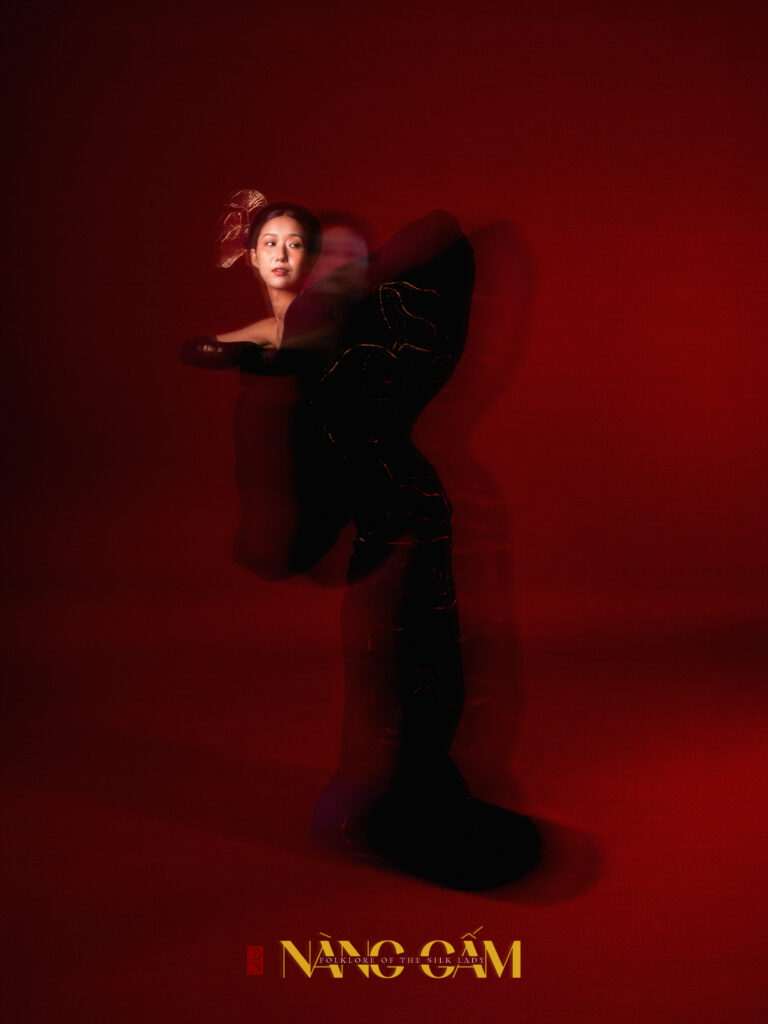
Silk, Vietnam’s most historically significant and widely produced fabric, takes center stage as the primary material in Nàng Gấm. The collection prominently features gấm (brocade silk) and lụa (mulberry silk), fabrics that are intrinsically linked to Vietnamese heritage and craftsmanship. "When she first pitched this idea, it very much felt like a love letter to silk," Austin remarked. "It not only felt like a love letter to the fabric itself, but to Vietnamese women." This profound reverence for both the material and its cultural significance is palpable in every creation within Nàng Gấm, where traditional Vietnamese attire is reimagined through a contemporary, editorial lens, resulting in garments that are both timeless and avant-garde.
Weaving Narratives of Class, Labor, and Femininity
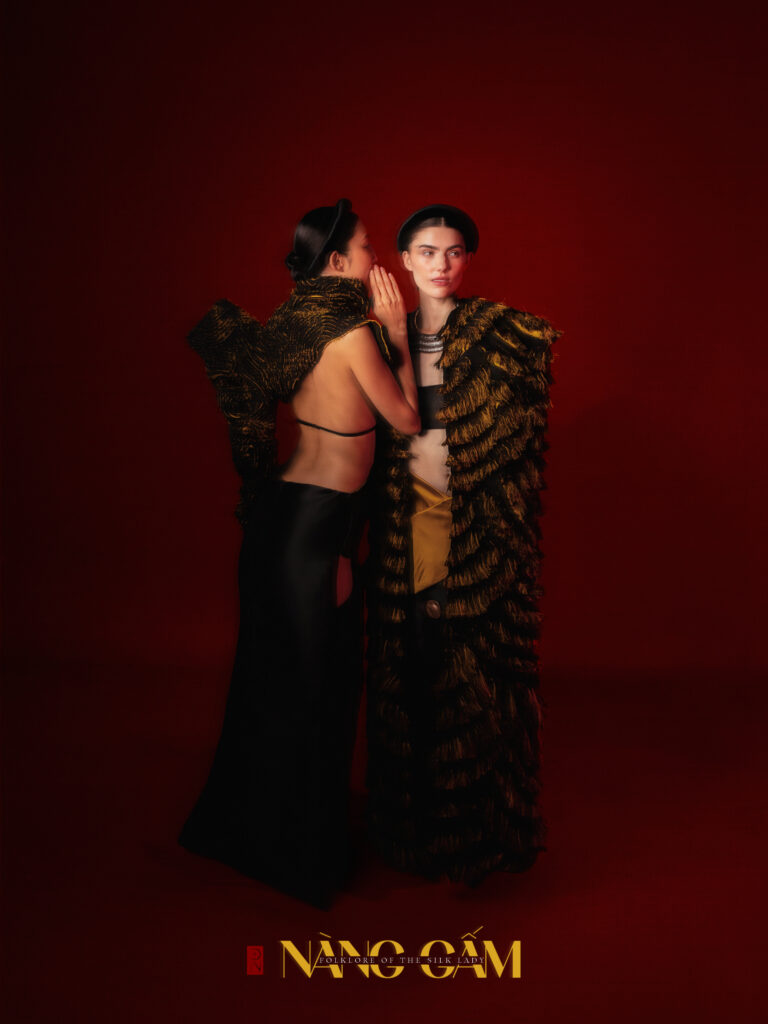
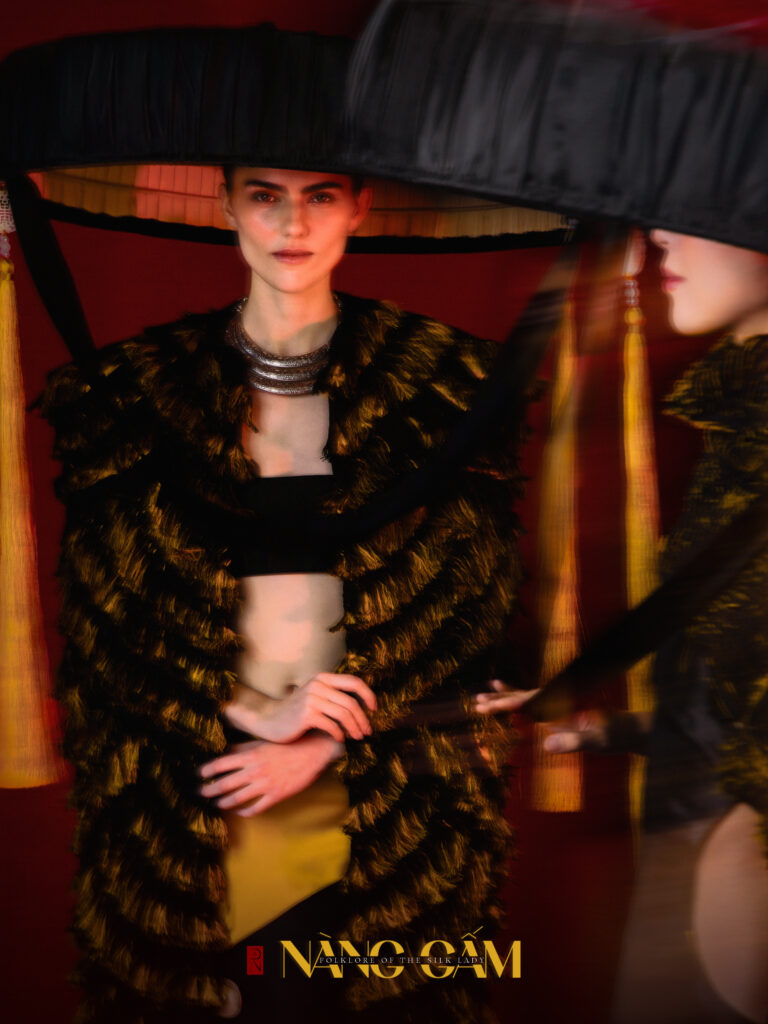
At its very essence, Nàng Gấm traces the complex interplay of class, labor, and femininity within Vietnamese society. The collection’s striking color palette embraces a powerful duality of black and yellow. Black, traditionally worn by rural laborers, served a utilitarian purpose as it was less prone to showing dirt during agricultural work. Yellow, conversely, was the color of the nobility and upper classes, symbolizing wealth, affluence, and authority. This visual contrast immediately draws attention to the historical social stratification and the distinct roles and privileges associated with each class. Furthermore, the ability to wear silk, a luxurious and delicate fabric, was a privilege largely confined to those of higher social and economic standing, further emphasizing the fabric’s symbolic weight.
The collection showcases a diverse array of iconic elements and garments drawn from Vietnamese heritage, representing various social classes, geographical regions, and ceremonial occasions. It moves seamlessly from the formal elegance of the áo dài to more everyday silhouettes such as the áo yếm, a halterneck undergarment that offers a glimpse of the wearer’s form, and the áo bà ba, a long-sleeved blouse and pant set commonly associated with women in the rural Mekong Delta. This thoughtful inclusion of garments from different walks of life underscores the breadth of Vietnamese sartorial history.
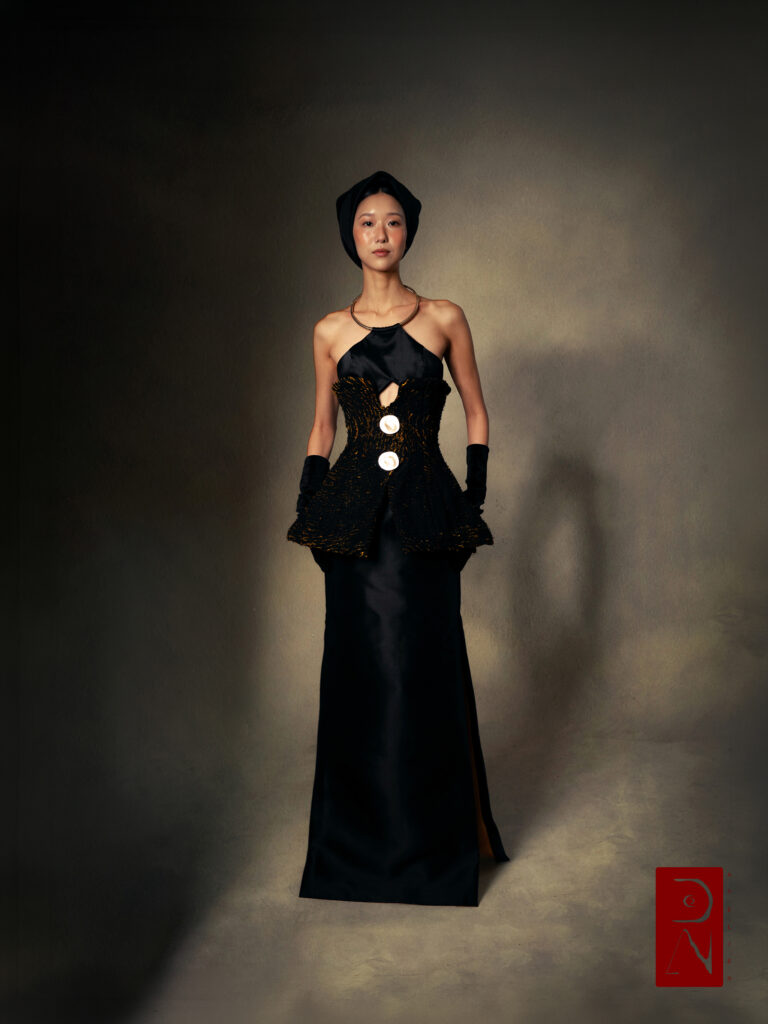
Looks 2 and 5, for instance, exemplify this delicate balance, reinterpreting traditional garments with a modern sensibility while artfully preserving the timeless, rustic, and intimate beauty that defines Vietnamese women. Notably, Look 5 achieved a significant moment of international exposure when it was featured in the music video for Lady Gaga and Doechii’s track "RUNWAY." This particular ensemble features a skirt adorned with a lotus-leaf pattern, designed to flare around the wearer like a blooming lotus. This visually striking design embeds profound cultural imagery into a high-fashion context, aligning the motif of Vietnamese femininity and resilience with the song’s empowering theme of confidence. The visibility gained through such high-profile collaborations can have a substantial impact on a designer’s career, opening doors to new opportunities and expanding their global reach.
Beyond the primary garments, the collection reimagines a variety of accessories deeply embedded in Vietnamese culture. These include khăn mỏ quạ, a square headscarf historically worn by rural working women, offering practical protection from the elements. The nón ba tầm, a flat palm hat favored by middle to upper-class Northerners, is reinterpreted, adding a touch of regional specificity. The mấn (or khăn đội), a ceremonial wedding headdress, speaks to significant life events and traditions. Finally, kiềng, intricately crafted silver or gold necklaces often passed down as cherished heirlooms, represent the enduring legacy of familial connections and material culture. The inclusion of these diverse accessories enriches the narrative, highlighting the multifaceted aspects of Vietnamese women’s lives and their connection to tradition.
The careful selection of attire from different regions of Vietnam serves to highlight the diversity of labor and how dress is intrinsically shaped by place, work, and daily life. Nàng Gấm masterfully integrates the utilitarian design of traditional workwear with the regal silhouettes of ceremonial garb, weaving them together into contemporary couture compositions. This fusion creates a compelling dialogue between the practical and the ceremonial, the everyday and the extraordinary.
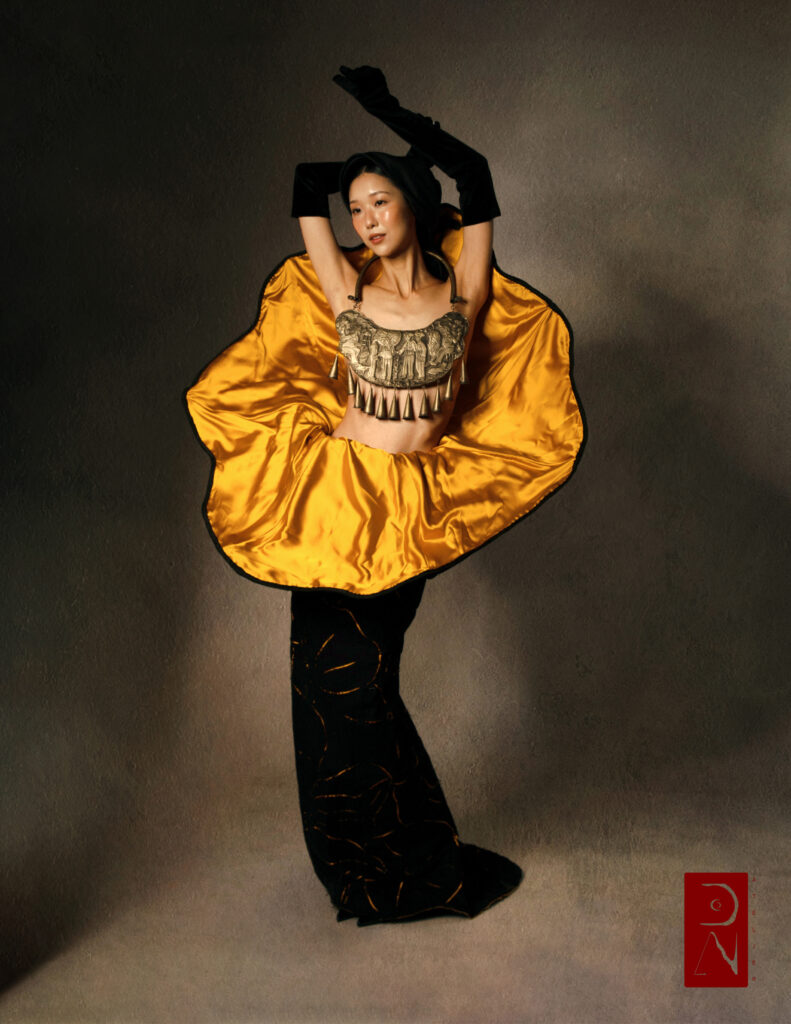
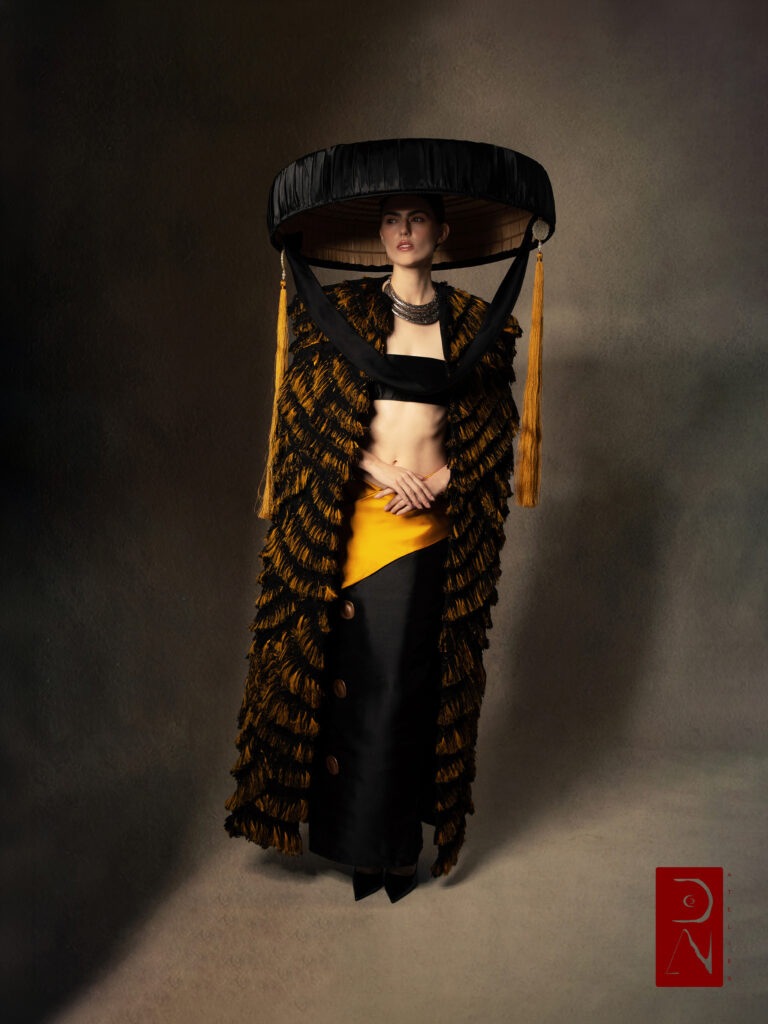
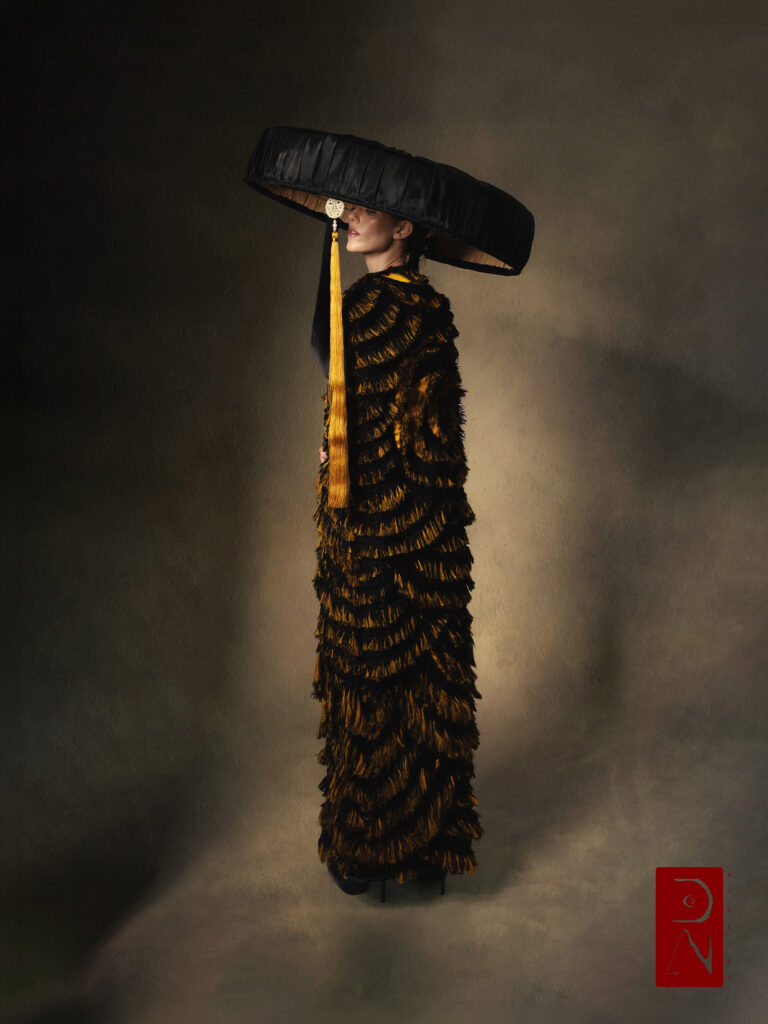
This striking contrast is particularly evident in Look 1. The elongated robe draws inspiration from the áo tơi, a rain cloak traditionally fashioned from layered palm leaves, and the áo long bào, a resplendent gold robe emblazoned with dragon motifs, historically reserved for emperors. By intentionally marrying garments from such polar origins, Jennie creates a powerful statement about the multifaceted nature of Vietnamese identity and history.
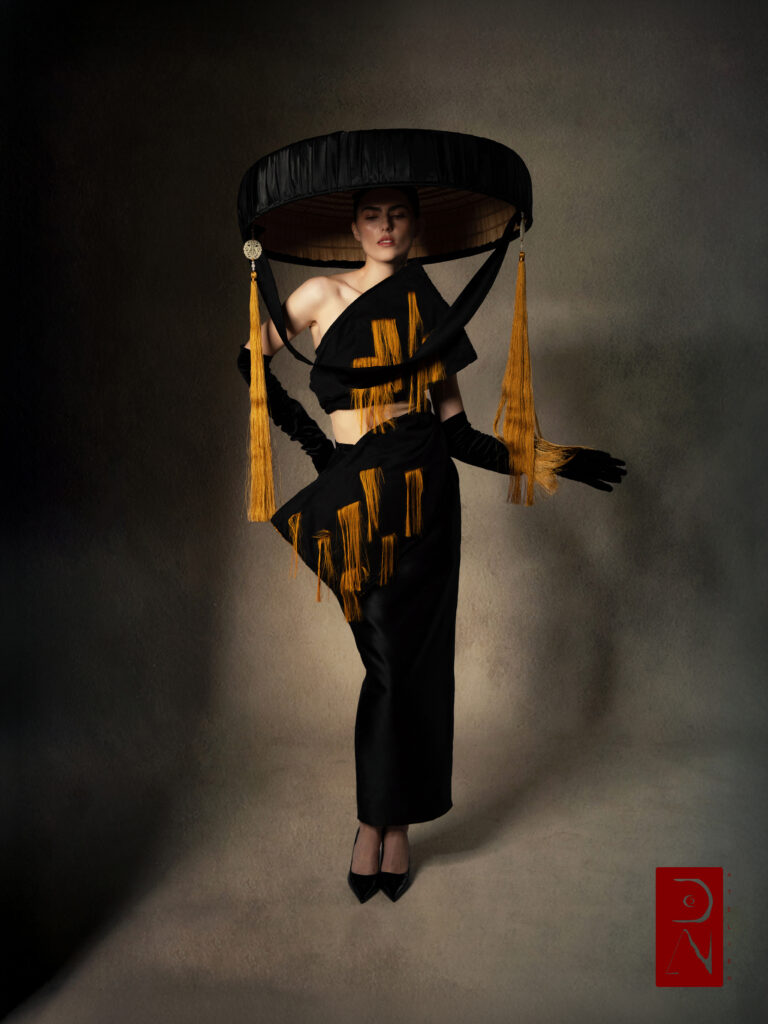
Look 3’s skirt shape echoes the design of nơm bắt cá (fish trapping baskets), a testament to the resourcefulness and ingenuity of traditional fishing practices. The cascading yellow silk fringes, reminiscent of flowing grains of rice, evoke imagery of generations of agricultural labor and the sustenance it provided. This deliberate incorporation of agricultural motifs serves as a profound tribute to the foundational role of farming in Vietnamese culture and economy.
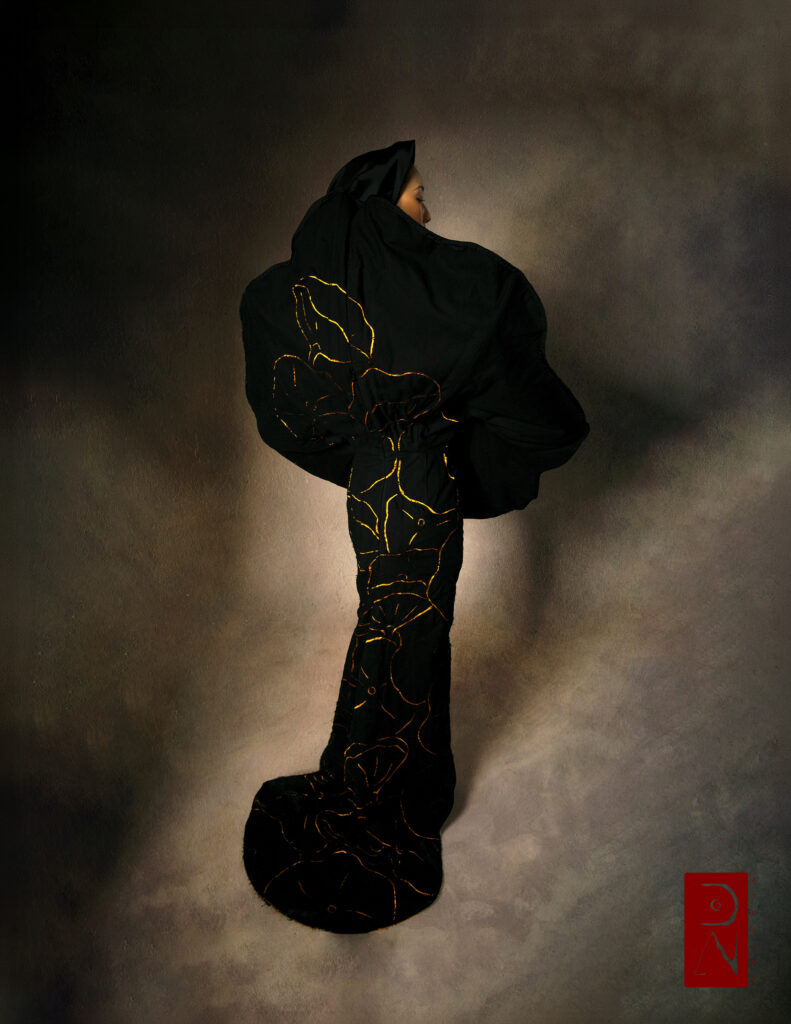
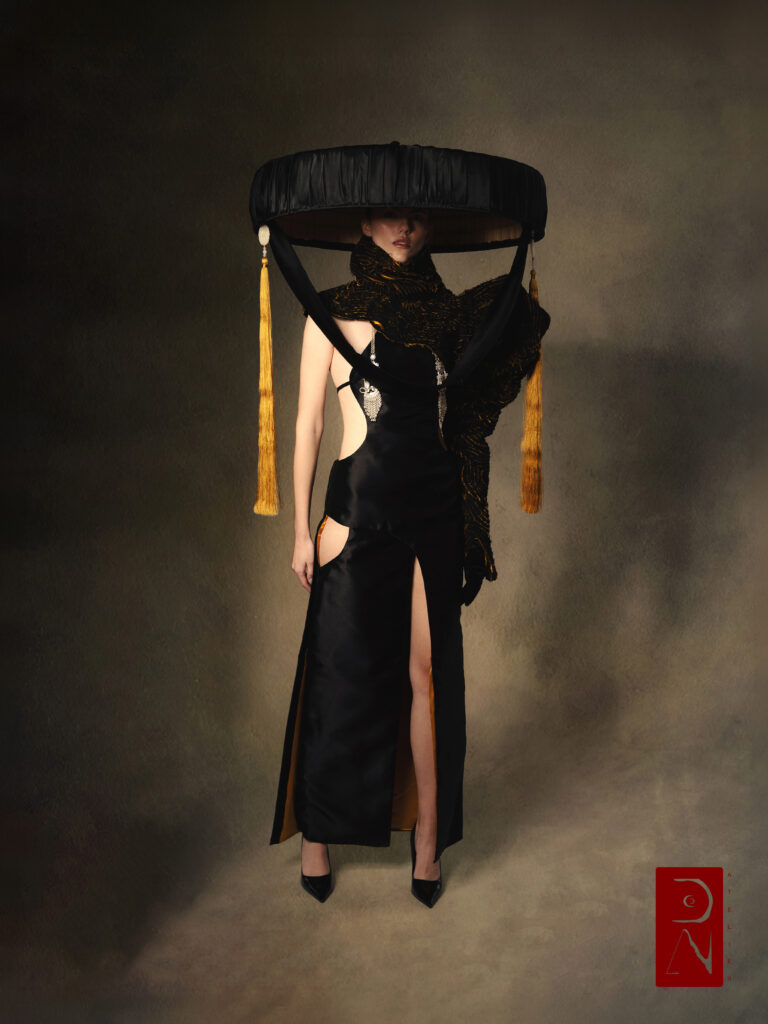
Look 4 pays homage to the ethnic minority communities residing in Vietnam’s mountainous regions. Its dramatic asymmetrical shoulder piece emulates the undulating contours of rolling hills and the majestic presence of tall peaks. Across the garment, carved waves meticulously render the movement of ruộng bậc thang (terraced rice fields), a breathtaking testament to human adaptation and agricultural innovation in challenging landscapes. Worn over a backless áo yếm-inspired dress with a daring leg slit, and a wide-brimmed nón ba tầm that artfully veils the eyes, this ensemble exudes confidence and allure, capturing the quiet, yet profound, resilience of Vietnamese women.
From Sketch to Silhouette: The Labor of Love in Creation
Look 4 also holds a special significance as it marks the genesis of the Nàng Gấm collection. It was the very first sketch from which the entire collection began to take shape, and the initial drawing has been preserved intact throughout its meticulous execution. This commitment to preserving the original vision speaks to the integrity of the creative process.
The construction of this piece proved to be a significant learning curve for Jennie, who testified to the inherent challenges of working with silk. The material’s delicate nature and unpredictable drape demand a high level of skill and precision. Furthermore, she was working with a finite supply of material, making it imperative to meticulously source all silks and fabrics for the collection directly from Vietnam. This commitment to using locally sourced materials not only ensures authenticity but also supports Vietnamese artisans and textile producers.
The Doan siblings’ family played an integral role in the collection’s development. Their parents actively sourced the needed textiles from local markets and artisans in Vietnam, diligently shipping them to Canada. This familial support, coupled with the collaboration with local businesses and artisans, reflects a "village" approach to creation, reinforcing the collection’s unwavering commitment to Vietnamese authenticity and craftsmanship. This collaborative spirit is crucial in fostering a sense of community and shared purpose within the creative process.
During the interview, Jennie shared a piece of test fabric she had experimented on to achieve the distinctive grooved slashes in the shoulder piece of Look 4. The trademark yellow silk peeked from beneath the black canvas, interspersed with intricate lines of embroidery, each slit and threaded pattern meticulously executed by hand. Jennie revealed that she had meticulously dissected an áo dài that her mother had sent her, studying its layers, seams, and construction to gain a deeper understanding of how the garment was assembled. This hands-on approach to learning and deconstruction is a hallmark of true craftsmanship.
The painstaking level of detail poured into each piece of the collection truly embodies the thematic proverb of Nàng Gấm: khó nhọc, sống sau, which translates literally to "suffer first, ease later," an equivalent of the well-known adage "no pain, no gain." This saying, deeply ingrained in Jennie and Austin by their parents, resonated profoundly with Jennie throughout the arduous process of assembling each garment. It speaks to the dedication, perseverance, and hard work required to achieve something beautiful and meaningful.
This philosophy of discipline and care is mirrored in Jennie’s overarching approach to design. "As a designer, I feel like everything we do, we have to have the intention behind it," she stated. "I don’t want to put something in without any meaning – even down to the smallest detail like a button or a seam." This intentionality infuses her work with a depth and significance that transcends mere aesthetics.
Embracing agricultural motifs within the collection, Jennie underscored the critical importance of hand labor to "harvest the fruit" of her work. Much like the fishermen, rice harvesters, weavers, and countless other hardworking Vietnamese individuals, it is precisely this intensive labor and meticulous care that are essential for preserving delicate beauty and cultural heritage. Through the creation of this collection, Jennie gained a profound appreciation for the labor of Vietnamese women throughout history and their invaluable contributions to preserving cultural and material traditions.
Nàng Gấm in the Global Arena: A New Dawn for Vietnamese Fashion
The unveiling of Nàng Gấm represents a significant milestone for DOAN Atelier, but it is merely the beginning of their journey. Jennie and Austin are dedicated to solidifying their presence within the fashion industry, navigating the fast-paced rhythms of academic pursuits, professional responsibilities, and the broader demands of life. Their immediate goals include further familiarizing themselves with the intricacies of the fashion world, fostering connections with fellow creative minds, and strategically building their team to support their ambitious vision.
Deeply inspired by the legacy of Vietnamese designers who have paved the way and by their contemporary industry peers, the siblings aspire to join them in occupying a prominent space on the global stage. They aim to represent a blossoming vision of Vietnamese talent, showcasing its depth, diversity, and innovative spirit. This aspiration is not merely about personal success but also about elevating the collective profile of Vietnamese artistry.
During the development and showcasing of Nàng Gấm, Jennie and Austin observed a consistent reaction from attendees impressed by the quality of the silk, often exclaiming, "Wow, is this coming from Vietnam?" Initially, they were surprised by this sentiment, given that "this is something we could easily have access to. Literally, if you go to Bến Thành Market, this silk is so abundant, but it is something so unknown to people elsewhere." This common refrain highlights a significant disconnect between Vietnam’s substantial role in the global textile supply chain and the general lack of awareness regarding its rich artisanal heritage.
As one of the world’s largest exporters of textiles, Vietnam plays a monumental role in the global fashion supply chain. However, its long legacy of intricate craftsmanship and artisanal expertise remains largely underrecognized by the international community. While recent viral moments, such as the popularity of Hội An tailors among tourists on social media, have brought some attention, for many Vietnamese people, tailoring culture has always been an integral part of daily life, with tailor shops a ubiquitous presence in every neighborhood.
When reflecting on what they hope both Vietnamese and international audiences will take away from their future work, Austin articulated a powerful sentiment: "It’s not just about promoting Vietnamese fabrics and products, but also for them to know that ‘Hey, we’re Vietnamese and we can do this.’ This is something from our country, and this is something we can do." This statement encapsulates a crucial aspect of their mission: fostering national pride and asserting the creative capabilities of Vietnamese individuals on a global scale.
As Jennie and Austin Doan move forward with their future bodies of work, DOAN Atelier continues to build upon the foundational principles established by Nàng Gấm, translating heritage into modern reimagining. The brand remains steadfast in its commitment to positioning Vietnam not merely as a hub for production but as a vibrant epicenter of emerging creative talent, a place saturated with rich craftsmanship, enduring cultural memory, and forward-thinking innovation.
At the very heart of DOAN Atelier lies an ongoing tribute to Vietnamese women, encompassing their past, present, and future. Their strength, resilience, and the profound impact of their labor continue to shape the very fabric of each meticulously crafted piece. This dedication to celebrating women is not just a thematic element but a core tenet of their brand identity.
To stay updated with the latest creations and initiatives from DOAN Atelier, follow them on their official Instagram account. The journey of DOAN Atelier is a compelling narrative of cultural pride, artistic innovation, and the enduring power of heritage, promising a bright and impactful future for Vietnamese fashion on the world stage.

