
 By Asep Darmawan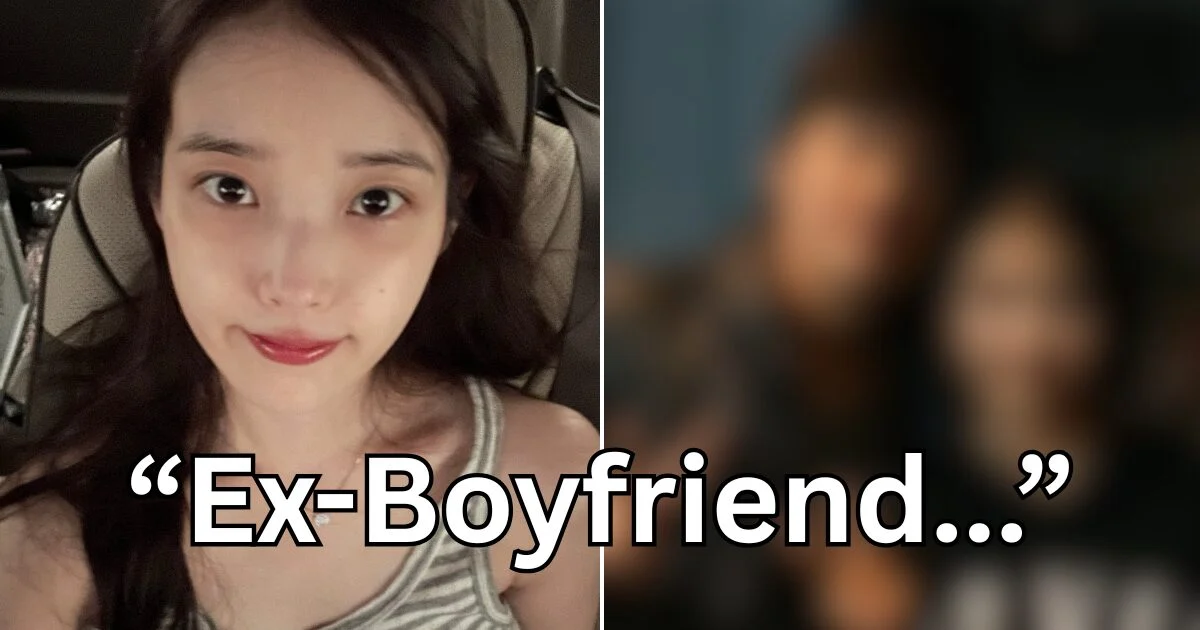
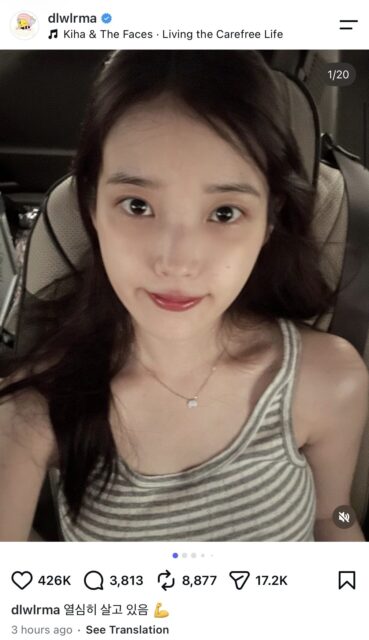
A recent Instagram post by acclaimed South Korean soloist and actress IU, featuring a song from the band of her former boyfriend, Jang Ki Ha, has ignited a fervent debate across online communities, drawing sharply polarized reactions from netizens and fans alike. The seemingly innocuous social media update, shared within the past hour, quickly became a focal point for discussions concerning celebrity public image, social media etiquette, and the lingering presence of past relationships in the intensely scrutinized world of K-pop.
The Instagram Post Under Scrutiny
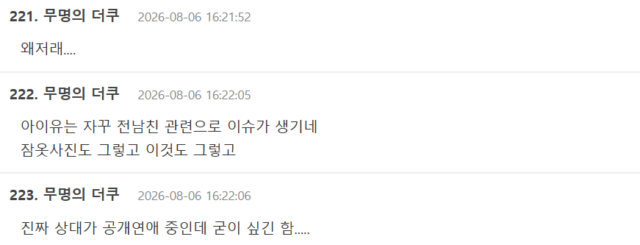
The post in question, uploaded to IU’s official Instagram account (@dlwlrma), reportedly featured visuals accompanying a song from Jang Ki Ha and the Faces, the indie rock band fronted by her ex-partner, Jang Ki Ha. While the specific visual content of the post has not been detailed beyond its existence, the inclusion of music from his group was sufficient to trigger widespread commentary. This action, coming nearly a decade after their public breakup, immediately prompted a torrent of reactions on popular South Korean online forums such as theqoo and various social media platforms, highlighting the persistent public interest in IU’s personal life and relationships. The choice of song, whether a casual selection or a deliberate nod, has been interpreted in vastly different ways, underpinning the complexity of managing a celebrity persona in the digital age.
A Retrospective: The IU-Jang Ki Ha Relationship
To fully understand the current discourse, it is crucial to revisit the history of IU and Jang Ki Ha’s relationship. Their romance first came to light in October 2015, when Korean media outlet Dispatch revealed their dating. The news was subsequently confirmed by both their respective agencies, EDAM Entertainment (then LOEN Entertainment for IU) and DooRooDooRoo Artist Company for Jang Ki Ha. The revelation sent shockwaves through the K-pop industry, primarily due to the significant age gap – IU was 22 at the time, and Jang Ki Ha was 33 – and their differing musical genres, with IU as a mainstream pop sensation and Jang Ki Ha as a respected indie rock musician.
Their relationship was reported to have begun in 2013, after they met on Jang Ki Ha’s SBS Power FM radio show, "Jang Ki Ha’s Great Radio." IU later shared that she had "fallen in love with him at first sight," admiring his intelligence and musical talent. For a period of nearly four years, their relationship was one of the most prominent and publicly acknowledged romances in the notoriously private K-pop world. Despite the initial surprise, the couple generally garnered public support, viewed as a "musician couple" who shared a deep artistic connection.
However, in January 2017, after approximately four years of dating, their agencies confirmed their amicable breakup. The official statements cited the common celebrity reason of "busy schedules" and a natural drifting apart, emphasizing that they would remain good senior-junior colleagues in the music industry. The news was met with understanding, and both artists continued to focus on their respective careers without public acrimony.

Jang Ki Ha’s Career and Current Relationship Status
Jang Ki Ha, a highly regarded figure in the South Korean indie music scene, is known for his distinctive vocal style and experimental rock sound. His band, Jang Ki Ha and the Faces, formed in 2008, achieved critical acclaim and a dedicated following for their unique blend of folk, rock, and spoken-word elements. Post-breakup with IU, Jang Ki Ha continued his musical endeavors, releasing new material and maintaining his presence in the industry. Crucially, as highlighted by the current online debate, Jang Ki Ha is reportedly in a new public relationship. This fact adds a layer of sensitivity to IU’s recent Instagram post, as it introduces the perception of potential insensitivity towards his current partner, regardless of IU’s intent. The K-pop ecosystem, known for its intense scrutiny, often holds celebrities to stringent standards of conduct, particularly concerning past romantic entanglements.
IU’s Enduring Stardom and Public Image
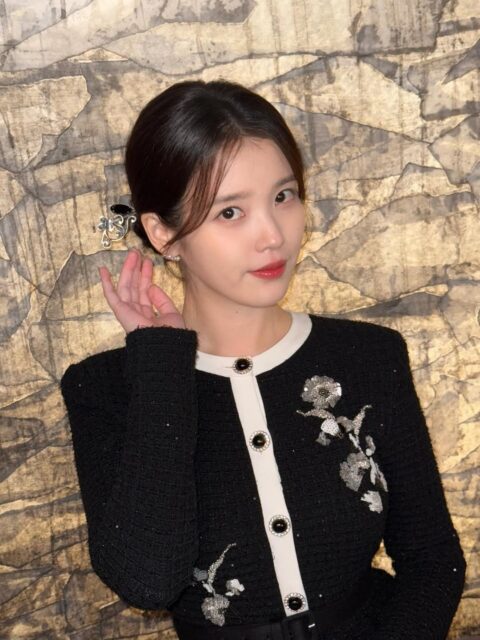
Lee Ji-eun, professionally known as IU, has consistently maintained her status as one of South Korea’s most beloved and successful entertainers. Since her debut in 2008, she has evolved from a "Nation’s Little Sister" to a versatile artist revered as a "Queen of K-pop" and a respected actress. Her career is marked by numerous chart-topping hits, critically acclaimed albums, and leading roles in popular dramas such as "Hotel Del Luna" and "My Mister." IU’s public image is meticulously managed, characterized by professionalism, humility, and a close connection with her fan base, known as Uaena. Given her carefully cultivated persona and her agency’s strategic approach to her career, any action that could be perceived as controversial or less than impeccable is typically avoided. This makes the current incident, however minor in scope, particularly noteworthy as it momentarily deviates from her generally unblemished public record.
The Online Divide: Amicable Maturity vs. Perceived Indiscretion
The reactions to IU’s Instagram post coalesced into two primary camps, reflecting the broader spectrum of public opinion in South Korea regarding celebrity relationships and social media conduct.
Perspective 1: Amicable and Mature Coexistence
Many netizens viewed IU’s post as a testament to her maturity and the healthy, respectful conclusion of her past relationship. Proponents of this view argued that:
- Professionalism and Mutual Respect: It demonstrates that both artists maintain a professional respect for each other’s work, acknowledging their shared history without lingering animosity. This is often seen as a sign of maturity, where individuals can appreciate art divorced from personal romantic entanglements.
- Normalization of Past Relationships: For some, it normalizes the idea that ex-partners can coexist peacefully and even appreciate each other’s artistic contributions. In a culture where celebrity breakups can often lead to awkward public silences or perceived animosity, this approach is seen as refreshing and progressive.
- Artistic Expression: Music is a universal language, and using a song by a former partner’s group could simply be an appreciation of good music, rather than a statement about the past relationship itself. This perspective emphasizes that creative works should be enjoyed regardless of the artist’s personal history.
- Minimal Impact: Given the passage of nearly a decade since their breakup and both artists having moved on, many felt the post was largely inconsequential and overanalyzed by the public.
Perspective 2: Inappropriate and Insensitive to Current Partners
Conversely, a significant portion of online commentators expressed discomfort and criticism, deeming the post inappropriate and potentially insensitive. Their arguments centered on:
- Disregard for Current Relationships: The most prevalent concern revolved around Jang Ki Ha’s current public relationship. Critics argued that IU’s post, regardless of intent, could be perceived as disrespectful or awkward for his current partner, potentially causing unnecessary emotional distress or public speculation. This viewpoint strongly emphasizes social etiquette and consideration for others’ feelings, especially when a past relationship is brought back into the public eye.
- Unnecessary Public Speculation: Even if there was no ill intent, the act of using an ex-boyfriend’s song inevitably reopens old narratives, leading to renewed public discussion about their past relationship. This can be seen as an unwelcome dredging up of history that both parties had seemingly moved past, generating unnecessary gossip and speculation.
- Celebrity Accountability: Some netizens believe that public figures, particularly those with IU’s immense influence, have a greater responsibility to consider the broader implications of their social media actions. Every post is scrutinized, and seemingly minor details can escalate into major controversies, demanding a higher degree of caution.
- Perceived Intent vs. Actual Impact: While IU’s intent might have been innocent, the impact of the post on the public and potentially on those directly involved is what truly matters in this perspective. The optics of the situation, rather than the internal motivations, became the subject of critique.
Broader Implications for Celebrity Public Relations and Fan Culture
This incident, while seemingly minor, underscores several fundamental challenges faced by K-pop celebrities in the contemporary digital landscape:
- The Panopticon of K-Pop: K-pop idols operate under an almost constant state of surveillance. Every public action, no matter how trivial, is subject to intense scrutiny, interpretation, and often, misinterpretation by millions of fans and netizens. This creates an environment where even a song choice can become a national talking point.
- Managing Digital Footprints: For celebrities, their social media accounts are not just personal spaces but extensions of their public persona and brand. Every piece of content contributes to their narrative, making content creation a high-stakes endeavor that requires careful consideration of potential public reactions.
- The "Ex-Factor" in K-Pop: Past relationships, especially high-profile ones, often continue to linger in the public consciousness long after they have ended. For K-pop idols, whose images are often intertwined with an idealized persona, the resurfacing of past romantic connections can be particularly delicate, as it challenges the carefully constructed public narrative.
- The Power of Fandoms: K-pop fandoms are incredibly influential and passionate. Divided reactions among netizens often reflect deeper divisions within fan bases, where different segments may champion their idol’s autonomy, protect their image, or express concerns about perceived missteps. The speed at which these discussions proliferate across online communities like theqoo, Pann, and Twitter demonstrates the immediate and widespread impact of fan and netizen sentiment.
- Agency Responses: In such situations, entertainment agencies typically adopt a cautious approach. While EDAM Entertainment has not issued an official statement regarding this specific Instagram post, the standard protocol often involves either maintaining silence to let the controversy subside naturally, or issuing a brief, neutral statement emphasizing the artist’s focus on their current work and respect for all parties involved. Fabricating a direct statement would be irresponsible, but it is plausible that if the controversy escalated, IU’s agency would reiterate her professional focus and mature outlook. Given IU’s long-standing reputation, it is unlikely that this incident would cause significant long-term damage to her career, but it serves as a potent reminder of the constant vigilance required in celebrity public relations.
Conclusion
IU’s recent Instagram post has inadvertently shone a spotlight on the intricate dynamics of celebrity public life in South Korea. What might be considered a benign act for an ordinary individual becomes a subject of intense public debate for a figure of IU’s stature. The divided reactions underscore the ongoing tension between a celebrity’s right to personal expression and the pervasive public expectations surrounding their conduct, particularly concerning past relationships and their potential implications for others. As K-pop continues its global expansion, the challenges of navigating an ever-watchful audience, both domestic and international, remain a defining feature of celebrity existence in the digital age.

