
 By rifanmuazin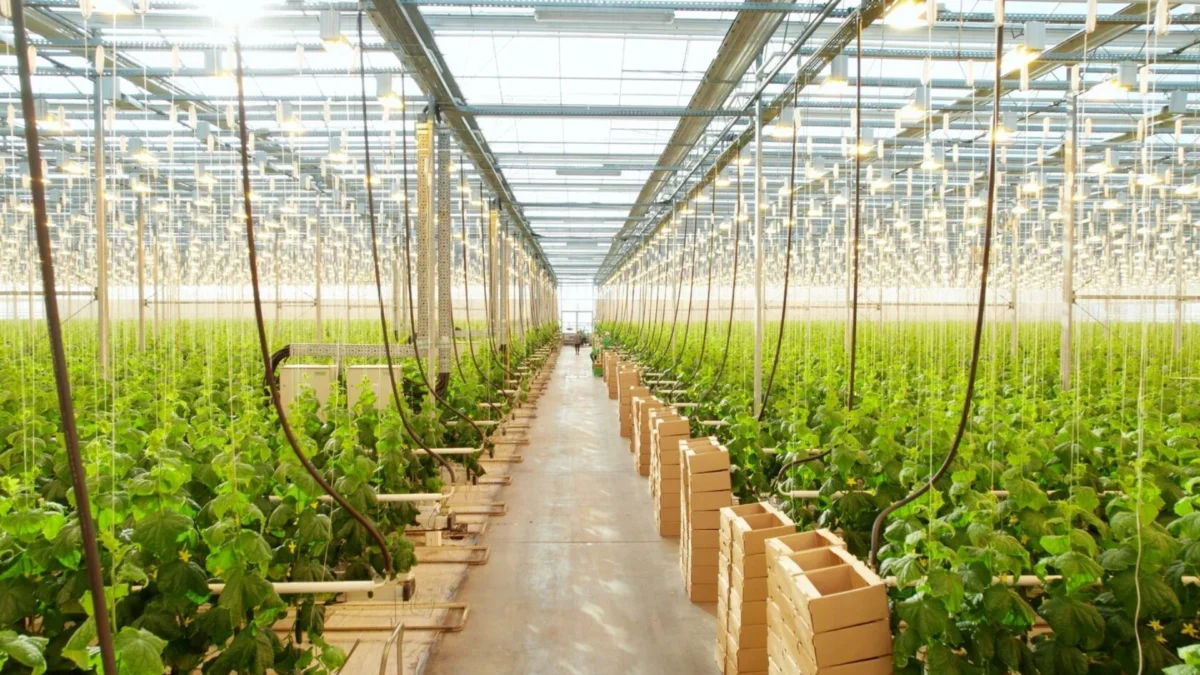
By Investigative Desk
A former state-run agricultural enterprise in Russia’s Bashkortostan region has initiated a controversial plan to import 50 North Korean nationals to work in its greenhouse facilities. Procurement documents obtained by NK News reveal that the Alekseevsky Agricultural and Industrial Complex has entered into a $133,000 agreement with a labor brokerage firm known for facilitating the movement of DPRK citizens into Russia.
The development underscores a persistent, and arguably expanding, trend of Russian entities bypassing international sanctions to secure low-cost labor from the Democratic People’s Republic of Korea (DPRK). By classifying these individuals as “student trainees,” the entities involved appear to be exploiting regulatory loopholes to circumvent United Nations Security Council (UNSC) resolutions that mandate the repatriation of all North Korean laborers.
Main Facts: A $133,000 Deal
The procurement records, finalized on August 18, detail a financial arrangement between the Alekseevsky Agricultural and Industrial Complex and a firm identified as Pyongyang LLC. The contract, valued at approximately $133,000 (12.2 million rubles), outlines the logistical and administrative requirements for the "recruitment and placement" of 50 North Korean workers.
The documentation explicitly frames these individuals not as migrant workers, but as "student trainees." This specific terminology is significant; under international law and previous sanctions regimes, the use of North Korean labor is strictly prohibited. However, by designating the workers as students engaged in vocational training or academic exchange, the Alekseevsky complex may be attempting to create a legal fiction that shields both the farm and the Russian government from direct accusations of sanctions violations.
The broker, Pyongyang LLC, is not a new player in the clandestine labor market. The firm is controlled by a businessman who has been previously linked to multiple schemes aimed at funneling DPRK workers into Russian industrial and agricultural sectors. The use of such a specialized intermediary suggests a sophisticated, well-oiled pipeline that has managed to survive despite the tightening of global financial and trade restrictions.
Chronology: The Path to the Greenhouse
The integration of North Korean labor into the Russian agricultural sector has been a gradual, often opaque process, accelerating in the wake of the war in Ukraine and the resulting labor shortages in Russia.
- Early 2023: As Russia faced a mounting labor crisis due to military mobilization and the exodus of foreign workers, local agricultural enterprises in regions like Bashkortostan began exploring alternative labor sources.
- Late 2023 – Early 2024: Discussions between regional agricultural administrators and various labor brokers began to materialize. Pyongyang LLC positioned itself as a primary intermediary, promising the delivery of disciplined, low-cost personnel.
- August 2024: The Alekseevsky complex officially moved to formalize the arrangement. Internal procurement portals began showing the tender for the "training and support" of foreign nationals.
- August 18, 2024: The $133,000 contract is signed. The agreement stipulates that the workers will be housed on-site and integrated into the greenhouse operations of the Alekseevsky complex.
- Present Day: The implementation phase has begun, with logistics for visas and transport currently being finalized.
Supporting Data: The Anatomy of a Loophole
The NK News review of the procurement documents highlights a disturbing pattern. The $133,000 price tag is not merely for salaries; it covers the complex administrative overhead required to move people across heavily sanctioned borders.
The “Student Trainee” Defense
The use of the "trainee" label is a well-documented tactic. By partnering with local educational or vocational institutions, Russian firms can claim that North Korean citizens are in the country for educational purposes rather than economic gain. This allows the firm to issue student visas, which are subject to different oversight mechanisms than standard work visas.
The Role of Intermediaries
Pyongyang LLC operates as the vital link in this chain. By acting as the primary contractor, the firm shields the Alekseevsky complex from the direct complexities of dealing with the North Korean regime’s state-controlled labor agencies. The broker manages the recruitment in the DPRK, the transit through Russia, and the ongoing supervision of the workers once they reach the facility.

Economic Context
The Alekseevsky complex is a massive, modernized facility. The introduction of 50 workers is a small percentage of its total workforce, yet the choice to utilize North Korean labor—given the geopolitical baggage—suggests that the facility is either unable to find local labor or is seeking to drive down operating costs to a level that only sanctioned, state-controlled workers can satisfy.
Official Responses: Silence and Obfuscation
When approached for comment regarding the procurement documents, representatives for the Alekseevsky Agricultural and Industrial Complex declined to provide a detailed statement. In brief communications, administrative staff claimed that all labor contracts were "conducted in accordance with federal law" and denied that the workers were being subjected to illegal labor practices.
The regional administration in Bashkortostan has similarly avoided public comment on the matter. This lack of transparency is characteristic of regional governments in Russia, which are increasingly incentivized to prioritize economic output and food security over compliance with international resolutions that they view as Western-imposed impediments to their sovereign development.
International monitors, including the UN Panel of Experts, have historically noted that the Russian government often ignores reports of DPRK labor usage within its borders, maintaining that the workers are either students or tourists. This state-level denial provides the necessary political cover for individual firms to proceed with such contracts.
Implications: A Challenge to Global Sanctions
The Alekseevsky case is a microcosm of a larger, systemic breakdown in the enforcement of UN sanctions against North Korea.
Erosion of Sanctions Efficacy
Every successful contract that brings North Korean workers into Russia acts as a proof-of-concept for other firms. If a large-scale agricultural complex can import 50 workers without significant repercussions, it emboldens others in the construction, forestry, and manufacturing sectors to do the same. This creates a "gray market" that sustains the North Korean regime’s access to hard currency, which is widely believed to be funneled back into their nuclear and missile programs.
Human Rights Concerns
Beyond the geopolitical implications, there are profound human rights concerns. North Korean laborers sent abroad are widely reported to work under conditions of extreme exploitation. They typically have their passports confiscated, live in cramped, state-monitored facilities, and have the vast majority of their wages seized by the North Korean government. The “student trainee” designation often serves to strip these workers of the protections afforded to conventional employees under Russian labor laws.
Diplomatic Strain
The move is likely to further strain relations between Moscow and the international community. While Russia has increasingly aligned its interests with Pyongyang, particularly since the invasion of Ukraine, the flagrant disregard for UNSC Resolution 2397—which mandated the return of all DPRK laborers—serves as another point of friction.
The Future of the "Trainee" Pipeline
As the Russian economy continues to struggle with demographic decline and the demands of its wartime economy, the reliance on foreign labor will only increase. If the international community fails to address the "student" loophole, Russia may well become the primary destination for North Korean state-sponsored labor, effectively neutralizing years of diplomatic effort aimed at cutting off the regime’s illicit revenue streams.
The $133,000 paid by the Alekseevsky complex may seem like a modest sum in the global economy, but its implications are far-reaching. It represents the persistent ability of sanctioned regimes to find partners willing to look the other way, provided the price is right and the paperwork is sufficiently obfuscated. Whether or not this arrangement faces scrutiny from international regulators remains to be seen, but for now, 50 North Korean workers are preparing to head to the greenhouses of Bashkortostan, highlighting the fragility of the current sanctions architecture.


 Ammar Sabilarrohman
  Pevita Pearce
  Nana Wu
