
 By Ali Ikhwan
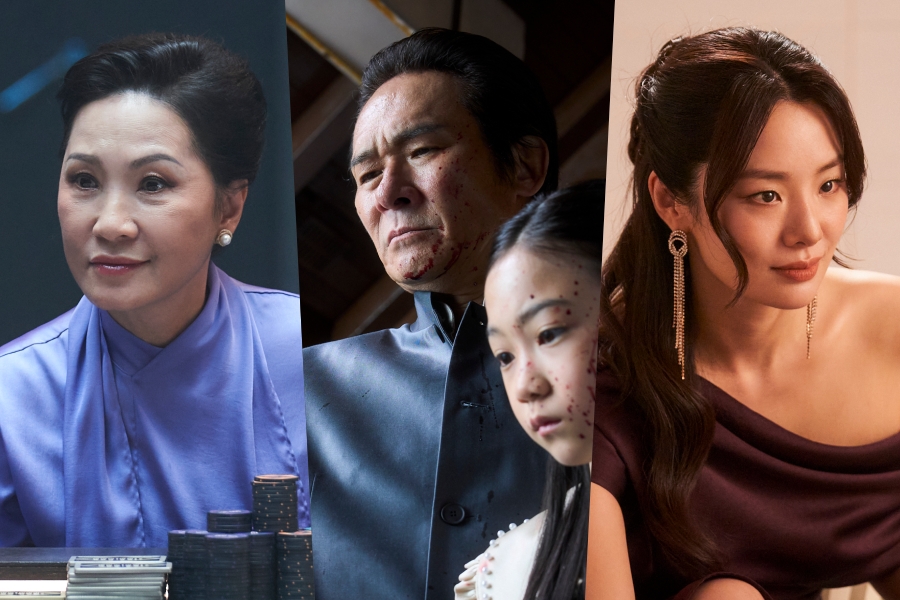
The highly anticipated return of South Korea’s premier gambling-thriller franchise has taken a definitive step forward. Six years after the release of the last installment, the production team behind Tazza 4: The Song of Beelzebub has officially released a series of new character stills. The promotional materials offer audiences an analytical look at the film’s expanded global scale, introducing a multi-national cast of characters who will drive the narrative across South Korea, Japan, and Vietnam.
Directed by Choi Kook Hee, Tazza 4: The Song of Beelzebub shifts the franchise’s traditional focus from localized, smoke-filled backrooms to the high-stakes, multi-billion-dollar arena of international syndicate gambling. The newly released stills highlight the casting of veteran Vietnamese actress Hong Dao, Japanese cinema icon Tsuyoshi Ihara, and Korean-American model-turned-actress Stephanie Lee, signaling a narrative that is as geopolitically diverse as it is tense.
Main Facts: The Plot, Cast, and Premiere Details
At its core, Tazza 4: The Song of Beelzebub is a story of betrayal, ambition, and asymmetric retribution. The narrative centers on Jang Tae Young (played by Byun Yo Han), a brilliant strategist who rises to the pinnacle of the criminal underworld by constructing a highly lucrative online casino empire. His triumph is short-lived, however, as he is betrayed by his closest confidant, Park Tae Young (played by Roh Jae Won), who orchestrates a hostile takeover that strips Jang of everything he built.
                                 [ Jang Tae Young ]
                                   (Byun Yo Han)
                                         │
                        ┌────────────────┴────────────────┐
                        ▼                                 ▼
               Betrayed & Ruined by                Allied & Aided by
                [ Park Tae Young ]                  [ Linda Park ]
                  (Roh Jae Won)                     (Stephanie Lee)
                        │                                 │
                        └────────────────┬────────────────┘
                                         ▼
                             Cross-Border Confrontation
                                         │
                        ┌────────────────┴────────────────┐
                        ▼                                 ▼
               [ Chairwoman Thao ]               [ Chairman Sasaki ]
                   (Hong Dao)                     (Tsuyoshi Ihara)
               (Vietnam Syndicate)                (Yakuza/Japan Corp)
Ruined and exiled, Jang Tae Young is forced to rebuild from the ground up. The former friends are eventually drawn back together by the gravitational pull of the global underground gambling circuit. The ensuing battle of wits transcends domestic borders, pulling in powerful power brokers, corporate syndicates, and organized crime figures from across East and Southeast Asia.
The film features a formidable ensemble cast:
- Byun Yo Han as Jang Tae Young, the fallen casino mogul seeking vengeance.
- Roh Jae Won as Park Tae Young, the ruthless former friend who stole an empire.
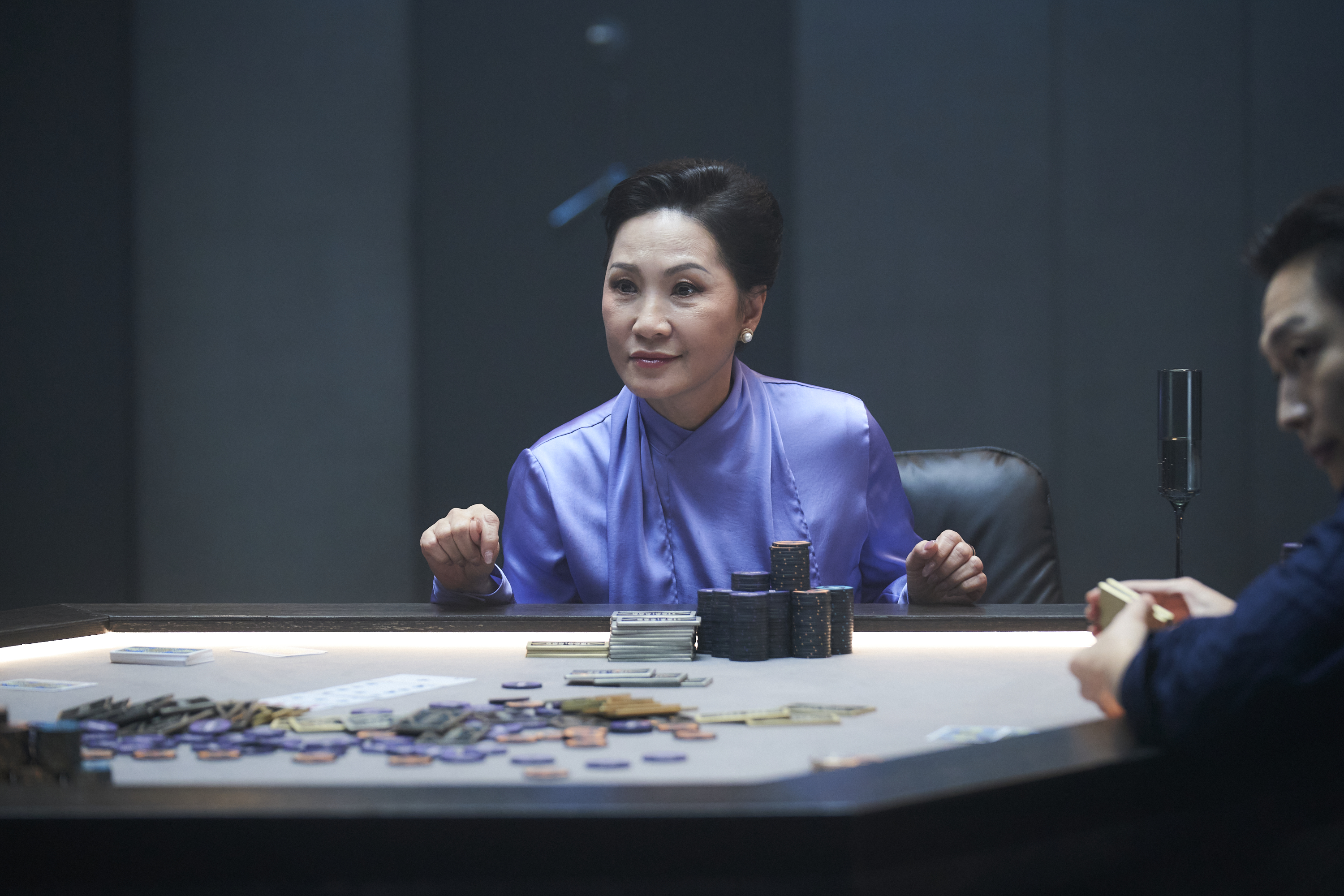
- Hong Dao as Chairwoman Thao, a formidable Vietnamese business tycoon.
- Tsuyoshi Ihara as Chairman Sasaki, a composed but ruthless former Yakuza boss.
- Stephanie Lee as Linda Park, a highly sophisticated international lobbyist.
Tazza 4: The Song of Beelzebub is scheduled to make its theatrical premiere on September 23.
The Chronology of a Legendary Franchise
To understand the weight of Tazza 4, one must examine the twenty-year history of the Tazza cinematic universe, which has consistently served as a benchmark for South Korean crime cinema.
  2006: "Tazza: The High Rollers" (Dir. Choi Dong-hoon)
  │     - Focused on traditional Hwatu (flower cards)
  │     - Set the benchmark for Korean gambling noir
  ▼
  2014: "Tazza: The Hidden Card" (Dir. Kang Hyeong-cheol)
  │     - Expanded the lore with a younger, stylish cast
  │     - Maintained the localized Hwatu-centric underworld
  ▼
  2019: "Tazza: One Eyed Jack" (Dir. Kwon Oh-kwang)
  │     - Shifted the game from Hwatu to Western Poker
  │     - Introduced a darker, team-based heist dynamic
  ▼
  2026: "Tazza 4: The Song of Beelzebub" (Dir. Choi Kook Hee)
        - Transitions to international online/offline syndicates
- Features pan-Asian settings (Korea, Japan, Vietnam)- 2006 – Tazza: The High Rollers: Directed by Choi Dong-hoon and based on Huh Young-man’s famous manhwa, the original film became an instant classic. It popularized the underground world of Hwatu (Korean flower cards), grossing over 6.8 million admissions and cementing characters like Goni and Agwi into the Korean pop-culture lexicon.
- 2014 – Tazza: The Hidden Card: Directed by Kang Hyeong-cheol, the second installment maintained the Hwatu focus but brought a sleeker, more youthful energy to the franchise, starring T.O.P (Choi Seung-hyun) and Shin Se-kyung. It proved the franchise’s enduring commercial viability.
- 2019 – Tazza: One Eyed Jack: Directed by Kwon Oh-kwang, the third film marked a major mechanical shift, trading traditional Korean Hwatu cards for Western-style poker. The tone became darker, emphasizing team-based grifts and psychological manipulation.
- 2026 – Tazza 4: The Song of Beelzebub: After a six-year hiatus, the franchise returns under the direction of Choi Kook Hee. This fourth chapter represents the most radical evolution yet, scaling up the narrative from local gambling dens to a transnational corporate battlefield.
Supporting Data: A Global Cast and Multi-National Settings
Tazza 4 distinguishes itself by abandoning the insular domestic settings of its predecessors in favor of a sprawling, cross-border narrative. The film’s production design and location scouting span Vietnam, Japan, and South Korea, with each territory represented by key characters who control the flow of capital and information.
Character Profiles and Casting Data
| Character | Actor | Nationality/Representing | Role in Narrative | Key Traits |
|---|---|---|---|---|
| Chairwoman Thao | Hong Dao | Vietnam | Head of a massive Vietnamese business conglomerate | Views life and high-level corporate decisions as a high-stakes game. |
| Chairman Sasaki | Tsuyoshi Ihara | Japan | Leader of a major Japanese corporation; former Yakuza | Calm exterior concealing a volatile gambler willing to risk everything. |
| Linda Park | Stephanie Lee | Korea/USA | International political and corporate lobbyist | Operates behind the scenes to connect Jang Tae Young with elite Southeast Asian gamblers. |
The integration of these characters highlights a carefully calculated globalization strategy by the production company. Rather than utilizing international locations merely as scenic backdrops, the script integrates the distinct socio-economic realities of each country’s underworld. Vietnam serves as the rapidly developing, high-growth market where new money is laundered; Japan represents the established, highly disciplined corporate-Yakuza syndicates; and South Korea remains the technological hub where digital gambling infrastructure is designed and contested.
Behind-the-Scenes and Official Responses
The international cast members have expressed both enthusiasm and a deep sense of responsibility regarding their integration into one of South Korea’s most revered film franchises.
Hong Dao’s Rigorous Preparation
For Vietnamese veteran actress Hong Dao, stepping into the role of Chairwoman Thao required overcoming both language barriers and a complete unfamiliarity with the mechanics of professional gambling.
"When I was first offered the role in a South Korean production of this scale, it was a source of immense joy and a profound honor," Hong Dao remarked. "However, I had absolutely no prior experience with card games or casino culture."
To portray a convincing, cold-blooded tycoon who treats life-and-death decisions like a casual hand of cards, Hong Dao underwent intensive training. She learned the rules of the games from scratch and spent hours daily practicing the physical mechanics of handling casino chips and shuffling cards.
"I practiced handling the chips so frequently and intensely at home that my family eventually became completely accustomed to the constant, rhythmic sound of cards and plastic chips clacking together in the living room," she added with a laugh.
Tsuyoshi Ihara’s Dark Transformation
Japanese actor Tsuyoshi Ihara, widely recognized for his versatile performances in both Japanese and international cinema, took a methodical approach to portraying Chairman Sasaki. Upon receiving the offer, Ihara systematically watched all three previous Tazza films to grasp the unique, high-tension atmosphere of the franchise.
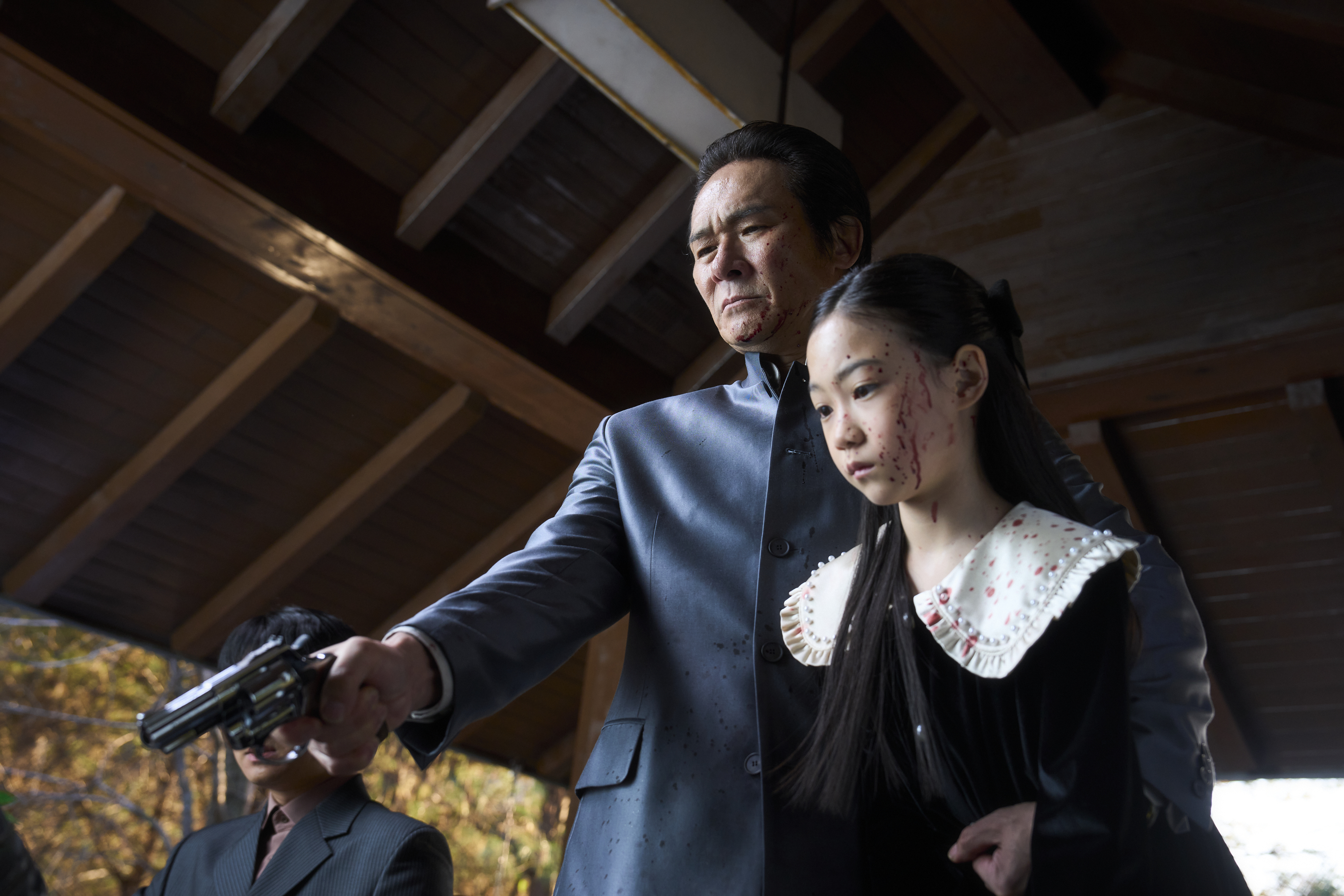
"The distinct energy and suspense of the Tazza series immediately drew me in," Ihara explained. "I knew I wanted to be a part of this world."
Having spent much of his recent career playing honorable, virtuous characters, Ihara welcomed the opportunity to play a morally compromised, intimidating figure. To perfect the physical presence of the former Yakuza boss, Ihara collaborated closely with Director Choi Kook Hee. At the director’s request, Ihara filmed detailed self-tapes of himself practicing minute character gestures—ranging from the precise way Sasaki slicked back his hair to his posture at the card table—sending them back and forth to Seoul during pre-production to refine the character’s menacing aura.
Stephanie Lee’s Strategic Pivot
For Stephanie Lee, the role of Linda Park represents a significant opportunity to showcase her range. Transitioning from her early career as a high-profile fashion model to an established actress, Lee brings a natural bilingual fluidity and cosmopolitan charm to the character of Linda Park.
As a lobbyist operating in the shadow economies of Hanoi and Ho Chi Minh City, Linda Park serves as the narrative bridge between the ruined Jang Tae Young and the formidable Chairwoman Thao. Production insiders note that Lee’s performance is defined by a sharp, calculating intellect that contrasts with her character’s glamorous exterior, adding a layer of unpredictable tension to the film’s second act.
Implications: The Evolving Landscape of Korean Crime Cinema
The production and upcoming release of Tazza 4: The Song of Beelzebub carry significant implications for both the franchise and the broader South Korean film industry.

                    [ Regional Market Integration ]
              Co-casting stars from Japan & Vietnam
              broadens theatrical footprint across Asia.
                                │
                                ▼
                   [ Transnational Themes ]
              Reflects the modern shift from local
              dens to borderless digital crime syndicates.
                                │
                                ▼
                 [ Mid-Budget Franchise Survival ]
              Tests whether legacy IP can thrive in
              the post-pandemic theatrical landscape.
1. The Globalization of Hallyu Intellectual Properties
Historically, South Korean crime dramas have relied heavily on highly localized contexts—focusing on regional dialects, domestic political corruption, and culturally specific underworld hierarchies. Tazza 4 represents a conscious pivot toward transnational storytelling. By casting prominent actors from Vietnam and Japan, the production company is positioning the film for maximum theatrical and streaming appeal across the Asia-Pacific region. This strategy mirrors a broader industry trend where Korean production houses seek to mitigate domestic box-office volatility by creating content with built-in regional appeal.
2. The Modernization of the Gambling Sub-Genre
The transition from the localized Hwatu games of the 2006 original to the international corporate espionage of The Song of Beelzebub reflects the changing nature of real-world crime. Modern illicit gambling is no longer confined to smoky, hidden basements; it operates via decentralized online servers, shell companies, and international financial networks. By centering the plot on an online casino empire and the geopolitical maneuvers required to sustain it, Tazza 4 modernizes the franchise, making it highly relevant to contemporary audiences familiar with the digital age of white-collar crime.
3. A Litmus Test for the Mid-Budget Franchise Model
In the post-pandemic cinematic landscape, mid-to-high-budget theatrical releases face unprecedented competition from streaming platforms. The performance of Tazza 4 will serve as an important case study for the industry. It will test whether a established, twenty-year-old theatrical intellectual property can still draw massive audiences to theaters after a six-year absence, or if the future of such character-driven crime sagas lies primarily on subscription video-on-demand (SVOD) platforms.
With its September 23 release date rapidly approaching, Tazza 4: The Song of Beelzebub stands as a highly ambitious attempt to elevate a beloved domestic franchise into a sleek, pan-Asian thriller. By combining the vengeful intensity of Byun Yo Han’s lead performance with the seasoned international presence of Hong Dao and Tsuyoshi Ihara, director Choi Kook Hee has assembled a cinematic deck that is stacked for a high-stakes, international showdown.



 Layla Zulfa
  Siti Muinah
  Lina Irawan
