
 By Nana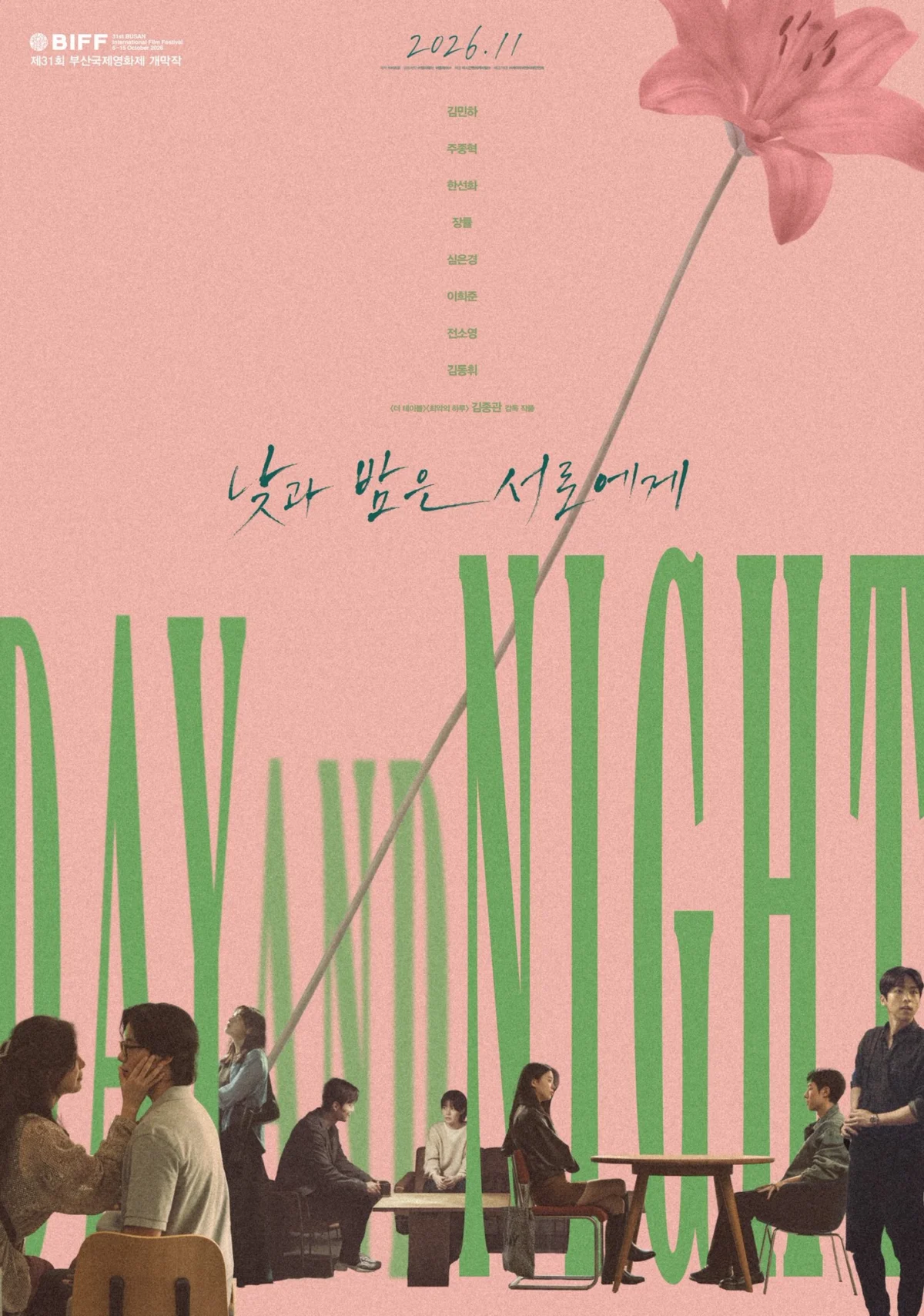
An impressive ensemble cast is set to bring a quiet, dialogue-driven romance to life this autumn. The upcoming omnibus romance feature film The Table: Day and Night has officially commenced its promotional campaign, releasing its first main poster and teaser trailer.
Set against the atmospheric backdrop of a single café during the transitional period between the warmth of late summer and the crisp chill of early autumn, The Table: Day and Night weaves together the delicate, witty, and understated conversations of four different pairs of men and women. As their paths cross at different hours of the day, the film promises to deliver an intimate look at modern romance, missed connections, and the bittersweet nature of human relationships.
Scheduled to hit theaters in November, the film has already generated significant buzz due to its stellar lineup of established actors and rapidly rising stars, including Kim Min Ha, Joo Jong Hyuk, Han Sun Hwa, Chang Ryul, Shim Eun Kyung, Lee Hee Jun, Jeon So Young, and Kim Dong Hwi.
Narrative Chronology: Four Couples, One Shared Space
The Table: Day and Night is structured as an anthology film, utilizing a single physical location—a neighborhood café—to ground its four distinct narrative segments. Each segment captures a unique phase of love, from the initial spark of curiosity to the heavy silence of an impending breakup. The film’s chronology is dictated not just by the passing of hours from dawn to dusk, but also by the emotional weight of each encounter.
[Time of Day: Morning to Night]
  │
  ├──► Segment 1: Yoo Jin & Hyeon Oh ──────► A dreamlike, time-delayed connection
  │
  ├──► Segment 2: Sang Mi & Young Min ─────► A sudden, flustered middle-school reunion
  │
  ├──► Segment 3: Hye Jin & Dong Nam ──────► A fiery clash between a writer and filmmaker
  │
  └──► Segment 4: Na Kyeong & Jong Su ─────► A bittersweet parting of young lovers
Yoo Jin and Hyeon Oh: A Dreamlike Intersection of Day and Night
The first narrative thread follows Yoo Jin (played by Kim Min Ha) and Hyeon Oh (played by Joo Jong Hyuk). Unlike traditional romantic pairings, their connection is defined by temporal distance. Visiting the exact same café at different times of the day, the duo shares a dreamlike bond that transcends their lack of direct physical contact. Through shared spaces, lingering atmospheres, and left-behind traces, their story explores the lingering presence of a stranger and how two lives can intersect without ever truly aligning in time.
Sang Mi and Young Min: The Flutter of Nostalgic Reunion
The second segment shifts the mood to one of unexpected nostalgia and comedic tension. Sang Mi (Han Sun Hwa) and Young Min (Chang Ryul) experience a sudden reunion years after they attended the same private tutoring sessions during their middle school years. As they sit across from one another, the initial awkwardness of adulthood melts away, replaced by the resurfacing of long-forgotten adolescent feelings. The segment promises to balance witty banter with the sudden, heart-fluttering realization that past crushes never entirely fade.
Hye Jin and Dong Nam: The Clash of Two Creative Minds
Representing the fiery, intellectual side of attraction, the third segment introduces Hye Jin (Shim Eun Kyung), an analytical web novel writer, and Dong Nam (Lee Hee Jun), a passionate and eccentric indie filmmaker. Their initial meeting is anything but smooth. As two storytellers with vastly different artistic philosophies, their conversation quickly sparks into a battle of wits. However, beneath the professional skepticism and creative friction lies a magnetic curiosity that draws them closer together.

Na Kyeong and Jong Su: The Bittersweet Finality of Young Love
The final segment grounds the film in the quiet, painful realities of contemporary youth. Na Kyeong (Jeon So Young) is an aspiring idol singer whose dreams demand intense personal sacrifice, while Jong Su (Kim Dong Hwi) is her supportive yet increasingly distant boyfriend. As they sit at their usual table, the physical and emotional distance between them becomes impossible to ignore. Their conversation captures the tender, heartbreaking moments of a young couple realizing that loving someone sometimes means letting them go.
Supporting Data: The Power of an Elite Ensemble Cast
The anticipation surrounding The Table: Day and Night is heavily bolstered by its cast. By bringing together a mix of international breakout stars, award-winning veterans, and respected character actors, the production has positioned itself as a major cinematic event for lovers of realistic romance.
| Actor | Character | Key Previous Projects | Notable Accolades / Career Milestones |
|---|---|---|---|
| Kim Min Ha | Yoo Jin | Pachinko, Way Back Love | International breakout star; nominated at the Gotham Awards and Independent Spirit Awards. |
| Joo Jong Hyuk | Hyeon Oh | Extraordinary Attorney Woo, Doona! | Gained widespread recognition as "Tactician Kwon Min-woo" in the global hit K-drama. |
| Han Sun Hwa | Sang Mi | Work Later, Drink Now, Honey Sweet | Former idol turned highly sought-after actress; praised for her comedic timing and emotional range. |
| Chang Ryul | Young Min | My Name, Bargain, Golden Spoon | Known for intense, transformative villainous and dramatic performances; showing a softer romantic side here. |
| Shim Eun Kyung | Hye Jin | Sunny, Miss Granny, The Journalist | First Korean actress to win Best Actress at the Japan Academy Film Prize; a highly respected veteran of cinema. |
| Lee Hee Jun | Dong Nam | A Killer Paradox, The Badland Hunters, The Man Standing Next | A powerhouse character actor celebrated for his intense, immersive, and versatile performances. |
| Kim Dong Hwi | Jong Su | In Our Prime, The Deal, Missing: The Other Side 2 | Won Best New Actor at the Blue Dragon Film Awards for his breakout performance in In Our Prime. |
| Jeon So Young | Na Kyeong | Newcomer Profile | An exciting rising talent selected to bring vulnerability to the film’s final emotional segment. |
The Resonance of the Omnibus Format
The omnibus romance format has a long, successful history in South Korean independent and mid-budget cinema. Films like Kim Jong-kwan’s The Table (2017)—which shared a similar narrative framework—and Worst Woman (2016) proved that audiences are highly receptive to minimalist, dialogue-driven stories that prioritize character development over high-stakes action.
By focusing on the micro-interactions of daily life, these films provide a canvas for actors to showcase their rawest, most natural performances. The Table: Day and Night builds upon this legacy, offering a modern update on the genre by integrating contemporary social realities, such as the struggles of indie artists and the grueling path of aspiring K-pop idols.
Promotional Materials and Visual Language: The Poster and Teaser Breakdown
The marketing campaign for The Table: Day and Night kicked off with the simultaneous release of an eye-catching theatrical poster and a moody teaser trailer, both of which set the aesthetic tone for the film.
The Contrasting Aesthetics of the Official Poster
The newly released poster utilizes a striking pink-and-green color palette that represents the transition of seasons—the warm pinks of fading summer blending with the cool greens of early autumn. Bold, modern typography spells out the words "DAY AND NIGHT" across the center of the frame, physically and metaphorically dividing the characters.
The spatial arrangement of the actors on the poster serves as a visual summary of their respective relationships:
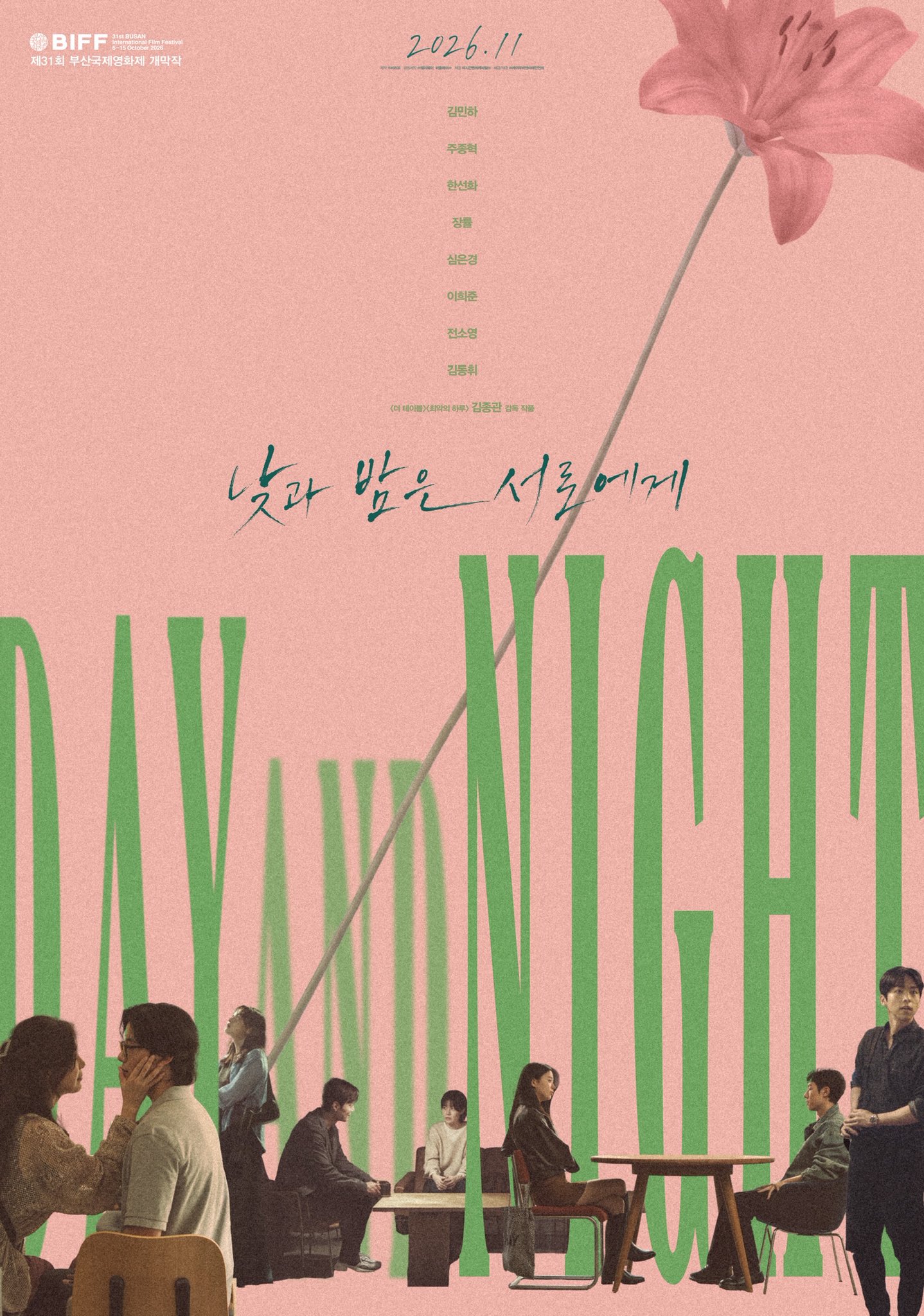
- Yoo Jin and Hyeon Oh are placed at opposite ends of the frame, looking away from each other into the distance, highlighting their time-delayed, near-miss connection.
- Sang Mi and Young Min occupy a more intimate space; Sang Mi is depicted playfully holding Young Min’s cheeks, while he looks adorably flustered, capturing the playful chemistry of their reunion.
- Hye Jin and Dong Nam are shown mid-conversation, with Hye Jin listening to Dong Nam with a mixture of skepticism and curiosity, emphasizing their intellectual tug-of-war.
- Na Kyeong and Jong Su sit facing one another, but the noticeable physical gap and heavy expressions on their faces hint at the emotional chasm that has grown between them.
Teaser Trailer Analysis: Transitioning Seasons, Shifting Emotions
The teaser trailer provides a sensory preview of the film’s atmosphere. Accompanied by a soft, acoustic-driven soundtrack, the video tracks the changing light inside the café as the seasons shift. The cinematography emphasizes the play of natural light, transitioning from the bright, golden hues of summer afternoons to the long, blue shadows of autumn evenings.
Through rapid but deliberate cuts, the teaser highlights the characters’ micro-expressions: a sudden smile, a hesitant glance, a sigh of frustration, and a lingering touch on a coffee cup. These moments of vulnerability underscore the film’s tagline: "All the moments we loved are here." The teaser effectively promises a film that does not rely on dramatic plot twists, but rather on the quiet resonance of shared human experiences.
Industry Implications: The Revival of Character-Driven Romance
The release of The Table: Day and Night comes at a critical juncture for the South Korean film industry. In recent years, domestic theatrical releases have been heavily dominated by high-budget action thrillers, disaster films, and historical epics. The romantic drama genre, which once formed a cornerstone of Korean cinema’s golden era in the late 1990s and 2000s, has largely migrated to streaming platforms in the form of multi-episode dramas.
As a result, theatrical releases like The Table: Day and Night represent a refreshing and necessary counter-programming effort. For theatergoers seeking intimate, intellectual, and emotionally resonant cinematic experiences, this film offers a return to form.
Furthermore, the film’s reliance on a single primary location and a heavy focus on dialogue presents a sustainable model for mid-budget filmmaking. By maximizing the dramatic potential of its stellar cast within a controlled setting, the production demonstrates how high-quality storytelling can thrive without relying on excessive production costs.
As November approaches, industry insiders will be watching closely to see how audiences respond to this cozy, conversational romance. If successful, The Table: Day and Night could pave the way for a resurgence of minimalist anthology dramas in the domestic theatrical market, proving that sometimes, the most compelling stories are the ones told quietly over a cup of coffee.



 Basiran
  Siti Muinah
  Ali Ikhwan
