
 By Ammar Sabilarrohman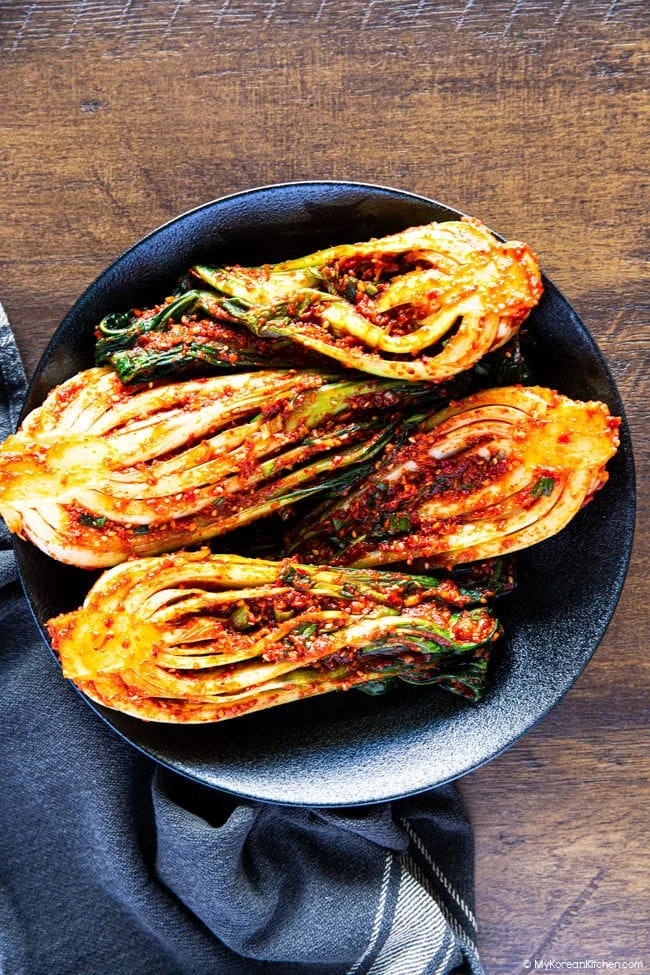
In the pantheon of Korean cuisine, kimchi stands as a cultural titan. While the iconic napa cabbage (baechu) variety remains the gold standard for many, a vibrant, fresh, and remarkably crisp alternative has been gaining traction in both professional kitchens and home gardens alike: Bok Choy Kimchi.
Far from being a mere "substitute" for its cabbage-based predecessor, bok choy kimchi—often referred to as cheong-gyeong-chae kimchi—offers a distinct sensory experience. With its succulent stems and vibrant green leaves, it provides a textural profile that traditional, heartier cabbages simply cannot replicate. As food enthusiasts and home chefs look for ways to diversify their fermentation repertoires, this recipe has emerged as a seasonal favorite, particularly for those looking to utilize a bountiful garden harvest.
The Evolution of a Seasonal Staple
The history of kimchi is rooted in necessity. Originally, fermentation was a vital preservation technique used to survive the harsh Korean winters. Today, while we have year-round access to fresh produce, the tradition of making kimchi remains a communal and culinary ritual.
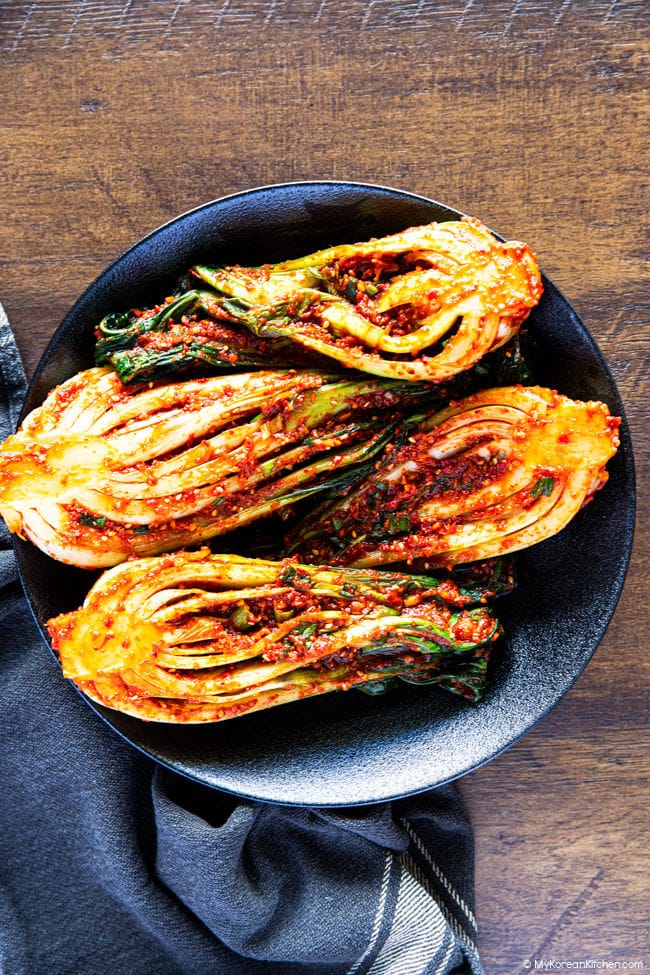
Bok choy, a staple of Asian cooking, brings a fresh, green, and slightly earthy flavor to the fermentation crock. Unlike napa cabbage, which is prized for its dense, layered leaves that soften into a tender, buttery texture over time, bok choy remains notably crisp. Its stems possess a snap that is often compared to celery, making it an ideal candidate for "quick" or "fresh" kimchi—a style that is meant to be consumed within days of preparation, rather than months.
Chronology of the Craft: A Step-by-Step Guide
To master the art of bok choy kimchi, one must respect the ingredients and the timing. The process is a careful balance of salinity, acidity, and aromatic complexity.
Phase 1: Preparation and Brining
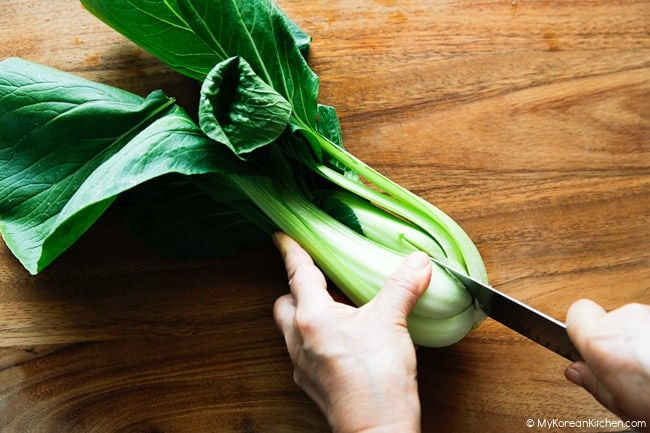
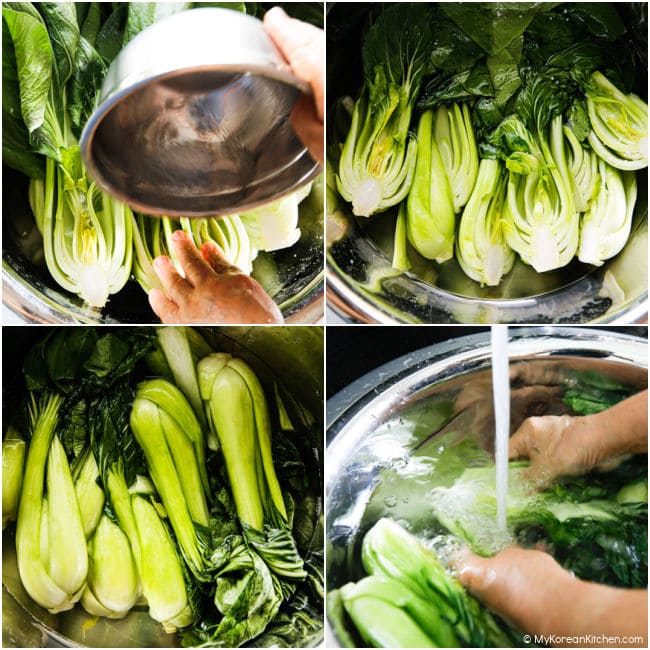
The process begins with the structural integrity of the vegetable. The root end of the bok choy is trimmed lightly, ensuring the leaves remain attached at the base. Each head is halved lengthwise and rinsed under cold, running water. This step is critical; the base of the bok choy is a magnet for grit and garden soil. Once cleaned, the vegetables are drained thoroughly.
The brining process acts as the foundation of the fermentation. A coarse salt solution is prepared, and the bok choy is submerged. The duration of this phase is highly dependent on the thickness of the stems. Thicker, more robust stems require approximately 90 minutes of brining to ensure the salt penetrates the fibers, while thinner, more delicate stalks are sufficiently cured in 60 minutes. Turning the vegetable two to three times during this window ensures uniform salinity.
Phase 2: Building the Flavor Profile
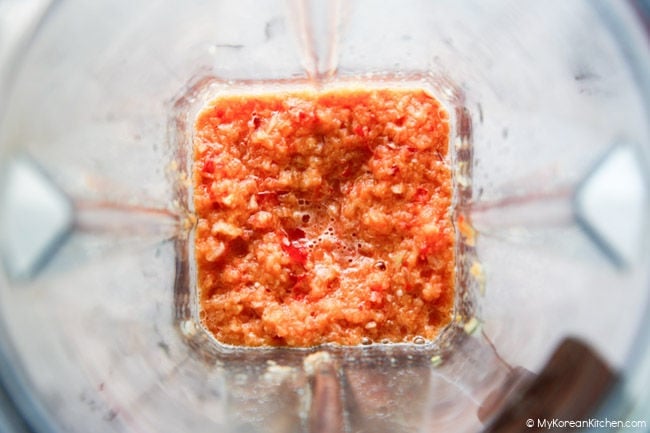
Once the bok choy has been rinsed of excess salt and drained, the complexity of the dish is built through the seasoning paste. A base of apple (for natural sweetness), garlic, ginger, salted shrimp, and fish sauce is blended into a slurry.
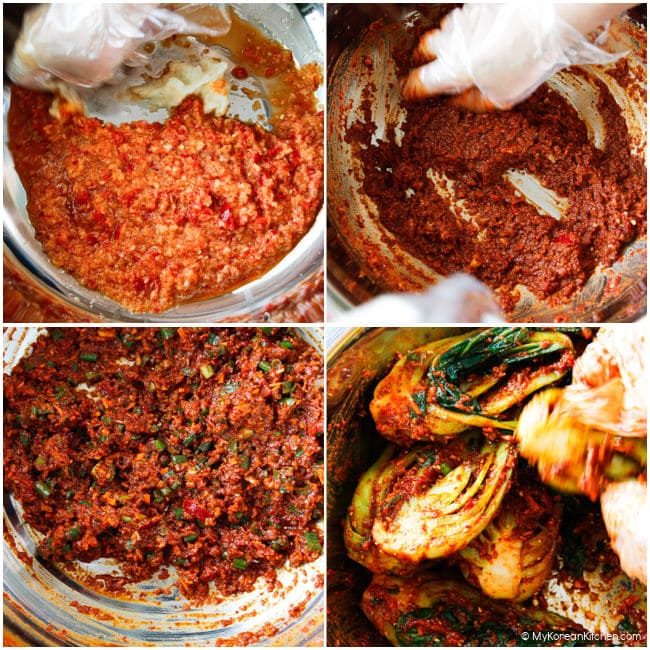
To achieve the desired body and adhesion, a flour paste is prepared by whisking water and flour until smooth, then microwaving in short, controlled bursts. This acts as a thickener, ensuring the seasoning clings to every leaf and crevice. Finally, the aromatic elements—onion, carrot, green onion, and optional red sweet pointed pepper—are folded in, along with the essential Korean chili flakes (gochugaru).
Phase 3: The Marriage of Ingredients
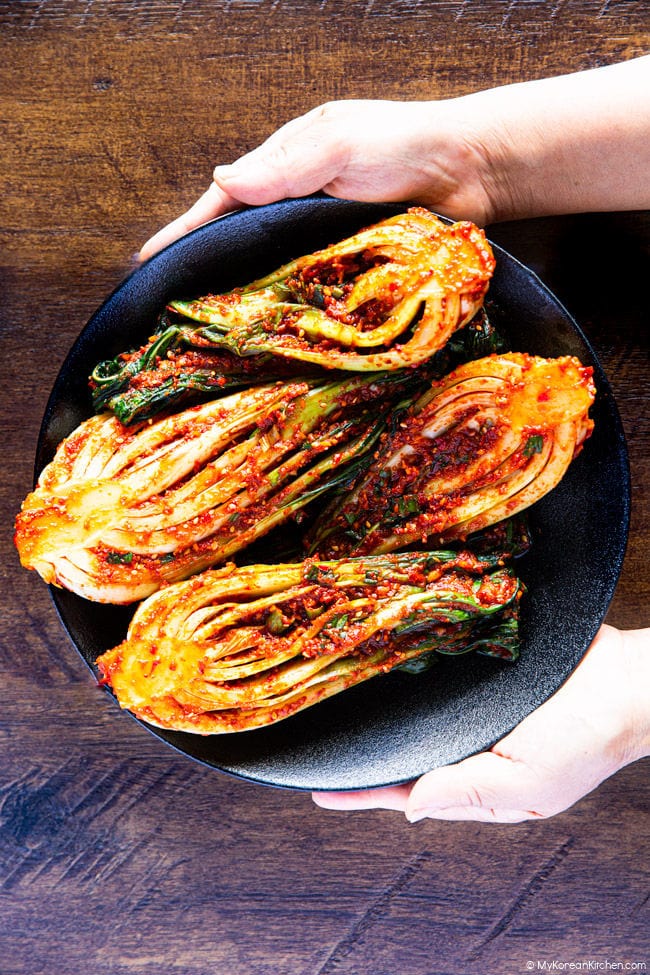
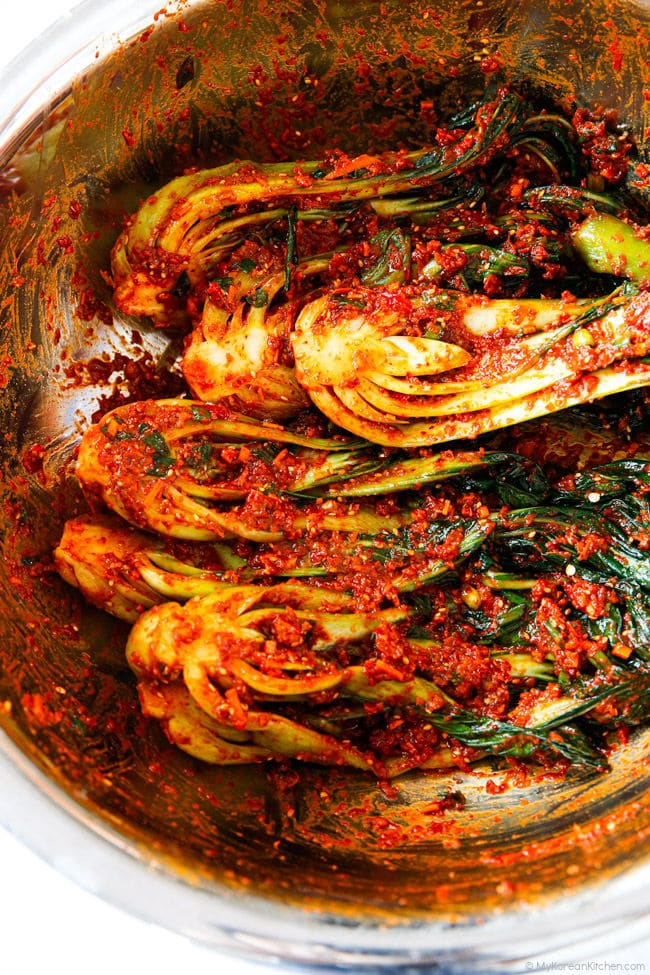
The final assembly requires a delicate hand. The seasoning is massaged into the bok choy. Because the leaves are significantly more fragile than those of napa cabbage, the mixture must be tossed gently. Rough handling will bruise the leaves and compromise the final texture.
Supporting Data: Understanding the Ingredients
The nutritional profile of bok choy kimchi is as impressive as its flavor. With approximately 457 kcal per batch (based on a 1.5-serving estimate), it is a nutrient-dense side dish. It is exceptionally high in Vitamin A and Vitamin C, both of which are preserved and enhanced during the fermentation process.
| Nutrient | Estimated Value |
|---|---|
| Calories | 457 kcal |
| Carbohydrates | 85g |
| Protein | 22g |
| Fiber | 24g |
| Calcium | 1044mg |
| Iron | 14mg |
Note: These figures are estimates derived from standard nutritional databases and should be used as a general guide.
The Gochugaru vs. Paprika Debate
A common point of contention among modern home cooks is the use of gochugaru (Korean chili flakes). While some recipes suggest paprika as a mild, non-spicy alternative, professional testing indicates that paprika lacks the depth and the vibrant, deep-red aesthetic that defines authentic kimchi.
For those sensitive to heat, the recommended compromise is a ratio of 2 tablespoons of gochugaru to 3–4 tablespoons of sweet paprika. This allows for a milder spice level while maintaining the visual allure of a traditional red-hued kimchi.
Professional Perspectives on Fermentation
According to fermentation experts, the key to successful bok choy kimchi lies in the "freshness window." While napa cabbage kimchi can be aged for months in traditional onggi (earthenware pots), bok choy kimchi is best consumed within 3 to 5 days.
"The structural integrity of bok choy is quite different," notes one culinary researcher. "As the fermentation progresses, the leaves soften significantly faster than those of traditional cabbage. If you wait too long, you lose that signature crisp bite."
The storage of the product also matters. A 1.8-liter (2-quart) airtight container is ideal, as it provides enough headspace for the initial CO2 release during the fermentation process without exposing the vegetable to too much air, which can lead to unwanted bacterial growth.
Implications for Modern Dining
The rise of bok choy kimchi represents a broader shift in how we approach traditional recipes. By swapping out main ingredients while maintaining the core techniques of brining and seasoning, home cooks are creating "fusion-adjacent" dishes that respect historical methods while embracing local, seasonal produce.
This dish pairs exceptionally well with heavy, fatty meats. The clean, crisp, and slightly acidic profile of the bok choy cuts through the richness of samgyeopsal (grilled pork belly) or bossam (steamed pork wraps). It acts as a palate cleanser, resetting the senses between bites of savory, high-fat protein.
Culinary Versatility
Beyond the traditional dinner table, bok choy kimchi is increasingly being featured in modern fusion cooking. Its unique shape makes it an excellent candidate for:
- Kimchi Jjigae (Stew): While it softens quickly, it adds a unique, delicate texture to stews when added in the final stages of cooking.
- Grain Bowls: The crisp, spicy leaves add a necessary "kick" to quinoa, brown rice, or buckwheat noodle salads.
- Breakfast Additions: A small portion served alongside scrambled eggs or avocado toast provides a probiotic boost and a sophisticated, savory breakfast option.
Conclusion: A Fresh Chapter
Bok choy kimchi is not merely a replacement for the classic napa cabbage version; it is a celebration of a different texture and a brighter, fresher flavor profile. It invites the cook to participate in the ancient tradition of fermentation with a modern, garden-to-table sensibility.
Whether you are a seasoned fermenter or a curious novice, this recipe offers a low barrier to entry with a high culinary reward. By respecting the nuances of the vegetable—from the careful cleaning of the base to the gentle application of the seasoning—you can bring a bright, crunchy, and deeply satisfying element to your next meal.
As you embark on your own batch, remember: the true beauty of kimchi lies in its variability. Taste as you go, adjust the heat to your preference, and enjoy the crisp, vibrant results of your labor. After all, the best kimchi is the one made with care, patience, and a bit of personal flair.



 Nana Wu
  Asro
Asro  Layla Zulfa
