
 By Lina Hope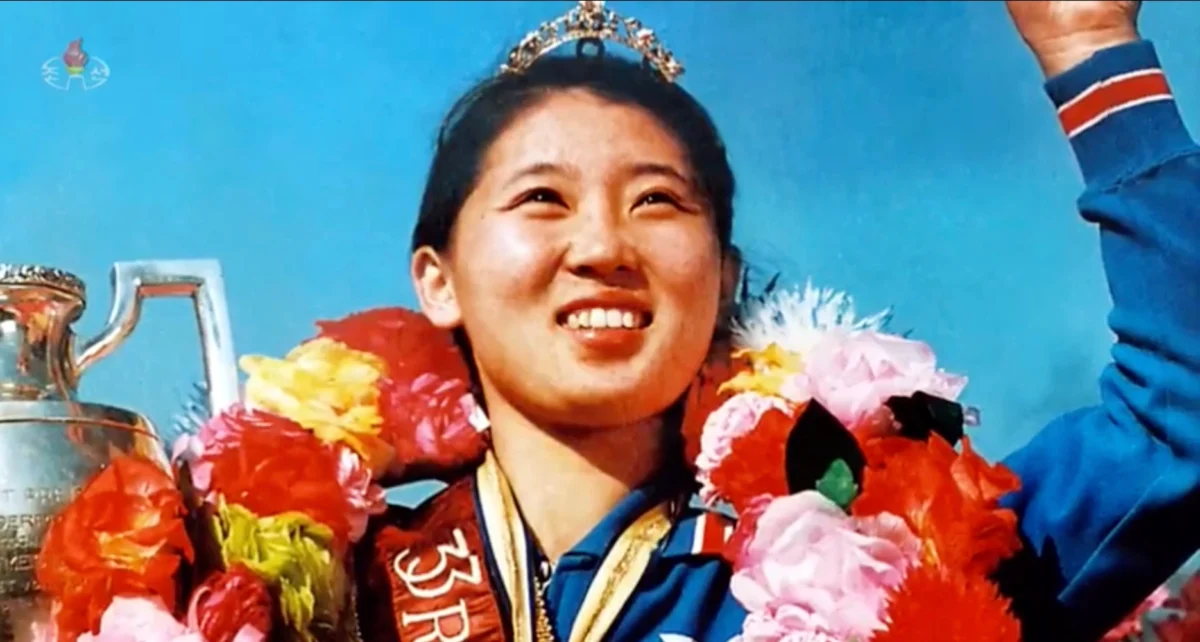
Introduction: The Stage for a Propaganda Coup
In the annals of Cold War sports diplomacy, few chapters are as surreal or as politically charged as the 1979 World Table Tennis Championships (WTTC) hosted in Pyongyang. For the Democratic People’s Republic of Korea (DPRK), the tournament was intended to be more than a mere sporting competition. It was designed as a "Hitler’s Olympics" moment—a meticulously curated theater meant to project the image of a burgeoning, modern, and internationally respected socialist utopia to the world.
At the heart of this grand strategy was Pak Yong Sun, the North Korean table tennis phenom whose rapid rise to stardom served as the perfect propaganda vehicle. Having already tasted glory on the global stage, Pak was cast as the quintessential daughter of the revolution, a living testament to the superiority of the North Korean system. However, as the dust settled on the tournament, the reality of the event revealed a complex tapestry of diplomatic failures, state-orchestrated staging, and the eventual disintegration of a fragile image-building campaign.
Main Facts: The 1979 WTTC Context
The 34th World Table Tennis Championships were not merely a gathering of athletes; they were a significant geopolitical gamble. Pyongyang had lobbied hard to secure the hosting rights, viewing the influx of international delegations as an opportunity to break out of its diplomatic isolation.
- The Protagonist: Pak Yong Sun (often transcribed as Pak Yung Sun), a powerhouse in the women’s game, was the face of the North Korean effort. Her ability to dominate the sport was leveraged by the state to suggest that their training methodologies and societal structure created "super-athletes."
- The Strategy: The North Korean government invested heavily in infrastructure, specifically the construction of the Pyongyang Indoor Stadium, which was intended to showcase architectural prowess.
- The Diplomatic Twist: As detailed in the previous installment of this series, the event was also an attempt to extend an olive branch to the United States—a "ping-pong diplomacy" maneuver designed to navigate the thawing but still icy relations of the late 1970s.
Chronology: A Tournament in Three Acts
Act I: The Build-Up
Years before the tournament began, Pyongyang embarked on a massive construction and training program. The directive from the top was clear: the event must be flawless, and the North Korean athletes must dominate the podium. This necessitated an environment where international guests were funneled through specific, state-sanctioned corridors, ensuring that the "truth" of the regime was the only narrative visible to foreign visitors.
Act II: The Sporting Climax
When the championships officially opened, the atmosphere was electric. Pak Yong Sun, already a household name after her previous success in Birmingham, entered the tournament under immense pressure. Her performance in the earlier rounds confirmed her status as a titan of the sport. The North Korean media machine went into overdrive, framing her matches not as individual athletic pursuits, but as battles of national ideological fortitude. When she reached the final, the entire nation was effectively brought to a standstill.
Act III: The Aftermath
The conclusion of the tournament brought with it a shift in the international perception of the DPRK. While the event was technically successful in terms of hosting logistics, the diplomatic outcomes were mixed. The regime’s attempt to use the tournament to bridge the gap with the United States was largely stifled by the rigid ideological constraints of the time, and the international press corps began to look past the glitz of the Pyongyang Indoor Stadium to the reality of the society behind it.
Supporting Data: The Anatomy of an Athlete-Propaganda Machine
The elevation of Pak Yong Sun was not a grassroots development; it was a state-managed phenomenon. Analysis of archival records suggests:
- Training Regimes: Athletes like Pak were subjected to state-run "talent identification" programs that prioritized early indoctrination and extreme physical conditioning.
- Resource Allocation: The DPRK diverted significant portions of its national budget to ensure the athletes had the best equipment and training facilities available, often at the expense of other public welfare sectors.
- Media Saturation: During the tournament, the state-run Rodong Sinmun and other outlets published daily tributes to Pak, using her image to equate personal victory with the strength of the Worker’s Party of Korea.
By comparing the performance data of North Korean athletes against their international peers, it becomes evident that the focus was heavily skewed toward specific "prestige sports" where international visibility was highest, rather than a broad investment in national fitness.
Official Responses and Diplomatic Friction
The international reaction to the Pyongyang WTTC was a study in caution. Western delegations were wary of the "showcase" nature of the event.

- The U.S. Perspective: Documents from the U.S. State Department during the period indicate a deep skepticism regarding North Korea’s intentions. While there was a desire to keep communication channels open, the U.S. delegation was under strict instructions to avoid being used as a prop for the North’s internal propaganda.
- The Soviet and Chinese Balance: Pyongyang had to navigate the delicate sensitivities of its two communist patrons. By hosting a major international event, North Korea was signaling its own agency, which occasionally caused friction with Moscow and Beijing, who were not always aligned with Kim Il Sung’s specific diplomatic maneuvers.
The official North Korean narrative remained steadfast: the tournament was a resounding victory for "Juche" (self-reliance) and a rebuke to the imperialist forces that sought to isolate the nation.
Implications: A Legacy of "Ping-Pong Diplomacy"
The 1979 tournament serves as a case study for why sports diplomacy often fails in the context of authoritarian regimes.
1. The Myth of "Neutral" Sport
The tournament proved that in a closed society, there is no such thing as an apolitical athletic event. Every serve, every rally, and every medal won by Pak Yong Sun was stripped of its individual context and repurposed as a tool for political legitimacy.
2. The Illusion of Engagement
While the event did facilitate a rare influx of foreigners, it did not lead to a lasting opening of the country. Instead, it reinforced the regime’s belief that it could control the narrative through managed international encounters. This "controlled openness" has become a hallmark of North Korean foreign policy in the decades that followed.
3. The Human Cost of Glory
For athletes like Pak Yong Sun, the pressure of being a state symbol was immense. The weight of expectations—that a victory was a service to the leader and a defeat was a failure of the state—creates a unique psychological burden. The history of North Korean sports is littered with the stories of athletes who, after their moment of fame, were discarded or integrated into the bureaucracy to serve the very system that had exploited their talent.
Conclusion: Reflections on the 1979 Experiment
The 1979 World Table Tennis Championships remain a fascinating intersection of sports, vanity, and geopolitics. Pyongyang’s attempt to emulate the spectacle of Berlin 1936 was a product of a regime desperate for global validation. While the tournament did not lead to the geopolitical breakthrough the North Koreans desired, it cemented the role of sports as a primary instrument of statecraft for the DPRK.
Today, when we look back at the archival footage of Pak Yong Sun, we are not just watching a table tennis player. We are witnessing a calculated performance designed to mask the cracks in a system that sought to define its greatness through the spin of a celluloid ball. The 1979 tournament did not change the course of history, but it perfectly encapsulated the inherent tension between the universal language of sport and the insular demands of a totalitarian state.
As we analyze the history of the DPRK’s interactions with the outside world, the 1979 WTTC stands as a reminder that for Pyongyang, the game was never just about winning—it was about who held the paddle, and who got to write the rules of the match.
 Ammar Sabilarrohman
  Pevita Pearce
  Nana Wu
