
 By Asro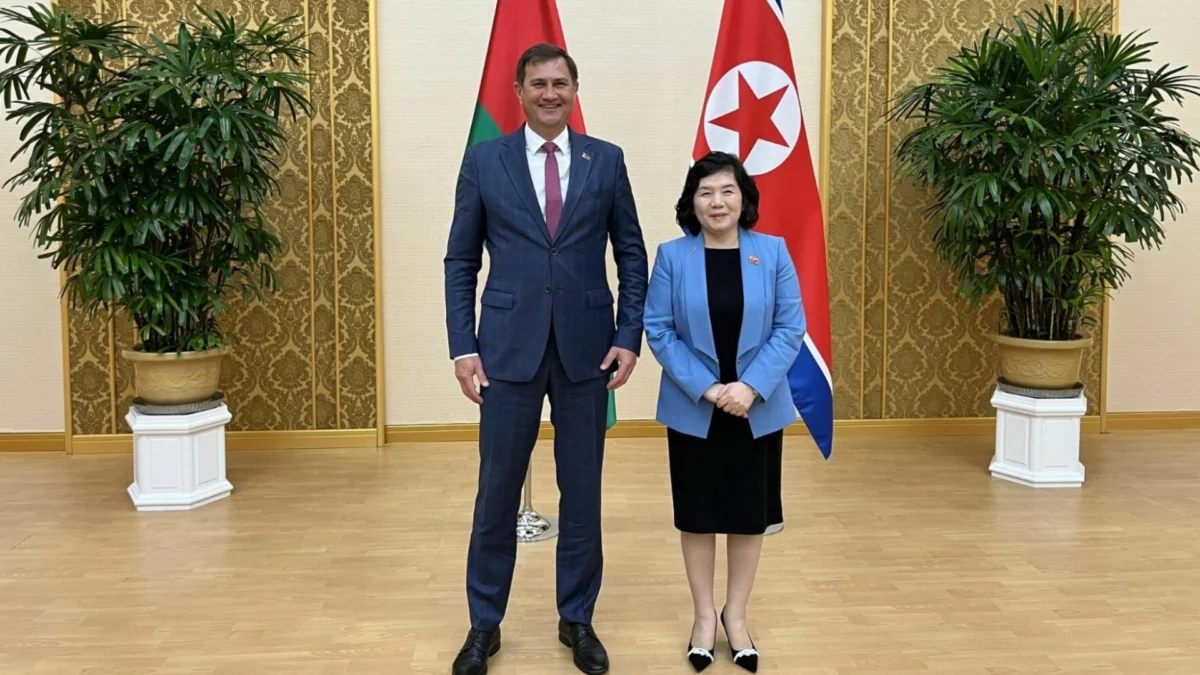
In a move that signals a deepening alignment between two of the world’s most isolated regimes, Belarusian Foreign Minister Maxim Ryzhenkov recently concluded a high-profile visit to the Democratic People’s Republic of Korea (DPRK). While officially framed as a "working vacation," the visit served as a pivotal moment for bilateral relations, culminating in the finalization of a mutual visa-exemption agreement. As Minsk and Pyongyang navigate increasing geopolitical pressures, the meeting between Ryzhenkov and his North Korean counterpart, Choe Son Hui, suggests a calculated effort to solidify a strategic partnership that spans economic, diplomatic, and symbolic spheres.
I. Main Facts: The Pyongyang Summit
The diplomatic encounter in Pyongyang marked a significant milestone in the nascent thaw between Belarus and North Korea. According to reports from Belarusian state media, Belteleradio, the primary outcome of the meetings was the formalization of a visa-free travel arrangement. This policy shift is intended to facilitate "human-to-human" exchanges, though observers note that such moves often precede deeper state-level cooperation.
During his visit, Ryzhenkov engaged in an exhaustive "entire range" of discussions with Choe Son Hui. These talks touched upon trade, cultural exchange, and the long-delayed process of establishing a fully operational Belarusian embassy in Pyongyang. Ryzhenkov’s public commentary was notably effusive, praising the DPRK’s development, its modernizing infrastructure—specifically citing the "booming car traffic" in the capital—and the scenic appeal of the Wonsan-Kalma tourist zone.
The minister framed his visit through the lens of duty, referencing President Alexander Lukashenko’s mandate that "even when on vacation, a civil servant should continue working." This rhetoric underscores the seamless integration of state bureaucracy and foreign policy objectives in the Belarusian governance model, mirroring the rigid state-party structure of North Korea.
II. Chronology of Diplomatic Rapprochement
The relationship between Minsk and Pyongyang has transitioned from a period of relative dormancy to one of active engagement over the last 18 months.
- Early 2024: Signaling a shift in policy, Belarus began re-evaluating its engagement with North Korea as part of a broader "pivot to the East," a strategy dictated by the collapse of diplomatic and economic bridges with the European Union and the United States following the invasion of Ukraine.
- Mid-2024: Informal working groups were established to discuss the logistics of embassy staffing. Despite these efforts, the physical opening of a Belarusian diplomatic mission in Pyongyang faced bureaucratic and logistical delays, reportedly exacerbated by the DPRK’s strict border controls and internal administrative hurdles.
- Late 2024 – Early 2025: High-level interactions increased, with technical delegations visiting Pyongyang to survey facilities and discuss economic cooperation frameworks.
- August 2026 (The Current Visit): Foreign Minister Ryzhenkov arrives in the DPRK. The visit is framed as a hybrid of a working diplomatic mission and a private vacation, a unique approach to international diplomacy that allowed for informal negotiations away from the typical protocol constraints of official state visits.
- August 2026: Finalization of the visa-free agreement, marking the most tangible success of the recent diplomatic push.
III. Supporting Data: The Economic and Geopolitical Landscape
To understand the significance of this rapprochement, one must look at the economic isolation facing both nations. Belarus, heavily sanctioned for its role in supporting Russian military operations and its domestic human rights record, is desperate to find new export markets and diplomatic partners. North Korea, similarly isolated by UN sanctions and its own autarkic policies, represents a niche but politically useful ally.
Trade Potential
While trade volume between Minsk and Pyongyang is historically negligible, there is significant potential for exchange in specific sectors:
- Agricultural Technology: Belarus, as a hub for heavy machinery and agricultural equipment, views the DPRK’s agricultural sector as a potential market for tractors, harvesters, and technical expertise.
- Textiles and Manufacturing: Pyongyang has historically looked to Eastern European nations for manufacturing partnerships that circumvent standard trade barriers.
- Infrastructure: The mention of the Wonsan-Kalma resort is significant. North Korea is actively seeking foreign investment and expertise to develop its tourism industry, a sector that offers a way to generate hard currency without triggering traditional industrial sanctions.
The "Embassy Impasse"
The delay in opening the Belarusian embassy in Pyongyang has been a point of contention. While Minsk has officially maintained that the delay is due to "logistical and technical reasons," analysts suggest it reflects the cautious nature of the DPRK’s foreign policy apparatus. The residency of foreign diplomats in Pyongyang is subject to intense scrutiny, and the vetting process for a new mission is notoriously exhaustive. Ryzhenkov’s visit appears to have been intended to break this administrative logjam.
IV. Official Responses and Narratives
The Belarusian state apparatus has utilized the visit to project an image of a nation that remains connected to the global stage despite Western attempts at isolation. By highlighting the "friendly atmosphere" and the natural beauty of the DPRK, the state media narrative seeks to normalize North Korea as a legitimate and appealing partner for Belarusians.

Conversely, the North Korean state media has remained relatively muted, focusing on the visit as a sign of the "steadfast solidarity" between two nations struggling against "imperialist pressure." In the DPRK’s media lexicon, this visit is a victory for the "anti-hegemonic front," a term frequently used by Pyongyang to describe its relationships with Russia, Belarus, and other states that challenge the U.S.-led international order.
International observers, particularly those in the ROK (South Korea) and the West, have viewed the development with skepticism. The U.S. State Department and its counterparts in Seoul have warned that increasing cooperation between Pyongyang and Russia’s allies, including Belarus, could facilitate illicit arms transfers and technology sharing, further destabilizing the Korean Peninsula and Eastern Europe.
V. Implications: A New Front in the "Axis of Resistance"?
The implications of the Ryzhenkov-Choe summit extend far beyond a visa-free agreement.
Strengthening the "Russia-Belarus-North Korea" Nexus
The most critical implication is the consolidation of a three-way alignment. With North Korea providing munitions to Russia and Belarus acting as a key logistics hub for the Russian military, a direct line of communication between Minsk and Pyongyang completes a strategic triangle. This allows for the exchange of intelligence, tactical experience, and economic survival strategies among the three states.
Diplomatic Normalization
For Belarus, this is a clear signal to the West that it has options outside of the European sphere. By engaging with Pyongyang, Minsk is effectively signaling its total abandonment of any desire to return to pre-2020 relations with the West. It is a doubling down on a foreign policy that prioritizes survival over international legitimacy.
Potential for Security Cooperation
While the visa-free deal is a civilian-facing policy, it often serves as a precursor to broader cooperation. The ability of officials, technical experts, and security personnel to move between the two countries with minimal oversight creates a "gray zone" for cooperation. Analysts are particularly concerned about the potential for:
- Labor Exchange: The possibility of North Korean workers being integrated into Belarusian infrastructure projects, similar to arrangements seen in Russia.
- Military Tech Liaison: The exchange of technical data regarding drone technology and cyber warfare, areas where both Belarus and North Korea have developed significant (albeit asymmetric) capabilities.
Conclusion: The Future of the Partnership
The visit of Maxim Ryzhenkov to Pyongyang is a harbinger of a more integrated, albeit isolated, diplomatic bloc. By prioritizing personal rapport and symbolic agreements like the visa-free deal, both regimes are working to build a sustainable model of cooperation that can withstand global pressure.
As the world watches the unfolding situation, the "vacation" of the Belarusian Foreign Minister serves as a stark reminder that in the realm of international relations, isolation is often a relative term. For Minsk and Pyongyang, the path forward is one of mutual support, shared rhetoric, and a common goal: to outlast the sanctions and diplomatic pressures that seek to constrain their sovereignty. Whether this alliance will yield long-term economic benefits or remain a largely symbolic gesture of defiance remains to be seen, but one thing is clear—the ties between Belarus and North Korea are no longer on the periphery of their respective foreign policies; they are moving toward the center.

 Ammar Sabilarrohman
  Pevita Pearce
  Nana Wu
