
 By Nana Muazin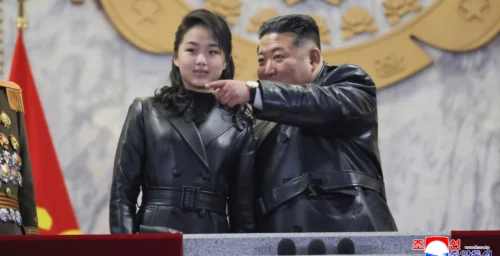
The political landscape of the Democratic People’s Republic of Korea (DPRK) has undergone a tectonic shift. Following the Ninth Party Congress held in February 2026, the Workers’ Party of Korea (WPK) has unveiled a sweeping set of revisions to its internal rulebook. These amendments, which represent the most significant restructuring of governing norms under Kim Jong Un’s tenure, signal a transition from charismatic rule toward a more rigid, institutionalized form of “monolithic” leadership.
Among the most discussed changes is the formal increase of the minimum age for joining the WPK from 18 to 20. While seemingly a minor administrative adjustment, geopolitical analysts suggest this shift has profound implications for the state’s succession planning, specifically concerning the role of Kim Jong Un’s daughter, who has been a prominent fixture in state media over the past several years.
Main Facts: A Restructuring of Party Norms
The recent revelations, detailed in a comprehensive report by the Institute for National Security Strategy (INSS)—a think tank affiliated with South Korea’s National Intelligence Service (NIS)—outline a party structure that is becoming increasingly centralized. The Ninth Party Congress, which served as the backdrop for these changes, functioned as a mechanism to solidify the ideological and administrative grip of the Kim family over the state apparatus.
The core of the revision focuses on the "monolithic leadership system." By codifying these changes into the party rulebook, the regime is effectively removing ambiguity from the governance structure. The decision to raise the age of party membership eligibility to 20 acts as a filter, ensuring that prospective party members have completed a specific phase of state-mandated education and military or labor service before they are permitted to enter the political fold.
This move reflects a broader trend in Pyongyang: the transformation of the state from a revolutionary entity into a bureaucratically entrenched dynasty. By tethering the party’s internal logic more tightly to the leader, Kim Jong Un is ensuring that any future transition—or ongoing management of his subordinates—is conducted through a framework that prioritizes the “Supreme Leader” above all other institutional entities.
Chronology: The Road to the Ninth Party Congress
To understand the weight of these revisions, one must examine the timeline of North Korea’s recent political evolution:
- 2022–2023: The emergence of Kim Jong Un’s daughter in the public eye marks a departure from North Korean tradition, which historically shielded the children of the leadership from public scrutiny until they were adults.
- January 2026: Preparations for the Ninth Party Congress are finalized, with state media emphasizing the need for "ideological purity" and "organizational discipline" in the face of external pressure.
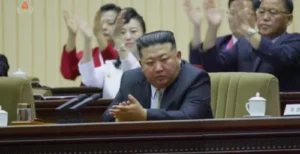
- February 2026: The Ninth Party Congress convenes in Pyongyang. During these sessions, Kim Jong Un delivers a keynote speech condemning “extreme negligence” in administrative duties, setting the stage for the rulebook overhaul.
- Late February 2026: Following the Congress, a massive military parade is held. Kim Jong Un and his daughter appear together, signaling the continuity of the “Paektu bloodline.”
- September 2026: The INSS releases its report, providing the first detailed look at the internal rulebook changes, specifically the age-limit adjustment for party membership.
Supporting Data and the Succession Question
The INSS report provides a crucial analytical lens through which to view the regime’s long-term strategy. By raising the age of entry to the WPK to 20, the regime is essentially delaying the formal political initiation of its youth.
For observers of the DPRK, the most pressing question is how this affects the status of Kim’s daughter. If the daughter is to assume a leadership role, she must eventually be integrated into the WPK’s high-ranking committees. By pushing back the age of membership, the regime may be attempting to synchronize her public maturation with the rigid requirements of the party. It suggests that the "succession track" is not being rushed; rather, it is being carefully calibrated to align with the new institutional standards Kim has established for the entire citizenry.
Furthermore, the data from the Ninth Party Congress indicates that the party has moved to tighten control over regional and local committees. By standardizing the membership age, the WPK is ensuring that every level of the party bureaucracy is populated by individuals who have been subjected to a longer duration of state indoctrination. This is not merely a bureaucratic change; it is a defensive measure intended to ensure that no individual—regardless of their proximity to the Kim family—can bypass the standard vetting processes of the party.

Official Responses and Global Analysis
Pyongyang’s official media, the Korean Central News Agency (KCNA), has framed these changes as a "glorious advancement in the democratic centralism" of the Workers’ Party. In the regime’s lexicon, these revisions are described as essential for preventing the "ideological rot" and “slackness” that Kim Jong Un has warned against in recent speeches.
Conversely, regional intelligence agencies have reacted with caution. The South Korean government views the Ninth Party Congress as a clear sign that the North is preparing for a long-term period of stability under the current leadership. The NIS, through the INSS report, emphasizes that the “monolithic” nature of the changes suggests that Kim Jong Un intends to rule for decades, and that he is building a party structure that is resilient enough to survive even if his health or personal status were to fluctuate.
International observers in Washington and Tokyo have largely echoed these sentiments, noting that the legislative changes in Pyongyang rarely happen by accident. The elevation of the party rules to a near-sacrosanct status indicates that North Korea is moving away from the era of “field inspections” and impulsive governance, shifting instead toward a model that mimics the organizational rigor of the Chinese Communist Party.
Implications: A More Rigid Future
The implications of these changes are twofold: domestic control and succession security.
1. Domestic Control
By raising the barrier to entry for the WPK, the regime is making party membership a more exclusive, and therefore more coveted, status. It reinforces the idea that the party is the ultimate arbiter of social and political advancement in North Korea. Those who reach the age of 20 and successfully join the party will have been thoroughly vetted by a system that now demands higher levels of adherence to the “monolithic” line.
2. Succession Security
The delay in the formal leadership track for the Kim family’s next generation suggests a desire for perfection. By aligning the daughter’s potential rise with the new, higher age threshold, the regime avoids the criticism of nepotism by making her path look like the result of adherence to the same rules that apply to the common citizen. It is a masterclass in legitimizing dynastic succession through the veneer of institutional rule.
3. The Future of the Ninth Congress Reforms
As the regime continues to implement these changes throughout the remainder of 2026 and into 2027, the world should expect to see further “purges” or “realignments” of existing party officials who do not meet these new, stricter standards. The Ninth Party Congress was not just a meeting; it was the start of a new era of governance in which the individual is subservient to the institution, and the institution is entirely subservient to the leader.
In conclusion, the restructuring of North Korea’s governing norms under the Ninth Party Congress represents a pivot toward a more sophisticated, institutionalized form of authoritarianism. Whether these changes will succeed in securing the longevity of the Kim dynasty remains to be seen, but one thing is certain: the rules of the game in Pyongyang have been rewritten, and the threshold for power has never been higher.
 Laily UPN
  Raul Delapena Setiawan
  Ammar Sabilarrohman
