
 By Laily UPN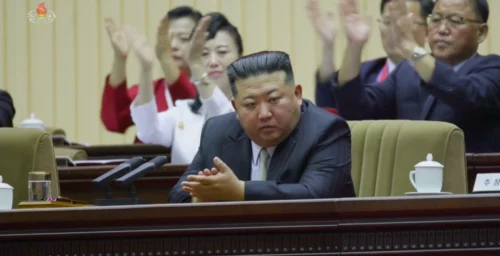
PYONGYANG — North Korean leader Kim Jong Un has officially signaled a major shift in the country’s domestic policy, declaring education to be “the most important state affair” during the opening of the 15th National Conference of Teachers. The event, held in Pyongyang this Wednesday, marks the first time in seven years that the country’s pedagogical leadership has convened on a national scale, signaling an urgent push by the ruling Workers’ Party to modernize the nation’s academic foundations amid ongoing economic and geopolitical pressures.
Addressing a hall filled with model educators, high-ranking party officials, and delegations of Chongryon (pro-Pyongyang) educators from Japan, Kim called for an “educational revolution in the new era.” His speech, which lasted several hours, underscored a strategic pivot toward human capital development as the primary vehicle for securing the future of the Democratic People’s Republic of Korea (DPRK).
Main Facts: A Blueprint for the New Era
The 15th National Conference of Teachers is not merely a ceremonial gathering; it serves as a critical policy-setting platform for the regime. According to state media reports released on Thursday, the central objective of the conference is to audit the efficacy of the Party’s current educational mandates and align pedagogical practices with the regime’s long-term developmental goals.
Kim Jong Un’s rhetoric at the opening ceremony was markedly ambitious. He emphasized that the survival of a socialist state in an increasingly technological global environment depends entirely on the quality of its youth. By labeling education the “most important state affair,” Kim is effectively elevating the Ministry of Education to the same priority level as the national defense and nuclear industries, which have historically dominated the country’s fiscal and political landscape.
Key components of the “educational revolution” discussed at the conference include:
- Technological Literacy: A renewed focus on integrating advanced digital tools and scientific methodology into the classroom.
- Ideological Consistency: Ensuring that all curriculum changes remain firmly tethered to the Workers’ Party’s core ideology.
- Teacher Empowerment: A call to elevate the social status and living conditions of educators, who the regime now acknowledges are the “engineers of the socialist future.”
Chronology: Seven Years of Educational Stasis
To understand the weight of this conference, one must look at the timeline of North Korea’s educational administration over the last decade.
- 2019–2021 (The Pandemic Gap): The original timeline for this conference was delayed by the global COVID-19 pandemic. During this period, North Korea implemented strict border closures, which severely disrupted the supply of educational materials and isolated the country’s academic research from international developments.
- 2022–2023 (The Push for Digitalization): Following the pandemic, the state began a tentative rollout of computer-aided instruction in major urban centers. However, reports indicated a lack of uniform implementation, leading to disparities between Pyongyang’s elite schools and provincial institutions.
- 2024 (The Preparatory Phase): Throughout the past year, the regime held a series of regional teacher workshops, gathering data on local infrastructure and pedagogical failures to prepare for this week’s national event.
- September 2026: The 15th National Conference of Teachers commences in Pyongyang, marking the formal launch of the new policy cycle.
The seven-year hiatus between the 14th and 15th conferences highlights the regime’s struggle to balance ideological purity with the practical necessity of modernizing its workforce to compete in a changing global economy.
Supporting Data: The Infrastructure of Learning
While specific statistics regarding North Korea’s educational budget remain classified, analysts suggest that the emphasis on this conference is driven by a decline in standardized test scores and a noted shortage of qualified STEM teachers in rural provinces.
According to historical data from state media, North Korea has been attempting to transition to a 12-year mandatory education system. The challenges identified by the regime include:
- Resource Allocation: A lack of electricity and internet connectivity in remote schools hinders the implementation of digital learning.
- Teacher Retention: Many talented teachers have drifted toward more lucrative roles in the state’s burgeoning tech and military sectors.
- Curriculum Modernization: The transition from rote memorization to a more "creative" and "analytical" pedagogical approach, which Kim Jong Un has advocated for, requires significant retraining of a teaching force long accustomed to rigid, traditional methods.
The conference is expected to produce a series of new directives aimed at digitizing textbooks and establishing a national network for remote teacher training, designed to bridge the gap between Pyongyang and the outer provinces.

Official Responses and Internal Sentiment
The atmosphere at the conference, as described by the Korean Central Television (KCTV), was one of profound loyalty and enthusiasm. Participants were seen applauding the leader, reflecting the high stakes involved in the event.
However, behind the scenes, the internal response from the teaching community is nuanced. While educators are optimistic about the potential for increased resources and better salary structures, there is an undercurrent of anxiety regarding the “revolution” in curriculum. Many teachers fear that the mandate to modernize will impose a heavier administrative burden without providing the necessary hardware—such as reliable computer labs or high-speed internet—to support the shift.
“The Party is asking for a revolution in the classroom,” said one analyst specializing in North Korean domestic affairs. “But a revolution requires materials. The success of this initiative will be measured not by the speeches made this week, but by the physical upgrades that reach the schools in the coming eighteen months.”
Implications: A Strategic Pivot?
The implications of this educational push are far-reaching. By prioritizing education, Kim Jong Un is attempting to build a sustainable, tech-literate workforce capable of navigating the 21st-century economic landscape.
Geopolitical Considerations
North Korea’s push for high-tech education is inextricably linked to its desire for self-reliance. As international sanctions restrict the import of advanced technology, the regime is betting on its own human capital to develop indigenous solutions for cybersecurity, software development, and industrial engineering. If successful, this move could slowly alter the country’s economic trajectory, moving away from simple manufacturing toward a more knowledge-based, albeit highly controlled, internal economy.
Domestic Stability
Education has always been the primary tool for social engineering in the DPRK. By refining the educational system, the regime is also tightening its grip on the socialization of the younger generation. The emphasis on “new era” education suggests that the Party is concerned about the impact of outside information—whether through smuggled digital media or the influence of the few elite who travel abroad—on the youth. By preempting these influences with a more engaging, technologically integrated, yet ideologically ironclad curriculum, the state hopes to insulate its youth from perceived subversive elements.
The Road Ahead
As the multi-day conference continues, observers will be watching for specific announcements regarding funding. Will there be a dedicated national fund for school hardware? Will the curriculum for university-level science and technology programs be overhauled to mirror international standards in research and development?
Ultimately, the 15th National Conference of Teachers is a clear signal that Kim Jong Un is looking beyond the immediate security threats of today to the long-term viability of his state. Whether this “educational revolution” can overcome the systemic limitations of a closed, sanction-heavy society remains one of the most significant questions in current North Korean affairs.
As the conference concludes, the delegates will return to their respective provinces with a clear set of mandates. The success of these directives will, in the eyes of the leadership, determine the success of the DPRK’s next decade. If education is truly the “most important state affair,” then the regime has staked its entire future on the classroom, setting the stage for a transformation that will be closely scrutinized by the international community for years to come.

 Nana Muazin
  Raul Delapena Setiawan
  Ammar Sabilarrohman
