
 By Muslim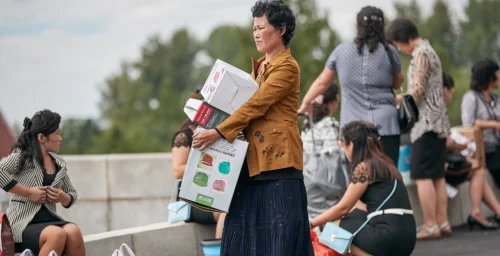
The flow of information from inside the Democratic People’s Republic of Korea (DPRK) has long been likened to peering through a frosted window. For decades, researchers, intelligence analysts, and humanitarian organizations relied on a singular, vital lifeline to understand the daily lives of ordinary North Koreans: the testimonies and survey data provided by defectors who successfully escaped the regime. However, a new study from the Korea Development Institute (KDI) warns that this window is rapidly darkening.
As the number of North Koreans reaching the South has fallen to record lows—exacerbated by the stringent border closures initiated during the COVID-19 pandemic—the pipeline of micro-level data has effectively dried up. This demographic shift has left the international research community struggling to track the evolution of North Korea’s informal economy, leaving scholars in the dark regarding how the average citizen survives, earns, and spends in an era of unprecedented state isolation.
Main Facts: The End of the "Defector-Data" Era
The core of the crisis lies in the methodology of North Korean studies. Because Pyongyang provides virtually no reliable, transparent, or verified macroeconomic statistics, the international community has leaned heavily on the experiences of those who have left. Surveys conducted by institutions like the Korea Development Institute (KDI) and Seoul National University’s (SNU) Institute for Peace and Unification Studies have historically provided the quantitative backbone for academic analysis of the North Korean jangmadang (informal markets).
According to the latest analysis by Bank of Korea economist Yongshin Cho, the sharp decline in new arrivals means that existing data sets are becoming increasingly stale. The "recency bias" of previous studies—which relied on interviewing defectors who had arrived within the previous 12 to 24 months—is no longer sustainable. Without a steady influx of new subjects, researchers cannot conduct the longitudinal or cross-sectional studies required to map changes in market prices, household income, or the impact of state-mandated economic policies.
A Chronology of Declining Access
To understand the current impasse, one must look at the timeline of events that decimated the data stream.
2011–2016: The Era of Relative Volume
Following the ascension of Kim Jong Un, the number of defectors arriving in South Korea initially remained steady, hovering between 1,000 and 1,500 per year. During this period, researchers could comfortably survey hundreds of individuals annually, allowing for statistically significant conclusions regarding the growth of private commerce and the fading influence of the state-run Public Distribution System (PDS).
2017–2019: The Tightening Grip
As Pyongyang increased border security and improved surveillance technology, the cost and danger of defection rose exponentially. The number of successful escapes began a noticeable downward trend, though researchers were still able to maintain a semblance of consistent data collection through small, targeted cohorts.
2020–2023: The Pandemic "Black Hole"
The COVID-19 pandemic served as the final blow. In early 2020, the DPRK implemented a "shoot-on-sight" policy along its borders, effectively sealing the country off from the outside world. The number of defectors reaching the South plummeted to near-zero levels. This period represents the most significant "information gap" in the history of post-war Korean studies.
2024–Present: The "Stale Data" Crisis
Today, the academic community is grappling with the reality that any survey conducted in 2024 is largely based on the experiences of people who left North Korea years ago—or who have spent years in transit. The economic landscape of 2018 or 2019 bears little resemblance to the hyper-controlled, isolated, and digitally monitored state that exists in 2026.
Supporting Data: The Quantitative Void
The reliance on defector testimony was never an ideal solution, but it was the only one available. Economists like Yongshin Cho have highlighted that the lack of new data prevents the adjustment of critical economic models.
- Micro-Level Trends: Previously, surveys captured the rise of mobile payment systems or the proliferation of foreign currency in local markets. With current survey sample sizes falling below the threshold for statistical validity, these micro-trends remain invisible.
- The "Survivor Bias" Problem: As the demographics of the few who do manage to escape shift—often toward older individuals or those from specific border regions—the data becomes less representative of the broader North Korean population, which is increasingly urbanized and tech-savvy.
- Comparison Inconsistency: Without yearly updates, researchers cannot compare the "pre-pandemic" market price of staples like rice or corn against modern prices. This makes it impossible to assess the current rate of inflation or the success of recent state attempts to re-centralize the economy.
Official Responses and Academic Concerns
The academic community has reacted with significant alarm. The KDI, as a government-funded institution, is under pressure to provide policy-relevant analysis to the South Korean government. However, as the report by Yongshin Cho suggests, there is a growing consensus that providing "annual updates" on the informal economy is currently an exercise in guesswork rather than science.

"We are essentially flying blind," says one anonymous researcher familiar with the KDI report. "We are forced to rely on satellite imagery and the occasional leak from state media, but those sources tell us what the regime wants us to see. They don’t tell us how the average family in Hyesan is putting food on the table. The defector surveys were the only way to bypass the state’s propaganda."
Human rights groups and NGOs have also voiced concerns. They argue that the lack of data not only hinders economic analysis but also masks the human cost of the regime’s isolationist policies. Without the ability to document the humanitarian impact of market restrictions, international bodies have less leverage to pressure the North Korean government for humanitarian access.
Implications: The High Cost of the "Information Blackout"
The implications of this data desert are profound, touching on geopolitics, national security, and humanitarian aid.
1. Miscalculation of Regime Stability
If the international community underestimates or overestimates the fragility of the North Korean economy due to lack of data, it risks making grave policy errors. A misunderstanding of how the market economy sustains the regime could lead to ineffective sanction policies that hurt the population while leaving the elite untouched.
2. The Erosion of Policy Intelligence
For the South Korean Ministry of Unification, this gap is a direct threat to strategic planning. If policymakers do not understand how North Koreans are living, they cannot craft effective "soft power" initiatives or prepare for contingencies regarding potential reunification or regime collapse.
3. The Digital Transition
While physical movement has halted, some researchers argue that the next phase of data collection must move to the digital realm. However, this comes with its own set of risks, as the North Korean regime has significantly hardened its internal cybersecurity. The inability to communicate with people inside via cell phones or social media—as was possible in the past—further compounds the difficulty of obtaining primary data.
4. A New Methodology Required
The KDI report implicitly calls for a paradigm shift. If traditional defector surveys are no longer viable, the research community must pivot toward:
- Big Data and Remote Sensing: Utilizing higher-resolution satellite imagery to detect changes in market activity, night-light intensity, and infrastructure development.
- Synthetic Data Modeling: Using artificial intelligence to simulate economic conditions based on historical data points and known regime economic mandates.
- Regional Intelligence: Increased reliance on information from Chinese border regions, where trade, though restricted, remains a more reliable proxy for North Korean economic activity than official state reports.
Conclusion: Adapting to the Dark
The decline in defection is not merely a logistical hurdle for researchers; it is a fundamental transformation of the relationship between North Korea and the outside world. As the border stays closed and the regime doubles down on digital surveillance, the "human bridge" that allowed us to understand the North Korean experience is crumbling.
Researchers, policymakers, and international observers are now faced with an uncomfortable reality: the "information age" has, for North Korea, been replaced by an era of profound obscurity. Unless new, innovative methods of data acquisition are developed, the international community must accept that our understanding of the North Korean economy will remain, for the foreseeable future, a fragmented and fading portrait of a reality that no longer exists.
The KDI’s warning serves as a clarion call: the tools of the past are no longer sufficient for the challenges of the future. We must prepare for a prolonged period of uncertainty, where the most important questions about North Korea’s future may remain unanswered until the windows are finally allowed to open once more.

 Ammar Sabilarrohman
  Pevita Pearce
  Nana Wu
