
 By Sagoh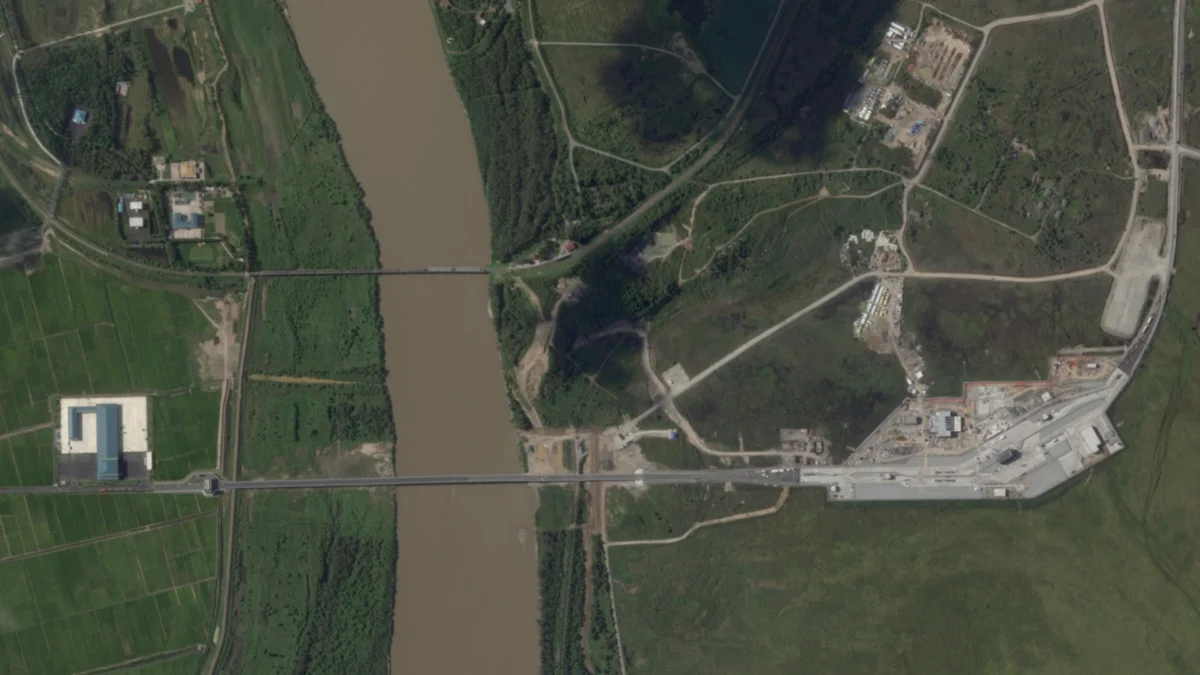
In a development signaling the deepening integration of their logistical and political ties, Russia and the Democratic People’s Republic of Korea (DPRK) are marking the official completion of their first-ever cross-border vehicle bridge spanning the Tumen River. The milestone, celebrated via a remote ceremony on Monday, represents the culmination of 18 months of intensive construction and high-stakes diplomacy between Moscow and Pyongyang.
The bridge, a critical component of a broader 4.7-kilometer border infrastructure project, is designed to modernize the movement of goods and personnel between the two nations. While the existing "Korea-Russia Friendship Bridge"—a railway crossing dating back to the late 1950s—has long served as the primary, and indeed only, physical link between the two countries, this new road crossing introduces a vital artery for vehicular traffic, effectively bypassing the constraints of rail-only transit.
The Ceremony and Diplomatic Significance
The completion ceremony was characterized by a high-level, albeit remote, diplomatic presence. Russian Prime Minister Mikhail Mishustin joined the event from Moscow via video link, while his North Korean counterpart, Pak Thae Song, presided over the proceedings from the DPRK side of the border.
The event was attended by an array of senior Russian officials, underscoring the strategic importance Moscow places on this infrastructure. Attendees included Minister of Natural Resources Alexander Kozlov, Minister of Transport Andrei Nikitin, Minister for the Development of the Russian Far East and Arctic Alexei Chekunkov, and Primorsky Krai Governor Oleg Kozhemyako.
The bridge has been officially christened the "Yakov Novichenko Bridge," named after the Soviet officer who famously saved North Korea’s founding leader, Kim Il Sung, during an assassination attempt in 1946. By bestowing this name upon the bridge, the two nations are emphasizing the historical roots of their relationship, framing the new infrastructure not merely as a utilitarian road, but as a monument to a long-standing "blood-forged" alliance.
Chronology of a High-Speed Infrastructure Project
The trajectory of the Tumen River bridge project has been marked by rapid development, bureaucratic hurdles, and significant cost escalations.
- November 2024: Early signs of preparatory work emerged as Russia initiated site surveys and initial earthworks.
- February 2025: The Russian government officially allocated approximately $100 million for the project, tasking the firm TonnelYuzhStroi with the primary construction contract.
- April 2025: Prime Ministers Mishustin and Pak formally inaugurated the construction project via a remote ceremony.
- March–June 2026: Throughout the spring of 2026, the project saw a flurry of activity, including the installation of primary structural supports.
- April 2026: A secondary ceremony was held to celebrate the physical linking of the bridge spans across the Tumen River.
- June 19, 2026: The original target date for completion—coinciding with the second anniversary of the historic summit between Vladimir Putin and Kim Jong Un—passed without a grand opening due to project delays.
- August 2026: Official reports indicated that the project was only 65% complete, leading to a revised timeline for September.
- September 2026: The bridge is officially declared complete, transitioning from a construction site to a finalized facility.
Supporting Data: Capacity and Infrastructure Specifications
The "Yakov Novichenko Bridge" is far more than a simple river crossing; it is part of an integrated, high-capacity border checkpoint system. Spanning approximately one kilometer over the water, the structure acts as the centerpiece of a 4.7-kilometer border crossing zone that includes sophisticated terminal facilities on both the Russian and North Korean banks.
According to specifications provided by the Russian Ministry of Transport, the facility is designed for significant throughput:
- Lane Capacity: The Russian checkpoint features 10 distinct lanes to manage traffic flow.
- Vehicle Throughput: The bridge is designed to process up to 300 vehicles per day.
- Pedestrian Throughput: The terminal facilities are equipped to handle a capacity of 2,850 people daily.
While construction on the North Korean side reached a state of near-completion by the summer of 2026, the Russian side required additional time to finalize auxiliary buildings and high-tech security installations. Recent expenditures, including an additional $6 million allocated for advanced canopy systems at the checkpoint, highlight the push to make this border crossing a modern, all-weather facility.
Investigations and Financial Transparency
Despite the celebratory nature of the project, independent investigations by NK News and NK Pro have raised questions regarding the fiscal management of the bridge. Data suggests that the initial $100 million budget has at least doubled since the project’s inception.
Furthermore, the selection of TonnelYuzhStroi as the primary contractor has drawn scrutiny. While presented as a standalone firm, evidence suggests the company served as a front for a large Chechen construction conglomerate. The opaque nature of the contracting process, combined with the soaring costs, suggests that the project may have been prioritized for political speed rather than fiscal efficiency.
Official Responses and Strategic Implications
The Russian government has framed the project as a vital step in "strengthening the economic potential" of the Far East and improving trade efficiency. By facilitating road-based transport, the bridge removes the logistical bottlenecks that have historically hampered the movement of goods between the two neighbors.
However, analysts note that the project carries profound geopolitical implications. The expansion of land-based connectivity between Russia and the DPRK occurs against the backdrop of increased international isolation for both regimes. The bridge effectively creates a permanent, high-capacity channel that could be used for the transfer of goods that bypass maritime monitoring or existing air-traffic surveillance.
The Question of Operational Readiness
Despite the fanfare surrounding the completion ceremony, the official date for the bridge’s opening to civilian or commercial traffic remains undisclosed. Officials from both sides have been tight-lipped regarding the "go-live" date, leading to speculation about whether the bridge is intended for immediate economic use or if it serves a more specialized, state-directed purpose.
Conclusion
The completion of the Yakov Novichenko Bridge is a defining moment in the modern history of Russia-DPRK relations. It is a physical manifestation of the strategic partnership formalized by Putin and Kim in 2024. Whether this bridge becomes a genuine corridor for cross-border commerce or remains a specialized strategic asset, its construction in record time—despite significant cost and logistical challenges—underscores the commitment of Moscow and Pyongyang to link their futures.
As the two nations move toward the next phase of the bridge’s life cycle, the international community will be watching closely to see how this new infrastructure alters the regional status quo on the Korean Peninsula and the broader Northeast Asian theater. For now, the bridge stands as a testament to the endurance of a partnership that, regardless of global pressure, continues to build, invest, and connect.


 Ammar Sabilarrohman
  Pevita Pearce
  Nana Wu
