
 By Layla Zulfa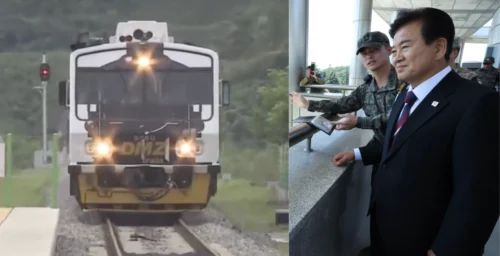
In a move that signals a nuanced shift in Seoul’s approach to inter-Korean relations, the South Korean Unification Ministry has unveiled an annual budget proposal that balances infrastructure investment with a significant recalibration of its North Korean human rights initiatives. The center-piece of this proposal is an allocation of approximately $17.5 million dedicated to the restoration of a vital 9.3-kilometer section of the historic Gyeongwon Line, a railway artery once intended to connect Seoul to the North Korean port city of Wonsan.
While the infrastructure project suggests a long-term vision for eventual connectivity, the administration’s decision to slash funding for the North Korean Human Rights Foundation by 90% has sparked immediate debate. This dual-track approach—investing in physical connectivity while downsizing institutional mechanisms for human rights oversight—reflects the complex, often contradictory pressures facing the South Korean government as it navigates the volatile landscape of the Korean Peninsula.
Main Facts: The Gyeongwon Line Investment
The Gyeongwon Line, which historically spanned 223.7 kilometers from Seoul to Wonsan, serves as a poignant symbol of the division of the Korean Peninsula. The Unification Ministry’s latest budget request, totaling $740.4 million (1 trillion won) for the upcoming fiscal year—a modest 0.91% increase over the previous cycle—includes the earmarking of $17.5 million for the restoration of a 9.3-kilometer segment.
Construction on this specific section is slated to commence in the coming year, with officials projecting a completion date of 2029. This segment represents more than just a logistical task; it is a physical commitment to the concept of trans-Korean integration. However, the project exists in a state of geopolitical limbo. Without a corresponding willingness from Pyongyang to engage in infrastructure cooperation, the line remains a "railway to nowhere," serving as a testament to the South’s unilateral desire to maintain the physical potential for reunification despite the current absence of cross-border dialogue.
Chronology: A History of Interrupted Connectivity
The story of the Gyeongwon Line is one of construction, destruction, and aspiration. To understand the significance of the upcoming 2029 completion date, one must examine the timeline of the railway’s fractured existence:
- 1914: The Gyeongwon Line is completed, establishing a vital trade and passenger link between Seoul and Wonsan.
- 1945: Following the end of the Second World War and the subsequent division of the peninsula, the railway is severed at the 38th parallel.
- 1950–1953: The Korean War renders the line largely inoperable, with tracks destroyed and infrastructure left to decay in the demilitarized zone.
- 2000s: During the "Sunshine Policy" era, inter-Korean summits trigger a flurry of optimism. Efforts to reconnect the Gyeongui and Donghae lines gain momentum, and there is talk of revitalizing the Gyeongwon Line.
- 2018: Following the Panmunjom Declaration, South Korea conducts a joint field survey with North Korea to assess the condition of rail lines, briefly raising hopes for comprehensive restoration.
- 2019–2023: Stalled diplomacy and rising tensions lead to a suspension of cross-border cooperation.
- 2026 (Upcoming): The South Korean government initiates the restoration of the 9.3-kilometer section, setting a five-year timeline for completion.
Supporting Data: Budgetary Realignment
The ministry’s budget proposal is telling not only for what it includes but for what it de-prioritizes. The $17.5 million investment in the Gyeongwon Line must be viewed alongside the broader fiscal strategy:
The Human Rights Foundation Cut
The most controversial element of the budget is the 90% reduction in funding for the North Korean Human Rights Foundation. Established to monitor and document human rights abuses in the North, the foundation has struggled with political gridlock since its inception. By drastically reducing its funding, the Ministry has signaled a move away from institutionalized, government-led advocacy toward potentially more discreet or alternative methods of addressing the humanitarian situation in the North.
Budgetary Overview
- Total Ministry Budget: $740.4 million (1 trillion KRW).
- Year-over-Year Increase: 0.91%.
- Infrastructure Allocation: $17.5 million (focused on the 9.3km Gyeongwon Line segment).
- Human Rights Foundation Adjustment: 90% reduction compared to previous fiscal allocations.
This fiscal shift suggests a prioritization of "tangible" assets—roads, rails, and infrastructure—that can be maintained independently, over "soft power" institutions that require cross-border cooperation or political consensus within the National Assembly.
Official Responses and Political Context
The Unification Ministry has maintained that the restoration project is a prudent measure to ensure readiness for potential future engagement. A ministry official stated, "Our role is to prepare for the day when the geopolitical climate shifts. Investing in our own infrastructure ensures that we are not caught unprepared should the North decide to re-engage with the international community."

However, opposition lawmakers have been vocal in their criticism. Critics argue that the 90% cut to the human rights foundation represents a retreat from the South’s moral obligations. "To spend millions on a railway that no train can currently cross, while stripping funding from the very foundation meant to advocate for the oppressed people of North Korea, is a profound misplacement of priorities," remarked a prominent human rights activist during a recent parliamentary hearing.
The administration counters that the Foundation has been largely ineffective due to the ongoing refusal of the North to participate in any collaborative mechanisms. By reallocating these funds, they claim to be focusing on areas where the South can exert unilateral control and provide humanitarian aid through independent channels.
Implications: The Long Road to 2029
The decision to complete the 9.3-kilometer section by 2029 carries significant long-term implications for the Korean Peninsula:
1. The "Waiting Room" Strategy
By continuing to build, South Korea is essentially keeping the "waiting room" open. It is a signal to both the domestic population and the international community that Seoul remains committed to the principle of eventual reunification, even if the current diplomatic outlook is bleak.
2. Strategic Autonomy
The shift away from joint human rights foundations and toward infrastructure that exists solely within South Korean territory reflects a desire for "strategic autonomy." The government is focusing on projects that it can finish without needing a signature or a handshake from Pyongyang, thereby avoiding the constant frustration of stalled joint projects.
3. Diplomatic Leverage
While the railway is currently disconnected, a fully restored southern segment provides South Korea with a ready-made bargaining chip. If the North ever signals a desire for economic integration or infrastructure development, Seoul will be able to demonstrate that it has already done the heavy lifting on its side of the border.
4. The Human Rights Vacuum
The de-funding of the human rights foundation leaves a significant void. The international community will be watching closely to see if this represents a permanent abandonment of the issue or merely a tactical shift in how the South Korean government intends to address the North’s human rights record. The risk, as noted by observers, is that the focus on infrastructure may overshadow the plight of the North Korean people, potentially alienating the international coalition that supports Seoul’s policy of principled engagement.
As 2029 approaches, the Gyeongwon Line will remain a silent, metallic metaphor for the Korean condition—a track waiting for a train that, for the moment, has no permission to arrive. Whether this project serves as a bridge to a unified future or remains a costly relic of unfulfilled aspiration will depend entirely on the unpredictable winds of Northeast Asian diplomacy.
 Ammar Sabilarrohman
  Pevita Pearce
  Nana Wu
