
 By Nana Wu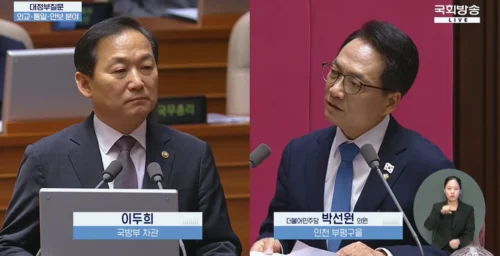
By [Author Name/News Desk]
September 12, 2026
The South Korean government has officially rebuffed growing calls from conservative political factions to pursue a nuclear-armed posture, asserting that it remains committed to the current framework of extended deterrence with the United States. During a high-stakes parliamentary interpellation session on Thursday, Vice Minister of National Defense Lee Doo-hee categorically dismissed the prospect of Seoul seeking its own nuclear arsenal, deploying U.S. tactical nuclear weapons on the peninsula, or entering into a formal nuclear-sharing agreement with Washington.
The declaration comes at a time of heightened regional volatility, as North Korea continues to accelerate its ballistic missile program and rhetoric. While the defense ministry maintains a firm stance against domestic nuclear armament, it has simultaneously promised a “decisive and overwhelming” response to any provocations along the heavily fortified border.
Main Facts: The Government’s Official Stance
During the session at the National Assembly, Vice Minister Lee Doo-hee faced intense scrutiny regarding the ROK’s security strategy. Representing Defense Minister Ahn Gyu-back—who is currently in Croatia to oversee the finalization of a significant defense contract involving 18 Chunmoo multiple-launch rocket systems—Lee addressed the growing anxiety among lawmakers regarding the North’s nuclear advancements.
Lee emphasized that the current alliance-based strategy, centered on the U.S. "nuclear umbrella," remains the most effective deterrent. "The government is not considering the deployment of U.S. tactical nuclear weapons, the development of our own indigenous nuclear capabilities, or the pursuit of a nuclear-sharing arrangement," Lee stated.
The Vice Minister clarified that the Ministry of National Defense (MND) believes that introducing nuclear assets onto the peninsula would not only destabilize the security environment but also undermine the Nuclear Non-Proliferation Treaty (NPT) commitments that have bolstered South Korea’s international standing for decades. Instead, the government is prioritizing the enhancement of the "Three-Axis System"—a strategic framework comprising the Kill Chain preemptive strike system, the Korea Air and Missile Defense (KAMD), and the Korea Massive Punishment and Retaliation (KMPR) plan.
Chronology: The Escalation of the Nuclear Debate
The debate over South Korea’s nuclear options has intensified over the past 24 months, fueled by a series of North Korean policy shifts and perceived gaps in the regional security architecture.
- September 2025: Pyongyang formalizes its status as a nuclear-armed state in its constitution, signaling an end to any remaining ambiguity regarding its intent to utilize nuclear force in a potential conflict.
- January 2026: Following a series of short-range ballistic missile tests, the People Power Party (PPP) begins to publicly debate the efficacy of the U.S. extended deterrence model, with several senior members suggesting that the "nuclear-for-nuclear" balance is shifting in favor of the North.
- May 2026: A leaked internal defense assessment suggests that the ROK must consider "all possible options" to match the North’s tactical nuclear capabilities, triggering a firestorm of speculation in both Seoul and Washington.
- September 8, 2026: PPP floor leaders issue a formal statement urging the administration to reconsider its policy on nuclear sharing, citing a "deterrence deficit" following reports of increased cooperation between Pyongyang and external military partners.
- September 10, 2026: Opposition Democratic Party lawmaker Park Sun-won challenges the Ministry of Defense during parliamentary questioning, demanding a clear answer on whether the government has secretly engaged in talks regarding tactical nuclear deployment.
- September 11, 2026: Vice Minister Lee Doo-hee officially closes the door on these proposals, reaffirming the ROK’s commitment to non-proliferation.
Supporting Data: Regional Security and the "Chunmoo" Factor
While the government rejects nuclear weapons, it is aggressively pursuing conventional military modernization. The ongoing trip of Defense Minister Ahn Gyu-back to Croatia is emblematic of this shift. By exporting the Chunmoo rocket launcher system, South Korea is not only strengthening its domestic defense industry but also cementing its role as a key supplier of advanced conventional weaponry to NATO-aligned nations.
Strategic analysts point out that South Korea’s conventional military expenditure is among the highest in the world relative to GDP. Data from the Defense Acquisition Program Administration (DAPA) indicates that ROK defense exports have surged by over 40% since 2024. This, the government argues, provides the "firm response" capability required to deter the North without the risks associated with nuclear proliferation.
Furthermore, satellite imagery and intelligence reports suggest that North Korea’s production of tactical nuclear warheads is reaching a scale that poses a direct threat to South Korean infrastructure. The ROK military’s intelligence briefings note that Pyongyang has moved beyond testing to the operational deployment of these assets, which has necessitated the acceleration of the KAMD system.

Official Responses: A House Divided
The debate has created a distinct rift between the ruling administration and parts of the conservative legislative bloc.
The PPP Perspective: Proponents of a nuclear-armed South Korea argue that the United States’ security guarantees are subject to the whims of domestic American politics. They point to the possibility of future isolationist shifts in Washington as a primary reason for Seoul to secure its own nuclear insurance policy. "We cannot afford to leave our survival solely in the hands of foreign leaders," a senior PPP spokesperson stated in a press release earlier this week.
The Democratic Party Position: Lawmaker Park Sun-won, who initiated the recent questioning, has voiced concerns that even discussing nuclear options invites international sanctions and destroys the diplomatic leverage South Korea holds. The Democratic Party generally advocates for a return to inter-Korean dialogue, arguing that the nuclear debate only serves to further isolate the peninsula and increase the risk of accidental escalation.
The Ministry of Defense: The MND maintains that the "Washington Declaration"—the 2023 agreement that established the Nuclear Consultative Group (NCG)—is sufficient. The NCG provides South Korea with an unprecedented level of insight into U.S. nuclear planning, which the ministry argues effectively bridges the "deterrence gap" without the need for physical nuclear assets on ROK soil.
Implications: Regional Security and Diplomatic Fallout
The rejection of nuclear sharing by the Vice Minister carries significant implications for both domestic and international policy.
1. The U.S.-ROK Alliance
By explicitly ruling out nuclear sharing, the Seoul government has signaled to the White House that it remains a compliant and reliable partner in the NPT framework. This is expected to ease tensions in Washington, where policymakers have been concerned that a nuclear-armed South Korea would trigger a regional arms race, potentially forcing Japan to follow suit and destabilizing the Pacific.
2. The China Factor
Beijing has historically viewed any increase in South Korean nuclear capacity as a direct threat to its security interests. By maintaining its non-nuclear stance, Seoul avoids a further breakdown in relations with China, its largest trading partner. However, the promise of a "firm response" to border provocations still leaves room for friction, particularly if the ROK increases its military footprint in the Yellow Sea.
3. The North Korean Response
Pyongyang is likely to interpret this rejection as a sign of weakness or as evidence that the ROK is fully subservient to U.S. policy. Experts warn that the North may use this as a pretext for further "salami-slicing" tactics—small-scale, incremental provocations that stay below the threshold of full-scale war but serve to test the ROK’s resolve and the limits of the U.S. security guarantee.
4. Domestic Political Consequences
For the current administration, the issue is far from settled. With general elections on the horizon, the "nuclear question" will likely remain a central theme in public discourse. If the North continues to escalate, the pressure on the government to adopt a more hawkish stance—perhaps including the permanent rotation of U.S. strategic assets like nuclear-capable bombers and submarines—will only intensify.
Conclusion
As South Korea navigates the complex waters of the 21st-century geopolitical landscape, the government’s refusal to pursue a nuclear arsenal stands as a testament to its commitment to the existing global non-proliferation regime. However, the intense scrutiny from opposition lawmakers highlights a deep-seated public anxiety. The path forward for Seoul will require a delicate balance: continuing to project sufficient conventional strength to deter aggression while maintaining the diplomatic and strategic restraint necessary to avoid a nuclear catastrophe. For now, the "nuclear option" remains firmly off the table, but the debate that brought it to the fore is far from over.



 Layla Zulfa
  Lina Irawan
