
 By Jia Lissa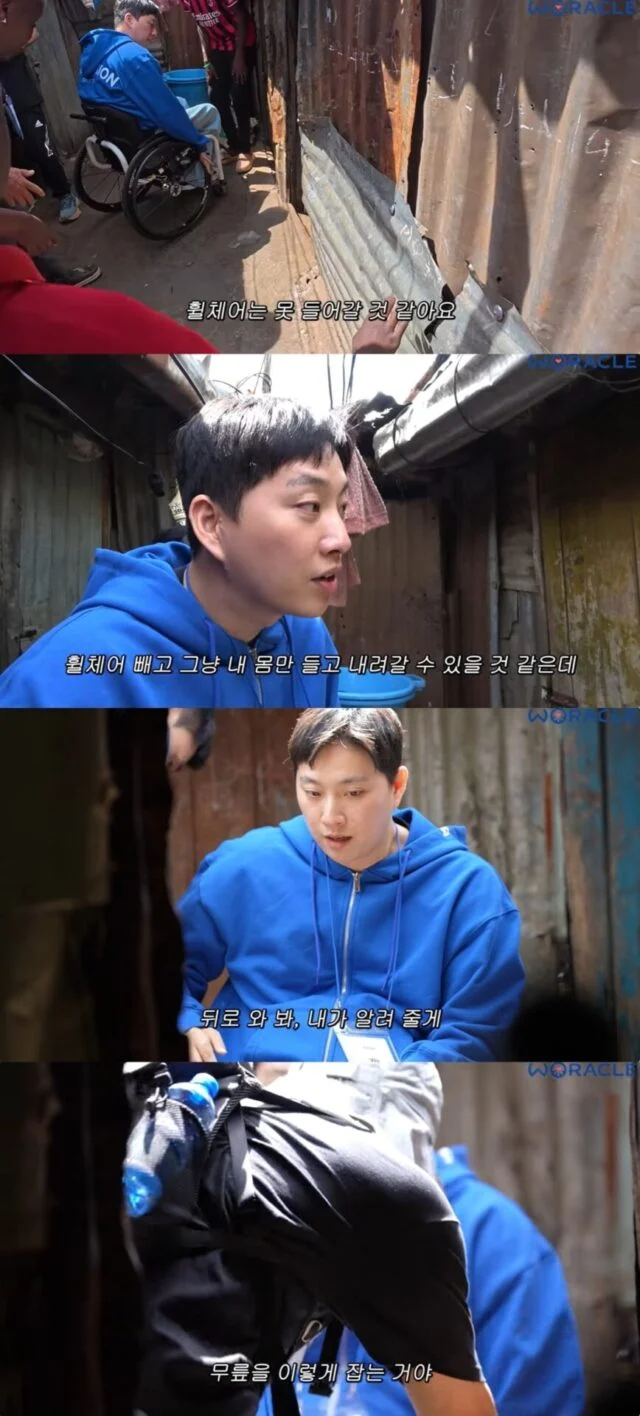
The public discourse surrounding prominent South Korean YouTuber and disability advocate Park We has taken a sharp turn as critics revisit his past overseas volunteer work in the wake of a recent, highly polarized controversy involving a fall accident on a KTX train. Park, who has built a significant following through his channel Weracle by sharing his life as a person with quadriplegia, currently finds himself at the center of a multifaceted debate regarding the ethics of content creation, the expectations placed on disability advocates, and unverified allegations concerning his personal history.
While Park We has remained largely silent since the release of CCTV footage depicting his fall while disembarking from a high-speed train, the digital community has begun scrutinizing his previous public appearances and humanitarian efforts. Most notably, a video documenting his October 2023 trip to Kenya has resurfaced, sparking a divide between those who view his actions as inspirational and those who now characterize them as an undue burden on others.
The Kenya Volunteer Mission: Context and Content
In October 2023, the Weracle YouTube channel uploaded a documentary-style video featuring Park We and his wife, singer and actress Song Jieun, as they embarked on a humanitarian mission to Kenya. The trip was organized in collaboration with a non-governmental support organization aimed at providing aid to impoverished communities. The footage primarily focused on the couple’s visit to a slum area, where they sought to interact with and support local children living in extreme poverty.
The video highlights the significant physical challenges Park faced while navigating an environment largely inaccessible to wheelchair users. In the footage, Park is seen attempting to traverse narrow, unpaved, and uneven roads. Due to the lack of ramps and the presence of steep stairs, members of the volunteer group and local residents were required to physically lift Park’s wheelchair or carry him to ensure he could reach the designated locations.
In one specific segment that has become a point of contention, Park is seen providing detailed instructions to those assisting him. Before entering a residence with a difficult entryway, Park suggested, "I think I can go down by lifting only my body without the wheelchair." He then guided the volunteers on the safest method to transport him, telling one man, "Brother! Look, you hold the knees like this," and instructing another behind him to "Hold like this, that’s right!" He further cautioned his helpers to be "careful with your feet and your head" to prevent injury during the process.
Shift in Public Sentiment: From Inspiration to Criticism
At the time of its initial release, the Kenya volunteer video was met with overwhelming praise. Viewers commended the couple for their dedication to global service despite Park’s physical limitations. However, the atmosphere shifted dramatically following a more recent incident involving Korea’s national railway operator, KORAIL.
On September 21, 2024, Park We released CCTV footage of an accident in which he fell while attempting to exit a KTX train. Park’s commentary accompanying the video suggested that the incident was a result of inadequate accessibility measures and a lack of proactive assistance from railway staff. This sparked an immediate backlash from a segment of the public who argued that Park was displaying a sense of "entitlement." Critics suggested that the fall may have been avoidable had he followed standard safety protocols or waited for specialized assistance, rather than focusing on filming content.
This shift in perception has bled into the re-evaluation of the Kenya trip. Modern critics have voiced "uncomfortable" opinions on online forums and social media platforms. Some netizens have argued that the trip was counterproductive, with one commenter stating, "They went there not to volunteer but to receive help." Others questioned the necessity of the trip, suggesting that "they could have just donated money" or that "volunteers must have worked twice as hard" to accommodate Park’s presence in a slum environment.
Chronology of Recent Events
The current controversy is the result of a rapid succession of events that have placed Park We’s public image under intense pressure:
- October 2023: Park We and Song Jieun travel to Kenya for volunteer work. The resulting video is initially received with high acclaim for its humanitarian message.
- May 2024: Park We and Song Jieun announce their marriage, further elevating their status as a "power couple" in the Korean entertainment and social media landscape.
- September 21, 2024: Park We uploads the KTX fall accident footage. The video aims to highlight accessibility issues but instead triggers a wave of criticism regarding safety and perceived entitlement.
- Late September 2024: As the KTX controversy grows, anonymous allegations surface online accusing Park We of past misconduct, including claims of school violence and a period spent in a juvenile detention center. These claims remain unverified.
- October 2024: Critics begin re-examining the 2023 Kenya video, using it as evidence to support claims that Park’s advocacy often requires excessive labor from others.
Supporting Data: Accessibility and the "Barrier-Free" Movement
The debate surrounding Park We coincides with a broader national discussion in South Korea regarding the "Barrier-Free" movement and the "Act on Guarantee of Promotion of Convenience of Persons with Disabilities, the Aged, Pregnant Women, and Nursing Mothers."
According to data from the Ministry of Health and Welfare, South Korea has made significant strides in urban accessibility, with over 90% of public buildings in major cities now meeting basic accessibility standards. However, the railway system, particularly older stations and certain KTX models, continues to be a point of friction. KORAIL reports suggest that while "wheelchair lift" services are available at all major stops, they require prior reservation or a waiting period, which some advocates, including Park, argue limits the spontaneity and independence of disabled travelers.
In the context of the Kenya trip, the data on international volunteerism suggests that physical participation is often prioritized by organizations to foster empathy and raise awareness, even if the logistical costs are higher. However, the "voluntourism" critique—the idea that such trips benefit the volunteer’s image more than the recipients—is a well-documented sociological phenomenon that critics are now applying to Park’s case.
Official Responses and Unresolved Allegations
To date, Park We has not issued a formal statement addressing the specific criticisms regarding the Kenya video or the more serious allegations of past school violence. His management and representatives have also remained quiet, a move that some PR experts suggest may be an attempt to let the news cycle move on, while others warn it could allow negative narratives to solidify.
The allegations of school violence and juvenile detention are particularly damaging in the South Korean cultural context, where "cancel culture" frequently targets public figures based on their past behavior. In recent years, several high-profile celebrities and athletes have seen their careers end abruptly due to verified accounts of bullying. In Park’s case, the lack of evidence has not stopped the spread of rumors, which have been amplified by the existing frustration over the KTX incident.
Analysis of Implications for Disability Advocacy
The Park We controversy highlights a complex challenge for disability advocates who use social media as their primary platform. On one hand, Park has been instrumental in humanizing the experience of paralysis and pushing for better infrastructure in South Korea. On the other hand, the transition from "advocate" to "influencer" often requires the creation of dramatic or emotionally charged content, which can sometimes alienate the public if perceived as performative.
Observers note that the backlash against the Kenya video reflects a broader societal fatigue with influencer culture. When Park is seen being carried through a slum, supporters see a man refusing to let his disability limit his spirit of service. Critics, however, see a logistical nightmare that diverted resources away from the actual mission. This dichotomy illustrates the "double-edged sword" of being a public figure with a disability: the same actions that inspire one group can be interpreted as a demand for special treatment by another.
Broader Impact on the "Weracle" Brand
The "Weracle" brand—a portmanteau of "We" and "Miracle"—was built on the foundation of overcoming adversity and spreading positivity. The current wave of criticism threatens the core of this brand identity. If the public continues to perceive Park’s actions as self-serving rather than altruistic, the efficacy of his advocacy may be permanently diminished.
Furthermore, the involvement of Song Jieun adds a layer of celebrity scrutiny. As a former member of a popular K-pop group, her association with the controversy brings in a wider demographic of commenters and increases the stakes for their joint public image.
As the situation evolves, the focus remains on whether Park We will break his silence. A transparent explanation of the KTX incident and a direct address of the past allegations could potentially de-escalate the situation. Conversely, continued silence may lead to further "digging" by netizens into his past content, potentially uncovering more moments that can be reframed in a negative light.
The case of Park We serves as a significant case study in the intersection of disability rights, social media influence, and the volatile nature of public opinion in the digital age. It underscores the difficulty of maintaining a consistent public persona when the line between personal struggle and public advocacy becomes blurred by the demands of content production. For now, the "Miracle" that Park We sought to share with the world is being tested by a reality of intense public scrutiny and unresolved questions.

