
 By Nila Kartika Wati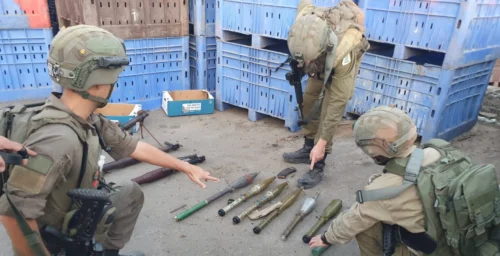
By International Affairs Desk
In a landmark legal development that underscores the deepening nexus between global rogue states and non-state militant actors, a U.S. federal court has ordered North Korea and Iran to pay approximately $487 million in damages. The ruling, handed down by the U.S. District Court for the Eastern District of Virginia on September 8, 2026, marks a significant escalation in the legal pursuit of state sponsors of terrorism, holding both Pyongyang and Tehran accountable for their material support of groups that targeted American citizens across the Middle East and Africa.
The judgment, stemming from the case Al-Khalili vs. DPRK and Iran, provides a rare judicial glimpse into the sophisticated logistical and military cooperation between the world’s most isolated regime and the Islamic Republic.
Main Facts: A Convergence of Malign Influence
The litigation centered on the role of state-sponsored support in seven specific terrorist attacks occurring between 2019 and 2023. According to the court’s findings, North Korea and Iran provided more than mere rhetorical support; they supplied the essential hardware, technical expertise, and tactical training that allowed groups such as Hamas and Hezbollah to conduct lethal operations against U.S. personnel.
Judge Liam O’Grady’s ruling highlighted evidence suggesting that Pyongyang’s involvement went beyond the sale of conventional munitions. The court cited intelligence indicating that North Korean engineers provided specialized expertise in tunnel-building—a cornerstone of Hamas’s tactical defensive and offensive strategy—and assisted in the modification of rocket propulsion systems used by Iranian-backed proxies.
For the 47 plaintiffs—comprised of victims and their surviving family members—the ruling is a vindication of their long-standing claims that the violence they endured was not merely the work of isolated militants, but the result of a coordinated, state-backed industrial complex.
Chronology of Attacks: The Path to Litigation
The court documented a harrowing timeline of violence that spanned multiple theaters of conflict. The following incidents were instrumental in the court’s determination of liability:
- 2019 (Iraq): A series of rocket attacks targeting forward operating bases in Iraq, which the court linked to Iranian-supplied launchers that utilized metallurgical components consistent with North Korean manufacturing standards.
- 2020 (Syria): An IED attack on a logistics convoy involving American contractors, which forensic analysis suggested utilized detonator technology developed in tandem with Iranian training manuals and DPRK-sourced materials.
- 2021 (Kenya): A complex assault on an airfield housing U.S. personnel. Intelligence reports presented to the court indicated that the attackers utilized small arms and specialized explosives that had been transited through Iranian supply chains, with evidence of North Korean markings on ordnance.
- 2022 (Syria): Increased activity by militant proxies using advanced, precision-guided anti-tank systems, which the court identified as variants of systems Pyongyang has previously exported to the Middle East.
- 2023 (Regional): A final wave of coordinated strikes that prompted the immediate filing of the Al-Khalili suit, as victims sought to hold the primary sponsors of these proxy networks accountable for the structural support that made such attacks possible.
Supporting Data: The Logistics of Terror
The evidentiary burden of the case relied heavily on forensic analysis of recovered weaponry and declassified signals intelligence.
The Pyongyang-Tehran Pipeline
For decades, the "axis of cooperation" between North Korea and Iran has been a subject of intense scrutiny by the UN Security Council and Western intelligence agencies. The court heard testimony from defense analysts who detailed how Pyongyang acts as a "technological supplier" for Tehran’s broader geopolitical ambitions. By utilizing North Korea’s advanced tunnel-boring technology, militant groups have been able to create "underground cities," complicating U.S. and allied efforts to neutralize threats via airpower.
Financial Damages
The $487 million judgment is categorized into compensatory and punitive damages. While collecting on such a judgment against sovereign states—particularly those under heavy international sanctions—remains a daunting task, the court’s ruling provides a legal framework to seize frozen assets held by these nations in international accounts, should they become available.
Official Responses: A Diplomatic Chill
The reaction to the ruling has been predictably stark, reflecting the deep diplomatic fissures between Washington and the two defendant nations.

The U.S. Position
The Department of Justice and the State Department have signaled that this ruling serves as a cornerstone for future efforts to use the American legal system as a tool of foreign policy. "The court has made it clear that distance and proxy-shields do not provide immunity for those who facilitate the murder of Americans," a spokesperson for the Department of Justice stated following the ruling.
The Silence of Pyongyang and Tehran
Neither the Democratic People’s Republic of Korea (DPRK) nor the Islamic Republic of Iran issued formal legal responses to the court. Historically, both nations have maintained that such U.S. courts lack jurisdiction over their sovereign actions. In Pyongyang’s case, state media typically dismisses such rulings as "hostile fabrications" intended to tarnish the reputation of the state. Tehran, meanwhile, continues to frame its support for militant proxies as a legitimate defense against "hegemonic Western influence."
Implications: The New Era of Legal Warfare
The Al-Khalili ruling carries profound implications for international law and global security.
1. The Precedent of "Joint Liability"
By holding both North Korea and Iran jointly liable, the court has signaled that the traditional model of attributing terrorist acts to a single state is no longer sufficient. The legal precedent set here suggests that in an era of "networked terrorism," courts will look at the entire supply chain of violence. Future plaintiffs may now use this ruling as a blueprint to name secondary state sponsors in civil litigation.
2. Challenges in Enforcement
Critics of such rulings argue that while they provide symbolic justice, the practical application is limited. Because North Korea and Iran have virtually no assets reachable by U.S. courts, the plaintiffs face a long, uphill battle to collect. However, legal experts point out that the ruling adds significant weight to the "maximum pressure" campaigns of the U.S. government, as it justifies the continued seizure of assets by third-party nations that comply with U.S. sanctions regimes.
3. Diplomatic Repercussions
The ruling will undoubtedly complicate any future back-channel negotiations between the U.S. and these nations. With a $487 million judgment looming, the political cost for any administration to engage in sanctions relief or normalization talks with Pyongyang or Tehran has significantly increased. The ruling effectively ties the hands of diplomats, as any concession would now have to account for the legal rights of the victims.
4. Intelligence-Driven Litigation
This case represents a shift in how victims of terrorism approach the courts. By integrating declassified intelligence and expert testimony on military hardware, the plaintiffs’ legal team successfully navigated the "state secrets" barrier that often prevents such cases from proceeding. This indicates a future where lawyers and intelligence analysts work more closely to expose the material ties that sustain global terrorism.
Conclusion
The decision of the U.S. District Court for the Eastern District of Virginia is more than a financial penalty; it is a definitive judicial record of the illicit cooperation between two of the world’s most sanctioned regimes. As the geopolitical landscape continues to fragment, the Al-Khalili ruling serves as a stark reminder that the tentacles of state-sponsored terror reach far beyond the immediate blast zones of the Middle East and Africa.
For the families of the 47 victims, the ruling provides a measure of closure. For the global community, it serves as a critical, documented warning that the nexus between North Korean military hardware and Iranian regional strategy is a tangible, lethal threat—one that can no longer be ignored by the halls of international justice.
As the legal proceedings conclude, the international focus will shift to whether this judgment can serve as a catalyst for greater global cooperation in identifying, tracking, and dismantling the financial and logistical networks that connect Pyongyang, Tehran, and the groups that operate in their shadow.


 Nana
Nana  Suro Senen
  Nana Wu
