
 By Suro Senen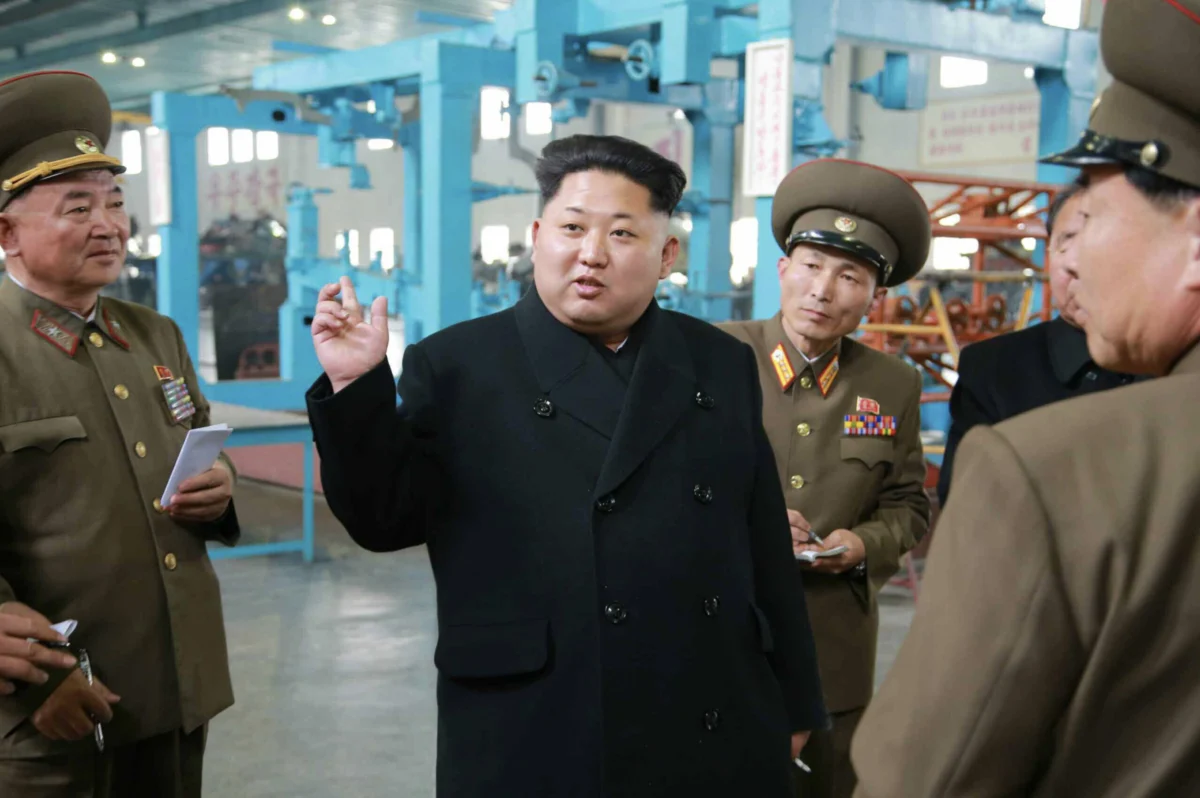
By Editorial Staff
The global testing, inspection, and certification giant Société Générale de Surveillance (SGS) has issued a categorical denial regarding claims made by North Korean state media and official trade portals that the company maintains a physical representative office in Pyongyang. This discrepancy, highlighted by recent internal investigations, has sparked a debate regarding the Democratic People’s Republic of Korea’s (DPRK) efforts to project an image of normalized economic engagement as it attempts to claw back its international trade standing following years of pandemic-induced isolation.
The Discrepancy: Pyongyang’s Narrative vs. Corporate Reality
The tension centers on information circulated via North Korean trade portals, which have frequently alluded to the presence of international quality assurance firms to bolster the credibility of their export goods. For a nation under stringent United Nations and unilateral sanctions, the association with a globally recognized Swiss entity like SGS—which is synonymous with verification and standards—is a valuable commodity. It provides a veneer of legitimacy that suggests North Korean products meet international standards, potentially easing the path for cross-border trade with skeptical international partners.
However, when confronted with these assertions, SGS was swift to distance itself from the regime. "SGS does not maintain a representative office or other corporate presence in North Korea. Any information suggesting otherwise is not accurate," a spokesperson for the company’s corporate communications department stated in response to inquiries from NK News.
The company further emphasized its commitment to international law, noting that it maintains rigorous internal controls to ensure full compliance with global sanctions regimes and export-control regulations. This public rebuttal serves as a stark reminder of the "information gap" that often exists between the claims of the DPRK’s state-managed media apparatus and the operational realities of multinational corporations.
Chronology of Claims and Counter-Claims
To understand the weight of this denial, one must look at the historical context of North Korea’s attempts to align itself with international commerce.
- Pre-2015: During periods of relative diplomatic thaw, North Korea often sought technical assistance from European firms to modernize its industrial certification processes. These early interactions likely provided the foundation for the current, exaggerated narratives regarding foreign corporate presence.
- April 2015: Kim Jong Un’s inspection of the Machine Plant managed by Jon Tong Ryol, as documented in the Rodong Sinmun, highlighted the regime’s focus on "space power" and industrial modernization. During this era, North Korea ramped up efforts to present its domestic manufacturing as "world-class," often citing foreign technical partnerships that were—at best—transient or indirect.
- 2020–2022: The COVID-19 pandemic caused a near-total collapse in North Korean trade as the borders were sealed. During this period, the mention of international corporate partners largely vanished from state discourse.
- 2024–2025: As North Korea began to cautiously re-engage with neighboring markets and Russia, the state’s trade portals resumed promoting various "international certifications." It is within this window that the claims regarding SGS resurfaced.
- Early 2026: Following inquiries regarding these claims, SGS issued its formal denial, effectively debunking the narrative of a permanent office in the North Korean capital.
The Strategic Value of "Legitimacy"
Why would the DPRK risk a public correction by a global firm? Analysts suggest that for a pariah state, the "illusion of normalcy" is a strategic asset. By claiming that firms like SGS are present in Pyongyang, the regime aims to accomplish two goals:
- Consumer Trust: Providing a sense of quality control to potential buyers in emerging markets who may be wary of the safety or compliance of North Korean manufactured goods.
- Sanctions Evasion: By embedding their export process within the rhetoric of international standards, the regime attempts to mask the origins of its goods or facilitate transactions that might otherwise be flagged by international banks and customs authorities.
The disconnect between the DPRK’s claims and the reality of the business environment is a hallmark of the regime’s economic policy, where the truth is often subordinate to the utility of the propaganda.

Implications for Global Trade and Sanctions Compliance
The implications of this incident extend beyond a simple corporate correction. For multinational firms operating in sensitive jurisdictions, the North Korean attempt to co-opt their brand identity poses a significant reputational risk.
Reputational and Legal Risks
If a corporation’s name is used without authorization to facilitate trade, it could inadvertently lead to investigations by the UN Panel of Experts or national treasury departments. SGS’s rapid and public denial is not just a clarification; it is a defensive move designed to shield the company from accusations of sanctions violations. Compliance officers worldwide are now likely reviewing their supply chains to ensure that no "certification" documents originating from the DPRK are falsely bearing the SGS logo.
The "Normalization" Effort
North Korea’s current export recovery is fragile. As the country attempts to rebuild its trade volume—particularly with Russia and parts of the Global South—the pressure to appear "sanctions-compliant" is immense. By leveraging the reputation of established Swiss or European firms, the regime hopes to bypass the "reputational discount" that normally applies to North Korean exports. However, as demonstrated by the SGS case, the digital age makes it increasingly difficult for the regime to maintain these falsehoods in the face of direct scrutiny.
Supporting Data: The Fragility of DPRK Exports
Data from the Korea Risk Group and other monitoring bodies indicate that North Korean exports, while showing signs of recovery, remain deeply tethered to a narrow set of commodities and a limited list of regional partners.
The reliance on these exports is necessitated by the acute shortage of foreign currency reserves, exacerbated by the long-term impact of the pandemic and the subsequent border closures. The desire to "legitimize" these exports is not merely a bureaucratic exercise; it is a matter of national economic survival. However, as the global community moves toward more stringent digital verification and blockchain-based supply chain tracing, the DPRK’s traditional methods of "propaganda-led" trade facilitation are becoming increasingly ineffective.
Conclusion: A Cautionary Tale
The incident involving SGS serves as a microcosm of the challenges inherent in engaging with North Korea’s economy. The regime’s tendency to inflate its international standing by claiming the presence of reputable foreign entities is a tactic that creates a dangerous environment for global business.
For companies, the lesson is clear: verify everything. The "representative office" in Pyongyang exists only in the pages of North Korean state media. For the international community, the incident reinforces the necessity of maintaining strict vigilance, as the regime continues to adapt its strategies to bypass the wall of sanctions surrounding its economy.
As North Korea looks toward a future of renewed trade, it must confront the reality that its greatest obstacle to economic integration is not just the sanctions themselves, but the lack of trust created by its own state-sponsored misinformation. Until the regime can provide transparency that matches the reality of international corporate standards, its claims will continue to be met with the skepticism they deserve.

 Ammar Sabilarrohman
  Pevita Pearce
  Nana Wu
