
 By Ammar Sabilarrohman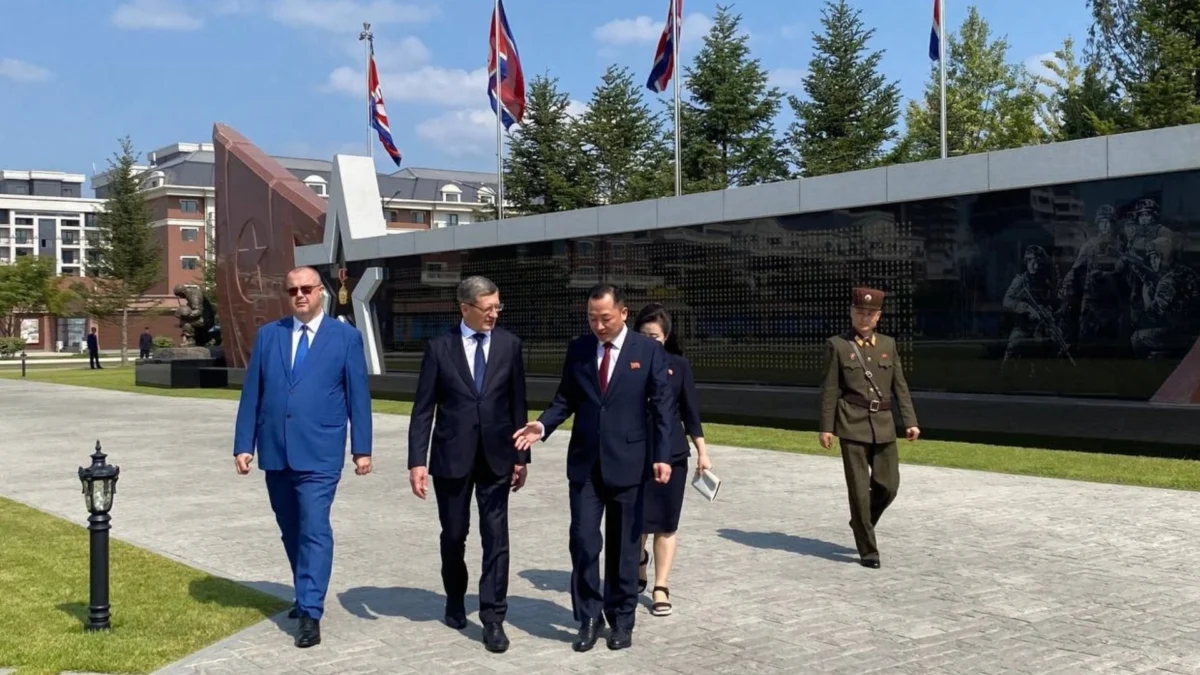
By Editorial Staff
The diplomatic landscape of the Korean Peninsula shifted significantly this past Saturday as Andrei Podelyshev, the newly appointed Russian Ambassador to the Democratic People’s Republic of Korea (DPRK), touched down in Pyongyang. His arrival marks the end of a nearly year-long vacancy at the top of the Russian diplomatic mission following the sudden passing of his predecessor in the North Korean capital.
Podelyshev’s arrival, confirmed via the Russian Embassy’s official social media channels and state media outlet TASS, comes at a pivotal juncture in Moscow-Pyongyang relations. As Russia continues to navigate the complexities of the war in Ukraine and North Korea seeks to solidify its position against Western isolation, the appointment of a seasoned diplomat signals that the Kremlin views its partnership with the Kim Jong Un regime as a cornerstone of its strategic pivot to the East.
Main Facts: A Diplomatic Arrival
Ambassador Podelyshev arrived at Pyongyang International Airport accompanied by his wife, arriving on a direct Nordwind Airlines flight from Moscow. The logistical ease of this transit underscores the increasingly robust transport links being established between the two nations, bypassing traditional international air corridors.
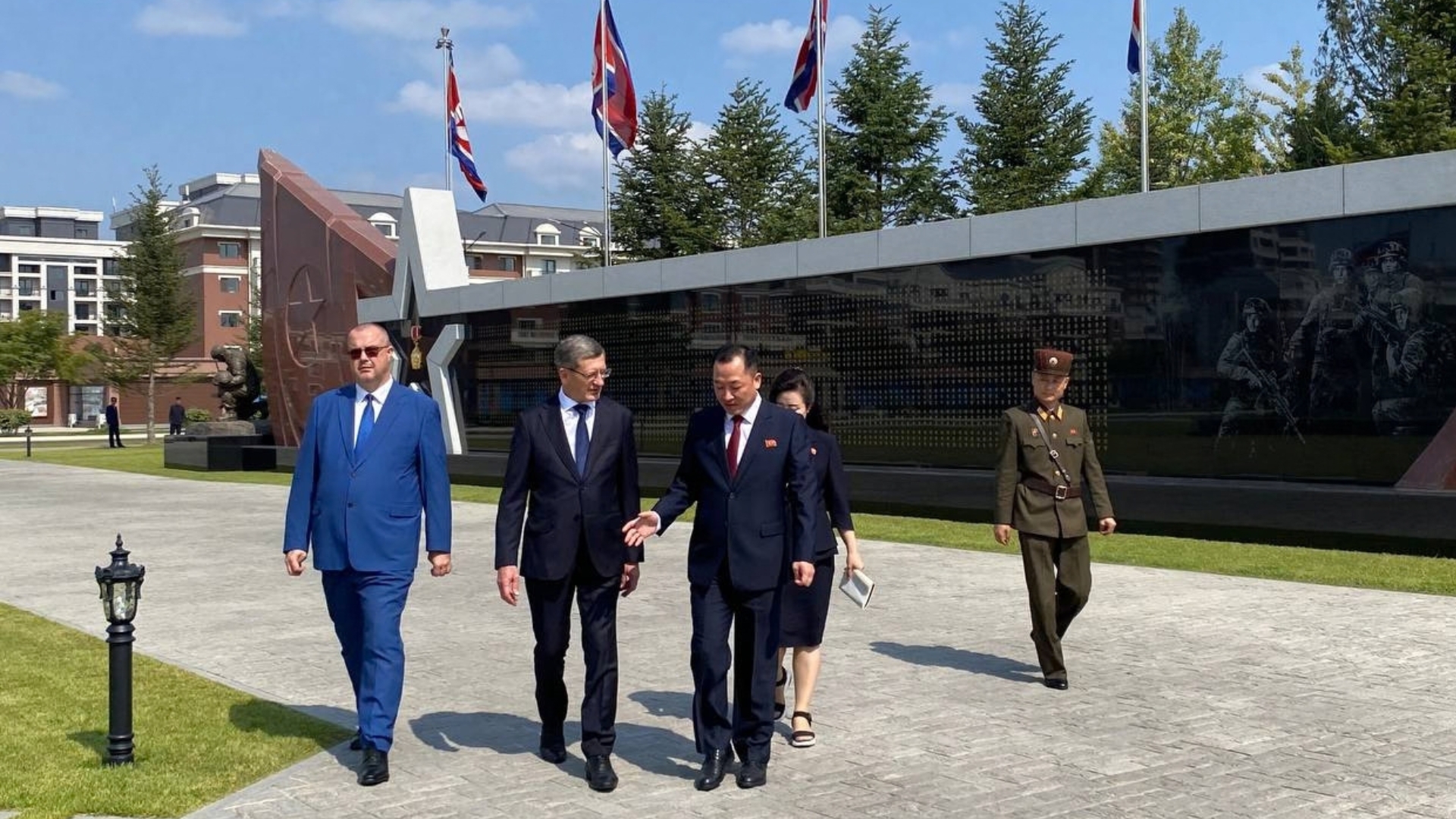
In a move intended to project both continuity and ideological alignment, Podelyshev did not proceed to the embassy for administrative briefings. Instead, he made an immediate detour to the Liberation Monument—a storied site dedicated to the Soviet soldiers who fought alongside Korean forces during the liberation of the peninsula in 1945. Shortly thereafter, he visited a newly inaugurated memorial complex dedicated to DPRK soldiers who have reportedly participated in combat operations in Russia’s Kursk region. This sequence of events serves as a powerful visual narrative: that the "blood alliance" forged in the 20th century is being actively revitalized in the 21st.
Chronology of the Diplomatic Void and Resurgence
To understand the weight of this appointment, one must examine the timeline of the recent diplomatic transition and the rapid acceleration of bilateral ties:
- Late 2025: The Russian diplomatic mission in Pyongyang faces a significant setback following the unexpected death of the sitting Ambassador. This created a period of administrative limbo, though daily diplomatic functions were maintained by senior mission staff.
- Early 2026: Russia and North Korea intensify military cooperation, with intelligence reports suggesting an increase in the exchange of technical expertise and personnel.
- Summer 2026: Moscow formally nominates Andrei Podelyshev for the post. His background suggests a focus on security cooperation and regional logistics.
- September 26, 2026: Podelyshev conducts his first official acts on North Korean soil, focusing heavily on memorializing combat cooperation.
- September 27, 2026: Official diplomatic credentials are processed, signaling the beginning of his formal tenure.
The period between the passing of the previous ambassador and Podelyshev’s arrival was characterized by a "deep freeze" in formal representation, yet paradoxically, the substance of the Russia-DPRK relationship reached a fever pitch during this time. The vacancy did not slow the flow of bilateral high-level visits or the integration of military logistics.
Supporting Data: The Logistics of an Alliance
The arrival of a new ambassador is rarely just a diplomatic formality; it is a signal of the scope of the mission. Recent data suggests that the mission Podelyshev is now heading is fundamentally different from the missions of the previous decade.
Transport and Infrastructure
The use of direct Nordwind Airlines flights reflects a bypass of international sanctions. Since early 2026, the volume of cargo and personnel traffic between Vladivostok and Pyongyang has increased by an estimated 40% compared to the previous year.
Economic Indicators
While official trade figures remain opaque, independent satellite analysis shows a marked increase in rail activity at the Khasan-Tumangang border crossing. Reports indicate that this infrastructure is being utilized not only for the delivery of humanitarian aid—as often claimed by Pyongyang—but for the transfer of industrial raw materials and components necessary for North Korea’s satellite and missile programs.
Military Integration
The mention of the "Kursk memorial" by the Russian Embassy is perhaps the most significant data point of the week. It confirms the existence of a DPRK military contingent on Russian soil, acting in a combat capacity. This represents a qualitative shift: from a buyer-seller relationship to a formal military partnership.
Official Responses and Rhetoric
The Kremlin has kept its commentary on the appointment brief but pointed. A spokesperson for the Russian Foreign Ministry noted that "Ambassador Podelyshev is tasked with deepening the comprehensive strategic partnership as outlined by the bilateral treaty signed in 2024."
Conversely, the North Korean Ministry of Foreign Affairs, through the Korean Central News Agency (KCNA), welcomed the new ambassador by emphasizing the "invincible spirit of the two peoples." The rhetoric employed by Pyongyang frequently references the "anti-imperialist struggle," a clear attempt to frame the Russia-DPRK alignment as a global vanguard against U.S.-led hegemony.
In Washington and Seoul, the reaction has been one of heightened concern. U.S. State Department officials reiterated that "the deepening of military cooperation between Russia and the DPRK is a direct violation of multiple UN Security Council resolutions." However, the lack of immediate, actionable leverage has left the international community largely in the position of observer.
Implications for Global Security
The arrival of Andrei Podelyshev carries three major implications for the geopolitical order:
1. The Normalization of Combat Cooperation
By publicly acknowledging the memorial for DPRK soldiers in Kursk, the Russian embassy is stripping away the pretense of "technical advice" or "humanitarian support." This is a new era where North Korean soldiers are essentially part of the Russian military supply chain. The implication is that this partnership is no longer hidden; it is now a foundational pillar of Russian foreign policy.
2. A Challenge to the Sanctions Regime
Podelyshev arrives as the primary representative of a permanent member of the UN Security Council who has effectively decided that sanctions against North Korea are an obstacle to be bypassed. His tenure will likely be defined by the creation of "sanction-proof" trade routes and financial mechanisms that could serve as a blueprint for other nations seeking to evade Western economic pressure.
3. The Future of the Korean Peninsula
For South Korea, the presence of an emboldened Russian Ambassador in Pyongyang is a strategic nightmare. It provides Kim Jong Un with a "security umbrella" that renders the threat of conventional sanctions and diplomatic isolation less potent. With Russia now a vested interest in the survival and stability of the DPRK regime, the window for denuclearization talks has effectively closed for the foreseeable future.
Conclusion
Andrei Podelyshev’s arrival in Pyongyang is not merely a staffing change; it is the physical manifestation of a realignment of global powers. By choosing to honor the combat ties of the past as his first official act, he has set a clear tone for his ambassadorship.
The Russia-North Korea relationship has evolved from a cold-war relic into a modern, functioning military-industrial complex. As Podelyshev settles into the embassy, the international community must grapple with a new reality: the "Axis" of Moscow and Pyongyang is no longer a rhetorical flourish, but an operational fact that will dictate the stability of Northeast Asia for years to come.
The diplomatic community will be watching closely to see if Podelyshev acts as a traditional diplomat or as an architect of a deeper, more dangerous integration. Given the current trajectory, the latter seems the far more likely path.


 Ali Ikhwan
  Pevita Pearce
  Nila Kartika Wati
