
 By Lina Irawan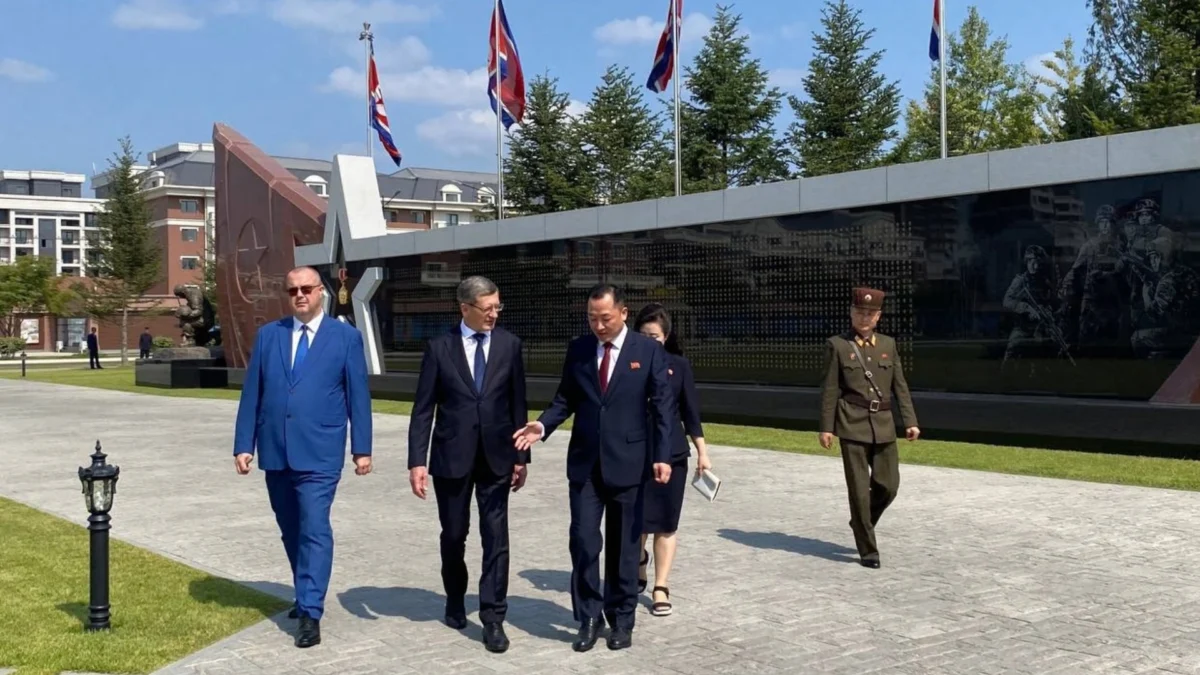
PYONGYANG — The diplomatic landscape of the Korean Peninsula shifted perceptibly this weekend as Andrei Podelyshev, the newly appointed Russian Ambassador to the Democratic People’s Republic of Korea (DPRK), touched down in Pyongyang. His arrival marks a critical juncture in the burgeoning partnership between Moscow and Pyongyang, occurring nearly a year after the sudden passing of his predecessor in the North Korean capital.
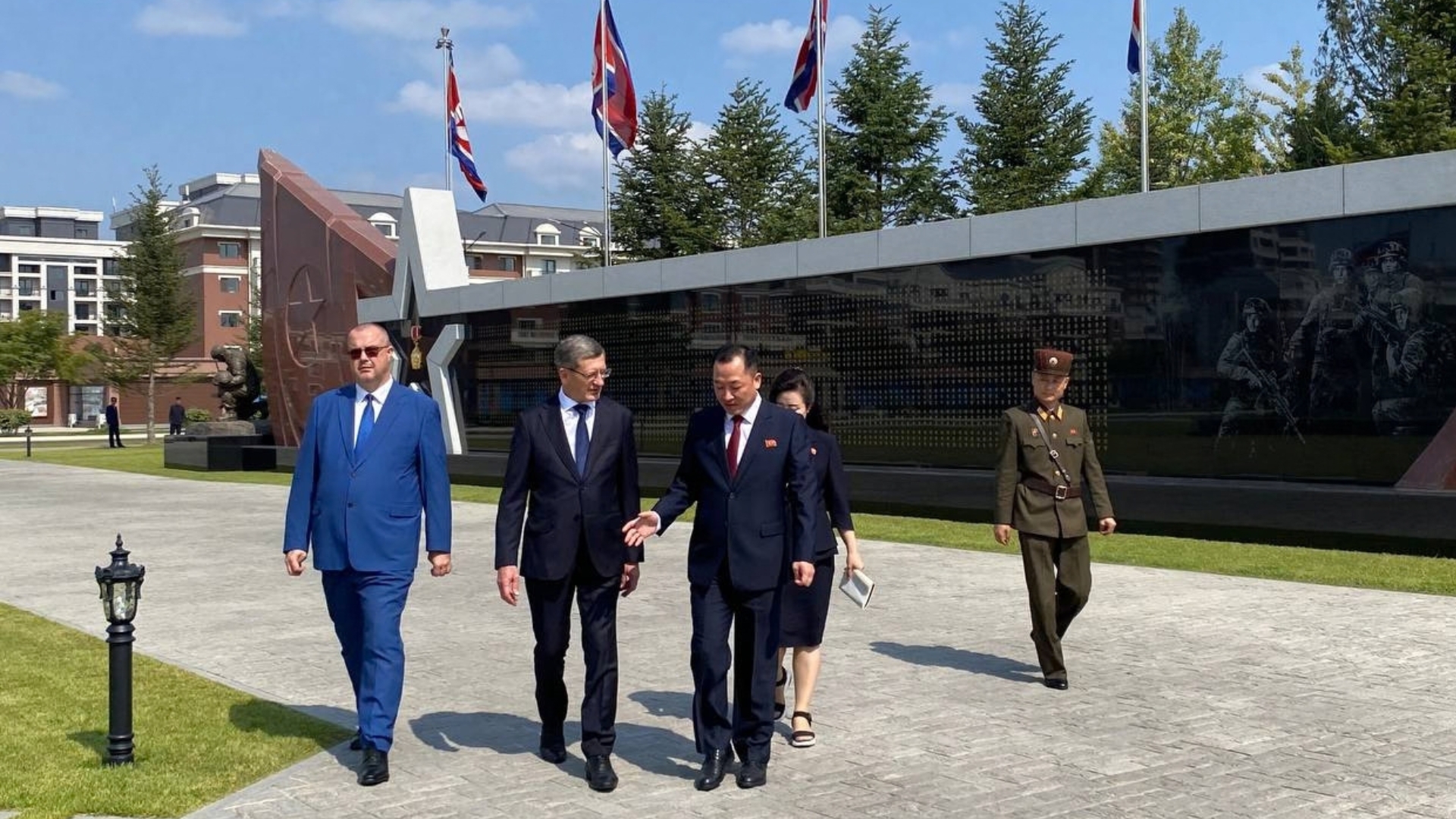
Podelyshev’s arrival, confirmed by the Russian Embassy via social media channels on Saturday, was characterized by high-symbolic gestures that underscore the ideological and military rapprochement between the two nations. Upon stepping off a direct Nordwind flight from Moscow, the diplomat eschewed a period of rest, opting instead to immediately pay homage to the historical ties that have long defined the Russia-DPRK relationship.
I. Main Facts: A Diplomatic Transition Under Intense Scrutiny
The appointment of Andrei Podelyshev comes at a time when the geopolitical alignment between Russia and North Korea is at its most intimate since the Cold War. His arrival follows a period of administrative uncertainty following the death of the previous Russian ambassador, Alexander Matsegora, who had served as a pillar of bilateral relations for nearly a decade.
Podelyshev arrived accompanied by his wife, signaling an intent to establish a long-term diplomatic footprint in Pyongyang. The logistical ease of his arrival—facilitated by a direct flight from Moscow—is itself a testament to the deepening transport and infrastructure links that have been quietly expanded over the last 24 months.
Immediately following his arrival, Podelyshev proceeded to the Liberation Monument, a site dedicated to Soviet soldiers who perished during the liberation of Korea from Japanese colonial rule. His itinerary was marked by a secondary, highly symbolic visit to a new memorial complex in Pyongyang dedicated to DPRK soldiers who reportedly fought in Russia’s Kursk region. This inclusion, observed by observers as a nod to the modern-day "combat ties" between the two nations, highlights the evolution of the relationship from historical memory to contemporary military cooperation.
II. Chronology: From Stagnation to Strategic Synergy
The trajectory of Russia-DPRK relations over the last three years has been one of exponential growth, moving from peripheral contact to a comprehensive strategic partnership.
- 2022–2023: The Great Pivot. As Russia found itself increasingly isolated from Western markets following the invasion of Ukraine, Moscow began to look toward Pyongyang not just as a political ally, but as a potential supplier of industrial and military goods.
- September 2023: Kim Jong Un’s high-profile summit with Vladimir Putin at the Vostochny Cosmodrome served as the catalyst for a new era of cooperation, formalizing the transfer of munitions and technical assistance.
- Late 2025: The death of Ambassador Alexander Matsegora left a void in the diplomatic pipeline, leading to a period of interim management while Moscow vetted a successor capable of navigating the heightened stakes of the alliance.
- September 2026: The arrival of Ambassador Podelyshev signifies that Moscow is ready to resume full-scale diplomatic engagement, with a specific focus on implementing the "Comprehensive Strategic Partnership" treaty ratified earlier this year.
III. Supporting Data: The Infrastructure of Cooperation
The "combat ties" mentioned by Ambassador Podelyshev are not merely rhetorical. According to satellite imagery and intelligence reports analyzed by the Korea Risk Group and various international monitors, the physical connectivity between the two nations has increased significantly.
The Nordwind Connection
The use of a Nordwind Airlines flight—a carrier frequently associated with Russian state-sanctioned travel—highlights the bypass of international air traffic restrictions. These direct flights have become the primary artery for the movement of high-level delegations, technical advisors, and, as many Western analysts suspect, military equipment.
The Kursk Memorial
The establishment of a memorial complex in Pyongyang for DPRK soldiers who served in the Kursk region is a significant data point. It provides public confirmation of the deployment of North Korean personnel to Russian territory. This integration of human capital—whether in the form of labor, military personnel, or technical observers—suggests a level of mutual reliance that exceeds the traditional "supplier-client" dynamic seen in the past.
IV. Official Responses and Diplomatic Posturing
The Russian Embassy in Pyongyang has been explicit in its messaging: this is not a business-as-usual appointment. The Embassy’s Telegram channel emphasized the "inviolable bond" between the two nations, framing the visit to the war memorials as a prerequisite for the ambassador’s duties.
"The history of our common struggle against aggression is the foundation upon which we build our future security," the Embassy stated in a post released shortly after Podelyshev’s arrival.
In Pyongyang, the response has been characteristically muted in the state media but highly ceremonial in practice. The North Korean Foreign Ministry facilitated the Ambassador’s rapid movement to the monuments, a sign that the DPRK leadership prioritizes the symbolic endorsement of their "combat brotherhood" with Russia as much as the Russian delegation does.
Internationally, however, the response has been one of concern. The United States, South Korea, and Japan have issued joint warnings, stating that the deepening military-diplomatic link between Pyongyang and Moscow violates multiple United Nations Security Council resolutions. Officials in Washington have pointed to the arrival of a new ambassador as a signal that Russia is prepared to "double down" on its support for the Kim regime in exchange for continued military backing in the Ukraine conflict.
V. Implications: What Lies Ahead for the Korean Peninsula?
The appointment of Podelyshev is expected to have far-reaching consequences for regional stability. Analysts point to three key areas where his presence will be felt:
1. Hardening the "Anti-Western" Front
Ambassador Podelyshev is widely viewed as a "hardliner" within the Russian diplomatic corps, well-versed in the dynamics of sanctions-busting. His arrival suggests that Moscow has little interest in returning to the P5-led consensus on North Korea’s denuclearization. Instead, he is expected to solidify the "multipolar" alliance, encouraging Pyongyang to take a more aggressive stance against the U.S.-ROK security architecture.
2. Deepening Technological Transfers
With an ambassador who has clear directives to prioritize "strategic cooperation," it is highly probable that we will see an uptick in Russian technical assistance regarding space technology, ballistic missile guidance systems, and nuclear submarine components. The arrival of a full-rank ambassador allows for the direct coordination of these sensitive technology transfers without the need for cumbersome interim oversight.
3. Diplomatic Shielding
Perhaps the most immediate implication is at the United Nations. With Russia holding a permanent seat on the Security Council, Ambassador Podelyshev’s role will include ensuring that any international attempts to censure North Korea for its ongoing nuclear tests or missile launches are met with a Russian veto. He will essentially act as the diplomatic insurance policy for Pyongyang’s continued provocations.
Conclusion: A New Reality
The arrival of Andrei Podelyshev is more than a routine diplomatic rotation; it is a clear indicator that Moscow and Pyongyang are entering a phase of permanent, structural alignment. As the ambassador settles into his residence in Pyongyang, the international community must grapple with a new, emboldened reality: a Russia-North Korea axis that is not only willing to exchange munitions for technology but is also deeply invested in the mutual survival of their respective regimes.
The "combat ties" celebrated at the Liberation Monument are not just a nod to the past; they are the blueprint for the future. As Ambassador Podelyshev begins his tenure, the world will be watching to see how quickly he turns these symbolic gestures into concrete, and potentially destabilizing, policies on the Korean Peninsula.

 Nana Wu
  Ammar Sabilarrohman
  Ali Ikhwan
