
 By Nana Wu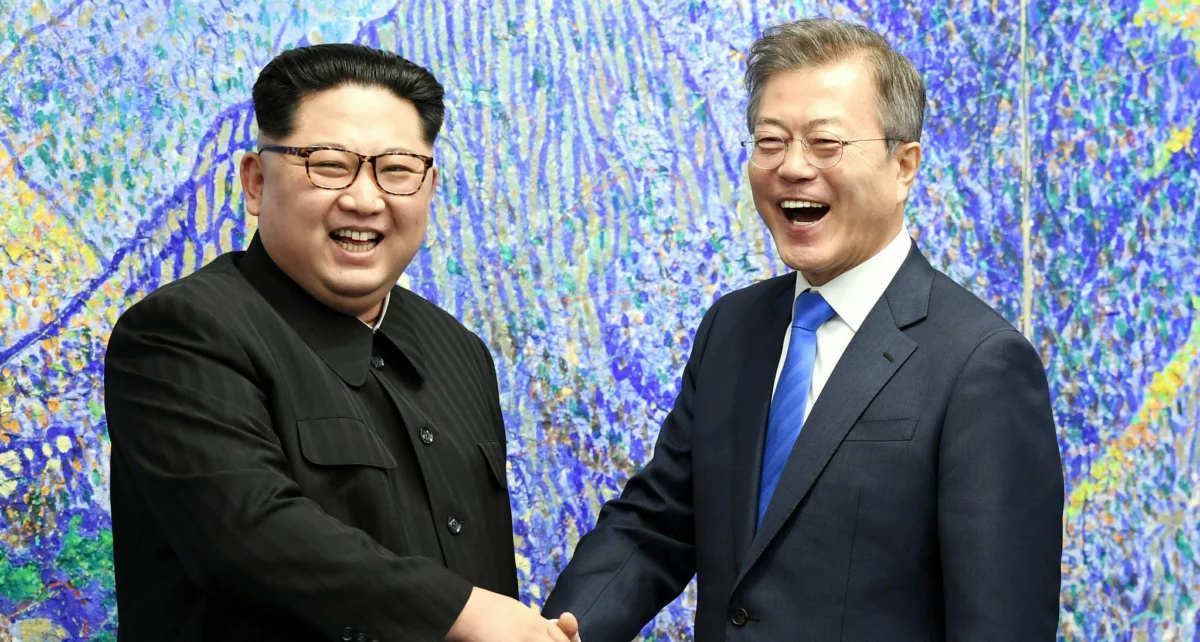
The long-cherished aspiration of a unified Korean Peninsula—a goal that has served as the ideological bedrock of South Korean domestic policy and inter-Korean relations for decades—appears to be fraying at the edges. According to the latest annual survey conducted by the Seoul National University (SNU) Institute for Peace and Unification Studies, the South Korean public is increasingly distancing itself from the prospect of national reunification, viewing it with a skepticism that has reached unprecedented levels.
As of the most recent findings, 39% of South Koreans believe that reunification with the North is now an impossible endeavor. This figure represents the highest level of pessimism recorded since the institute began its comprehensive annual polling in 2007. This shift in public consciousness is not merely a statistical anomaly; it marks a profound transformation in how the South Korean electorate perceives its northern neighbor, its own security, and the reliability of its traditional alliances.
The Core Data: A Decade of Declining Faith
The SNU study, conducted between July 1 and July 26, surveyed 1,200 adults aged 19 to 74, providing a representative snapshot of a nation grappling with the existential reality of a nuclear-armed North Korea. With a margin of error of 2.8%, the data provides a statistically significant look at the hardening of attitudes.
While 60% of respondents still cling to the belief that reunification is theoretically possible, the optimism surrounding this prospect is heavily qualified. Among those who remain hopeful, 27.5% estimated that the process would take at least 30 years to materialize. A further 16.1% suggested that while reunification is possible, it remains a distant, ill-defined goal.
Perhaps more striking than the doubt surrounding reunification is the erosion of faith in the security guarantees that have defined the post-war era. The survey revealed that only 61% of respondents expect the United States to intervene on behalf of South Korea in the event of an armed conflict on the peninsula. This figure is the lowest level of confidence in the U.S.-ROK security architecture since 2009.
Chronology: From Engagement to Estrangement
To understand the current malaise, one must look at the historical trajectory of inter-Korean relations over the last two decades.
- 2007–2010: The early years of the SNU polling coincided with the tail end of the "Sunshine Policy" era. While optimism was relatively high, the sinking of the ROKS Cheonan and the shelling of Yeonpyeong Island in 2010 began to sow the first seeds of profound public doubt.
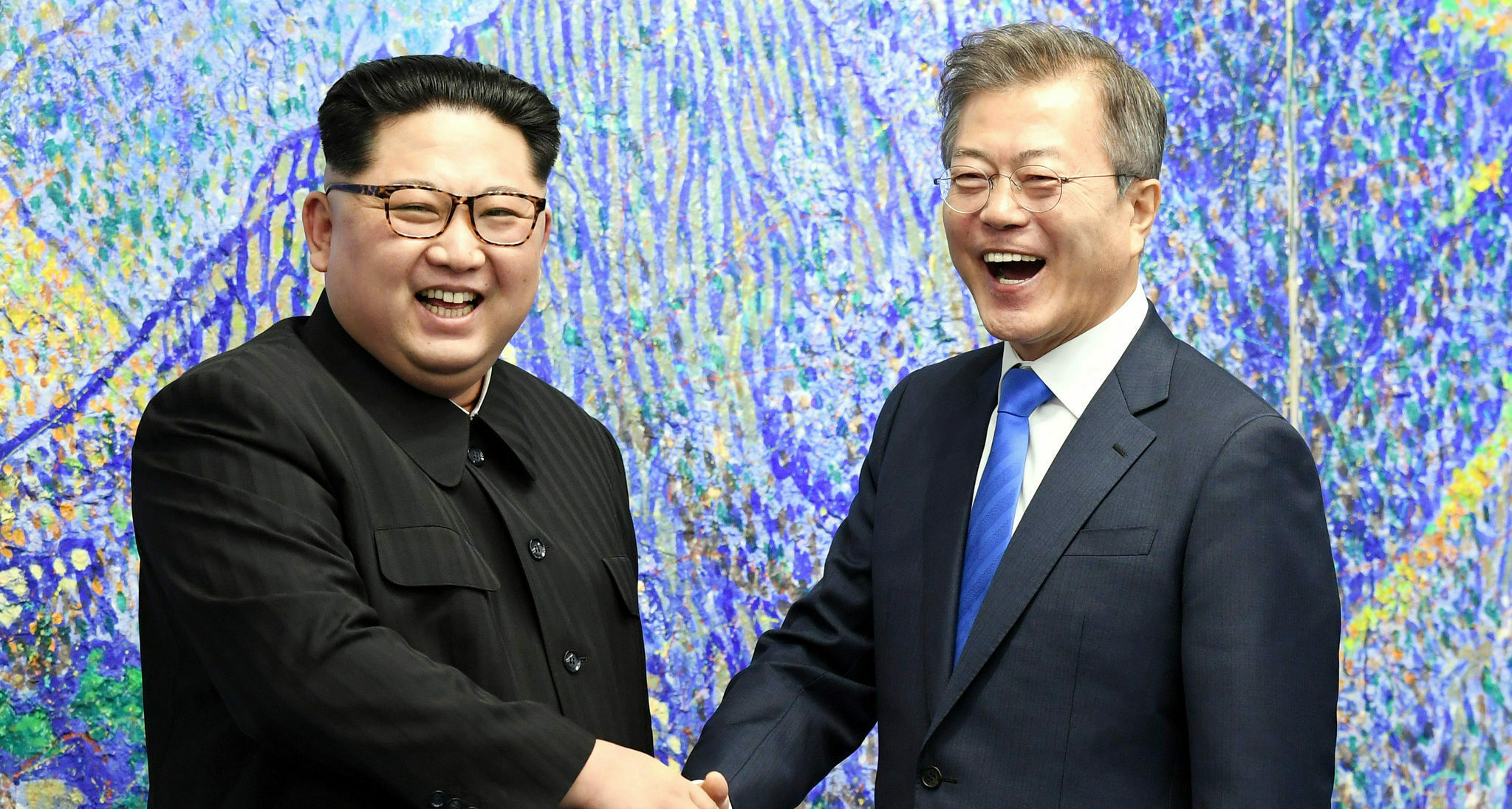
- 2017–2018: The "Fire and Fury" rhetoric between Washington and Pyongyang, followed by the dramatic thaw during the 2018 Inter-Korean Summits, saw a temporary spike in reunification optimism. However, the failure of the Hanoi Summit in 2019 proved to be a turning point, leading to a palpable sense of fatigue among the South Korean public.
- 2020–Present: The pandemic-era isolation of North Korea, coupled with its aggressive expansion of nuclear capabilities and missile testing, has accelerated the move toward a "realist" outlook. The South Korean public has increasingly transitioned from viewing the North as a "brother to be reclaimed" to a "hostile state to be contained."
Supporting Data: Why the Shift?
The decline in reunification support is not a monolith; it is driven by several identifiable socio-economic and geopolitical factors.
1. The Generational Divide
The survey highlights a sharp generational cleavage. Older South Koreans, who maintain a personal or ancestral connection to the pre-division era, remain statistically more likely to support reunification. Conversely, the "MZ generation" (Millennials and Gen Z) displays little to no sentimental attachment to the North. For these younger citizens, the North is viewed primarily as a security threat or a financial burden, rather than a lost homeland.
2. Economic Anxiety
The cost of German reunification remains a cautionary tale in Seoul. Modern South Korean discourse is increasingly dominated by the potential economic catastrophe that would follow an abrupt collapse of the North Korean state. Fears regarding the fiscal burden of integration, combined with domestic economic stagnation, have made the prospect of a unified economy feel like a threat to South Korean prosperity rather than an opportunity.
3. The Nuclear Reality
The North’s progression toward a credible intercontinental ballistic missile (ICBM) capacity has fundamentally altered the security calculus. As the North moves closer to being a recognized nuclear power, the South Korean public is beginning to question the utility of reunification, wondering if the cost of managing a nuclearized North—or the risks of a transition—outweigh the potential benefits.
Official Responses: The Political Balancing Act
The government of the Republic of Korea (ROK) faces a difficult task in navigating these shifting sentiments. While the administration has historically championed the "peace process," the disconnect between official policy and public opinion is widening.
Official statements from the Ministry of Unification emphasize that the goal of a "peaceful, democratic, and unified Korea" remains the constitutional mandate. However, policymakers are increasingly incorporating "peaceful coexistence" as a primary, interim goal. This shift in rhetoric is widely seen as an attempt to harmonize state policy with the increasingly pragmatic views of the electorate.
In the corridors of the Blue House (and now the presidential office in Yongsan), there is a quiet acknowledgement that the "unification narrative" no longer resonates with the youth. Consequently, recent policy papers have pivoted toward "North Korean denuclearization" and "human rights improvements" as the primary metrics of success, rather than immediate integration.
Implications: A New Era of Strategic Autonomy
The erosion of trust in the U.S. security umbrella, combined with the rising skepticism toward reunification, has profound implications for regional stability in East Asia.
1. Calls for Independent Deterrence
The fact that only 61% of South Koreans trust in American intervention has fueled a growing domestic debate regarding the necessity of South Korea developing its own nuclear deterrent. While such a move would violate the Nuclear Non-Proliferation Treaty (NPT) and cause significant friction with Washington, the public sentiment captured in the SNU poll provides the political leverage for conservative voices to push for a more autonomous defense posture.
2. The Normalization of Division
If reunification is no longer viewed as a realistic or desirable goal, South Korea may eventually shift toward a policy of "normalization" with the North. This would involve treating the North as a distinct, albeit hostile, state rather than a temporary administrative anomaly. This transition could lead to a more rigid, cold-war-style border, with less emphasis on cross-border economic projects and more emphasis on hard-power containment.
3. The U.S.-ROK Alliance at a Crossroads
Washington cannot ignore the trend lines in the SNU data. The perceived decline in the credibility of the U.S. security guarantee—down to its lowest point since 2009—suggests that the alliance requires a "re-set." If the South Korean public continues to feel that the U.S. security commitment is conditional or shaky, the alliance may suffer from a "credibility gap" that could be exploited by Pyongyang to drive a wedge between Seoul and Washington.
Conclusion: A Future Defined by Pragmatism
The findings of the 2019–2020 era, as highlighted by the SNU Institute for Peace and Unification Studies, serve as a mirror reflecting a society in transition. The dream of a unified peninsula, which served as a beacon for the South for over 70 years, is being supplanted by a cold, hard focus on national survival and economic stability.
Whether this trend is reversible depends largely on the actions of the Kim Jong Un regime and the evolving nature of the U.S.-ROK alliance. If the North continues to prioritize nuclear expansion over the welfare of its people, and if the South continues to feel economically and militarily vulnerable, the trend toward "reunification skepticism" is likely to deepen.
The era of sentimental nationalism is fading. In its place, a new, more pragmatic, and perhaps more precarious era of South Korean geopolitics is emerging—one where the North is no longer seen as a sibling to be reunited with, but as an existential variable to be managed. As the nation looks toward the next decade, the challenge for Seoul will be to define its identity not through the lens of a lost past, but through the hard-nosed realities of a divided future.

 Lina Irawan
  Ammar Sabilarrohman
  Ali Ikhwan
