
 By Sagoh

The South Korean entertainment landscape was met with a somber announcement on September 28, 2026, as SPHERES, a relatively nascent K-Pop agency, declared its immediate cessation of operations. The company cited a complete withdrawal of investment funds, rendering it financially incapable of continuing its projects and supporting its artists. This abrupt closure has consequently halted the much-anticipated debut of its boy group, BOY19ER, and the planned solo launch of JNXSK, a former member of the group 24K, also known as Junseok. The news sends ripples of disappointment through the industry, highlighting the precarious nature of even well-laid plans in the highly competitive K-Pop sector.
A Sudden End for SPHERES and its Aspirants
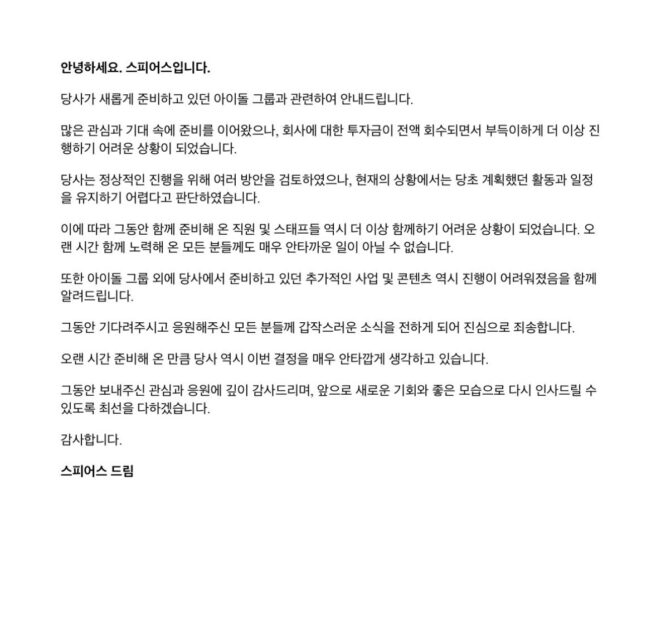
The official notice from SPHERES, released on Sunday, September 28th, painted a stark picture of the company’s financial demise. According to the statement, all previously secured investment funds had been "fully recovered" by investors, leaving the agency with virtually no capital to sustain its operations. This catastrophic financial setback forced SPHERES to abandon all ongoing and future projects, including the meticulously prepared debut of BOY19ER and JNXSK’s solo career. The agency expressed profound regret, not only to the fans who had eagerly awaited these launches but also to the dedicated employees and staff whose efforts over a "long period of time" culminated in this unforeseen end.
The statement detailed the company’s attempts to explore "various options" to salvage their plans, but ultimately, the financial reality made it impossible to maintain the envisioned activities and schedules. Beyond the idol projects, SPHERES confirmed that other "additional businesses and content projects" they had been developing would also be discontinued. This comprehensive shutdown underscores the severity of the financial collapse, indicating a complete inability to proceed with any venture under the SPHERES banner. The agency concluded its message with an apology for the "sudden news" and a hopeful, albeit vague, promise to "return with new opportunities and better news in the future."

The Unfulfilled Journey: BOY19ER and JNXSK’s Timeline
The path to debut for both BOY19ER and JNXSK was one marked by anticipation and considerable investment of time and resources. BOY19ER was first announced in 2025, signaling SPHERES’ ambitious entry into the K-Pop group market. Over the following year, the agency progressively unveiled details about the group, including member profiles, concept teasers, and early 2026 plans that outlined their debut strategy. For K-Pop trainees, this pre-debut period typically spans years of intensive training in singing, dancing, language, and stage presence, often involving living together in dormitories and adhering to strict regimens. The reveal of debut plans often signifies the culmination of these arduous years, offering a glimpse of the light at the end of a long tunnel.
JNXSK’s journey with SPHERES began in 2025 when he joined the agency. Already a familiar face in the K-Pop scene, JNXSK (Junseok) had previously been a member of the established boy group 24K and also a part of the pre-debut boy group HALF&HALF. His recruitment was seen as a strategic move for SPHERES, leveraging his experience and existing fanbase. Beyond his planned solo debut, JNXSK was also slated to serve as the main producer for BOY19ER, a role that would have allowed him to channel his artistic vision and industry experience into the new group’s sound and concept. This dual role highlighted SPHERES’ confidence in his capabilities and his significant contribution to the agency’s creative direction. The cancellation of both his solo debut and BOY19ER’s launch represents a profound personal and professional setback, marking another unfulfilled chapter in his career.
K-Pop’s Volatile Landscape: The Perils of Investment
The demise of SPHERES serves as a stark reminder of the inherent volatility and high-stakes nature of the K-Pop industry. While globally celebrated for its meteoric rise and immense cultural influence, the business behind the glamour is notoriously challenging, often characterized by significant financial risks and intense competition.
The Investment Model: K-Pop agencies, especially smaller and newer ones like SPHERES, are heavily reliant on external investment to fund their operations. The cost of developing and debuting a K-Pop group is astronomical. Estimates suggest that bringing a single idol group to market can cost anywhere from a few hundred thousand to several million U.S. dollars, encompassing expenses such as:

- Trainee Development: Years of vocal, dance, acting, and language lessons. Housing, food, and healthcare for trainees.
- Music Production: Songwriting, composition, arrangement, recording, mixing, and mastering.
- Visual Content: Music video production, concept photography, styling, hair, and makeup.
- Marketing and Promotion: Public relations, advertising campaigns, social media management, fan meet events, and showcase productions.
- Staff Salaries: Compensation for managers, choreographers, producers, creative directors, and administrative personnel.
For investors, the allure lies in the potential for massive returns if a group achieves mainstream success, mirroring the fortunes of global phenomena like BTS or BLACKPINK. However, this is a high-reward, high-risk game where the vast majority of debuting groups fail to achieve profitability, let alone international fame.
Competition and Saturation: South Korea’s entertainment industry sees dozens of new idol groups debut each year, creating an incredibly saturated market. Standing out requires not only immense talent and unique concepts but also robust financial backing for sustained promotion and innovative content. When investment funds are withdrawn, as in SPHERES’ case, it typically signifies a loss of investor confidence, either in the agency’s management, the potential of its projects, or a broader negative shift in economic conditions affecting investment appetite.
Economic Climate: The global economic environment can also play a crucial role. Periods of economic uncertainty or downturns often lead investors to pull back from high-risk ventures like entertainment, redirecting capital to more stable assets. While the specific reasons for the investment withdrawal from SPHERES were not detailed beyond "fully recovered," it could be a confluence of internal project performance concerns and broader market hesitancy.
Broader Impact and Unanswered Questions
The sudden disbandment of SPHERES and the cancellation of its planned debuts carry significant implications for various stakeholders.
For the Members of BOY19ER: The most immediate and profound impact falls upon the aspiring idols who comprised BOY19ER. After years of relentless training, sacrifice, and the emotional investment in their dreams, this announcement shatters their hopes just before their debut. Many K-Pop trainees begin their journey as young teenagers, dedicating their formative years to the rigorous system. The cancellation means they are now faced with an uncertain future:
- Seeking New Agencies: They may attempt to audition for other entertainment companies, but this means starting over, often with no guarantee of acceptance or a faster debut. The stigma of a failed pre-debut can sometimes make this harder.
- Return to Civilian Life: Some may choose to abandon their idol dreams and return to academic pursuits or explore different career paths outside of entertainment.
- Emotional and Psychological Toll: The experience can be devastating, leading to disillusionment, stress, and mental health challenges after years of intense pressure and now, disappointment.
For JNXSK: Having already navigated the challenging waters of the K-Pop industry with 24K and HALF&HALF, JNXSK’s current situation is particularly poignant. This marks another instance where his career trajectory has been disrupted by external circumstances. His options now include:
- Independent Artist: Pursuing music as an independent artist, a path that offers creative freedom but lacks the financial and promotional backing of an agency.
- Joining Another Agency: Seeking opportunities with a different company, potentially as a solo artist or as a producer.
- Focus on Production: Fully transitioning to a producer role for other artists, leveraging his experience without being in the spotlight.
- Personal Reflection: Re-evaluating his career aspirations and future direction within or outside the entertainment industry.
For SPHERES Employees and Staff: The closure of the agency means job losses for managers, choreographers, producers, administrative staff, and various support personnel. These individuals had invested their professional expertise and time into preparing the artists and projects, and are now left to seek new employment in a competitive sector.
For Fans: The K-Pop fandom is known for its passionate dedication. Fans who had followed BOY19ER’s pre-debut activities, supported JNXSK, and invested their hopes in SPHERES’ vision are left with disappointment and sympathy for the artists. Online communities and social media platforms are likely to be abuzz with messages of support for the former trainees and JNXSK, along with expressions of sadness over the lost opportunities.

Industry Perception: While the K-Pop industry has seen immense growth, events like SPHERES’ collapse serve as a cautionary tale. They reinforce the perception among potential investors that while the rewards can be high, the risks, especially with new or smaller agencies, are equally significant. This could lead to a more conservative investment climate, making it even harder for new companies to secure the necessary capital to compete with established entertainment giants.
The Resilience of Dreams
Despite the disheartening news, the K-Pop industry has a history of resilience. Many idols who faced similar setbacks – groups disbanding before or after debut, agencies going bankrupt – have managed to find new paths to success. Stories of members re-debuting with different groups, launching successful solo careers, or transitioning into acting or production are not uncommon. This culture of perseverance, often fueled by the unwavering support of fans, offers a glimmer of hope for the individuals affected by SPHERES’ closure.
The case of SPHERES serves as a powerful reminder that behind the glitz and glamour of K-Pop lies a complex and often unforgiving business environment. The dreams of aspiring idols and the meticulous efforts of dedicated professionals can be shattered overnight by financial instability, underscoring the critical importance of robust financial planning, diverse investment portfolios, and strategic management in navigating the highly competitive global entertainment market. While SPHERES’ chapter has closed, the individual journeys of its former artists and staff are far from over, and the industry will watch to see where their talents lead them next.

