
 By Pevita Pearce
By Staff Reporter
September 29, 2026
SEOUL — Tensions on the Korean Peninsula have reached a critical inflection point following a high-stakes briefing by the Republic of Korea (ROK) Joint Chiefs of Staff (JCS). Military officials confirmed on Monday that an explosion within the Demilitarized Zone (DMZ) one week ago, which left three South Korean soldiers with severe injuries, was "highly likely" the result of a North Korean landmine.
The incident, which occurred in a volatile stretch of the border, has prompted an immediate shift in Seoul’s defensive posture. The JCS has signaled that if the ongoing forensic investigation confirms the provenance of the explosive device as North Korean, the ROK military is prepared to launch "appropriate and corresponding measures," a phrase that, in the lexicon of inter-Korean relations, suggests a calculated military or psychological response.
The Incident: A Breach of the Fragile Peace
On September 21, 2026, a routine patrol mission turned into a casualty event when an unidentified explosive device detonated near the Military Demarcation Line (MDL). The blast resulted in life-altering injuries to three ROK soldiers, who were immediately airlifted to military hospitals in the capital region.
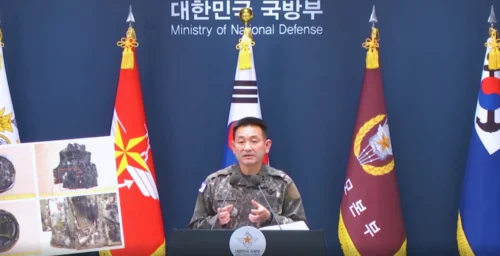
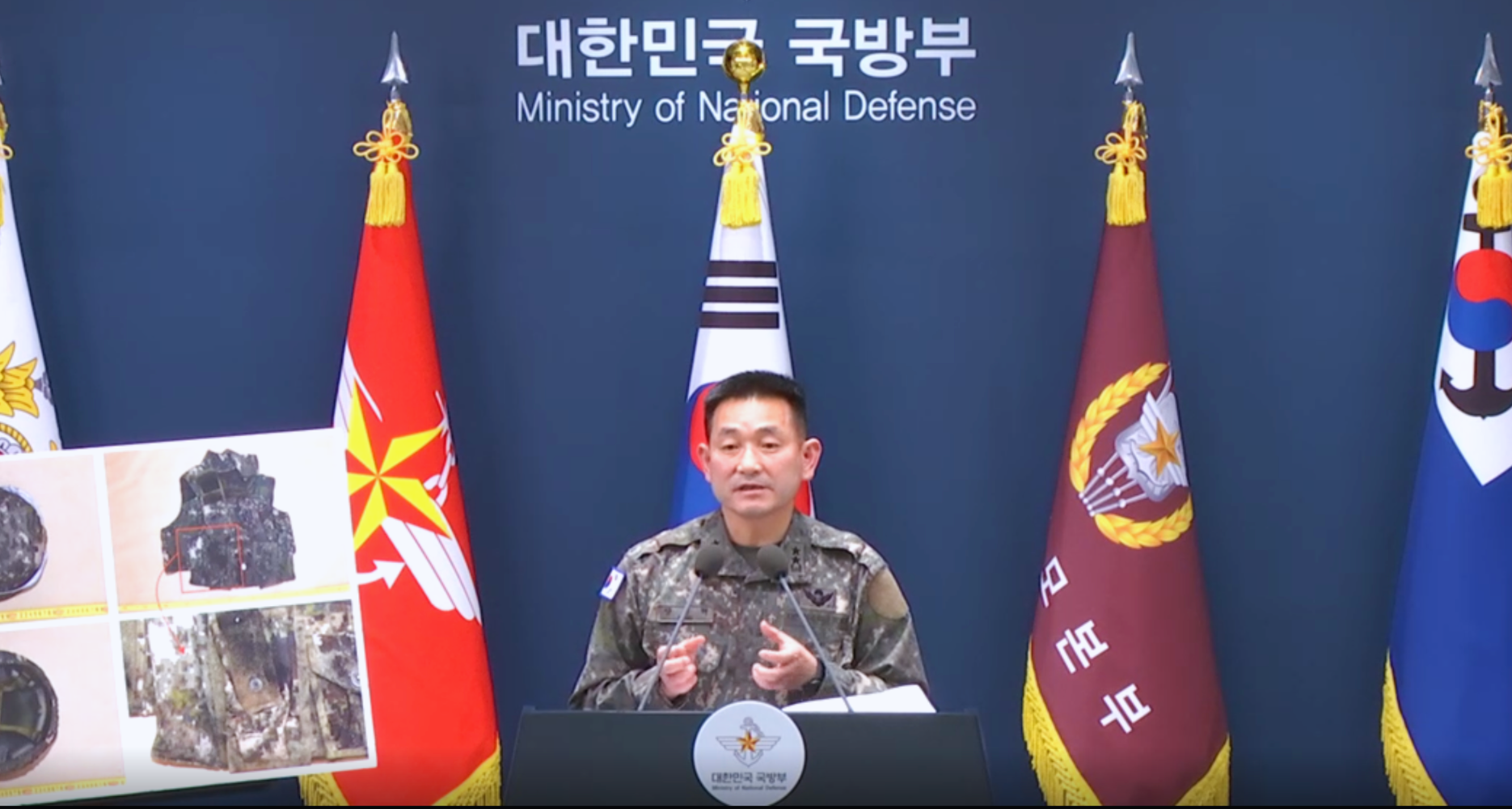
For seven days, the South Korean military conducted an exhaustive search of the blast site, hampered by dense vegetation, treacherous terrain, and the constant threat of secondary devices. During a televised briefing held at the Defense Ministry Headquarters at 8:30 p.m. KST on Monday, JCS Vice Chairman Lt. Gen. Kwon Dae-won laid out the preliminary findings.
"Based on the field investigation conducted so far, including shrapnel analysis and soil displacement patterns, we assess that the cause of the mine explosion was highly likely to be a North Korean-manufactured anti-personnel mine," Kwon stated. He emphasized that the location of the blast—an area that had been previously cleared of mines—suggests a recent, clandestine deployment, raising the specter of a deliberate provocation by Pyongyang.
Chronology of the 2026 DMZ Crisis
To understand the gravity of this event, one must look at the timeline of events leading up to the current standoff:
- September 21, 2026: A patrol team operating near the central sector of the DMZ triggers an explosion. Three soldiers are incapacitated. An emergency medical evacuation is executed under high-security protocols.
- September 22–26, 2026: The ROK military initiates a "no-fly" and "no-entry" zone around the blast site. EOD (Explosive Ordnance Disposal) teams and intelligence officers scour the area for debris.
- September 27, 2026: Intelligence reports suggest anomalous activity by North Korean guard posts near the site of the incident, further fueling suspicions of a deliberate placement.
- September 28, 2026: The JCS holds a late-evening briefing to inform the public and the international community of the forensic likelihood of a North Korean provocation.
- September 29, 2026: The South Korean Ministry of National Defense convenes an emergency meeting of the National Security Council (NSC) to discuss the "appropriate and corresponding measures" promised by military leadership.
Forensic Evidence and Technical Analysis
The ROK JCS provided a detailed, albeit cautious, assessment of the physical evidence recovered from the site. Forensic experts identified traces of a specific type of plastic-cased anti-personnel mine, a weapon that has historically been part of the Korean People’s Army (KPA) arsenal.
The "New Placement" Hypothesis
One of the most concerning aspects of the briefing was the military’s assertion that the mine was not a "legacy" device—a relic of the 1950–53 Korean War or subsequent skirmishes—but a recently installed munition.
"The condition of the components, specifically the chemical stabilizers in the detonator, indicates a relatively recent manufacture and deployment," noted a defense analyst briefed on the investigation. The fact that this area was subject to periodic safety sweeps makes it highly improbable that the device had remained dormant for decades. This leads investigators to conclude that the mine was placed within the last several weeks, likely under the cover of darkness.
Official Responses and Political Repercussions
The response from the Yoon Suk-yeol administration has been characteristically firm. The Ministry of Unification released a statement condemning the act as a "clear violation of the Armistice Agreement" and a "barbaric challenge to the safety of our soldiers."
The "Corresponding Measures" Doctrine
The promise of "appropriate and corresponding measures" has become the focal point of public discourse. In the past, such rhetoric has been followed by:
- Psychological Warfare: The resumption of high-decibel loudspeaker broadcasts across the border, which Pyongyang historically views as a direct threat to its domestic stability.
- Increased Surveillance: A surge in ROK drone flights and intelligence-gathering operations deep into North Korean territory.
- Military Posture Shifts: The redeployment of artillery units and the strengthening of guard post fortifications.
However, the administration is treading a thin line. With regional tensions already exacerbated by Pyongyang’s ongoing ballistic missile testing program, Seoul is under pressure from the international community—particularly Washington and Tokyo—to ensure that any response is proportional and does not trigger an uncontrollable escalatory spiral.
Implications for the Korean Peninsula
The DMZ, often described as the most heavily fortified border in the world, serves as a barometer for the state of inter-Korean relations. This incident, should it be confirmed as a deliberate North Korean act, shatters the fragile deterrence that has held since the last major border incident.
Security Architecture Under Strain
The incident highlights the degradation of the 2018 Comprehensive Military Agreement (CMA), which was intended to reduce border tensions. With the CMA effectively nullified by recent months of brinkmanship, the buffer zones that once kept soldiers from accidental contact have become, once again, the front lines of a "gray zone" conflict.
The Human Cost
Beyond the geopolitical maneuvering, the incident has had a profound effect on morale within the ROK military. Families of the injured soldiers have demanded transparency and accountability. The military’s decision to hold an 8:30 p.m. briefing signifies an attempt to maintain transparency and prevent the spread of rumors, which have historically been used by hostile actors to destabilize South Korean civil society.
International Context
The United Nations Command (UNC), which oversees the armistice, has been notified. A special investigation by the Military Armistice Commission (MAC) is expected to follow. If the UNC finds North Korea responsible, it could lead to formal diplomatic sanctions or a referral to the UN Security Council, although observers note that such avenues are frequently blocked by the current geopolitical deadlock between the permanent members of the Security Council.
Conclusion: A Precarious Future
As of Tuesday morning, the situation remains fluid. The North Korean state media, KCNA, has yet to issue an official response, maintaining a "strategic silence" that often precedes a counter-narrative or a secondary provocation.
Seoul’s next steps will be critical. By invoking the prospect of "appropriate measures," the ROK military has placed the ball firmly in Pyongyang’s court. Whether this leads to a new round of tit-for-tat escalations or a tense diplomatic standoff remains to be seen. For now, the soldiers along the 248-kilometer border remain at the highest state of alert, aware that a single step in the wrong direction could turn a localized explosion into a regional catastrophe.
The South Korean public, while accustomed to the cycles of tension, is watching closely. The government’s challenge is to project strength without inviting a wider conflict, a balance that has defined the precarious existence of the ROK for over seven decades. As the investigation continues, the memory of the three injured soldiers serves as a sobering reminder that the Korean War, technically ended by an armistice, remains a conflict that is far from settled.
Disclaimer: This report is based on information provided by the ROK Joint Chiefs of Staff. Further updates will be provided as forensic analysis concludes and official policy responses are finalized by the Presidential Office.


 Ammar Sabilarrohman
 Nana Wu
 Lina Irawan

