
 By rifanmuazin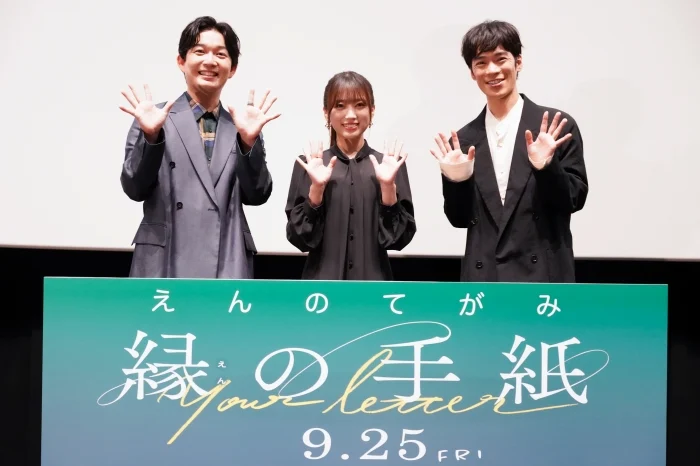
Introduction: A Digital Phenomenon Transcending Borders
In an era where digital content often flickers briefly before vanishing into the ether of the internet, few stories possess the staying power to migrate from the small screens of smartphones to the expansive canvas of the cinema. Your Letter (Korean Sejong-ui Pyeonji), the beloved webtoon-turned-short-film, has achieved exactly that.
Originally serialized on the digital platform LINE Webtoon in 2018, the narrative captured the hearts of millions with its poignant exploration of school life, the fragility of friendship, and the silent language of empathy. Now, seven years later, the property has been adapted into a full-length feature film, set to hit Japanese theaters on September 25, 2026. This transition marks a significant milestone for South Korean animation and transmedia storytelling, signaling a new chapter for the source material that first captivated audiences on YouTube through the "A Day Before Us" collective.
The Genesis of a Cult Classic
To understand the gravity of the film’s upcoming release, one must first appreciate the humble beginnings of Your Letter. The story follows the life of a young student who finds herself caught in the complex web of school hierarchies and social isolation. The narrative is defined by a central mystery: a series of anonymous letters that appear to guide the protagonist through the emotional turbulence of adolescence.

When the webtoon debuted in 2018, it quickly transcended its medium. It wasn’t just a "school drama"; it was a masterclass in visual storytelling, relying on delicate color palettes and nuanced character expressions to convey internal monologues that dialogue often fails to capture. The webtoon’s success eventually led to a YouTube-based short animation project, "A Day Before Us," which amassed over 125 million views globally. This digital footprint provided the empirical evidence needed for producers to justify a full-scale feature film adaptation.
Chronology of Production: Bridging Studios and Cultures
The path to the big screen was not a sprint, but a carefully choreographed marathon.
- 2018: The original webtoon gains widespread acclaim for its emotional depth and relatable character arcs.
- 2020-2022: The intellectual property expands into short-form content, testing the viability of a longer cinematic format.
- 2024: Official announcement of a joint production venture between LOTTE Entertainment, Studio Lico, and Studio N.
- 2025: Production enters the final stages, with a focus on translating the subtle, atmospheric quality of the original art style into high-fidelity animation.
- September 25, 2026: The scheduled wide-release date in Japan, supported by a robust marketing campaign featuring local talent.
The production represents a high-profile collaboration between three industry heavyweights. Studio Lico—known for its prowess in digital comics—partnered with Studio N, the powerhouse behind many of the most successful webtoon-to-screen adaptations of the decade. By bringing in KeyHolder Pictures and CWF Cinemas for the Japanese distribution and localization, the production team has ensured that the cultural nuances of the story are preserved while meeting the high production standards expected by the Japanese animation market.

Supporting Data: Why Your Letter Matters
The decision to bring Your Letter to the silver screen is backed by more than just critical acclaim; it is driven by hard data. The "A Day Before Us" series served as a massive data-gathering exercise. By tracking audience engagement across different regions, the producers identified a significant demand for "slice-of-life" animation that prioritizes emotional realism over action-oriented tropes.
With a running time of 97 minutes, the film is designed to provide a comprehensive narrative experience that the short-form videos could only hint at. The 5.1ch surround sound design is intended to emphasize the film’s atmospheric score, which plays a pivotal role in setting the tone for the protagonist’s journey of self-discovery. Furthermore, the selection of September 25 for the release date is strategic, positioning the film during the transition into autumn—a season that perfectly mirrors the contemplative and nostalgic tone of the story.
Official Responses and Creative Vision
During a recent press junket in Seoul, the lead producers discussed the challenges of adapting a work that is so deeply rooted in the "internal" experience of its characters.

"The biggest challenge," noted one of the lead directors from Studio Lico, "was not the animation itself, but the ‘silence.’ Much of the original work relies on what is not said. We had to ensure that the voice acting and the background art communicated that subtext without needing to spell it out for the audience."
The Japanese localization team, led by CWF Cinemas, emphasized the importance of maintaining the "Korean soul" of the story while ensuring it resonates with a Japanese audience. The Japanese version of the film features a specially recorded theme song, "Your Letter – Japanese Ver.," which has already begun to generate buzz on social media.
The protagonist, voiced by a rising star in the Japanese voice acting scene, remarked on the pressure of taking on such an iconic role. "I grew up reading the webtoon. To be the one to give voice to these letters is a profound responsibility. I wanted to make sure that the audience feels the same comfort that I felt when I first read the story."

Implications for the Industry
The success of Your Letter has profound implications for the future of international animation.
1. The Power of Webtoon Intellectual Property
Webtoons are no longer just a source for K-dramas; they are becoming the primary source material for high-budget animation. Your Letter proves that a narrative does not need to be a grand fantasy epic to warrant a cinematic release. The focus on human connection is proving to be a highly bankable commodity.
2. Cross-Border Collaboration
By involving Japanese distributors and production partners, the film sets a blueprint for future South Korea-Japan co-productions. The collaboration shows that despite historical and cultural differences, the "language of youth" and the struggles of adolescence are universal.

3. The Digital-to-Analog Migration
The success of the "A Day Before Us" YouTube channel provided a low-risk, high-reward environment for producers. This model—using viral digital content to build a loyal fanbase before committing to a theatrical release—is likely to become the industry standard for independent animation studios.
Looking Ahead: The Anticipation
As of September 2026, the anticipation for Your Letter is reaching a fever pitch. Social media campaigns, including interactive "letter writing" events where fans can share their own stories of friendship, have kept the buzz alive. The official website has also begun offering exclusive behind-the-scenes content, showing the rigorous process of hand-drawing thousands of frames to capture the delicate emotions of the characters.
The film is not merely an adaptation; it is a testament to the idea that kindness and empathy, even when delivered through anonymous notes, have the power to change a life. For the millions who followed the story from its inception as a webtoon to its current form as a cinematic work of art, the wait is almost over.

On September 25, when the lights dim in theaters across Japan, audiences will not just be watching a movie. They will be witnessing the culmination of a seven-year journey—a bridge built of paper and ink, now transformed into light and sound. Your Letter is poised to be more than just a box-office success; it is destined to become a touchstone for a generation that learned to express its own feelings through the stories of others.
Film Details Summary:
- Production: LOTTE Entertainment, Studio Lico, Studio N
- Genre: Drama / Slice-of-Life / Animation
- Runtime: 97 minutes
- Release Date: September 25, 2026
- Official Website: en-no-tegami.com
As we approach the release, the industry watches with keen interest. If "Your Letter" succeeds in translating its digital fervor to the traditional cinema audience, it will undoubtedly open the floodgates for a new wave of animated narratives from the Korean webtoon sector, further blurring the lines between digital platforms and traditional film distribution.


 Basiran
  Siti Muinah
  Neng Nana
