
 By Sagoh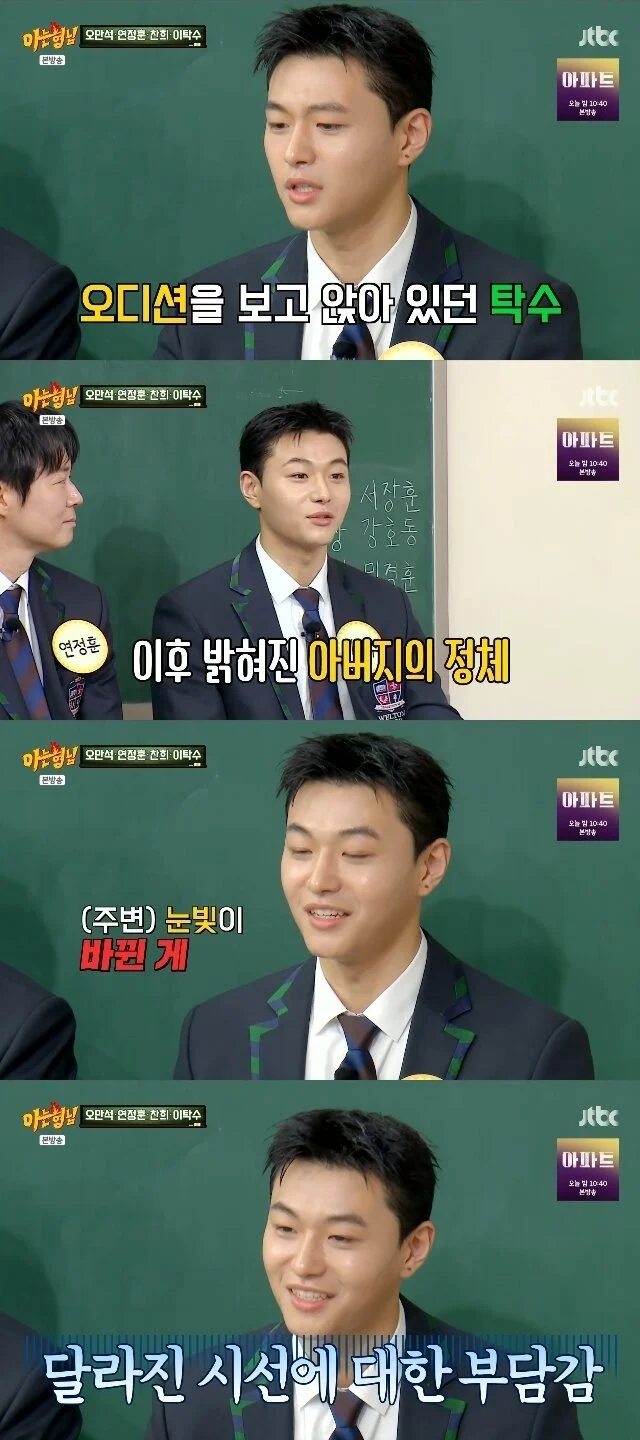
Rookie actor Lee Tak Soo, the eldest son of the veteran South Korean actor Lee Jong Hyuk, has found himself at the center of a growing public debate regarding the advantages and pressures faced by the children of established celebrities. During a recent television appearance, the young performer’s remarks concerning the "burden" of his father’s reputation triggered a wave of criticism from viewers who perceived his comments as being disconnected from the reality of his professional privileges. The incident has once again brought the "nepo baby" discourse to the forefront of the South Korean entertainment industry, highlighting a sharp divide between the personal experiences of celebrity offspring and the public’s demand for meritocracy.
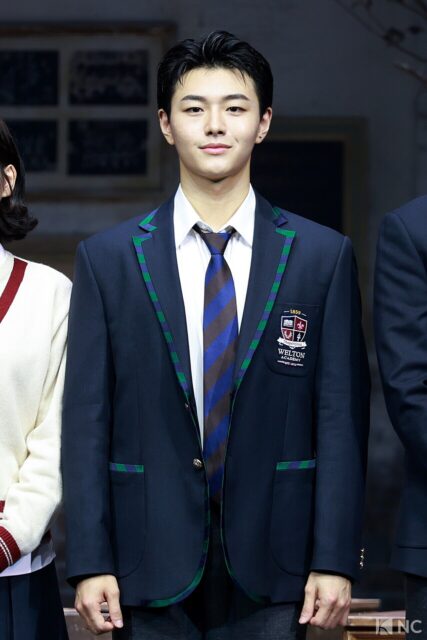
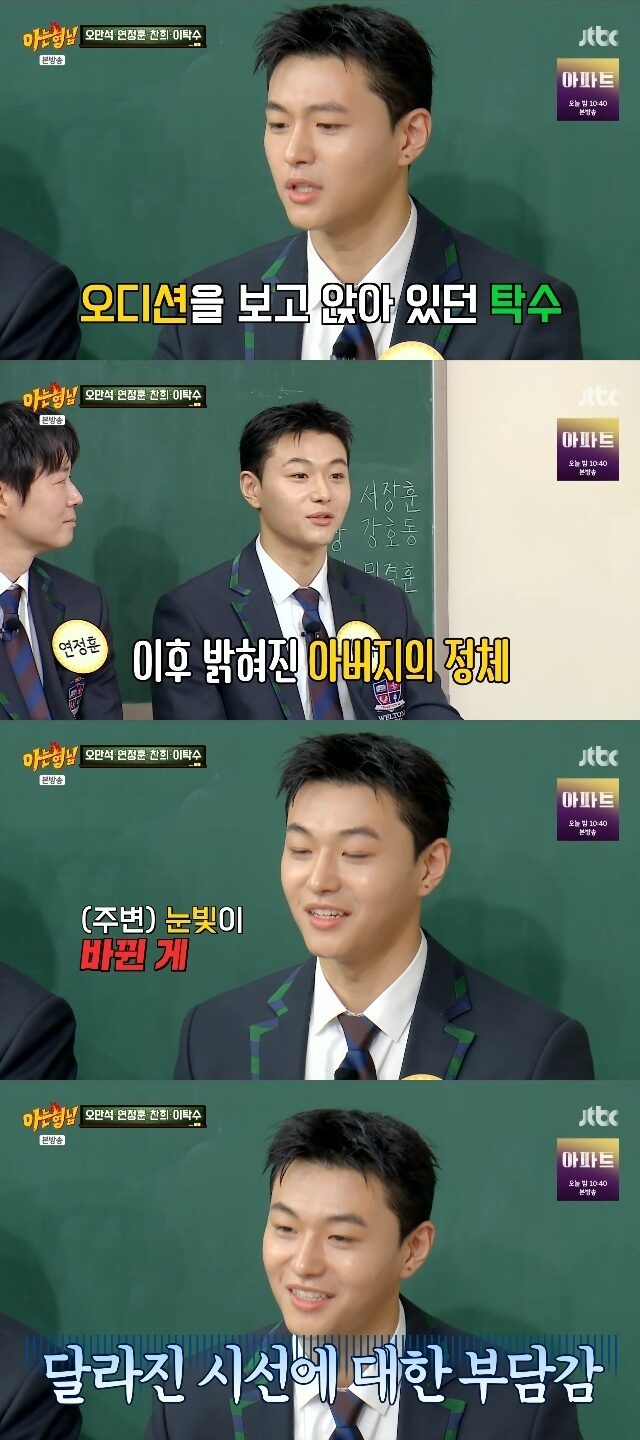
The controversy originated from the August 1 broadcast of the popular JTBC variety program Knowing Bros. Lee Tak Soo appeared as a guest alongside established actors Yeon Jung Hoon and Oh Man Seok, as well as SF9 member and actor Chani. The group was ostensibly on the show to promote their upcoming stage production, a theatrical adaptation of Dead Poets Society. During the episode, the conversation naturally turned toward Lee Tak Soo’s lineage, given that his father, Lee Jong Hyuk, is a highly respected figure in both television and film, known for his roles in hits such as A Gentleman’s Dignity and the reality show Dad! Where Are We Going?.
When asked by the program’s hosts about his father’s reaction to his career choice, Lee Tak Soo shared that Lee Jong Hyuk was initially cautious but ultimately supportive. The elder Lee, having navigated the industry for decades, was well aware of the volatility and psychological toll of an acting career. However, the point of contention arose when Lee Tak Soo detailed the difficulties he faced while attempting to establish his own identity separate from his father’s shadow.
Lee Tak Soo recounted an anecdote from an audition he attended during his freshman year at Dongguk University. He described a situation where the casting directors seemed genuinely impressed with his performance and visuals, offering him positive feedback and encouraging nods. However, according to Lee, the atmosphere in the room shifted dramatically the moment they realized he was Lee Jong Hyuk’s son. "The look in their eyes changed," he remarked during the broadcast, suggesting that he felt he was no longer being judged solely on his talent, but rather through the lens of his family connections. He expressed that this shift made him feel uncomfortable and undermined the confidence he had built during the audition.
While Lee Tak Soo’s intent appeared to be a sincere reflection on the psychological weight of high expectations, the reaction from the South Korean public was swift and largely unsympathetic. Within hours of the broadcast, online communities and social media platforms were flooded with comments criticizing the rookie actor for what many termed a "lack of self-awareness."

The primary grievance cited by netizens was the inherent contradiction in Lee Tak Soo’s presence on Knowing Bros. Critics pointed out that Knowing Bros is one of South Korea’s most influential variety shows, a platform that many talented but unknown actors spend years trying to reach. The fact that Lee Tak Soo was invited to the show as a "rookie" to promote a major stage production was, in the eyes of many, a direct result of the very family connection he was lamenting. One widely circulated comment on the popular forum theqoo summarized the sentiment: "He is complaining about the burden of his father’s name on a show he was only able to guest on because of his father’s name."
To understand the intensity of the backlash, one must look at the broader socio-economic climate in South Korea, where the concept of "fairness" (gong-jeong) has become a defining political and social issue. The terms "gold spoon" (geum-su-jeo) and "dirt spoon" (heuk-su-jeo) are frequently used to describe the disparity between those born into wealth and influence and those who must struggle without such safety nets. In the entertainment industry, where thousands of aspiring actors live in poverty while waiting for a single line of dialogue, the perceived "complaining" of a well-connected individual is often met with hostility.
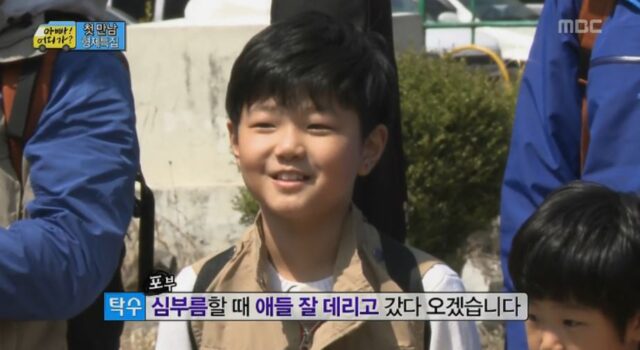
Industry analysts suggest that the public is not necessarily opposed to the children of celebrities entering the family business, but they do expect a high degree of humility and an acknowledgment of privilege. In the case of Lee Tak Soo, his history with the public further complicates the narrative. Both he and his younger brother, Lee Jun Soo, were introduced to the nation as children through the MBC reality show Dad! Where Are We Going? (2013-2015). The show was a cultural phenomenon, and the children became household names. This early exposure provided Lee Tak Soo with a level of public recognition and "brand value" that most rookie actors could never hope to achieve, regardless of their talent level.
Furthermore, critics compared Lee Tak Soo to other second-generation actors who took proactive steps to minimize the influence of their parents. Actors like Ha Jung Woo (son of Kim Yong Gun) and Yeon Jung Hoon (son of Yeon Kyu Jin) were cited as examples of performers who either used stage names or intentionally kept their family ties private during the early stages of their careers to prove their worth through their craft first. The fact that Lee Tak Soo has continued to use his real name and frequently appears in media contexts that highlight his relationship with Lee Jong Hyuk makes his complaints about being judged for that relationship ring hollow to many viewers.
The timeline of Lee Tak Soo’s career development also plays into the scrutiny. Born in 2003, he is currently a student in the Department of Theater and Film at Dongguk University, one of the most prestigious institutions for acting in Korea. His younger brother, Lee Jun Soo, recently gained admission to Chung Ang University’s theater department. The fact that both brothers are entering the industry simultaneously has amplified the "dynasty" narrative. While Lee Tak Soo is undoubtedly working hard to hone his skills, the "optics" of his career trajectory—from a famous child star to a student at a top-tier university to a guest on a major variety show—suggest a path that is significantly smoother than that of his peers.
In response to the backlash, some industry insiders have suggested that the "eyes changing" Lee Tak Soo perceived at his audition might not have been a sign of negative judgment, but rather a shift in the evaluators’ expectations or a realization of the potential PR value he brought to the table. In a commercial industry, being the son of a famous actor is an asset for marketing and ticket sales. If evaluators looked at him differently, it was likely because they saw a "product" with a built-in audience, a reality that, while perhaps bruising to a young artist’s ego, is a massive professional advantage.
The implications of this controversy extend beyond Lee Tak Soo’s individual career. It serves as a cautionary tale for other "second-generation" celebrities (often referred to as "nepo babies" in Western media) on how to navigate public discourse. The modern audience, particularly the younger demographic in South Korea, is highly sensitive to "privilege blindness." When a celebrity child focuses on the "hardship" of their position without first acknowledging the doors that were opened for them, it is often interpreted as an insult to those who are struggling to find even a crack in those same doors.
As Lee Tak Soo prepares for the opening of Dead Poets Society, the pressure on his performance has arguably increased. Having publicly claimed that he wants to be judged on his own merit, the audience and critics will likely hold him to a higher standard than a typical rookie. If his performance is exceptional, he may eventually move past this controversy. However, if his work is deemed mediocre, the "gold spoon" label will likely stick, potentially hindering his ability to build a sustainable career independent of his father’s legacy.
Currently, neither Lee Tak Soo nor his father, Lee Jong Hyuk, has issued a formal statement regarding the online criticism. In the world of Korean entertainment, silence is often the preferred strategy in the face of "netizen" backlash, allowing the news cycle to move on to the next topic. However, the conversation surrounding Lee Tak Soo remains a poignant example of the evolving relationship between celebrities and the public. It highlights a demand for a new kind of transparency—one where talent is recognized, but the structural advantages that helped nurture that talent are also openly acknowledged.
Moving forward, the industry may see a shift in how rookie actors with famous parents are marketed. To avoid the "nepo baby" stigma, agencies might encourage these performers to take on smaller, less publicized roles or to distance themselves from their parents in variety show appearances. For Lee Tak Soo, the road ahead involves proving that his talent is as substantial as his pedigree. In an industry as competitive as South Korea’s, the shadow of a famous father can either be a protective umbrella or a dark cloud; which one it becomes for Lee Tak Soo will depend on his future choices and his ability to reconcile his personal struggles with his public privileges.

