SEOUL — The highly anticipated military black comedy series New Recruit returns to television screens today with the premiere of its fourth installment, subtitled Sabotage. Based on the wildly popular YouTube animation of the same name created by the internet personality and writer Jangbbijju, the franchise has solidified its place as a cultural touchstone in South Korea. By blending hyper-realistic depictions of mandatory military service with biting satirical humor, the series continues to explore the systemic absurdities, unspoken hierarchies, and profound camaraderie found within the barracks of the fictional Shinhwa Unit.
Ahead of its premiere on August 24 at 10 p.m. KST, the production team released a series of promotional stills. These preview images offer a glimpse into the chaotic daily life of the first barracks, highlighting both traditional hazing rituals and elaborate, low-stakes operations orchestrated by the soldiers to survive the grueling summer heat.
Main Facts: What to Expect in "New Recruit 4: Sabotage"
The fourth season of New Recruit marks a significant narrative transition for its central protagonist, Park Min Seok (played by Kim Min Ho). Once the clumsy, hyper-privileged "gwan-gwan" (a soldier with influential family connections, as his father is a high-ranking military general), Min Seok has defied expectations by surviving the harsh environment of the infantry. In Sabotage, he faces his biggest milestone yet: promotion to corporal.
With this new rank comes a shift in responsibilities, social standing, and moral dilemmas. In the South Korean military hierarchy, a corporal is no longer a mere follower but a transitional leader expected to manage junior soldiers while bearing the brunt of expectations from senior officers. Min Seok’s hopes for a peaceful tenure are quickly dashed by two major disruptions:
The Arrival of a Mysterious New Recruit: Kim Hyun Wook (played by Lee Won Jung) enters the unit, bringing an enigmatic background and an unyielding, stoic demeanor that threatens to disrupt the established social order of the barracks.
A New Battalion Commander: The introduction of a strict, unpredictable new commander signals a regime change, forcing the soldiers of Shinhwa Unit to adapt to aggressive new protocols and administrative oversight.
The newly released stills highlight two primary sequences from the premiere episode: a theatrical "welcome ceremony" designed to test the psychological fortitude of the newcomer, and a highly coordinated, covert operation aimed at securing a morning nap in defiance of the unit’s rigorous schedule.
Chronology: The Evolution of the "New Recruit" Franchise
To understand the stakes of New Recruit 4: Sabotage, it is essential to trace the franchise’s chronological development from a digital animation project to a major television drama series.
[2019–2021] Original Animated Web Series (Jangbbijju)
       │
       ▼
[2022] Season 1: Live-Action Adaptation (Park Min Seok enters Shinhwa Unit as a private)
       │
       ▼
[2023] Seasons 2 & 3: Exploration of military hierarchy, hazing, and interpersonal conflicts
       │
       ▼
[August 24, 2026] Season 4 ("Sabotage") Premiere: Corporal promotion and institutional resistance
Phase 1: The Animated Genesis (2019–2021): Created by animator and voice actor Jangbbijju on his YouTube channel, the original animated series New Recruit gained millions of views. It resonated deeply with South Korean men who had completed their mandatory service, praised for its accurate voice acting, hyper-realistic dialogue, and spot-on character designs.
Phase 2: The Television Transition (2022): Directed by Min Jin Ki (known for Blue Tower, another seminal military comedy), the live-action adaptation premiered on ENA and Genie TV. The show received critical acclaim for casting actors who bore an uncanny physical resemblance to their animated counterparts, most notably Kim Min Ho as Park Min Seok.
Phase 3: The Rising Stakes (2023): Subsequent seasons tracked Min Seok’s slow maturation from a liability into a functioning soldier, tackling darker themes such as systemic bullying, the division of labor, and the psychological toll of isolation within the barracks.
Phase 4: The "Sabotage" Era (August 2026): Season 4 shifts the focus toward active, collective resistance. The subtitle Sabotage refers to the subtle, comedic, and sometimes desperate ways conscripted soldiers reclaim agency from an unyielding military apparatus.
Supporting Data: A Closer Look at the Premiere Stills
The promotional images released ahead of the August 24 premiere highlight the distinct character dynamics that define the series’ comedic style.
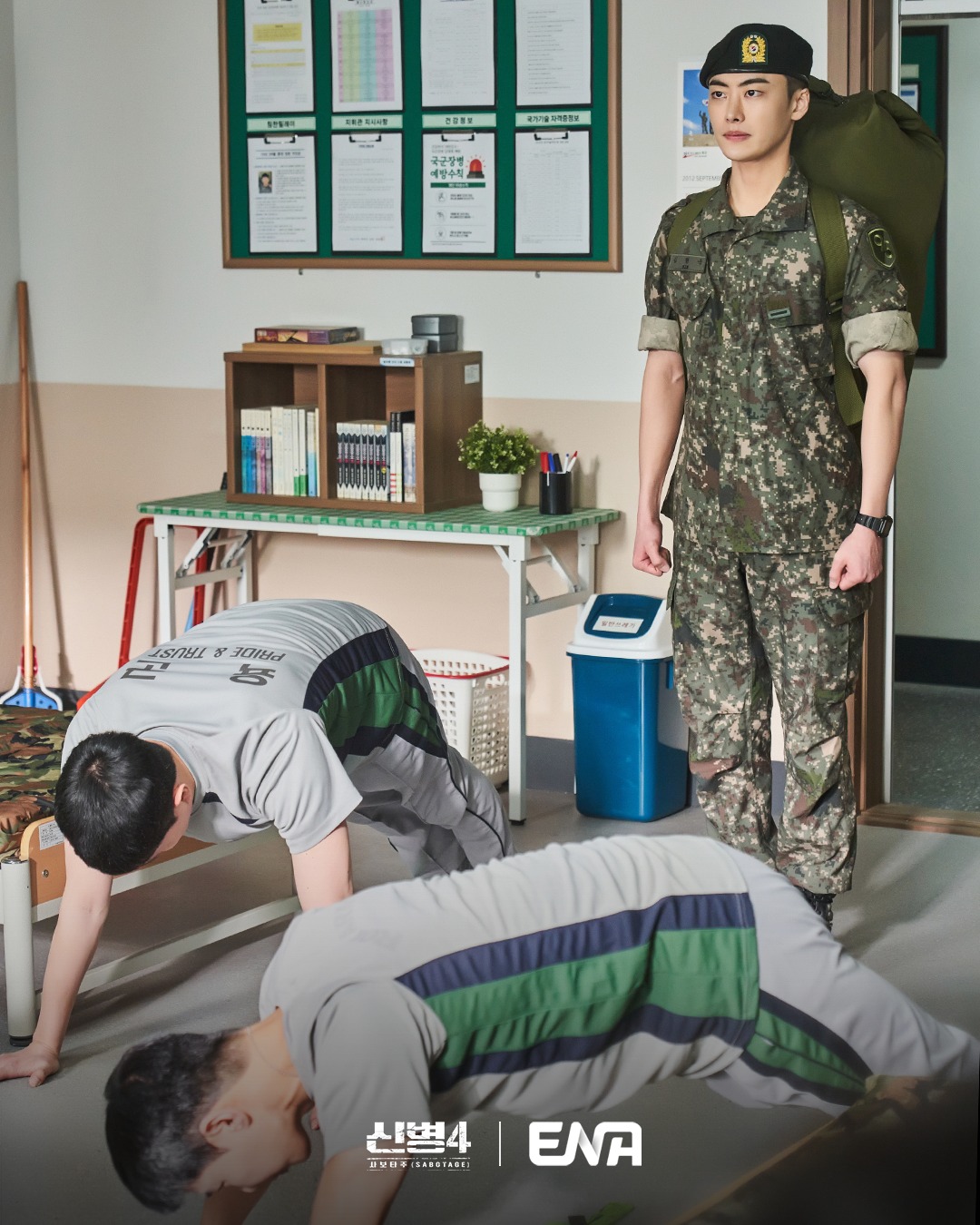
The Hazing Ritual: Moon Bit Nari vs. Im Da Hye
In the first set of stills, the show depicts the traditional "welcome ceremony" hosted by the first barracks. This initiation ritual is designed to shock new recruits into submission through theatrical displays of aggression.
Character
Actor
Role in the Scene
Performance Style
Moon Bit Nari
Kim Yo Han
The Aggressor
Delivers a thunderous, exaggerated roar at his senior, playing his part in the initiation with theatrical intensity.
Im Da Hye
Jeon Seung Hun
The Stoic Senior
Maintains a deadpan, unimpressed expression, creating a comedic contrast with Bit Nari’s performance.
Kim Hyun Wook
Lee Won Jung
The Target (New Recruit)
Observes the chaotic scene with perfect military posture and unblinking composure, refusing to show fear.
This sequence showcases the show’s signature style: subverting military tension with sudden bursts of deadpan humor. Hyun Wook’s refusal to be intimidated suggests he may prove more difficult to manage than previous recruits.
"Operation Morning Nap": Tactical Slacking in Summer Heat
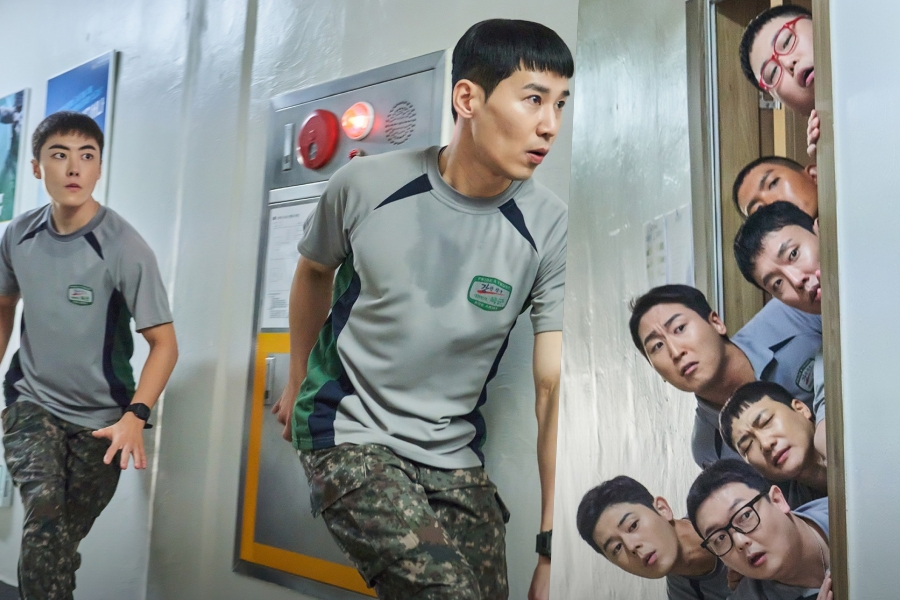
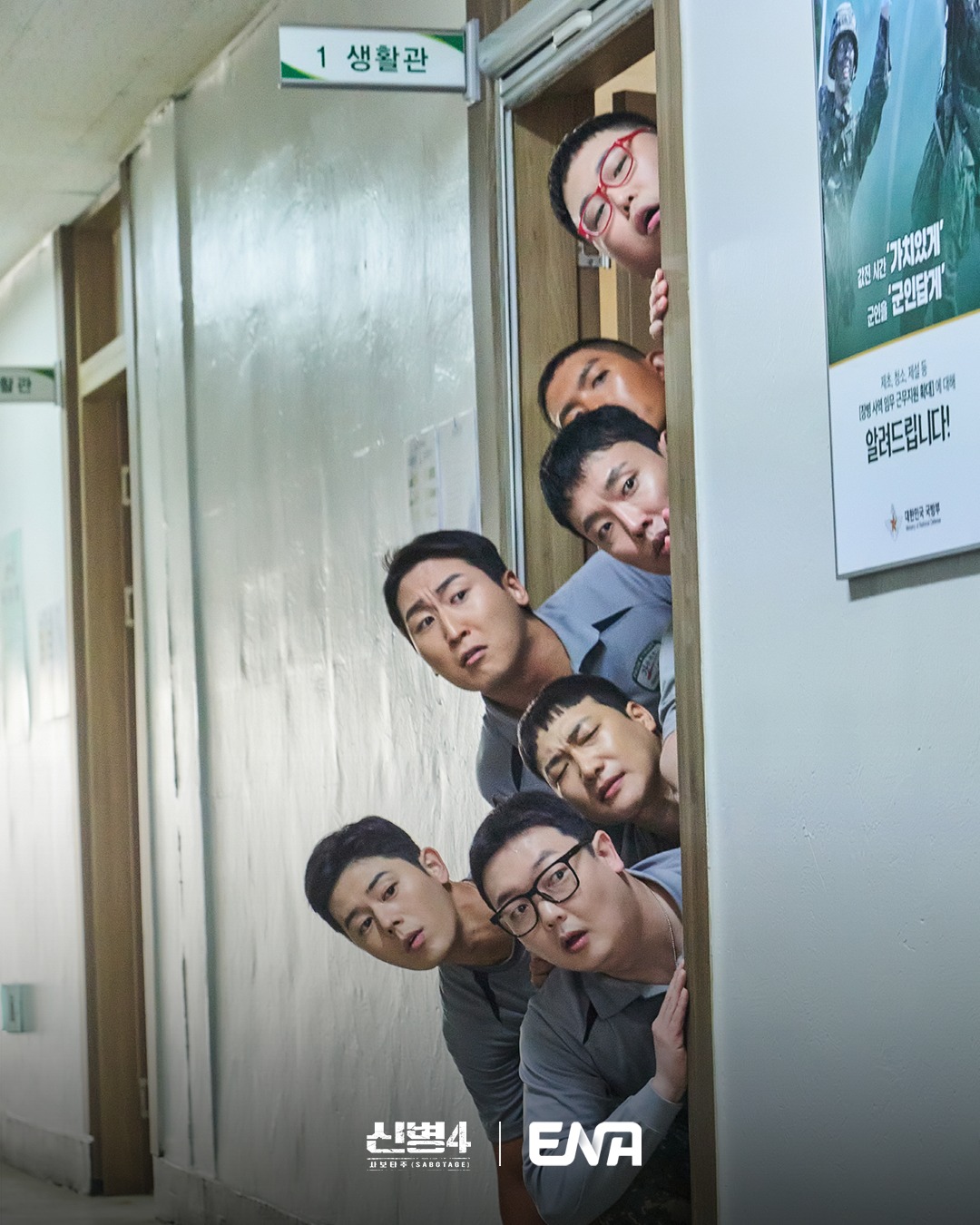
The second set of stills shifts focus to a collective mission: securing a morning nap during the sweltering summer heat.
[The Command Structure of "Operation Morning Nap"]
       Kim Sang Hoon (Strategist/Lookout coordinator)
                     │
                     ▼
       Kim Hyun Wook (Sentry duty/Perimeter watch)
                     │
                     ▼
       Shinhwa Unit Soldiers (Executing synchronized sleeping maneuvers)
In these images, the soldiers of Shinhwa Unit are seen cautiously poking their heads out of the barracks to scan the perimeter. The high-stakes framing of this mundane task—treating a quick nap like a high-risk reconnaissance mission—parodies classic military action films. Kim Hyun Wook, working under the direction of Kim Sang Hoon (Lee Choong Gu), takes his sentry duty seriously, keeping watch with intense focus. The contrast between their life-or-death expressions and their trivial objective drives the comedy of the episode.
Official Responses: Insights from the Production Team
The creative team behind New Recruit 4: Sabotage emphasized that this season will balance the series’ trademark comedy with deeper character development and stronger ensemble chemistry.
In an official press statement, the production team remarked:
"In today’s premiere episode, viewers will immediately see the dynamic second half of Corporal Park Min Seok’s military life unfold. Despite the constant chaos, the members of Shinhwa Unit have built a strong bond as comrades, so please look forward to what other dynamic events await them."
They added:
"From the very first episode, viewers can expect plenty of laughter and unpredictable incidents. The chemistry between the returning cast members and the new additions, particularly Lee Won Jung, has brought a fresh energy to the set that translates beautifully on screen."
Industry analysts note that maintaining the balance between realism and comedy is a delicate task for the creators. Director Min Jin Ki has previously stated that the goal of the series is not to glorify or condemn the military, but to capture the authentic human experience of young men navigating a highly structured, inescapable environment.
Implications: The Cultural Resonance of Military Black Comedies
The premiere of New Recruit 4: Sabotage highlights the enduring appeal of military-themed media in South Korea, a nation where mandatory conscription remains a defining rite of passage for young men.
1. The Psychology of Relatability
For the majority of South Korean male viewers, the experiences depicted in New Recruit—from the dread of a new commanding officer to the small joy of a successful barracks scheme—are deeply familiar. The series serves a therapeutic function, allowing viewers to process their own military memories through collective laughter. By focusing on the absurdities of military life rather than idealized combat scenarios, the show offers a more grounded representation of conscription than traditional dramas.
2. Contrasting "New Recruit" with "D.P."
While Netflix’s critically acclaimed series D.P. (Deserter Pursuit) exposed the darker, systemic violence and institutional failures of the military, New Recruit occupies a different space. It does not ignore the challenges of military life, but approaches them through the lens of satire and black comedy. Where D.P. provokes outrage and reflection, New Recruit fosters connection through shared, mundane struggles, showing how humor becomes a survival mechanism in restrictive environments.
3. The Power of Web-to-Drama Adaptations
The continued success of the franchise underscores the strength of web-based intellectual properties (IPs) in the modern South Korean media landscape. What began as a series of animated sketches on YouTube has successfully transitioned into a multi-season television drama. This evolution demonstrates how digital-native content can be adapted into mainstream formats without losing the authentic, raw appeal that attracted its original audience.
As New Recruit 4: Sabotage begins its run, both fans and critics will be watching to see if Corporal Park Min Seok and the soldiers of Shinhwa Unit can continue to find humor in the face of new authority figures, challenging recruits, and the daily grind of military service.
New Recruit 4: Sabotage airs its first episode tonight, August 24, at 10 p.m. KST. International viewers can stream the series and follow the cast’s previous works, including Lee Won Jung’s performance in the romance drama A Hundred Memories, on various global streaming platforms.

 By Sagoh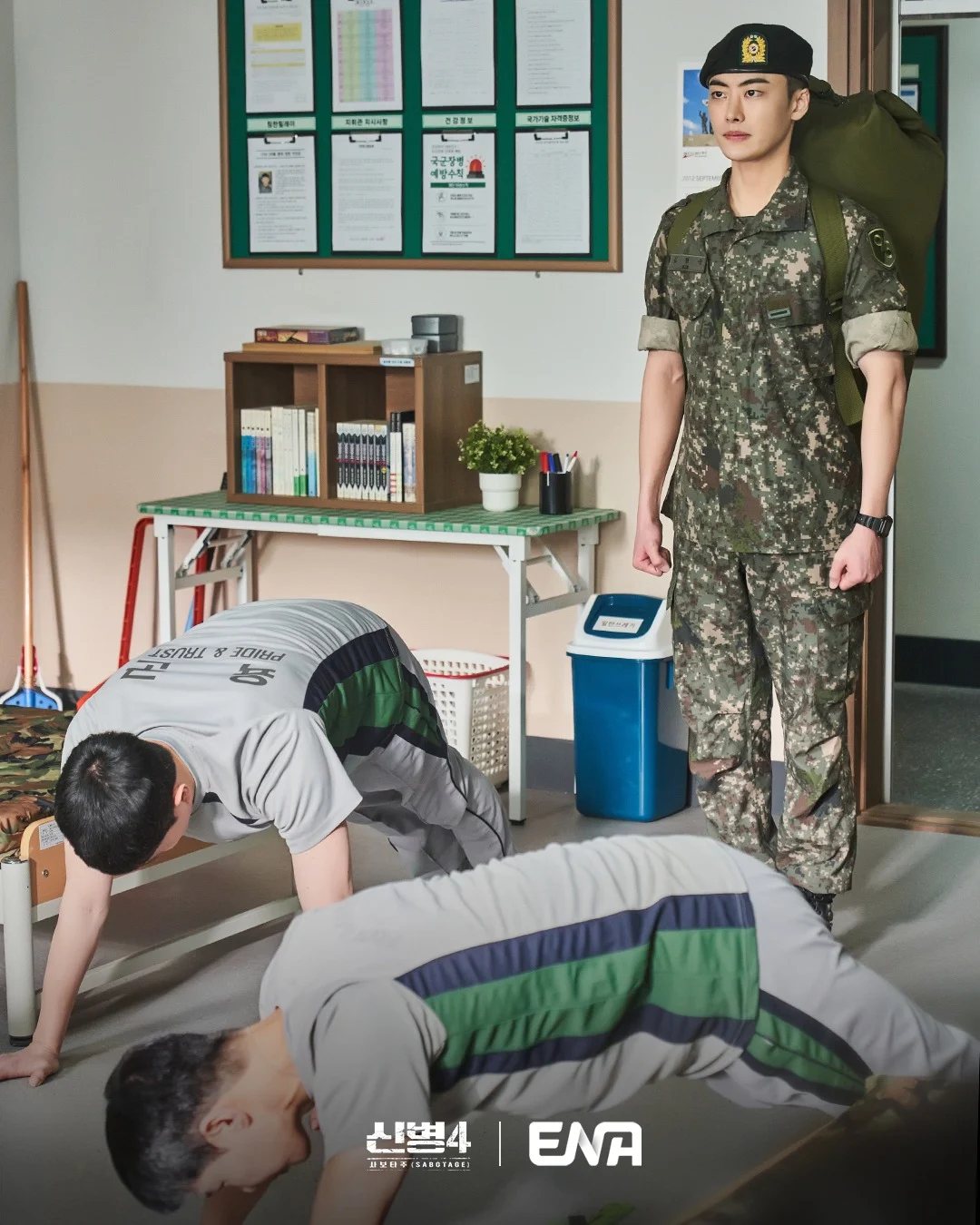





 Suro Senen
  Asro
Asro  Azzam Bilal Chamdy
