
 By Ammar Sabilarrohman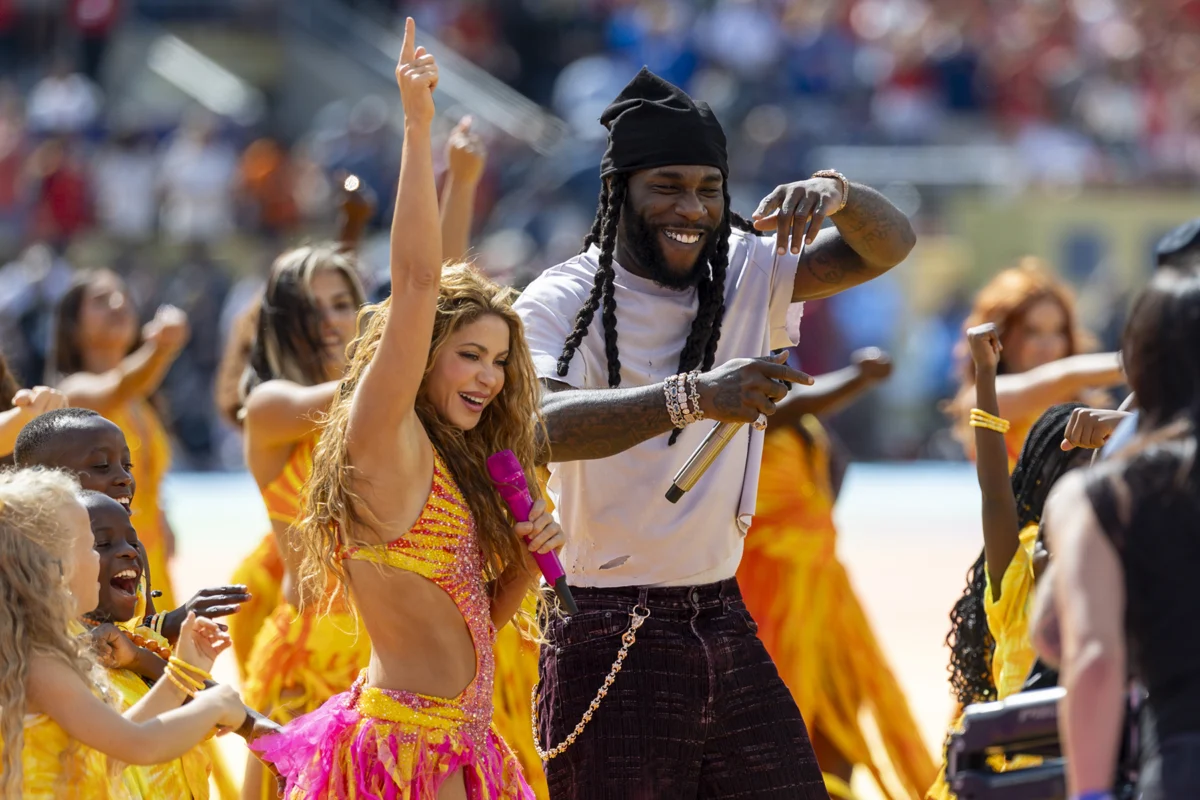
The infectious rhythm of "Dai Dai (FIFA Official World Cup Song 2026)," performed by global superstars Shakira and Burna Boy, continues to captivate audiences worldwide, holding the No. 1 position on the Billboard Global 200 for an impressive seventh consecutive week. This sustained chart dominance underscores the song’s widespread appeal, transcending geographical and cultural boundaries to become a true global phenomenon. Beyond its international success, the anthem has also achieved a significant milestone on U.S. radio, reaching the pinnacle of the Billboard Rhythmic Airplay chart.
A Historic Ascent on U.S. Radio
The track "Dai Dai," released under the FIFA Sound, SALXCO, Def Jam, and Sony Music Latin labels, has officially claimed the top spot on the Billboard Rhythmic Airplay chart for the week of September 5th. This achievement signifies a monumental career moment for both artists. For Shakira, it marks her very first No. 1 on this influential radio ranking, a testament to her enduring musical relevance and ability to connect with contemporary audiences. While she has previously seen success on the Rhythmic Airplay chart, with her iconic 2006 hit "Hips Don’t Lie" featuring Wyclef Jean peaking at No. 5, "Dai Dai" represents a significant new peak in her illustrious career.
Burna Boy, a leading figure in the global Afrobeats movement, also celebrates a landmark achievement with "Dai Dai." This marks his second No. 1 on the Rhythmic Airplay chart as a lead artist, following his earlier success with "wgft" featuring Gunna, which held the top position for four weeks in January. His consistent presence at the forefront of the chart is remarkable; in just five entries on Rhythmic Airplay, Burna Boy has reached the top two with four different tracks, including previous runners-up "Last Last" in 2022 and "Sittin’ on Top of the World" in 2023. His collaboration with Shakira on "Dai Dai" further solidifies his status as a global crossover artist.
The Rhythmic Airplay chart reflects the most-played songs on panel-contributing rhythm radio stations across the United States. "Dai Dai" ascended to the summit based on its performance during the August 21-27 tracking week, jumping from the No. 3 position. This dethroned the previous week’s leader, Drake’s "Shabang," which had enjoyed a two-week reign at No. 1. The shift in leadership highlights the dynamic nature of radio airplay and the strong momentum behind the World Cup anthem.
Global Domination and Expanding Reach
The success of "Dai Dai" is not confined to U.S. radio. Its reign on the Billboard Global 200 for seven weeks underscores its unparalleled global reach. This chart, which ranks songs based on streaming and sales activity from more than 200 territories, is a definitive measure of worldwide musical popularity. Furthermore, the anthem has secured its tenth consecutive week at No. 1 on the Billboard Global Excl. U.S. chart, demonstrating its dominance in markets outside of the United States.
Beyond its leading positions on the global and rhythmic charts, "Dai Dai" is steadily gaining traction at pop radio formats. It currently holds the No. 27 position on the Pop Airplay chart, a strong performance that reflects growing listener engagement. While this is one rung below its peak on this chart, the song is experiencing its strongest weekly play count, indicating sustained interest from pop radio programmers. The anthem also shows resilience on the Adult Pop Airplay chart, where it has re-entered at its strong No. 36 position, despite a minor dip in audience impressions.
The combined strength across these radio formats is propelling "Dai Dai" up the all-genre Billboard Radio Songs chart. It has climbed to No. 28 on this aggregate chart, which measures total weekly audience impressions from all monitored radio formats. During the recent tracking week, the song garnered 18.2 million audience impressions, marking a significant 7% increase from the previous week. This growth signifies a broadening listener base and increasing exposure across a wider spectrum of radio audiences.
Context of the FIFA World Cup 2026
The FIFA World Cup 2026, a monumental event that will be jointly hosted by the United States, Canada, and Mexico, provides the backdrop for the immense success of "Dai Dai." This will be the first World Cup to feature an expanded 48-team format and the first to be held across three North American nations. The tournament is anticipated to be a record-breaking event, both in terms of global viewership and economic impact. The official anthem often plays a crucial role in amplifying the excitement and unifying spirit of the tournament, and "Dai Dai" has certainly fulfilled that role with remarkable efficacy.
Shakira, a global icon with a history of delivering memorable World Cup anthems, including the ubiquitous "Waka Waka (This Time for Africa)" for the 2010 FIFA World Cup in South Africa, brings her signature energy and charisma to "Dai Dai." Her previous anthems have become cultural touchstones, resonating with fans long after the tournaments conclude. Burna Boy, a Grammy Award-winning artist, adds a contemporary and globally influential Afrobeats flavor to the track, bridging traditional sounds with modern pop sensibilities. Their collaboration represents a powerful fusion of musical legacies and contemporary global appeal, perfectly suited to the diverse and inclusive nature of the modern World Cup.
The image accompanying the news depicts Shakira and Burna Boy performing "Dai Dai" during the halftime show of the FIFA World Cup Final match between Spain and Argentina on July 19, 2026, at the New York New Jersey Stadium in East Rutherford, N.J. This visual reinforces the song’s connection to the pinnacle of the sport and its presence on a global stage. The performance at such a high-profile event would have undoubtedly contributed significantly to the song’s initial surge in popularity and its sustained chart performance.
Broader Impact and Industry Analysis
The sustained success of "Dai Dai" on global and U.S. charts offers several key insights into the contemporary music landscape. Firstly, it highlights the continued power of event-driven music. Major sporting events like the FIFA World Cup provide a unique platform for artists to reach massive, engaged audiences, often leading to significant chart impact. Secondly, the collaboration between Shakira and Burna Boy demonstrates the increasing importance of cross-genre and cross-cultural collaborations in achieving global hits. The fusion of Shakira’s Latin pop prowess with Burna Boy’s Afrobeats dominance creates a sound that appeals to a diverse international listenership.
The song’s strong performance across multiple Billboard charts – Global 200, Global Excl. U.S., Rhythmic Airplay, Pop Airplay, Adult Pop Airplay, and Radio Songs – signifies a holistic success that transcends specific formats. This broad appeal is a hallmark of truly impactful global anthems. The data from Luminate, which tracks radio airplay, sales, and streaming, provides the empirical evidence for this widespread consumption.
The longevity of "Dai Dai" at No. 1 on the Billboard Global 200 is particularly noteworthy. In an era of rapidly changing music trends and short-lived viral hits, maintaining the top position for seven weeks suggests a deep and enduring connection with listeners. This suggests that the song’s melodic hooks, rhythmic appeal, and thematic relevance to the World Cup have resonated beyond initial novelty.
As the FIFA World Cup 2026 approaches, the continued prominence of "Dai Dai" is likely to further amplify the anticipation and celebratory atmosphere surrounding the tournament. The song has not only become a soundtrack to the event but has also cemented its place in the annals of global music history, showcasing the power of collaboration, cultural fusion, and the universal language of music to unite the world. The ongoing success of "Dai Dai" serves as a compelling case study in how a well-crafted anthem, supported by stellar artist talent and a globally significant event, can achieve unprecedented levels of international acclaim.

