In an unprecedented shift in inter-Korean relations, South Korean citizens are engaging with North Korean state propaganda at record levels. Following a decisive policy directive from the administration of President Lee to liberalize access to information regarding the Democratic People’s Republic of Korea (DPRK), the official organ of the Workers’ Party of Korea, Rodong Sinmun, has seen a dramatic spike in readership within state-run digital archives.
For decades, the Rodong Sinmun was classified under South Korean law as "anti-state" material, restricted behind stringent legal barriers intended to prevent the dissemination of Pyongyang’s ideology. However, the recent reclassification of the newspaper as "general information material" has transformed the public’s ability to scrutinize the rhetoric and internal messaging of the Kim Jong Un regime.
The Policy Shift: Breaking the Information Blockade
The decision to open up access to North Korean media is a cornerstone of President Lee’s "Transparency and Understanding" initiative. The administration argues that in order to engage effectively with a nuclear-armed neighbor, South Koreans must possess a nuanced, first-hand understanding of the state’s internal narrative rather than relying on secondary interpretations or sanitized reports.
Under the previous legal framework, accessing North Korean media was often cumbersome, requiring specialized security clearance or academic justification. By moving these documents into the digital domain of the Information Center on North Korea, the Ministry of Unification has effectively democratized access to the DPRK’s primary mouthpiece.
Chronology of Engagement: A Surge in Interest
Data provided by the Ministry of Unification on Wednesday highlights a distinct trajectory in public engagement following the policy rollout. The numbers paint a picture of initial curiosity followed by a sustained period of analytical interest.
Q1 2026: The "Discovery Phase"
January: The transition began with a modest start. As news of the policy change trickled out, 3,475 views were recorded across the digital archive, supported by 84 unique system users.
February: The impact of the reclassification became more apparent as digital views climbed to 6,125. Interestingly, while views increased, the number of unique users actually dipped slightly to 71, suggesting that those who were already engaged began to read more deeply and frequently.
March: This month marked the zenith of the initial surge. Digital views skyrocketed to 10,092, with 100 unique users navigating the archive. This period coincided with heightened rhetoric from Pyongyang, likely driving researchers, students, and curious citizens to the site to track official state responses to regional geopolitical tensions.
Q2 2026: Consolidation of Interest
April: As the novelty of the policy change waned, views stabilized at 8,632, though the number of unique users continued to climb to 106.
May: By the end of the second quarter, the archive recorded 7,889 views.
The data suggests a transition from "casual interest" to "specialized study." While the raw number of views has retreated from the March peak, the number of unique users—those actively logging in to interact with the archives—has remained robust, indicating a core group of researchers and citizens who are utilizing the facility for sustained academic or professional purposes.
Supporting Data and User Demographics
The Information Center on North Korea, located in the heart of Seoul, has long been a repository for hard copies of the Rodong Sinmun. However, the digitization of these archives has fundamentally changed the demographic profile of the readers.
Previously, the library was largely frequented by North Korean defectors seeking a connection to their homeland or professional intelligence analysts. Today, the digital archive logs reveal a wider spectrum of visitors:
Academic Researchers: University professors and graduate students focusing on security studies are the most frequent users, utilizing the archive to perform longitudinal studies on North Korean political linguistics.
General Public: A significant portion of the traffic is attributed to private citizens, suggesting that the South Korean public is increasingly interested in the "human element" behind the headlines.
Media Professionals: Journalists covering the Korean Peninsula are increasingly citing Rodong Sinmun editorials to substantiate reports on the North’s shifting diplomatic posturing.
Official Responses and Bureaucratic Stance
The Ministry of Unification has been careful to frame this project as a tool for "informed democracy." In a statement accompanying the data release, a Ministry spokesperson noted:
"Our objective is not to facilitate the spread of North Korean propaganda, but to build a citizenry that is well-versed in the reality of the North. By providing a controlled, transparent environment to view these documents, we are stripping away the mystique of the state media and allowing our citizens to view the DPRK’s rhetoric with a critical, educated eye."
However, the policy has not been without its critics. Some conservative lawmakers have expressed concerns that unfettered access, even within a digital archive, could inadvertently provide a platform for North Korean ideological messaging. They argue that the government must maintain strict oversight to ensure that these archives are used for objective analysis rather than radicalization.
In response, the Ministry has confirmed that while the Rodong Sinmun is now classified as general material, access remains tracked and the context of the material is provided through supplementary analytical guides offered by the Information Center.
Implications: A New Era of Information Warfare?
The surge in readership poses significant implications for the future of inter-Korean relations.
1. Transparency as a Strategic Asset
By normalizing the consumption of North Korean media, Seoul is effectively neutralizing the "forbidden fruit" appeal of DPRK propaganda. When the state treats these newspapers as public record rather than contraband, the psychological allure of the "secret" information is diminished.
2. Monitoring Shifts in Pyongyang’s Narrative
The digital archive allows for real-time sentiment analysis. By tracking which articles receive the most views, the Ministry of Unification can gain insight into which topics the South Korean public finds most concerning—be it missile tests, economic reform promises, or the health of the leadership.
3. Challenges to Future Dialogue
The increased scrutiny of Rodong Sinmun by the South Korean public may lead to a more skeptical electorate. As citizens become more familiar with the erratic and often contradictory nature of North Korean official statements, the political appetite for "blind engagement" may decrease, forcing policymakers in Seoul to adopt a more pragmatic and cautious approach to future inter-Korean summits.
Conclusion: The Path Forward
The data from the Information Center on North Korea serves as a barometer for a changing society. South Korea is moving away from a policy of information isolationism toward a model of critical engagement.
As the Ministry of Unification continues to digitize more records, the challenge will be to maintain the balance between accessibility and security. The current figures indicate that there is a clear demand for information—not as a means of indoctrination, but as a prerequisite for navigating the complexities of the most heavily fortified border in the world.
Whether this trend of digital engagement will lead to greater mutual understanding or merely sharpen the ideological divide remains to be seen. What is clear, however, is that the digital archives of the Rodong Sinmun have become a vital battlefield in the ongoing information war, and for the first time in history, the South Korean public is no longer standing on the sidelines.

 By Azzam Bilal Chamdy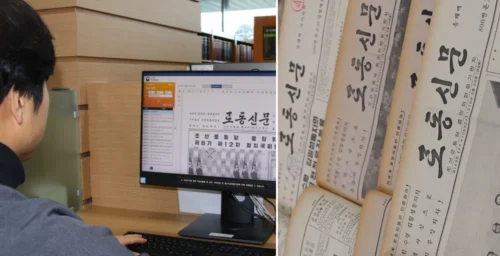


 Nana Wu
  Laily UPN
  Nana Muazin
