
 By Basiran
IVE member Ahn Yujin has recently become the focal point of a heated national discussion after reports confirmed her successful bid in a luxury apartment lottery in Seoul. The news, initially celebrated as a stroke of immense fortune for the popular K-pop idol, swiftly transitioned into a broader, more critical examination of the fairness and accessibility of South Korea’s highly competitive housing subscription system. This incident has reignited long-standing public grievances over wealth disparity and the increasing difficulty for average citizens, particularly the younger generation, to achieve homeownership in the capital’s astronomically priced real estate market.
Chronology of a Controversial Win
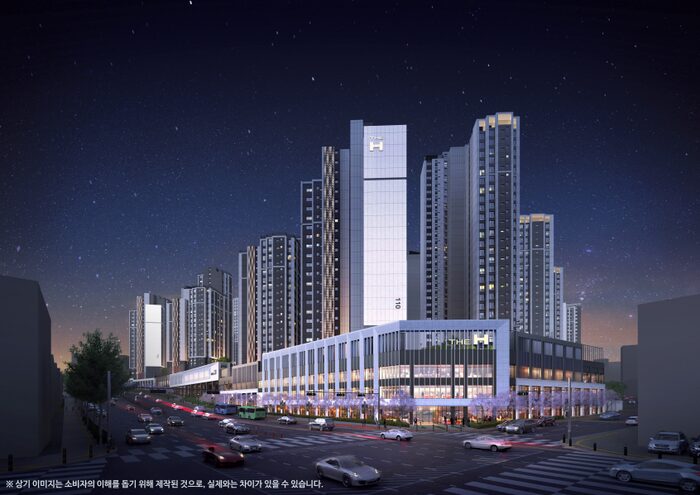
The story began to unfold in August 2024, when "The H Bangbae," a large-scale redevelopment project nestled in Seoul’s affluent Bangbae-dong in the Seocho District, first opened its doors for general sale. This highly anticipated residential complex quickly garnered attention for its prime location and luxurious offerings. Units were initially priced within a staggering range, from approximately ₩1.70 billion KRW (about $1.14 million USD) to ₩2.76 billion KRW (about $1.84 million USD), depending on size and specifications.
Fast forward to July 10, 2026, when the Maeil Business Newspaper broke the news that Yujin had secured a unit in the general sale lottery for The H Bangbae. This report sent ripples through both the entertainment industry and the broader public, given the project’s prestige and the immense financial implications of winning such a lottery. Just days later, on July 14, 2026, various media outlets, including Koreaboo, amplified the story, bringing it to the forefront of national discourse and sparking an intense online debate that continues to capture public attention.
Unpacking "The H Bangbae": A Prime Investment Opportunity
The H Bangbae is not just any apartment complex; it represents the pinnacle of luxury urban living in one of Seoul’s most coveted neighborhoods. Bangbae-dong, located in the Seocho District, is renowned for its upscale residences, excellent educational institutions, and proximity to major business and cultural hubs. Such properties are not merely homes but significant investment vehicles, often appreciating rapidly in value due to their strategic location and limited availability.

The project initially offered around 215 units, all measuring 84 square meters or larger, catering to a demographic seeking spacious and high-end accommodations. A critical factor contributing to its desirability and the subsequent controversy is its classification under Korea’s price cap system. This government policy aims to stabilize housing prices by limiting the initial sale price of new apartments. However, paradoxically, for projects like The H Bangbae in prime locations, this cap often creates a substantial gap between the initial sale price and the market resale value, effectively making successful lottery bids "lotto apartments" – instant generators of significant wealth.
Crucially, The H Bangbae also did not impose a mandatory owner-occupancy requirement. This clause, often seen in other price-capped projects to prevent speculative buying, was absent here. The lack of such a restriction meant that winners were not obligated to live in their units for a set period, making immediate resale or rental a viable option and further enhancing its attractiveness as a speculative investment rather than a purely residential purchase.
The Mechanics of Korea’s Housing Lottery System
To fully grasp the public reaction, one must understand the intricacies of South Korea’s housing subscription system. The system primarily operates through a points-based scheme, known as "housing subscription scores" (청약 가점제). Applicants accumulate points based on various criteria, including the length of their housing subscription savings account membership, the number of dependents in their household, and the period of their no-housing ownership. In highly competitive projects, scores exceeding 70 points are typically required to stand a strong chance of securing a unit. These high-score individuals usually represent long-term savers and families with a genuine need for housing.
However, a certain percentage of units, particularly in larger projects, are often reserved for random allocation under a lottery system (추첨제), irrespective of accumulated points. It was through this lottery system that Yujin reportedly secured her unit. While this lottery component is designed to offer a chance to those who may not accumulate high scores due to being young, single, or recent participants in the subscription system, its application in luxury, price-capped projects has become a point of contention.
The Staggering Financial Windfall and Shifting Public Sentiment
The immediate financial implications of Yujin’s win are astounding. Reports indicate that an 84-square-meter unit in The H Bangbae, which sold for approximately ₩2.24 billion KRW (about $1.50 million USD) under the lottery system, currently commands an estimated market value of ₩4.00 billion KRW (about $2.67 million USD) in the resale market. This translates to an estimated profit of at least ₩2.00 billion KRW (about $1.33 million USD) for the lottery winner – an instant, life-changing sum.

Initially, the news elicited a mix of awe and congratulatory messages for Yujin, acknowledging her extraordinary luck. However, as the scale of the financial gain became clearer and the details of the lottery system were dissected, the public discourse took a sharp turn. The conversation shifted dramatically from Yujin’s individual fortune to a broader, more critical examination of the inherent fairness of the entire housing allocation system. Netizens, real estate experts, and social commentators began to question whether a system that could generate such immense, unearned wealth for a select few, while excluding the majority, truly served the public interest.
The Fairness Debate: An Exacerbation of Inequality?
The core of the burgeoning controversy revolves around the high entry barriers that effectively preclude many from participating in these "lotteries" despite their ostensibly random nature. To secure a unit in The H Bangbae, successful applicants were mandated to pay a 20% down payment. For even the smallest unit in the lottery, this translated to a colossal sum exceeding ₩400 million KRW (about $267,000 USD) in immediate cash. Furthermore, the project did not offer deferred-interest financing, meaning buyers who opted for construction loans had to bear the burden of interest payments throughout the entire payment period, adding another layer of financial pressure.
These stringent financial requirements have led to widespread criticism that the housing lottery system, far from being an equitable distribution mechanism, inadvertently favors the already affluent. Many argue that young people, aspiring first-time homebuyers, or those from average-income backgrounds are effectively barred from even entering the competition, regardless of their luck or need. This sentiment resonates deeply within South Korean society, where the divide between the "golden spoon" (금수저, those born into wealth) and "dirt spoon" (흙수저, those born into poverty) is a constant and painful topic of discussion. The perception that only those with substantial liquid assets can participate in these high-stakes housing lotteries reinforces the narrative that the system perpetuates, rather than alleviates, socio-economic inequality.
Broader Context: Seoul’s Enduring Housing Crisis
The debate surrounding Yujin’s lottery win is not an isolated incident but a symptom of Seoul’s chronic and deeply entrenched housing crisis. The city’s real estate market is notoriously one of the most expensive and competitive globally. Limited land availability, coupled with surging demand fueled by urbanization, population concentration, and speculative investment, has driven housing prices to unprecedented levels.
Successive South Korean governments have grappled with this issue, implementing various policies aimed at stabilizing the market and improving affordability. These measures have included the aforementioned price caps, stricter loan regulations, and increased property taxes. However, the effectiveness of these policies in achieving true equity has been continually debated. Critics argue that while price caps can make initial purchases more "affordable" on paper, the substantial down payments and the resulting "lotto effect" often exclude those who need affordable housing the most, ultimately benefiting wealthy investors or those with significant family support.

For many young Koreans, the dream of homeownership has become increasingly distant, despite years of hard work and diligent saving. The housing market is seen as an insurmountable barrier, contributing to feelings of despair and economic insecurity among the youth. Incidents like Yujin’s lottery win, while perfectly legal, serve as potent reminders of this harsh reality and fuel calls for more fundamental reforms to create a genuinely equitable playing field.
Statements, Reactions, and Inferred Positions
The public reaction has been vociferous, primarily channeled through online forums and social media. Netizen comments largely fall into two categories: an initial wave of congratulations for Yujin’s personal fortune, quickly followed by a dominant chorus of systemic criticism. It is crucial to note that virtually none of the criticism has been directed at the idol herself. Commenters consistently emphasize that Yujin merely participated in a legal process and was fortunate enough to win, underscoring that the issue lies with the system, not the individual. Phrases like "It’s not Yujin’s fault, but the system is unfair" have been ubiquitous.
Real estate experts, while refraining from direct commentary on Yujin’s specific case, have offered insights into the dynamics of such projects. They typically explain that the significant price gap between initial sale and market value is a direct consequence of the price cap system in highly desirable locations. They might also point out that while the lottery component is designed to add an element of chance, the high financial entry barrier is an unavoidable reality for high-value properties, making it difficult to fully democratize access.
Government officials, particularly those from the Ministry of Land, Infrastructure and Transport, have yet to issue a direct statement regarding Yujin’s specific case. However, the recurring nature of such controversies means that policy discussions around housing fairness are ongoing. It is reasonable to infer that this incident will add pressure to re-evaluate the current housing subscription system, with a particular focus on how to genuinely support first-time homebuyers and mitigate the "lotto apartment" phenomenon. Potential reforms could include stricter owner-occupancy requirements for price-capped units or adjustments to down payment structures to make participation more accessible.
Yujin’s agency, Starship Entertainment, has maintained its typical stance of refraining from commenting on the personal financial matters of its artists, a common practice in the K-pop industry to protect idol privacy.
Analysis and Broader Implications
Yujin’s lottery win, while a personal triumph, has inadvertently cast a spotlight on the deep-seated structural issues within South Korea’s housing market. Her situation, though legally sound, highlights how a system ostensibly designed to promote fair allocation can, in practice, exacerbate wealth disparities by creating immense, instantaneous wealth for those already privileged enough to meet the high entry requirements.
For the housing market, this incident serves as a critical stress test of current policies. It renews scrutiny on whether the price cap system, without sufficient complementary measures, inadvertently fuels speculation and creates an unfair advantage for the wealthy. The public debate demands a serious re-evaluation of the housing subscription framework to ensure it genuinely serves the needs of all citizens, not just a select few.
The societal impact is profound. The ongoing discourse reinforces the pervasive sense of hopelessness among young Koreans regarding their ability to secure stable housing and achieve financial independence. It fuels the narrative that upward mobility is increasingly dictated by inherited wealth or extraordinary luck, rather than merit or hard work. Addressing these concerns is vital for social cohesion and future economic stability.
In conclusion, while IVE’s Yujin celebrates a remarkable personal achievement, her lottery win has transcended individual fortune to become a national talking point on systemic fairness. The ensuing debate is not about Yujin’s actions, but about the urgent need for reforms to ensure that the dream of homeownership in South Korea remains accessible and equitable for all, rather than an exclusive lottery for the already privileged.

