
 By Asep Darmawan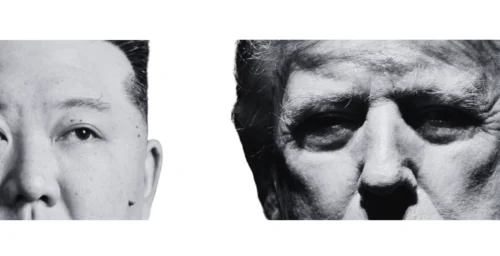
Introduction: The Failure of the Status Quo
For more than thirty years, the United States’ approach to the Democratic People’s Republic of Korea (DPRK) has been anchored to a singular, inflexible goal: the Complete, Verifiable, and Irreversible Denuclearization (CVID) of the Korean Peninsula. While this objective is morally and strategically desirable, its application as a prerequisite for diplomatic engagement has arguably become the primary obstacle to regional security. As the geopolitical landscape shifts in 2026, it is time to confront a harsh reality: the pursuit of immediate, total denuclearization has failed to prevent the expansion of Pyongyang’s nuclear arsenal.
In this climate, a strategic pivot toward a nuclear "freeze"—a pragmatic acknowledgment of current capabilities—is not an act of capitulation. Rather, it is a necessary evolution of policy that moves away from the "all-or-nothing" trap that has defined the last three decades of failure.
A Chronology of Stagnation: Three Decades of Failed Diplomacy
The history of U.S.-DPRK relations is a repetitive cycle of optimistic engagement followed by bitter disillusionment.
- 1994: The Agreed Framework: The Clinton administration brokered a deal to freeze North Korea’s plutonium production in exchange for light-water reactors and fuel oil. The agreement collapsed in the early 2000s over concerns regarding clandestine uranium enrichment.
- 2003–2009: The Six-Party Talks: An ambitious multilateral effort involving the U.S., both Koreas, China, Japan, and Russia. Despite the 2005 Joint Statement, the talks eventually sputtered out as Pyongyang prioritized its nuclear deterrent over economic integration.
- 2018–2019: The Summit Era: The historic meetings between Donald Trump and Kim Jong Un in Singapore and Hanoi offered a glimpse of a "new way." However, the inability to bridge the gap between "sanctions relief" and "denuclearization steps" led to the breakdown of the Hanoi summit, leaving the U.S. back at square one.
- 2020–2026: The Nuclear Expansion: Since the collapse of the summit process, Pyongyang has accelerated its missile testing programs, refined its tactical nuclear weapons capabilities, and solidified its status as a de facto nuclear state.
Supporting Data: Why the Current Model is Obsolete
The fundamental issue with the CVID framework is that it ignores the internal logic of the North Korean regime. For Pyongyang, nuclear weapons are not merely bargaining chips; they are perceived as the ultimate insurance policy against regime change.
The Growth of the Arsenal:
According to independent intelligence assessments, the DPRK’s fissile material stockpiles have grown exponentially. In the early 1990s, the threat was largely theoretical or limited to single-digit weapon potential. Today, the regime likely possesses enough material for dozens of warheads, ranging from tactical battlefield nukes to intercontinental ballistic missiles (ICBMs) capable of reaching the U.S. mainland.
The Limitations of Sanctions:
The "maximum pressure" campaign, while theoretically sound, has hit a wall of diminishing returns. Due to increased trade ties with Russia and China—who view the DPRK as a strategic buffer against U.S. influence—the international sanctions regime is increasingly porous. By holding out for total denuclearization, Washington has inadvertently incentivized Pyongyang to seek economic autarky and deeper military alignment with other revisionist powers.
The Case for a "Freeze" Policy
If total denuclearization is a multi-decade project, a "freeze" is an immediate security imperative. A freeze does not mean abandoning the ultimate goal of a nuclear-free Korea; it means prioritizing the containment of the threat before attempting its elimination.
1. Preventing Proliferation
A freeze agreement would include rigorous monitoring of centrifuge facilities and missile testing sites. Even a temporary halt to production limits the "ceiling" of the North Korean threat, providing breathing room for diplomacy.
2. Risk Reduction and Crisis Communication
The current lack of communication between Washington and Pyongyang creates a dangerous risk of miscalculation. A freeze agreement would necessitate back-channel communications and hotlines, which are vital for preventing a localized skirmish from escalating into a nuclear conflict.

3. Strategic Realism
By focusing on a freeze, the U.S. acknowledges the reality on the ground. This pragmatism can strip away the performative nature of recent negotiations. If the U.S. stops demanding that Pyongyang surrender its deterrent as a precondition, the regime may find the cost of continued testing to be higher than the benefits of a normalized relationship with the global economy.
Official Responses and Political Implications
The political landscape in Washington remains divided. Hardliners argue that any deal short of CVID provides the DPRK with "legitimacy" and weakens the Non-Proliferation Treaty (NPT). They warn that a freeze could be used by Pyongyang to simply "buy time" to perfect its existing technology.
Conversely, a growing cohort of analysts and policymakers, represented by voices like those at the Ajou Institute of Unification Studies, argue that the "legitimacy" argument is moot. Pyongyang is already a nuclear state in every practical sense. By refusing to engage unless they surrender their weapons, the U.S. is essentially punishing itself by leaving the status quo unchanged while the North Korean threat continues to grow.
Implications for South Korea:
For Seoul, the implications are profound. A policy of "freeze-first" could lower the temperature on the peninsula, reducing the constant threat of military provocation that plagues South Korean markets and society. However, it also raises fears of "decoupling"—the concern that if the U.S. accepts a nuclear-armed North Korea (even temporarily), the U.S. nuclear umbrella over Seoul might be perceived as less credible. This is a diplomatic hurdle that Washington must clear through robust consultations with the ROK government.
Future Outlook: A New Path Forward
The path to peace on the Korean Peninsula is narrow, but it is not closed. The mistake of the last thirty years has been the belief that North Korea would eventually sacrifice its nuclear program for the promise of economic development.
Moving forward, a successful strategy must include:
- Step-by-Step Engagement: Acknowledge the freeze as the first phase of a broader, multi-decade security framework.
- Regional Cooperation: Ensure that China and Russia are incentivized to maintain the freeze, as a nuclear-unstable Korea serves no one’s interest.
- Humanitarian-Diplomatic Linkage: Use humanitarian aid not as a reward for denuclearization, but as a tool to build the trust necessary for long-term negotiations.
The world cannot afford another decade of waiting for a "denuclearization" that is not coming under current conditions. By shifting the focus toward a manageable freeze, the United States has the opportunity to move from a position of frustrated impotence to one of active, pragmatic management of the North Korean nuclear challenge.
In the game of international security, the preservation of peace is the highest priority. If a nuclear freeze is the price of stability, it is a price that is long overdue for negotiation.
Disclaimer: This article is an analysis of the evolving geopolitical situation regarding U.S.-DPRK relations. The views and proposals discussed herein reflect ongoing debates within the international relations community and do not necessarily reflect the official policy of any specific government entity.
 Ammar Sabilarrohman
  Pevita Pearce
  Nana Wu
