
 By Lina Irawan
In a candid revelation that surprised many, Choi Sooyoung, a prominent member of the iconic K-Pop group Girls’ Generation, recently disclosed an extraordinary incident that led her to an emergency room visit. The unexpected cause? A severe case of overeating during a company dinner, a story that offered a rare glimpse into the more relatable, human side of a global superstar. This surprising anecdote emerged during her guest appearance on a popular South Korean variety program, sparking widespread discussion among fans and the public about food culture, health, and the unexpected challenges faced by celebrities.
The Revelation on "Please Take Care of My Refrigerator"
The disclosure took place on a recent episode of JTBC’s widely watched variety show, Please Take Care of My Refrigerator. The program, known for its unique concept where celebrity guests showcase the contents of their personal refrigerators, which are then used by top chefs to create impromptu dishes, provides an intimate look into the daily lives and dietary habits of public figures. Sooyoung appeared alongside veteran singer and actress Uhm Jung Hwa, creating a dynamic duo that captivated audiences with their witty banter and personal stories.
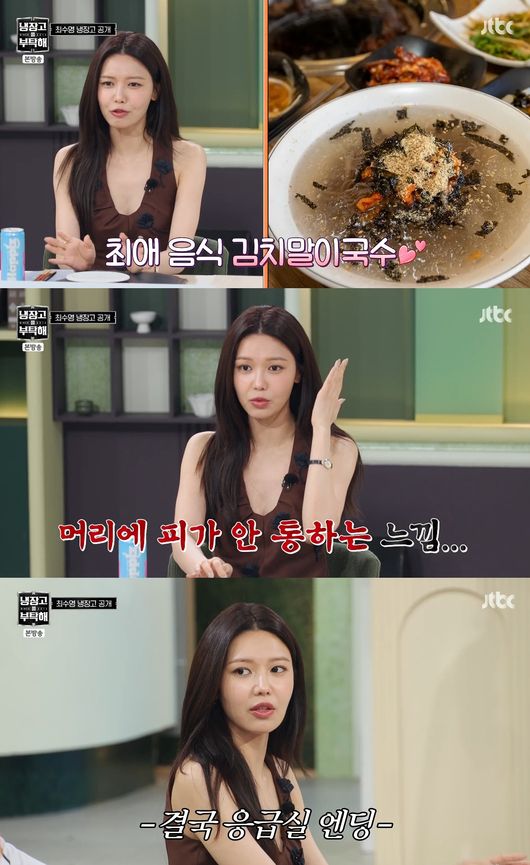
During a segment of the show, the conversation naturally veered towards food and eating habits. Sooyoung, known for her vibrant personality and often humorous candor, began to share an experience that underscored her deep affection for delicious cuisine. "Once I find something delicious, I keep eating it," she confessed, setting the stage for her remarkable tale. She recounted an occasion during a company dinner where she had been particularly enjoying kimchi noodle soup, a popular Korean dish, which she prefers to eat alongside meat. This combination, a hearty and flavorful staple in Korean dining, often encourages generous portions due to its comforting and satisfying nature.
As she continued to indulge in the delectable meal, Sooyoung described a sudden and alarming onset of symptoms. "While eating that, suddenly my head was hurting so much. I felt so full that blood wasn’t flowing properly," she explained, detailing the intense discomfort she experienced. Her description, though not a medical diagnosis, vividly conveyed her perception of extreme physiological distress. The severity of her headache and the sensation of impeded circulation prompted an immediate decision to seek medical attention. "I went to the emergency room and vomited everything out, and then I felt better," she concluded, her frankness surprising both her co-guest Uhm Jung Hwa, the show’s hosts, and the viewers.
When pressed by the hosts on why she continued to eat despite feeling uncomfortable, Sooyoung’s response was disarmingly simple and relatable: "The thought of it being delicious was stronger than feeling full." This statement resonated with many, highlighting the universal human tendency to sometimes prioritize gustatory pleasure over physical satiety, especially when confronted with truly exceptional food. Her admission brought a wave of laughter from the studio audience and a nod of understanding from those who have experienced similar, albeit perhaps less severe, instances of overindulgence.
A Shared Culinary Misadventure: Chef Yoon Nam No’s Account
Adding another layer of relatability to Sooyoung’s unusual story, Chef Yoon Nam No, one of the resident culinary experts on Please Take Care of My Refrigerator, immediately chimed in, expressing a profound understanding of her predicament. "I know what that’s like," he affirmed, further adding, "I’m good at that. I went to the emergency room once too." His corroboration provided a professional perspective, albeit one born from personal experience, on the allure of delicious food leading to unforeseen consequences.

Chef Yoon then proceeded to recount his own dramatic experience, which occurred in his mid-20s. He vividly recalled a company dinner where he had the opportunity to taste Korean beef of "two-plus grade" for the very first time. This specific grade signifies the highest quality of Hanwoo (Korean native cattle) beef, renowned for its exceptional marbling, tenderness, and rich flavor. For many Koreans, consuming such premium beef is a luxurious and often celebratory experience, encouraging diners to savor every bite.
"The taste was so overwhelming," Chef Yoon described, illustrating the powerful sensory impact of the high-grade meat. His indulgence, combined with soju, a traditional Korean alcoholic beverage often consumed during company gatherings, led him to consume an estimated 1.1 kg of food and drink. The sheer volume proved too much for his system. Like Sooyoung, he described a sensation of extreme physical distress: "My oxygen supply got cut off." While again, this is a layman’s description, it underscores the intense discomfort and potential panic that can arise from severe overeating, mimicking symptoms that might typically warrant emergency medical attention.
Sooyoung, in response to Chef Yoon’s anecdote, playfully emphasized her enduring passion for food, reiterating, "I love eating too much. I really love delicious food," which once again elicited laughter and underscored the shared human experience of finding immense joy in culinary delights, even if it sometimes leads to minor mishaps.
Understanding the "Overeating" Phenomenon: A Medical Perspective
While Sooyoung and Chef Yoon’s experiences might sound extreme, the physiological responses to overeating are well-documented, though rarely escalating to an emergency room visit for otherwise healthy individuals. When a person consumes a significantly larger amount of food than their stomach can comfortably hold, a cascade of physiological events occurs.
Firstly, the stomach stretches considerably to accommodate the excess volume. This distension activates stretch receptors in the stomach lining, which send signals to the brain via the vagus nerve. These signals can lead to feelings of extreme fullness, nausea, bloating, and general abdominal discomfort. The digestive system, now overloaded, has to work much harder to process the influx of food. This increased metabolic activity diverts blood flow to the digestive organs, potentially leading to a temporary reduction in blood flow to other parts of the body, which might be perceived as lightheadedness or a "blood not flowing properly" sensation, as Sooyoung described.
The consumption of a large, heavy meal, especially one rich in carbohydrates and fats like kimchi noodle soup with meat, can also cause rapid fluctuations in blood sugar levels. An initial spike in blood glucose, followed by a compensatory release of insulin, can sometimes lead to a subsequent dip in blood sugar (reactive hypoglycemia), which can manifest as headaches, fatigue, and dizziness. Furthermore, the sheer physical pressure of a distended stomach on surrounding organs, including the diaphragm, can make breathing feel labored, contributing to a sense of restricted oxygen supply, echoing Chef Yoon’s description.
While vomiting can indeed provide immediate relief by emptying the stomach and alleviating pressure, it is generally the body’s natural defense mechanism against severe overeating or food poisoning. An emergency room visit for overeating alone is uncommon, but severe symptoms such as intense chest pain, difficulty breathing, prolonged vomiting, or symptoms mimicking a heart attack or stroke would certainly warrant immediate medical evaluation. The fact that both Sooyoung and Chef Yoon sought ER care suggests the level of discomfort they experienced was genuinely alarming to them, highlighting the importance of listening to one’s body and seeking help when symptoms are severe or unusual.

The Cultural Context of Food in Korea: Company Dinners and "Hoe-sik"
Sooyoung and Chef Yoon’s anecdotes are particularly resonant within the broader cultural framework of South Korea, where food plays an incredibly significant role in social bonding, celebration, and professional life. The "company dinner," or "hoe-sik" (회식), is a deeply ingrained tradition in Korean corporate culture. These gatherings are not merely about eating; they are crucial for fostering team cohesion, building relationships, and sometimes even discussing work in a more relaxed setting.
At a hoe-sik, there is often an expectation, particularly in more traditional environments, for employees to participate fully, which includes consuming ample amounts of food and drink. Refusing food or drink can sometimes be perceived as aloofness or a lack of team spirit. The table is typically laden with various dishes, often communal, encouraging shared enjoyment and indulgence. Kimchi noodle soup with meat, as mentioned by Sooyoung, is a popular choice for its comforting warmth and hearty flavors, making it easy to consume large quantities, especially when paired with other dishes.
Similarly, the consumption of premium Korean beef (Hanwoo) at a company dinner, as described by Chef Yoon, signifies a special occasion or a gesture of appreciation from management. Hanwoo is highly prized for its quality and is often reserved for significant events. When such a delicacy is served, the desire to fully savor the experience and perhaps consume more than usual can be overwhelming, especially for someone experiencing it for the first time, as Chef Yoon did in his mid-20s. These cultural dynamics can sometimes lead individuals to push past their physical limits in the spirit of camaraderie and celebration.
The Demands of the K-Pop Industry: Idol Diets and Public Image
Choi Sooyoung’s revelation also offers a fascinating, albeit fleeting, glimpse into the complex relationship K-Pop idols have with food and their public image. The K-Pop industry is notoriously demanding, with idols often subjected to rigorous training regimens and strict dietary controls to maintain a specific physique deemed ideal for their public persona. The pressure to uphold a flawless appearance is immense, leading many idols to follow stringent diets, sometimes for extended periods.
In this context, Sooyoung’s unreserved indulgence in a delicious meal, to the point of an emergency room visit, stands out. It suggests a moment of liberation from the usual strictures, a genuine expression of her personal love for food that momentarily eclipsed the professional pressures. This incident, while humorous in retrospect, humanizes idols by demonstrating that they too grapple with everyday temptations and physical limitations, just like anyone else.
For fans, such an anecdote can foster a stronger sense of connection and relatability. It breaks down the often-impenetrable barrier of celebrity perfection, reminding them that even global stars have relatable experiences, from the joy of a delicious meal to the discomfort of overindulgence. It highlights the dichotomy between the carefully curated image of K-Pop idols and their private lives, where moments of genuine, uninhibited pleasure can sometimes lead to amusing, if slightly alarming, outcomes.
Choi Sooyoung’s Illustrious Career: Beyond Girls’ Generation
Choi Sooyoung’s journey in the entertainment industry is a testament to her versatility and enduring appeal. Debuting in 2007 as a member of Girls’ Generation, she quickly rose to global stardom as part of one of K-Pop’s most influential and successful girl groups. Girls’ Generation, often dubbed "The Nation’s Girl Group," pioneered the Hallyu (Korean Wave) movement, breaking records and setting trends with their music, choreography, and fashion. Sooyoung, with her striking visuals, engaging stage presence, and multilingual abilities, played a crucial role in the group’s international success.
Beyond her musical endeavors, Sooyoung has successfully transitioned into a respected actress, gracing both the small and big screens. She has starred in numerous television dramas, including Squad 38, Man in the Kitchen, and Run On, earning critical acclaim for her diverse roles and natural acting prowess. Her filmography also includes notable appearances in movies such as Memories of a Dead End and New Year Blues. Her appearances on variety shows like Please Take Care of My Refrigerator further showcase her charismatic personality and ability to connect with audiences on a more personal level.
This particular incident on the variety show aligns with her public persona as someone who is honest, grounded, and unafraid to share her authentic self. It reinforces her image as an idol who, despite her celebrity status, remains relatable and approachable, further endearing her to her legions of fans.
Public Reception and Broader Implications
The revelation of Sooyoung’s emergency room visit due to overeating quickly became a trending topic, generating a flurry of reactions across social media platforms and entertainment news outlets. Fans expressed a mix of amusement, concern, and profound relatability. Many found humor in the extreme yet understandable scenario, while others appreciated her candidness and vulnerability. The incident served as a lighthearted reminder that even K-Pop idols, often perceived as superhuman, are susceptible to common human experiences.
From a broader perspective, such celebrity anecdotes, even seemingly trivial ones, contribute to ongoing conversations about healthy eating habits, moderation, and body positivity within the entertainment industry. While not intended as a public health announcement, Sooyoung’s story subtly highlights the importance of listening to one’s body and recognizing the signals of discomfort, even in the face of immense culinary temptation. It also reinforces the idea that food, while a source of pleasure and cultural connection, should be enjoyed responsibly.
The incident underscores the power of celebrity influence in shaping public discourse. A seemingly minor personal story, when shared by a figure of Sooyoung’s stature, can resonate widely, sparking discussions about cultural practices like company dinners, the pressures of the K-Pop industry, and the universal joy and occasional pitfalls of loving food.
Conclusion
Choi Sooyoung’s candid confession about her emergency room experience due to overeating a delicious meal offers a unique blend of humor, relatability, and insight into the life of a K-Pop idol. Her story, corroborated by Chef Yoon Nam No’s similar anecdote, transcends the superficial glamour of celebrity, touching upon universal human experiences of culinary indulgence and its sometimes surprising consequences.
While an emergency room visit for overeating remains an unusual occurrence, the underlying sentiments—the irresistible pull of delicious food, the camaraderie of a shared meal, and the occasional disregard for physical limits—are deeply relatable. Sooyoung’s willingness to share such a personal and amusing mishap not only endeared her further to her audience but also subtly contributed to broader conversations about food culture, health awareness, and the authentic humanity behind the polished facade of stardom. It stands as a testament to the enduring appeal of K-Pop idols who, despite their global fame, continue to connect with their fans through shared, albeit sometimes extraordinary, everyday experiences.

