 By Sagoh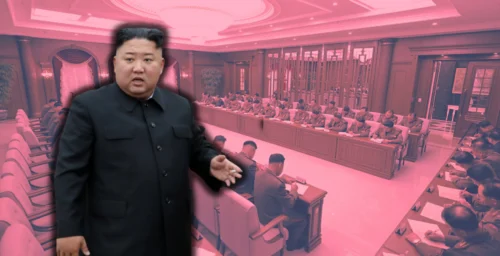
The recent sentencing of Pak Hui Chol, a senior North Korean military official, has sent shockwaves through the upper echelons of the Pyongyang elite. While the charges leveled against him—bribery, abuse of power, and the accumulation of illicit wealth—are staples of the North Korean legal narrative, the manner of his downfall marks a distinct departure from the regime’s traditional modus operandi. By airing Pak’s "extra-large crimes" at a rare joint meeting of party, government, and military officials, Kim Jong Un has transformed a standard anti-graft proceeding into a calculated exercise in political theatre, revealing the precarious balance between systemic corruption and the regime’s demand for absolute loyalty.
The Anatomy of a High-Level Purge
In the shadowy corridors of power in Pyongyang, the downfall of a high-ranking official is rarely a simple matter of criminal justice. For decades, the North Korean state has maintained a veneer of cohesion, often burying the transgressions of its elite to preserve the appearance of institutional integrity. However, the case of Pak Hui Chol stands in stark contrast.
During a recent, highly publicized joint meeting, Kim Jong Un personally spearheaded the condemnation of Pak. This was not a private disciplinary hearing; it was a public spectacle designed to resonate across the entire military-industrial complex. By branding Pak’s actions as "extra-large crimes," the regime signaled that the tolerance for individual enrichment, once considered a tacitly accepted perk of elite status, has reached a critical breaking point.
Observers note that this public shaming serves a dual purpose: it acts as a deterrent to other officials who may be tempted to leverage their positions for personal gain, and it allows Kim to consolidate power by purging potential rivals under the guise of an anti-corruption crusade.
A Chronology of Declining Influence
The trajectory of Pak Hui Chol’s career, while opaque to the outside world, mirrors the broader instability within the North Korean military hierarchy since Kim Jong Un assumed power.
- The Rise (Pre-2020): Like many of his contemporaries, Pak ascended through the ranks by demonstrating unwavering loyalty to the Kim family. His career was marked by positions of significant trust within the military apparatus, where he oversaw logistics and resource allocation—sectors notoriously prone to corruption.
- The Warning Signs (2022–2024): As the North Korean economy struggled under the weight of international sanctions and the post-pandemic isolation, the regime began tightening its grip on state resources. During this period, state media began to subtly shift its tone, focusing more heavily on "anti-socialist behavior" and "bureaucratism."
- The Breaking Point (Early 2026): Intelligence reports suggest that Pak’s internal oversight began to falter as he reportedly bypassed traditional channels to manage a personal network of illicit commerce.
- The Public Downfall (July 2026): The rare joint session of party and military officials served as the final stage of his prosecution. The public nature of the condemnation underscored the regime’s intent to make an example of a man who was once a trusted pillar of the military elite.
Systemic Corruption in a Command Economy
To understand the magnitude of Pak’s fall, one must look at the structural reality of the North Korean state. In a system where salaries are nominal and the state lacks the resources to provide for its upper class, corruption is not a flaw—it is a functional component of the bureaucracy. Officials at Pak’s level have historically relied on a web of "grease payments" and informal market participation to maintain their lifestyles and ensure the loyalty of their own subordinates.
However, the regime’s current anti-corruption drive, led by the Central Committee, suggests that the state is attempting to reclaim control over these informal networks. The irony, as many North Korea analysts point out, is that the system itself is built on a foundation of patronage. When an official is accused of "abuse of power," it is often because they have failed to share the spoils with the right people, or because their independent wealth has grown to a point where it challenges the centralized authority of the Supreme Leader.
Official Responses and State Rhetoric
State-run media, including the Rodong Sinmun, has framed the purge of Pak Hui Chol as a necessary "purification" of the party and military ranks. The official rhetoric emphasizes that no one, regardless of their rank or contribution to the revolution, is above the law.

"The party is engaged in a decisive struggle against the remnants of corruption," one editorial noted, emphasizing that the military must serve as the "shield of the revolution" rather than a tool for personal profit. This language serves to reinforce the ideology of the Juche state: that the individual’s life and status are entirely subordinate to the collective will of the regime.
Internationally, the reaction has been one of skepticism. South Korean officials and Western intelligence agencies view the move as a classic consolidation tactic. By highlighting the corruption of a high-level military figure, Kim Jong Un is likely attempting to deflect domestic dissatisfaction regarding the country’s dire economic conditions, shifting the blame onto "greedy" elites rather than the central leadership’s policy failures.
Implications for the North Korean Elite
The implications of the Pak case are profound. For the remaining members of the Pyongyang elite, the message is clear: the rules of the game have changed.
- Increased Paranoia: With the regime opting for public purges over quiet reassignment, the atmosphere of fear among high-ranking officials has intensified. The traditional security provided by one’s proximity to power is now negated by the risk of becoming a public scapegoat.
- Resource Re-centralization: The regime’s crackdown on illicit wealth is likely a precursor to a more aggressive attempt to siphon resources back into state-controlled coffers. As Pyongyang faces ongoing difficulties in sustaining its nuclear and missile programs, every dollar extracted from the elite helps shore up the military’s bottom line.
- Limits of the Anti-Graft Drive: Despite the spectacle, experts argue that this purge will likely fail to root out systemic corruption. Because the entire North Korean economic structure relies on informal mechanisms to bypass sanctions and shortages, cracking down on these networks often leads to temporary disruption rather than long-term reform. Once the current purge concludes, a new generation of officials will inevitably fill the vacuum, likely utilizing the same methods as their predecessors, albeit with greater caution.
The Future of the "Kim Jong Un Doctrine"
As Kim Jong Un continues to navigate the complexities of governing a closed, nuclear-armed state, the Pak Hui Chol affair serves as a microcosm of his leadership style. It is a mix of ideological rigidity, tactical cruelty, and an acute awareness of the need to keep his inner circle in a state of constant, manageable instability.
The "extra-large crimes" cited against Pak may have been real, but their public elevation was a strategic choice. By choosing to spotlight the rot within his own military, Kim is betting that he can maintain the loyalty of the masses by playing the role of the incorruptible arbiter of justice.
However, this strategy carries significant risks. By stripping away the protections previously afforded to the elite, the regime risks alienating the very people who uphold its power. If the sense of security among the elite evaporates entirely, the resulting desperation could create new, unpredictable vectors for instability.
For now, the purge of Pak Hui Chol remains a warning: in the world of North Korean politics, the distance between the height of power and the depths of disgrace is shorter than ever. The system, built on a foundation of loyalty and fear, continues to demonstrate that while corruption may be the lifeblood of the elite, it is also the most convenient tool for their destruction.


 Nana Wu
  Layla Zulfa
