 By Raul Delapena Setiawan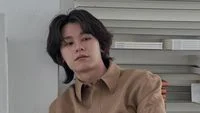
South Korean actor Cha Woo Min was recently hospitalized after sustaining injuries to his ribs and hand during the filming of the second season of the popular Korean drama (K-drama), Study Group. The incident, which occurred last week, took place during the execution of a high-intensity fight scene, a staple element of the action-packed series. While the actor’s agency, JUST Entertainment, confirmed that the injuries were minor and did not involve any fractures, the event has reignited discussions within the industry regarding the strenuous demands of K-drama productions and the critical importance of robust safety protocols on set.
The Incident: A Detailed Account
The injury to Cha Woo Min, widely reported by various Korean media outlets including 10Asia on Wednesday, July 8, transpired during a particularly dynamic and physically demanding sequence for Study Group 2. Sources close to the production indicate the scene involved a complex fight choreography, characteristic of the drama’s gritty portrayal of school-based rivalries and power struggles. During the execution of this elaborate sequence, the actor experienced an impact that led to immediate discomfort and pain in his ribcage and hand.
Upon the incident, production was promptly halted. On-set medical personnel were immediately dispatched to assess Cha Woo Min’s condition. Recognizing the potential severity of such injuries, particularly those involving the ribs, the decision was made to transport the actor without delay to the nearest hospital emergency room. This swift action underscored the production team’s commitment to prioritizing the well-being of its cast and crew, a standard practice in major K-drama productions but one that sometimes faces challenges amidst tight schedules and high-pressure environments.
At the hospital, Cha Woo Min underwent a thorough medical examination, including X-rays and other diagnostic tests, to ascertain the extent of his injuries. The primary concern was to rule out any severe trauma, such as broken bones or internal damage. Fortunately, the comprehensive tests confirmed that the injuries were relatively minor, categorized as contusions and soft tissue damage to his ribs and hand, with no major fractures detected. This news was a significant relief to his agency, the production team, and his burgeoning fanbase. Following intensive care and a period of observation, Cha Woo Min was discharged and, remarkably, was able to return to the set shortly thereafter to resume filming.
Agency’s Official Response and Reassurance
JUST Entertainment, the agency representing Cha Woo Min, moved quickly to address public concerns and provide a clear statement regarding their client’s condition. In an official release, the agency emphasized the precautionary nature of the hospitalization and the positive outcome of the medical assessments. "Immediately after the incident occurred last week, he was promptly taken to the hospital for examination as a precautionary measure, and the test results indicated no major issues," the agency stated. They further added, "Fortunately, there were no broken bones."
The agency’s statement aimed to reassure fans and industry stakeholders that Cha Woo Min’s health was not severely compromised and that he was receiving the best possible care. They elaborated that the decision to rush him to the Emergency Room was an anticipatory and protective step, designed to ensure his optimal condition. The swift return to the set, following medical clearance, signals the actor’s dedication and the production’s effort to maintain its schedule, while also highlighting the agency’s assertion that his recovery was swift and complete enough to continue his demanding role.
The World of Study Group and Cha Woo Min’s Role
Study Group is an adaptation of a popular webtoon, a format that has seen immense success in the K-drama landscape. The series delves into the gritty realities of school life, often blending academic struggles with intense action sequences. Cha Woo Min plays the pivotal character of Pi Han Wool, an antagonist known as the "cruelest and strongest student at Yuseong Technical High School." His character is central to many of the drama’s conflict-driven narratives, frequently initiating and participating in the fierce confrontations that define the series. This role inherently demands a high level of physical prowess and a willingness to engage in demanding action choreography.
The series, with its focus on a dark, action-heavy portrayal of high school dynamics, caters to a growing audience segment that appreciates realistic and often brutal fight scenes. The success of webtoon adaptations like Study Group often hinges on their ability to translate the visual dynamism and character intensity of the original source material onto the screen, which inevitably requires actors to perform physically challenging stunts. The casting of actors like Cha Woo Min, who can convincingly embody such roles, is crucial, but it also places a significant burden on their physical well-being.
K-Drama Production: Balancing Artistry with Safety
The incident involving Cha Woo Min underscores the inherent risks associated with filming action-heavy K-dramas. The South Korean entertainment industry, while globally celebrated for its high-quality productions, operates under intense pressure, often characterized by tight schedules, demanding workloads, and the pursuit of cinematic realism. These factors can sometimes lead to situations where actor safety might be inadvertently compromised, despite the best intentions.
Filming high-intensity fight scenes requires meticulous planning, expert stunt coordination, and rigorous safety measures. Professional stunt coordinators are crucial for choreographing complex sequences, ensuring that actors and stunt doubles are adequately trained, and that protective gear is utilized effectively. However, even with the most stringent precautions, accidents can occur due to the unpredictable nature of live-action filming, human error, or unforeseen circumstances. The pursuit of authenticity often pushes the boundaries, with directors and actors striving for impactful, realistic portrayals that resonate with audiences. This pursuit, while artistically commendable, inherently carries risks.
The global surge in popularity of K-content has significantly increased production budgets and ambitions. However, this growth also means greater scrutiny on industry practices, including working conditions and safety standards. Incidents like Cha Woo Min’s injury serve as critical reminders for production companies, agencies, and industry bodies to continually review and enhance safety protocols, ensuring that the pursuit of captivating entertainment does not come at the expense of cast and crew well-being.
Broader Implications for Industry Safety Standards
The incident, though resulting in minor injuries, highlights a recurring concern within the Korean entertainment industry: actor safety during demanding productions. While specific statistics on K-drama set injuries are not always publicly aggregated, anecdotal evidence and periodic news reports suggest that such incidents are not uncommon. Actors frequently sustain minor sprains, bruises, or even more severe injuries due to the physical demands of their roles, particularly in action, historical, or sports dramas.
Industry observers suggest that continuous dialogue and collaboration between production companies, talent agencies, and labor unions are essential to foster a safer working environment. This includes investing more in pre-production planning for action sequences, allocating sufficient time for rehearsals, ensuring the availability of qualified medical personnel on set, and adhering strictly to international safety guidelines. Furthermore, adequate insurance coverage and clear protocols for injury management and recovery are vital for supporting actors who face these occupational hazards.
The financial implications of actor injuries can be substantial. Production delays, even for a few days, can lead to significant cost overruns, impacting budgets that are already often stretched thin. The necessity of medical treatment, rehabilitation, and potential changes in filming schedules adds further financial strain. Beyond the monetary aspects, there is also the psychological impact on the actor, the cast, and the entire crew, who witness such events and often carry the stress of a demanding production environment.
Cha Woo Min’s Rising Career Trajectory
Despite this recent setback, Cha Woo Min’s career continues on an upward trajectory. His role as Pi Han Wool in Study Group is significant for his growing profile, allowing him to showcase his versatility and physical acting capabilities. In addition to Study Group 2, the actor is already confirmed to star in several other K-dramas, signaling high demand for his talent. Notably, he is slated to appear in My Bias, My Boss, a drama currently projected for a release date as far off as August 3, 2026. This unusually long lead time for a confirmed project underscores the often extensive planning and production timelines within the K-drama industry, where actors may commit to roles years in advance.
His engagement in multiple projects indicates a busy schedule and a promising future in the competitive Korean entertainment landscape. The ability to quickly recover and return to set, as demonstrated by Cha Woo Min, is often a testament to an actor’s resilience and commitment to their craft, but it also speaks to the intense pressure to maintain production schedules.
Conclusion: A Call for Continued Vigilance
Cha Woo Min’s recent injury on the set of Study Group 2, while thankfully minor, serves as a poignant reminder of the inherent risks faced by actors in the demanding world of K-drama production. The incident highlights the critical need for unwavering vigilance in maintaining and enhancing safety protocols, especially in productions that feature high-intensity action sequences. While the industry strives to deliver captivating and realistic entertainment to a global audience, the well-being of its talent must remain paramount.
As Study Group 2 continues its filming schedule without further reported disruptions, and as Cha Woo Min looks forward to a busy slate of future projects, the event stands as a call to action for all stakeholders in the Korean entertainment industry. Continuous investment in safety measures, comprehensive training, and open communication channels are not just best practices; they are essential commitments to protect the artists who bring these compelling stories to life on screen. The incident underscores that even minor injuries can have significant implications, prompting a renewed focus on ensuring that artistic ambition is always balanced with the highest standards of occupational safety and care.

