
 By Siti Muinah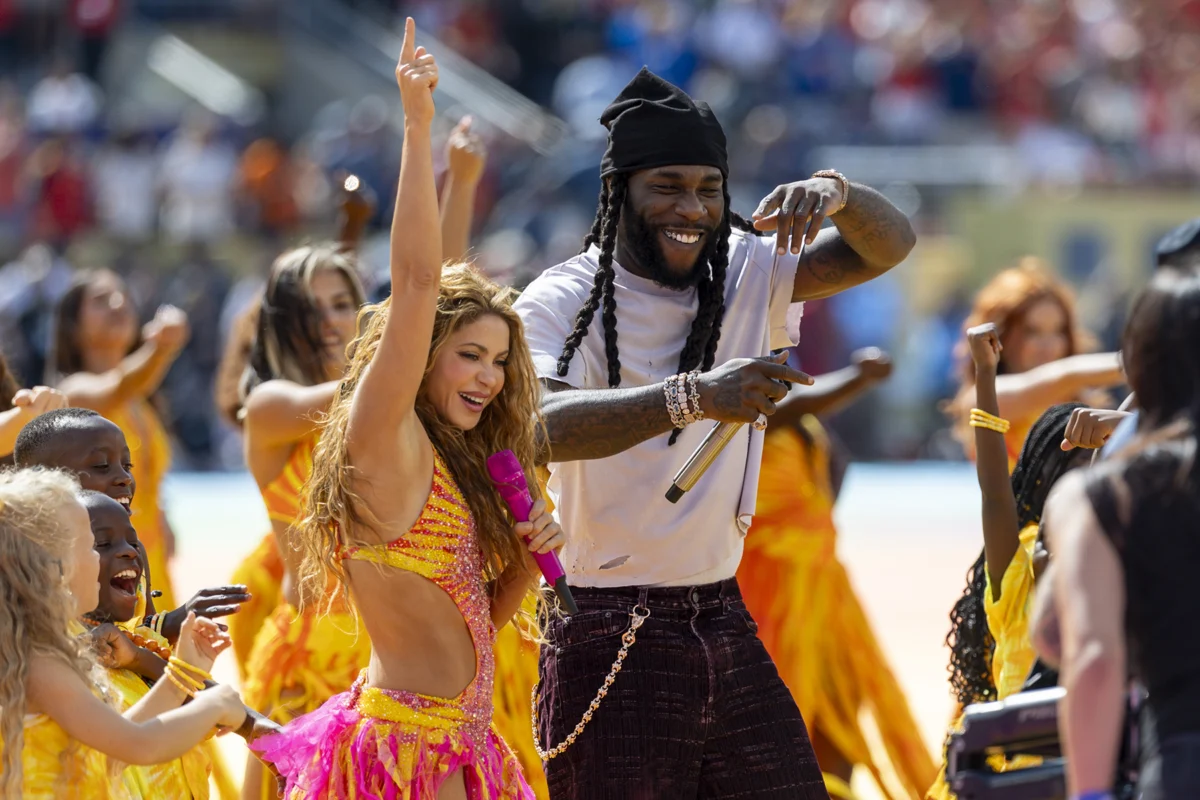
The official anthem of the FIFA World Cup 2026, "Dai Dai," a collaboration between global music icons Shakira and Burna Boy, has achieved a significant milestone by topping the prestigious Billboard Latin Airplay chart. This latest accolade marks a momentous occasion for both artists, underscoring the song’s widespread appeal and its powerful connection to the world’s most celebrated football tournament.
A Chart-Topping Collaboration with Global Reach
The track, officially titled "Dai Dai (FIFA World Cup Official Song 2026)," has ascended to the number one position on the Latin Airplay chart for the week of July 25, 2026. This achievement is particularly noteworthy as it represents Shakira’s 25th career number-one hit on the chart, further solidifying her status as a dominant force in Latin music. For Nigerian superstar Burna Boy, this marks his inaugural number-one hit on any Latin music chart, a testament to his growing global influence and the cross-cultural resonance of the collaboration.
The song’s journey to the top has been swift and impactful, mirroring the excitement and anticipation surrounding the 2026 FIFA World Cup. Its rise comes after a strong showing on other global charts, including a prominent position on the Billboard Global 200, further highlighting its international appeal. The song’s momentum was significantly amplified by its captivating performance during the halftime show of the FIFA World Cup Final on July 19, 2026, held at the New York New Jersey Stadium. This high-profile appearance provided a massive platform, captivating audiences worldwide and driving listener engagement.
Chart Performance and Historical Significance
According to data from Luminate, "Dai Dai" saw a substantial 25% increase in audience impressions, reaching 7.3 million across 152 Latin-reporting radio stations in the United States during the tracking period of July 10-16. This surge in airplay is a key indicator of the song’s widespread adoption by radio programmers and its popularity among listeners.
For Shakira, this number-one position signifies a triumphant return to the summit of the Latin Airplay chart after more than a year. Her previous number-one hit was "Soltera," which enjoyed a one-week reign in January 2025. "Soltera" itself was a landmark track, marking her first chart-topping solo single since "Loba" in late 2009. With "Dai Dai," Shakira extends her record as the female artist with the most number-one hits in the Latin Airplay chart’s 32-year history. While J Balvin remains the overall leader with 40 chart-toppers, Shakira’s consistent presence at the top demonstrates her enduring appeal and influence.
Burna Boy’s entry at number one is a significant achievement for the Afrobeats pioneer. This marks his first foray into the Latin music landscape at the highest level. His prior engagement with Billboard charts included his album L.I.F.E.: Leaving An Impact For Eternity, which reached the top 10 of the Reggae Albums chart. Furthermore, "Dai Dai" is his second number-one hit of 2026, following his featured contribution to Gunna’s "wgft," which dominated the Rhythmic Airplay chart for four weeks in January. This dual success across different genres and markets underscores Burna Boy’s versatility and his growing impact on the global music scene.
A Global Phenomenon: "Dai Dai’s" International Chart Domination
The success of "Dai Dai" is not confined to the Latin Airplay chart. Since its release, the song has garnered an impressive ten number-one positions across various international charts. Its global momentum began immediately after its premiere at the 2026 FIFA World Cup opening ceremony in Mexico City on June 11, setting the stage for its widespread adoption and commercial success.
The song’s chart-topping achievements, by peak date, include:
- June 27: Billboard Colombia Hot 100 (four weeks at No. 1)
- June 27: Switzerland Songs (four weeks at No. 1)
- July 4: Billboard Global Excl. U.S. (three weeks at No. 1)
- July 4: Austria Songs (two weeks at No. 1)
- July 11: Billboard Argentina Hot 100 (one week at No. 1)
- July 11: Luxembourg Songs (two weeks at No. 1)
- July 18: Billboard Global 200 (two weeks at No. 1)
- July 18: Germany Songs (one week at No. 1)
- July 18: Belgium Songs (one week at No. 1)
- July 25: Latin Airplay (one week at No. 1)
This extensive list of number-one hits across diverse global markets highlights the song’s universal appeal, transcending linguistic and cultural barriers. The collaborative spirit of the track, blending Shakira’s signature Latin rhythms with Burna Boy’s infectious Afrobeats sound, has clearly resonated with a broad international audience.
Context of the FIFA World Cup 2026
The 2026 FIFA World Cup was a monumental event, marking the first time the tournament was co-hosted by three nations: Canada, Mexico, and the United States. The tournament spanned 16 cities across the three countries, making it the most geographically expansive World Cup in history. The final match, which saw Spain emerge victorious over Argentina, was played on July 19, 2026, at the newly constructed New York New Jersey Stadium in East Rutherford, New Jersey. The final halftime show, featuring Shakira and Burna Boy, was a star-studded spectacle designed to celebrate the global unity and excitement generated by the tournament.
The tradition of an official World Cup song dates back to the 1962 tournament. These anthems are crucial in capturing the spirit of the event, becoming anthems for fans and a part of the tournament’s cultural legacy. "Dai Dai" has successfully fulfilled this role, with its infectious beat and powerful vocals becoming synonymous with the 2026 FIFA World Cup.
Future Outlook and Potential for Continued Success
While the FIFA World Cup concluded on July 19, the impact of "Dai Dai" on the music charts is likely to persist. The song’s performance during the World Cup final halftime show, which occurred during the July 17-23 tracking week, could potentially lead to a further surge in airplay, streams, and sales. This sustained interest, even after the tournament’s conclusion, is a common phenomenon for anthemic songs associated with major sporting events.
However, the final four days of the current tracking period (July 17-20) fall after the tournament’s close. This overlap might influence the song’s trajectory in the coming weeks, as the initial surge of post-event excitement gradually subsides. Nonetheless, "Dai Dai’s" current position at the top of the Latin Airplay chart and its impressive global chart performance solidify its status as a major hit and a defining soundtrack to the 2026 FIFA World Cup.
Broader Implications and Analysis
The success of "Dai Dai" underscores a growing trend in the global music industry: the increasing interconnectedness of genres and markets. The collaboration between a Latin music superstar and an Afrobeats icon highlights the power of music to bridge cultural divides and reach diverse audiences. This fusion of styles not only appeals to existing fan bases but also introduces artists to new listeners, fostering a more inclusive and dynamic musical landscape.
For Shakira, this achievement reinforces her legendary status and her ability to remain relevant and innovative in an ever-evolving industry. Her 25 number-one hits on the Latin Airplay chart are a testament to her enduring artistry and her deep connection with Latin audiences. For Burna Boy, this number-one hit is a significant step in his global ascent, demonstrating the growing international appeal of Afrobeats and its ability to compete on major global music charts.
The FIFA World Cup continues to serve as a powerful platform for music discovery and promotion. The exposure gained from an official song’s association with such a globally anticipated event can lead to unprecedented levels of success, as evidenced by "Dai Dai." The song’s journey from its premiere to topping charts worldwide is a compelling narrative of artistic synergy and the universal language of music.
The data reflects that "Dai Dai" has not only captured the spirit of the FIFA World Cup 2026 but has also carved out a significant and lasting place in the global music charts, celebrating a triumph of cross-cultural collaboration and musical excellence.
All charts dated July 25, 2026, updated on Billboard.com on July 21. For comprehensive chart news and explanations, follow @billboard and @billboardcharts on X (formerly Twitter) and Instagram, and refer to the Billboard Charts Legend.

