
 By Jia Lissa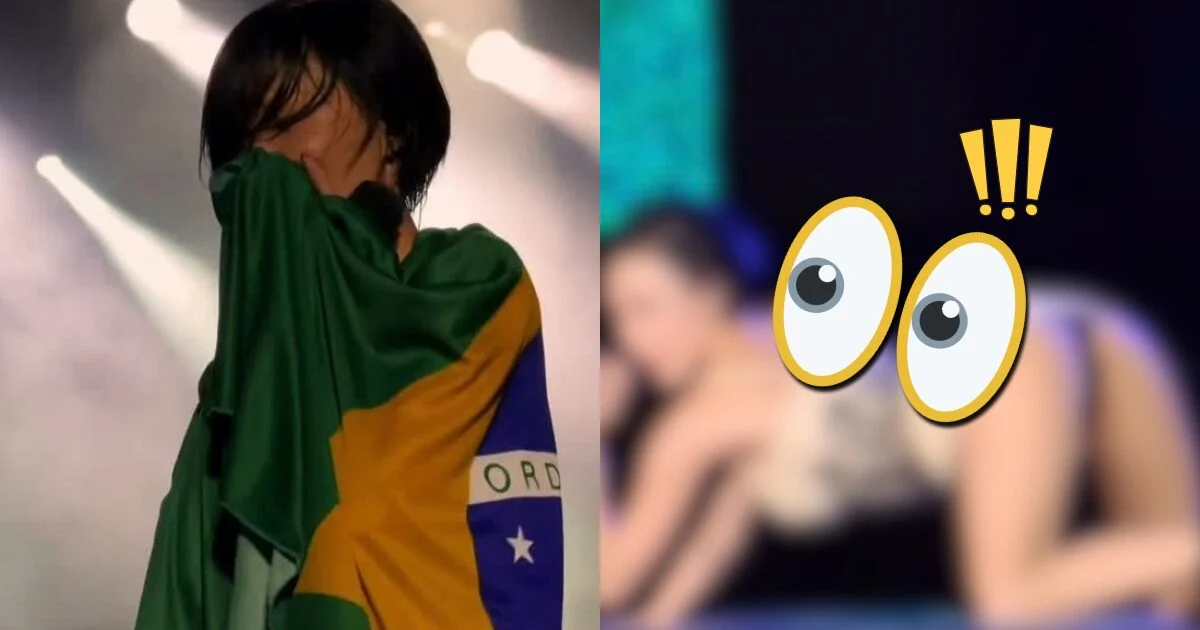
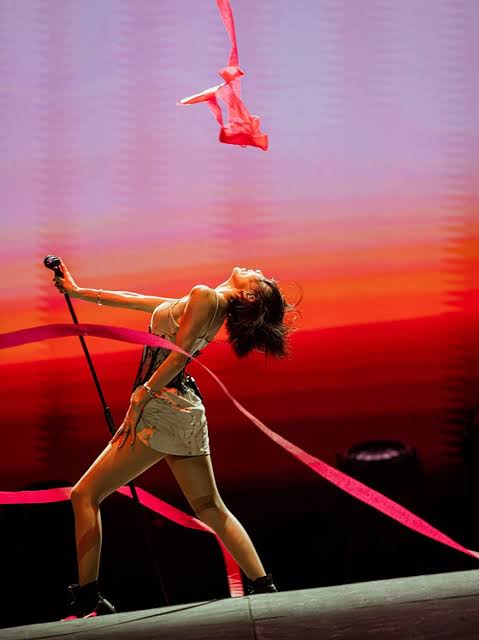
Ahn Hye-jin, widely known by her stage name Hwasa and as a prominent member of the third-generation K-Pop girl group MAMAMOO, has once again become the epicenter of a fervent online discussion following her groundbreaking performance at the 2026 Rock in Rio festival in Brazil. The acclaimed soloist made history as the first female K-Pop artist to headline the festival’s prestigious main stage, delivering a powerful set that captivated an audience of over 80,000. However, it was specific moments during her renditions of "I’m A B" and "Don’t," featuring deliberate displays of her lace undergarments, that sent shockwaves across social media platforms, sparking a vigorous debate about artistic freedom, cultural norms, and the evolving landscape of K-Pop performance.
A Historic Milestone at Rock in Rio
The 2026 Rock in Rio festival marked a significant chapter in Hwasa’s already illustrious career and for K-Pop’s global expansion. Held in Rio de Janeiro, Brazil, Rock in Rio stands as one of the world’s largest and most iconic music festivals, boasting a rich history that dates back to 1985. Over the decades, it has hosted legendary artists from across genres, establishing itself as a pinnacle for performers seeking to reach a massive international audience. Hwasa’s invitation to perform on the main stage was not merely an individual achievement but a testament to K-Pop’s surging popularity and its growing acceptance within mainstream global music festivals. This milestone underscored the genre’s ability to transcend linguistic and cultural barriers, with Hwasa leading the charge as a trailblazing female soloist.
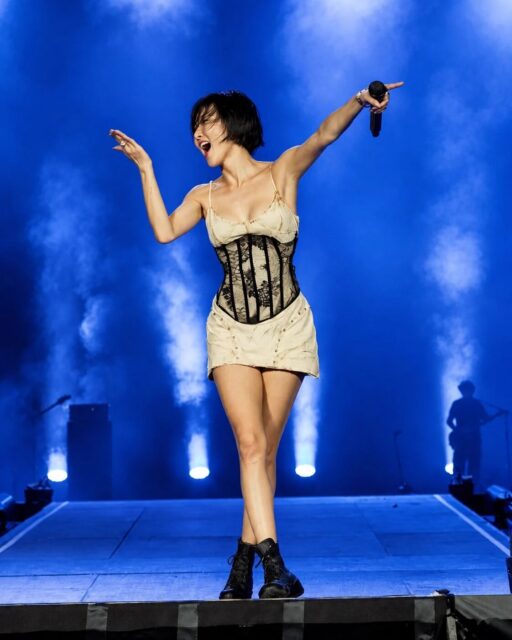
The festival itself is renowned for its colossal scale, often drawing hundreds of thousands of attendees over multiple days. Performing for an audience exceeding 80,000 on the main stage is an immense feat, typically reserved for global superstars. Hwasa’s presence alongside such high-caliber acts signified K-Pop’s undeniable foothold in the Western music market and its capacity to command vast, diverse crowds. Her setlist, comprising 13 of her chart-topping hits including "Twit," "Maria," and "Good Goodbye," showcased her versatility and powerful stage presence, solidifying her reputation as a formidable solo artist.
The Performance That Ignited Debate
The specific incidents that triggered widespread online discussion occurred during her performances of "I’m A B" and "Don’t." Hwasa, known for her confident and often provocative stage persona, incorporated elements that pushed the boundaries of conventional K-Pop performance aesthetics. During "Don’t," a sensual floor choreography moment saw the singer momentarily flash her lace underwear, a move that elicited a frenzied reaction from the live audience. This fleeting glimpse was perceived by many as a powerful expression of sexuality and confidence, perfectly aligned with the song’s evocative themes.
Even bolder was the opening sequence of "I’m A B." As the song commenced, Hwasa assumed a striking power pose, intentionally revealing her lace undergarment. This was not a wardrobe malfunction but a calculated artistic choice, designed to complement the song’s message of self-assertion and defiance. In the context of "I’m A B," a track celebrated for its strong, unapologetic message, this visual statement amplified the song’s core themes, portraying an artist fully in control of her narrative and image. The move, captured in numerous fan-recorded videos and widely circulated on social media, quickly became the focal point of a heated global discourse.

Chronology of Reactions and Online Discourse
The immediate aftermath of Hwasa’s performance saw an explosion of activity across social media platforms, particularly X (formerly Twitter). Within hours of the festival, clips of the controversial moments went viral, disseminated by fan accounts and major K-Pop news outlets.
- September 15, 2026: Hwasa’s performance at Rock in Rio takes place. Initial fan uploads of clips, including the "Don’t" and "I’m A B" segments, begin to circulate globally.
- September 16-17, 2026: The clips gain significant traction. Discussions intensify, with initial reactions largely dominated by excitement and praise from international fans who lauded Hwasa’s boldness and artistic expression. Comments like "No wonder y’all’s birth rate is so low you’re so afraid of a fucking pussy" and "scared of baddies omfg yall are losers" emerged, indicating a strong defense against perceived conservative criticism.
- September 18-19, 2026: The debate escalates, drawing in a broader range of opinions. While positive reactions celebrating Hwasa’s empowering image continued to outweigh criticism, a noticeable segment of users expressed discomfort or disapproval. Comments such as "This is f*cking filthy" began to surface, reflecting a more conservative viewpoint, likely influenced by traditional South Korean societal expectations for female idols. However, these critical voices were largely "suppressed by the sheer volume of the cheers," as noted by observers, indicating the global audience’s generally supportive stance.
- September 20-22, 2026: Media outlets, including Koreaboo, begin to report on the viral phenomenon, highlighting the contrasting reactions. The discourse shifted to a broader discussion about K-Pop’s evolving boundaries and cultural interpretations of performance. Fan sentiments like "i kinda love that hwasa is doing everything that korea is afraid of seeing like it was time for some change to happen in kpop" and "i love how knetz never stfu about her and she still never gaffff goddd i need more people like her" encapsulate the perception of Hwasa as a defiant figure challenging conservative norms.
Hwasa’s Established Persona and Previous Controversies
This is not the first time Hwasa has found herself at the center of discussions regarding her provocative performances and stage attire. Since her debut with MAMAMOO in 2014, Hwasa has cultivated an image as an artist who fearlessly embraces her sensuality and challenges conventional beauty standards within the highly curated K-Pop industry. Her confidence, powerful vocals, and distinct aesthetic have set her apart, often leading to both immense praise and occasional controversy.
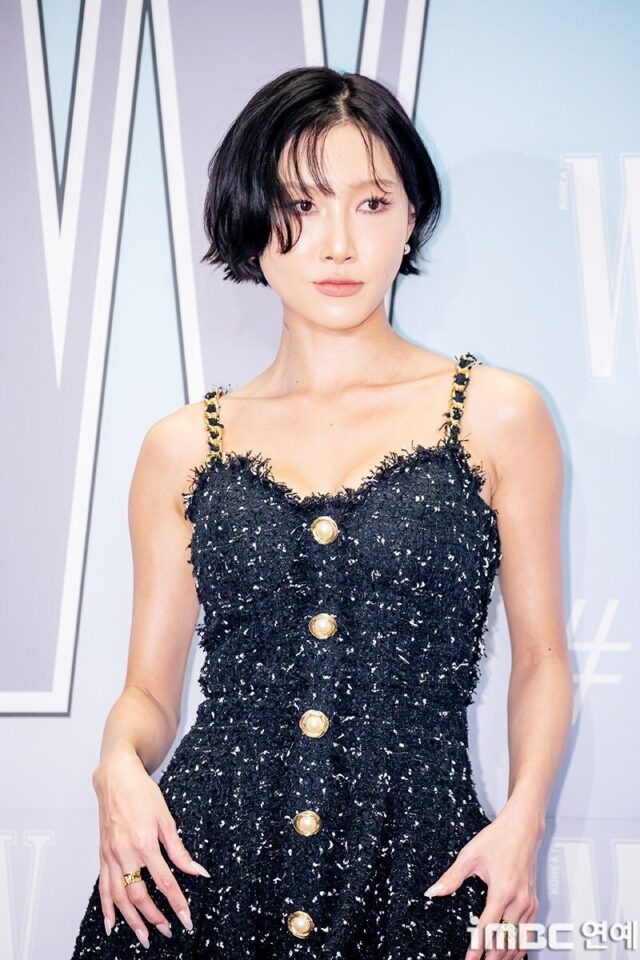
Notable past incidents include her iconic performance at the 2018 Mnet Asian Music Awards (MAMA), where her daring red latex outfit and uninhibited choreography ignited a similar debate. Domestically, she faced scrutiny, with some Korean netizens criticizing her attire as "too revealing" or "inappropriate." Conversely, international fans and many progressive voices within Korea lauded her for her confidence and for breaking away from the often-modest image expected of female idols. Such instances have solidified Hwasa’s reputation as a "nepo baby" of K-Pop, a term used to describe artists who defy expectations and carve out their own path, often challenging the status quo. These previous controversies provide crucial context, illustrating a pattern of Hwasa pushing boundaries and her audience reacting with a mixture of fervent support and conservative apprehension. Her performance at Rock in Rio thus appears to be a continuation of her artistic philosophy rather than an isolated incident.
Broader Implications for K-Pop and Artistic Expression
Hwasa’s Rock in Rio performance and the subsequent global reaction carry significant implications for the K-Pop industry and the broader discussion on artistic freedom.
-
Challenging K-Pop Norms: K-Pop, while globally popular, has often been characterized by strict image management and a certain degree of conservatism, particularly concerning female idols. Hwasa’s actions represent a powerful pushback against these conventions. Her deliberate display of underwear, framed as an artistic statement, challenges the unspoken rules about modesty and "appropriateness" that often constrain female artists in the industry. It suggests a growing desire among some K-Pop idols to exercise greater autonomy over their artistic expression and personal brand.
-
Cultural Divide in Reception: The stark contrast between the overwhelmingly positive international reception and the more mixed, sometimes critical, domestic Korean reactions highlights a persistent cultural divide. While global audiences often celebrate artists who embody confidence, individuality, and overt sexuality, South Korean society, with its deeply ingrained conservative values, often holds female idols to a different standard, emphasizing innocence and demureness. This phenomenon is not unique to Hwasa but is a recurring theme for K-Pop artists who gain international recognition.
-
Empowerment vs. Objectification: Supporters view Hwasa’s performance as an act of empowerment, reclaiming her body and sexuality on her own terms. They argue that by openly embracing a provocative aesthetic, she inspires others to shed inhibitions and challenges the male gaze. Critics, however, might argue that such displays, regardless of intent, can inadvertently contribute to the objectification of female artists, or that they simply cross a line of public decency. The debate underscores the complexities of interpreting artistic expression in a globalized, yet culturally diverse, world.
-
Global Brand Building: For Hwasa and her agency, P NATION (or her previous agency if she was still with RBW at this time), such performances, while controversial, often contribute to a strong, distinctive global brand. Her image as a "rebel" or a "boundary-pusher" resonates deeply with international fans who appreciate authenticity and defiance. This strengthens her appeal in markets where such artistic expressions are more readily accepted, potentially broadening her fan base beyond traditional K-Pop demographics. It reinforces K-Pop’s evolving image as a genre that, while rooted in precise choreography and polished visuals, also increasingly embraces diverse forms of artistic individuality.
-
Industry Adaptation: The continued success and global acclaim for artists like Hwasa, despite domestic controversies, may encourage other K-Pop agencies to reconsider their approach to idol image and artistic freedom. As K-Pop seeks to expand its global footprint, adapting to international sensibilities regarding self-expression becomes crucial. While navigating the balance between domestic expectations and global appeal remains a challenge, artists like Hwasa are at the forefront of shaping this new landscape.
Official Stance and Future Outlook
As of the latest reports, neither Hwasa nor her current agency has issued an official statement directly addressing the specific moments from her Rock in Rio performance or the subsequent online debate. This silence is often a strategic choice in the K-Pop industry, allowing the artist’s actions and the public’s reaction to speak for themselves, particularly when the artist’s image is built on a foundation of confidence and unapologetic self-expression. To issue an apology or a clarification might undermine the very artistic statement Hwasa intended to make.
Industry observers suggest that Hwasa’s performance is consistent with her established artistic philosophy and is unlikely to significantly alter her career trajectory, especially given the overwhelming support from her global fanbase. While domestic criticism might persist, the international applause solidifies her position as a global icon who champions artistic freedom and challenges conventional norms. Her trailblazing path at Rock in Rio not only etched her name in festival history but also ignited a crucial conversation about the evolving definitions of performance, artistry, and cultural acceptance in the ever-expanding world of K-Pop. The impact of her daring performance will likely resonate for years to come, influencing how future K-Pop artists approach their stage personas and artistic expressions on the global stage.

