 By Iffa Jayyana
Taipei, Taiwan – In a vibrant celebration of heritage and innovation, the second edition of the Hakka Fashion Awards concluded its prestigious award ceremony in July, with the winning creations gracing the halls of the Hakka Cultural Center in Taipei during mid-October as part of Taipei Fashion Week. This unique competition, guided by the theme "Inheritance Through Clothing, Weaving the Future" (衣傳承,衣未來), tasked designers with transforming literary works into tangible, wearable art, thereby illuminating the rich tapestry of Hakka culture for a contemporary audience. The event drew inspiration from the evocative prose and poetry of the Hakka Young Writers’ Literature Award, aiming to bridge the gap between traditional narratives and modern design.
Taiwan, a dynamic island nation with a population exceeding 23 million, is predominantly identified as ethnically Han Chinese. However, a significant demographic, representing approximately 20% of the population, proudly identifies with Hakka cultural roots or possesses Hakka ancestry. This substantial community has long preserved a distinct identity characterized by unique linguistic traits, customs, and a profound connection to the land. The Hakka Fashion Awards emerged as a crucial platform to showcase and revitalize this enduring heritage, demonstrating its relevance and adaptability in the 21st century.
The 11 award-winning pieces, meticulously curated and exhibited, represent a profound translation of Hakka literature into fashion. Each garment serves as a testament to the interconnectedness of the Hakka people with their ancestral lands and the inter-generational memories meticulously woven into the fabric of their lives. These designs are not merely garments; they are narratives spun from threads, embodying the spirit of perseverance, community, and artistic expression that defines the Hakka identity.
Gold, Silver, and Bronze: Honoring Literary and Artistic Excellence
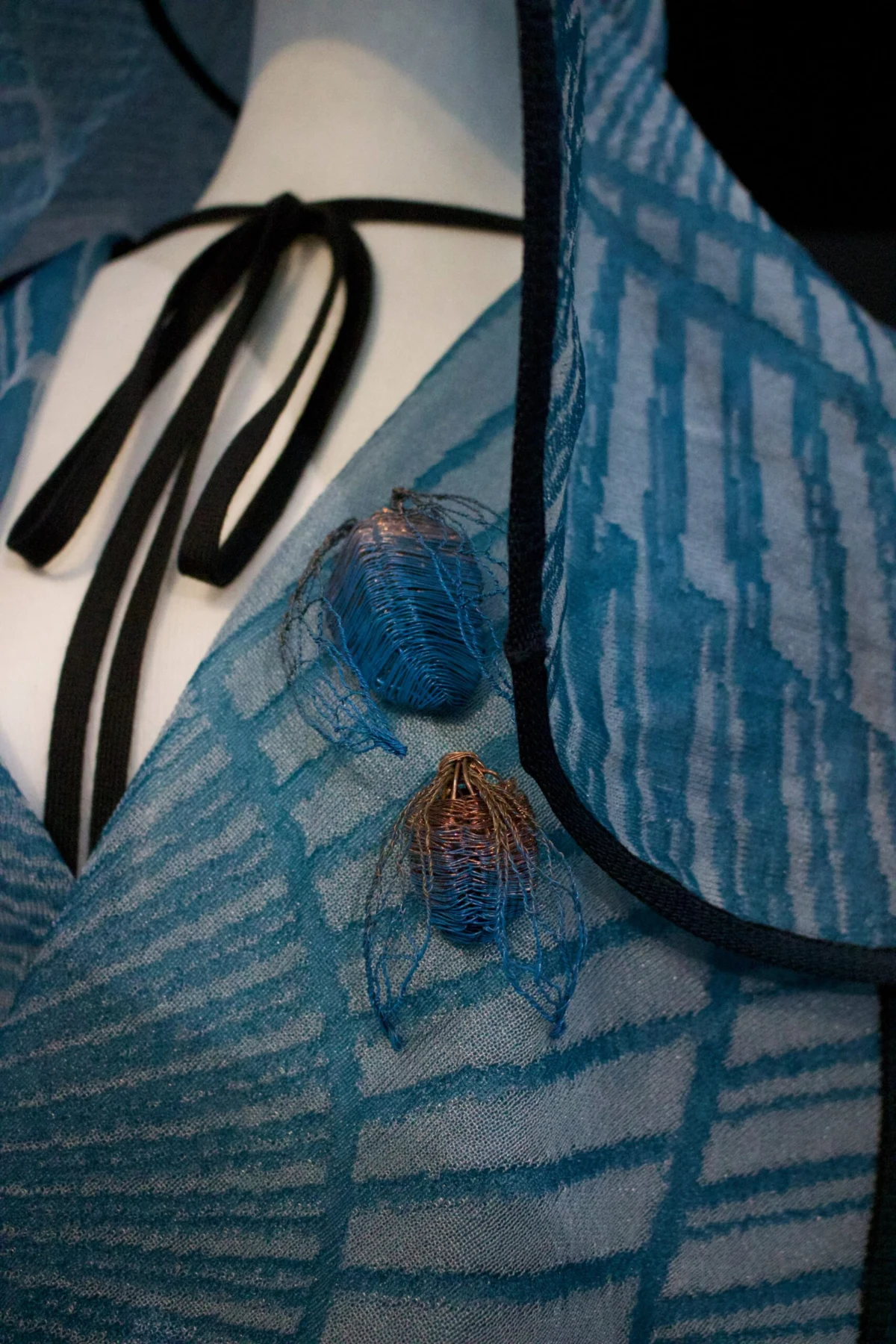
The pinnacle of the competition saw designer Kao Yuan-lung clinch the Gold Award for his striking creation, "Cicada’s Guest Inn." This masterpiece draws its essence from Hsu Sheng-yun’s poignant essay "Cicada," masterfully translating the insect’s life cycle into a garment of symbolic depth. Kao employed a semi-transparent Jacquard knit fabric, imbuing the design with a structural softness that alludes to the delicate yet resilient nature of the cicada. Thicker threads, spiraling throughout the main body of the look, visually narrate the creature’s journey from the earth, through decay, to its emergent song. The design’s intricate construction evokes the stages of the cicada’s existence – soil, decay, emergence, and the final, resonant song – offering a profound contemplation on transformation and renewal, themes deeply resonant within Hakka philosophy.
Securing the Silver Award was designer Fusion Hung with "Light Under the Stove." Hung’s work delves into the duality of the domestic sphere, exploring the intersection of security and labor within the kitchen, a traditional heart of Hakka households. The design features a deliberate interruption of tan dye against a base of indigo, creating highlights that evoke the flickering light of a stove and the telltale burn marks of culinary endeavors. This thoughtful detail invites viewers to reflect on the intimate relationship between sustenance and the often-unseen efforts that provide it. The practicality of the ensemble, a jacket and pants, is enhanced by modular fastening and strap designs, underscoring the functionality inherent in Hakka craftsmanship. Traditional Hakka embroidery and indigo dye, cornerstones of the community’s artisanal heritage, are skillfully interwoven, grounding Hung’s contemporary vision in his cultural lineage.
The Bronze Award was bestowed upon Chang Ya-che for "Burning Characters Into Flowers." This evocative piece is a symphony of vibrant fire-red Ugandan yarn, delicate transparent layers, and intricate lace meticulously stitched onto the outermost fabric. The gauze layers artfully mimic the ephemeral beauty of flower petals, with each element gently overlapping to create a soft, floral-like structure. However, beneath this delicate exterior lies a powerful undercurrent of historical resilience. Interspersed among the floral motifs are paper-like curls bearing text, a subtle yet potent reference to Taiwan’s White Terror period. This era of authoritarian rule, spanning nearly four decades, saw the prohibition of languages other than Mandarin Chinese, including the Hakka dialect. Chang’s "Burning Characters Into Flowers" thus becomes a quiet yet powerful bloom, seemingly fragile yet embodying the enduring strength and resilience of both the Hakka culture and the human spirit. The piece serves as a poignant reminder that even in the face of suppression, culture can blossom and endure.
Land Woven With the Body: Connecting Nature and Memory
Beyond the top three accolades, the Hakka Fashion Awards recognized a spectrum of talent, with several designers exploring profound connections between the land, personal memories, and cultural identity. Designer Yeh Chia-ching’s "Grandma," which earned the Popularity Award, masterfully folds together an intimate connection to nature with cherished memories of her grandmother. The look embodies a zero-waste design philosophy, combined with a pervasive sense of softness. A gauzy dress, designed for adaptability, could be folded and extended as needed, minimizing material waste. The color palette of white, pastel yellows, and greens further enhances its inherent softness, transcending mere textural qualities to evoke a sense of gentle comfort and familial warmth.
The Rookie Award was presented to Liu Ya-ting for "The Footwear of Farming and Weaving." This piece, an overcoat, pays homage to the Hakka people’s esteemed bamboo weaving tradition. The layer beneath is dyed indigo, another culturally significant element in Hakka craftsmanship. Silver flowers intricately threaded onto the woven overcoat symbolize the coexistence of delicacy and unbreakable strength, mirroring the resilience of the Hakka people. The design speaks to the practicalities of daily life, reflecting the tools and techniques that have sustained Hakka communities for generations.
Wang Cheng-han, another recipient of a Rookie Award, presented "Terraced Field Texture," a piece where the land literally melds with the body. Inspired by the iconic terraced fields of his hometown, Xinpu, a Hakka village in Hsinchu County, Wang captures the essence of agricultural ingenuity. The design’s silhouette, with its textured appliqués layered upon each other, visually represents the step-by-step construction of these vital agricultural landscapes. Gauzy green fabrics in varying shades drape around the body, complemented by a woven fishnet-like bag, creating a composition that Wang himself described as "a landscape worn on the body." This powerful imagery connects the wearer directly to the land that has sustained the Hakka people since their earliest migrations from China’s Fujian and Guangdong provinces during the Ming and Qing dynasties. The perseverance required to transform challenging terrain into fertile land is echoed in the layered textures and earthy tones of the garment.
Patching Together History: Narratives of Resilience and Labor
Several designers utilized innovative techniques to stitch together historical narratives and cultural resilience. Li Chia-chuan’s "Rest," which garnered a Popularity Award, presents a striking juxtaposition of a denim hoodie and a vibrantly textured gown. Triangular, double-layered pockets add a utilitarian detail to the denim, contrasting with the pleated oil paper that forms the gown’s textured surface. This interplay of materials and forms creates a look that is both bold and serene, immediately capturing attention while conveying a sense of groundedness.
Chung Shang-ye and Hsiao Yun-chen, collaborators and winners of a Rising Star Award, presented "One Persimmon, One Shape." This bubble patchwork piece powerfully reflects the resilience of Hakka women. The garment’s silhouette, with its curved form and stuffed circular sections at the hips, along with multi-colored fringe, draws inspiration from the physical toll of hard labor on these women’s bodies. The exhibition description eloquently noted that the look "reconstructs the deformed bones of their ancestors’ labor." The designers further integrated persimmon dyeing, a traditional Hakka craft, into their creation process, weaving memory and history into a contemporary fashion statement.
Ou Xiu-wei, another Rising Star Award winner, contributed "Blue Field," a piece that also intricately patches together history. Recycled denim forms the inner layer of a long coat, while reconstructed denim creates the outer layer. The overlaid denim pieces are meticulously patched together, forming a collage-like texture. Various sized black beads are strategically placed near the hem, cuffs, and lapels, providing both visual and textural contrast. The ensemble is crowned with a traditional Hakka liangmao, a bamboo hat worn by laborers, adorned with cascading floral lace and reappearing black beads, subtly threading together diverse elements of Hakka craftsmanship.
Hakka Craftsmanship: A Legacy in Fabric and Form
The Hakka Fashion Awards placed significant emphasis on showcasing the depth and beauty of Hakka cultural craftsmanship. Lin Yi-chen’s "Return to Cocoon," a Rookie Award winner, is deeply rooted in Hakka indigo dyeing traditions, incorporating natural gardenia dyeing techniques. Lin adopted a strict zero-waste approach, employing folding, looping, and stitching to construct the knitted dress without any cutting or discarding of material. The dress features a blend of ramie fabric and Tencel yarn, highlighting the natural texture of the fibers while allowing the garment to drape softly. This approach not only minimizes environmental impact but also emphasizes the inherent beauty of raw materials, a hallmark of sustainable Hakka practices.
Kuo Wei, the designer behind the brand INF and winner of the Special Jury Award, presented "Metamorphosis." This stacked indigo ensemble reimagines the traditional Hakka blue-shirt silhouette through modern fashion techniques. Kuo is renowned for his concept of "transformation," and this piece exemplifies that ethos. He ingeniously repurposed a bag into a coat, creating a striking tribute to indigo dye. The deconstruction of a Hakka straw hat and its fusion with a gentleman’s cap further embodies the spirit of metamorphosis, weaving together traditional and contemporary elements to forge something entirely new. This approach underscores the dynamic nature of cultural expression, demonstrating how heritage can be reinterpreted to resonate with current aesthetics and sensibilities.
The exhibition of the 2026 Hakka Fashion Awards creations is scheduled to run until November 25th, offering the public an extended opportunity to engage with these remarkable works. The Hakka Fashion Awards website provides further details on the competition and its objectives, serving as a vital resource for understanding the rich cultural landscape it celebrates.
This initiative not only highlights the artistic talent within Taiwan but also serves as a powerful cultural diplomacy tool, introducing the intricate nuances of Hakka heritage to a global audience through the universal language of fashion. By transforming literary works into wearable art, the awards have successfully demonstrated that tradition is not static but a living, evolving entity, capable of inspiring contemporary creativity and fostering a deeper appreciation for cultural identity. The success of this year’s awards suggests a promising future for the preservation and promotion of Hakka culture through innovative and engaging platforms.

