
 By Suro Senen
Introduction: A Moment Frozen in Time
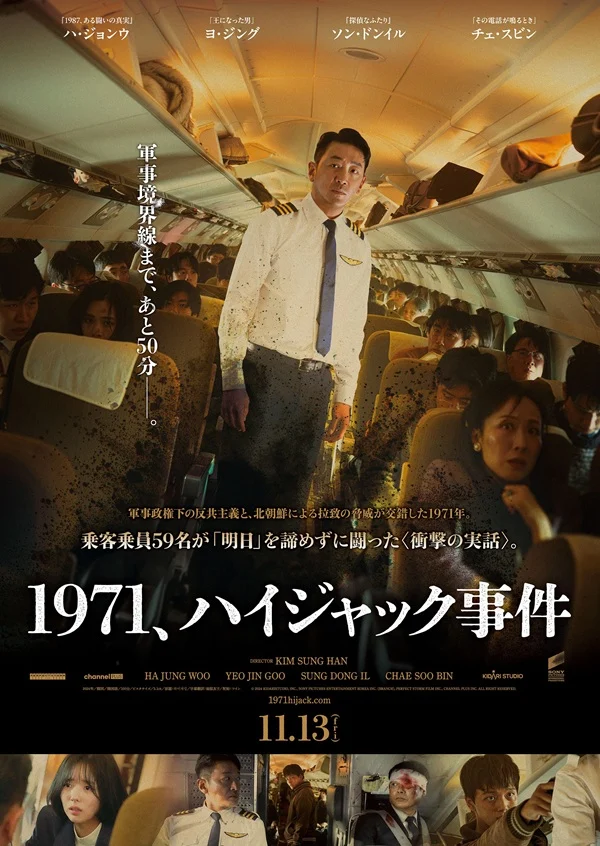
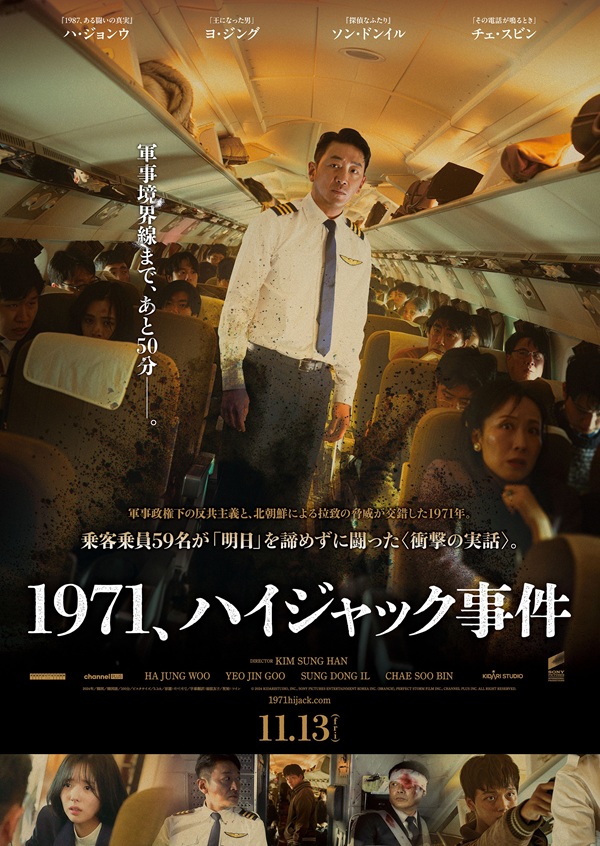
In the annals of aviation history, few events are as harrowing and emotionally resonant as the attempted hijacking of a Korean Air Fokker F-27. In January 1971, the tranquility of a domestic flight from Sokcho to Gimpo was shattered by a desperate act of defiance that would change the lives of 59 passengers and crew forever. More than five decades later, the harrowing ordeal is being brought to the screen in the powerful drama Hijack 1971. This cinematic exploration—directed by Kim Sung-han—is not merely a retelling of a tragedy, but a profound investigation into human resilience, the ethics of survival, and the political pressures that defined an era of extreme instability. As the film prepares for its November 13, 2026, release in Japan, it serves as a timely reminder of the courage required when faced with the ultimate test of character.
The Anatomy of an Incident: The Facts of 1971
On January 23, 1971, the Korean Air flight HL5212 was operating a routine domestic route when it was seized by a lone perpetrator. The hijacker, armed with explosives, forced the pilots to deviate from their course, demanding that the aircraft be flown into North Korea.
The situation rapidly evolved into a volatile standoff. Inside the cramped cabin of the twin-engine Fokker F-27, the atmosphere shifted from mundane travel to existential dread. The passengers, ranging from ordinary citizens to those caught in the crossfire of inter-Korean geopolitical tensions, were forced into an impossible situation. The film Hijack 1971 painstakingly recreates these moments, highlighting the claustrophobia of the cockpit and the cabin, where every decision could mean the difference between life and death.
Chronology of the Crisis: A 60-Minute Nightmare
The timeline of the hijacking was compressed, yet it spanned a lifetime of psychological terror.
- Initial Breach: Shortly after takeoff from Sokcho, the hijacker successfully bypassed security measures and gained access to the cockpit area, brandishing an improvised explosive device.
- The Demands: The assailant demanded the immediate rerouting of the flight toward the North. This created an immediate crisis for the crew, who had to balance the safety of the 59 souls on board against the potential for an international incident.
- The In-Flight Struggle: The film depicts the central conflict involving the pilots and the passengers. It portrays the heroic efforts of the crew to maintain control of the aircraft while attempting to neutralize the threat without causing a catastrophic explosion.
- The Resolution: The standoff concluded with a dramatic intervention, preventing the plane from reaching its intended destination. The bravery displayed by the flight crew and the cooperation among passengers became the cornerstone of the event’s legacy.
Supporting Data: Behind the Cinematic Reconstruction
To bring this historical event to life, the production team behind Hijack 1971 invested heavily in meticulous research. By consulting with historians and those familiar with the aviation standards of the 1970s, the film captures the technical limitations of the Fokker F-27 and the primitive nature of 1970s security protocols.
The production design team focused on the "analog" nature of the era. Unlike modern aircraft, which rely on sophisticated digital navigation and secure cockpit doors, the F-27 of the 70s was susceptible to physical breaches. The film highlights this vulnerability, emphasizing the physical struggle required to overcome an attacker. The ensemble cast, featuring Ha Jung-woo, Sung Dong-il, and Yeo Jin-goo, adds a layer of human depth to the technical reconstruction, ensuring that the audience feels the weight of the stakes involved.
Official Responses and Political Implications
The hijacking of 1971 occurred during a period of intense hostility on the Korean Peninsula. Consequently, the event was heavily politicized. The South Korean authorities were tasked with managing not only the immediate hostage situation but also the fallout of a potential defection.
The film explores the tension between the "duty to save" and the "necessity of state security." It portrays the internal conflicts of the pilots, who were caught between the orders of the authorities on the ground and the moral imperative to protect the passengers in their care. The cinematic narrative suggests that while the state viewed the event through a lens of national security, those on board were living a purely human tragedy—a battle for survival that transcended ideology.
The Cinematic Vision: A Masterclass in Tension
Director Kim Sung-han has stated that the goal of the film is to shift the perspective from the historical "headline" to the "human experience." By focusing on the cockpit as a space of immense psychological pressure, the film moves beyond standard action-thriller tropes.
The choice to frame the narrative through the lens of a "contained thriller" allows for a deeper exploration of the characters’ motivations. Yeo Jin-goo’s portrayal of the antagonist is notably layered, moving away from a one-dimensional villain to a character driven by the specific, often tragic, circumstances of the Cold War era. Meanwhile, Ha Jung-woo brings a stoic, grounded quality to the pilot role, representing the steady hand required to navigate a crisis when all systems are failing.
Historical Context: The 1970s and the Hijacking Phenomenon
To fully understand the impact of the 1971 hijacking, one must look at the global landscape of the decade. The 1970s were a "golden age" for air piracy, with numerous incidents occurring across the globe. However, for Korea, these events were uniquely tied to the separation of the peninsula.
The film does not shy away from this context. It uses the backdrop of the 1970s to explain why the passengers were so easily terrified—they were living in an era where the border was a constant, looming threat. By integrating archival-style visuals and period-accurate settings, the film invites the audience to inhabit a time where the skies were not the symbol of freedom they are today, but a contested space of political maneuvering.
The Legacy of Courage: Why This Story Matters Today
In the modern era, where air travel is highly regulated and security is omnipresent, it is easy to forget the pioneers of aviation safety—the pilots and crews who had to deal with threats using nothing but their instincts and their training. Hijack 1971 acts as a memorial to these individuals.
The film underscores the importance of communal responsibility. In the face of terror, the passengers and crew were forced to rely on one another. This collective action is the heart of the story. It is not just about a pilot saving a plane; it is about a group of strangers who, in their final hour, chose to stand together.
Technical Excellence and Production Quality
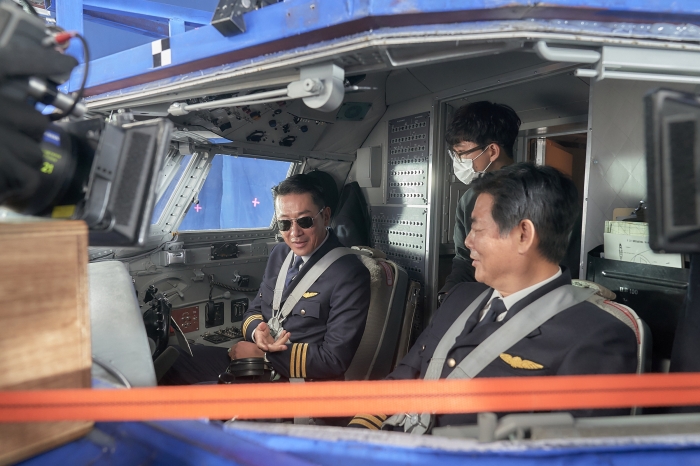
The film’s production quality is a testament to the growth of the Korean film industry. From the 5.1 channel surround sound that captures the roar of the F-27 engines to the cinematography that emphasizes the claustrophobic angles of the aircraft, the film is designed for the big screen. The collaboration between production entities such as Kidaristudio, Sony Pictures Entertainment Korea, and Perfect Storm Film has resulted in a polished, high-stakes cinematic experience.
Conclusion: A Must-Watch Historical Drama
As Hijack 1971 prepares for its wide release, it stands as more than just a movie; it is a vital piece of historical documentation. It invites viewers to look back at a defining moment in Korean aviation and see the faces of those who were there. It is a story of grit, a story of fear, and ultimately, a story of the resilience of the human spirit.
For those interested in historical dramas, aviation thrillers, or simply powerful character-driven narratives, Hijack 1971 is essential viewing. It reminds us that even when the world seems to be falling apart, the actions of a few individuals can make all the difference in the world.
Film Details at a Glance:
- Hijack 1971
- Director: Kim Sung-han
- Starring: Ha Jung-woo, Sung Dong-il, Yeo Jin-goo
- Production: Kidaristudio, Sony Pictures Entertainment Korea, Perfect Storm Film, Channel Plus
- Release Date: November 13, 2026 (Japan)
- Genre: Thriller / Drama / Historical
- Runtime: Approx. 100 minutes (Estimated)
For further information, please visit the official website at 1971hijack.com.


 Azzam Bilal Chamdy
 Nana Wu
 Siti Muinah

