
 By Suro Senen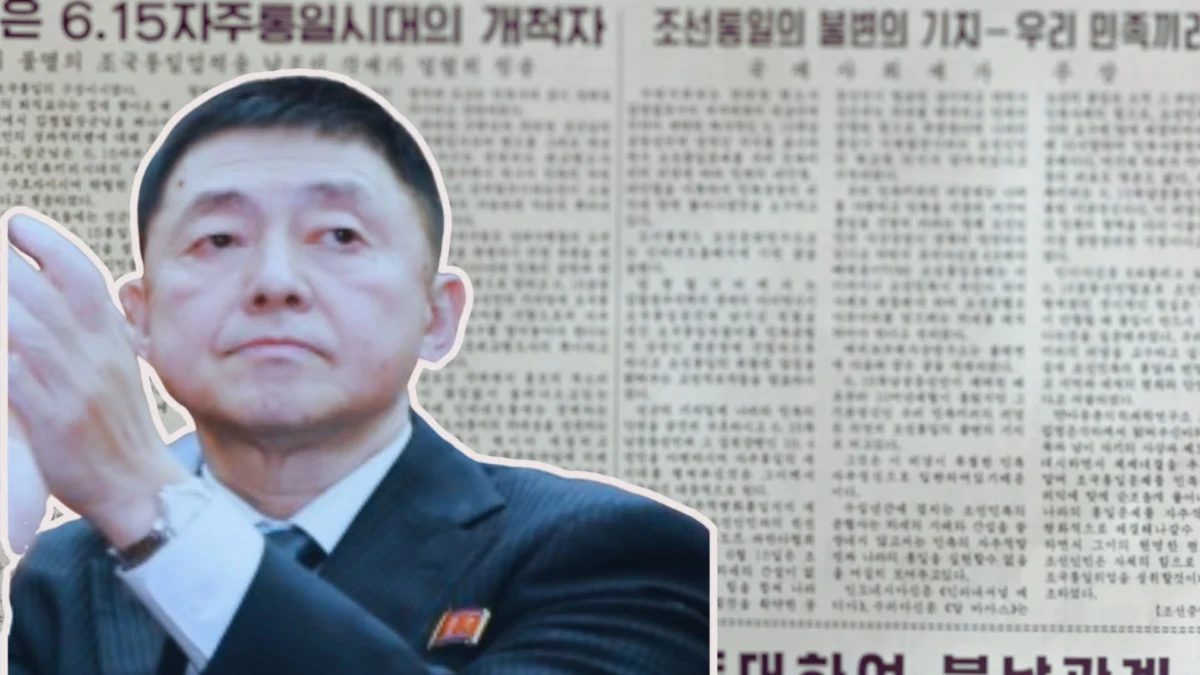
Executive Summary: A Diplomatic Shift in Ink
After a calculated two-year silence, Kim Ji Yong, the chief editor of the Tokyo-based Choson Sinbo, has returned to the forefront of North Korean foreign-policy discourse. His recent bylined columns signal a strategic recalibration in how Pyongyang communicates its nuclear posture to the international community. By explicitly rejecting denuclearization as a viable policy goal and aggressively targeting the trilateral security cooperation between Washington, Tokyo, and Seoul, Kim’s return serves as a bellwether for the hardening of North Korean rhetoric.
The Choson Sinbo, long recognized as the mouthpiece of the General Association of Korean Residents in Japan (Chongryon), acts as a critical bridge between Pyongyang’s inner circle and the outside world. Kim’s re-emergence is not merely a journalistic development; it is a tactical maneuver designed to solidify the narrative that North Korea’s status as a nuclear-armed state is irreversible and non-negotiable.
Chronology: The Evolution of a Hardline Voice
The Silent Years (2024–2026)
For approximately 24 months, the byline of Kim Ji Yong was notably absent from the opinion pages of the Choson Sinbo. During this period, the publication maintained its standard reporting on North Korean domestic affairs, but the high-level, biting ideological critiques—often used to signal changes in Pyongyang’s strategic intent—were relegated to lower-level staff or syndicated reports. Analysts suggest this silence may have been part of a broader, cautious diplomatic holding pattern while the Kim Jong Un regime focused on internal economic stabilization and deepening ties with Moscow.
The Return to Polemics (August 2026)
In early August 2026, the silence was broken. Kim published a series of scathing critiques that targeted the core tenets of the current international security architecture in Northeast Asia.
- August 5, 2026: Kim published a centerpiece article directly attacking international calls for the denuclearization of the Korean Peninsula.
- Late August 2026: The follow-up columns broadened the scope to include pointed rebuttals against the U.S.-Japan-South Korea trilateral security pact, labeling it an "aggression bloc" designed to provoke a regional conflict.
Supporting Data: The Role of the Choson Sinbo
To understand the significance of Kim’s return, one must understand the unique position of the Choson Sinbo. Operated by Chongryon, the outlet functions as the de facto embassy of the Democratic People’s Republic of Korea (DPRK) in Japan.
Institutional Ties
- Political Affiliation: The Choson Sinbo is intrinsically linked to the Workers’ Party of Korea (WPK). Its editorial stance is rarely, if ever, independent of Pyongyang’s central policy directives.
- Historical Context: Chongryon has historically served as a conduit for both intelligence and propaganda. The organization has been subject to intense scrutiny, particularly following revelations regarding the "repatriation" projects that saw thousands of Zainichi Koreans sent to the North under false pretenses—an episode that remains a significant point of legal and human rights contention in Japan.
- Financial Dependency: Recent reports indicate that the ruling Kim regime continues to provide direct financial aid to Chongryon, including multi-million dollar transfers intended for the education of pro-DPRK youth in Japan. This financial lifeline ensures that the Choson Sinbo remains loyal to the ideological mandates of the WPK.
The Significance of Bylined Editorials
In the controlled media environment of North Korea and its satellite organizations, a bylined editorial from a chief editor is never an accident. It is a state-sanctioned signal. When Kim Ji Yong writes, he is transmitting the official line to a specific audience: the Japanese public, regional stakeholders, and the international diplomatic community.
Official Responses and Regional Implications
The Reaction from Tokyo
The Japanese government has maintained a cautious but vigilant stance. As a nation that views the DPRK’s nuclear development as an existential threat, Tokyo sees the return of hardline rhetoric in the Choson Sinbo as an indicator of increased regional instability. Japanese officials, speaking on condition of anonymity, noted that the timing of these articles coincides with heightened military exercises, suggesting a coordinated effort to frame such exercises as "unprovoked aggression."
Washington and Seoul’s Strategic Calculus
The United States and South Korea have long prioritized the "complete, verifiable, and irreversible" denuclearization of North Korea. Kim’s recent articles directly undermine this policy by declaring the concept "obsolete."

- Washington’s Perspective: The U.S. State Department maintains that North Korea’s path to economic normalization lies through diplomatic engagement and disarmament. Kim’s writing effectively slams the door on this possibility, signaling to Washington that Pyongyang is no longer interested in even the pretense of denuclearization negotiations.
- Seoul’s Perspective: For the South Korean administration, the rhetoric is a reminder of the shifting threat landscape. The inclusion of Seoul in the target list of Kim’s critiques suggests that Pyongyang is attempting to isolate the South from its international allies, aiming to weaken the trilateral security framework through psychological and diplomatic pressure.
Implications: The End of the "Denuclearization" Era?
The return of Kim Ji Yong to the editorial fray is not merely a change in the Choson Sinbo’s content strategy; it is a manifestation of a new reality.
1. Hardening of the Nuclear Doctrine
By explicitly rejecting denuclearization, Kim is articulating a doctrine of permanence. Pyongyang is telling the world that the nuclear program is not a bargaining chip to be traded for sanctions relief, but an essential component of state identity and sovereignty. This move forces regional powers to adjust their long-term security policies, potentially leading to an increase in regional arms development.
2. A New Rhetorical Front in Japan
By utilizing the Choson Sinbo to attack the U.S.-Japan-South Korea alignment, Pyongyang is attempting to leverage domestic divisions in Japan regarding defense spending and constitutional reform. Kim’s work acts as a megaphone for anti-American and anti-trilateral sentiment, aiming to make it politically costly for Tokyo to deepen its security cooperation with Washington and Seoul.
3. The Future of the "Zainichi" Conduit
The continued support of Chongryon by the Kim regime, and the use of its newspaper as a megaphone for high-level foreign policy, suggests that Pyongyang sees its presence in Japan as a vital strategic asset. As diplomatic tensions rise, the role of the Choson Sinbo will likely shift from a community publication to an even more overt instrument of statecraft.
Conclusion: The Road Ahead
The return of Kim Ji Yong to the editorial spotlight marks a closing of the diplomatic window that many had hoped would remain open. As the Choson Sinbo continues its current trajectory of aggressive polemics, the international community must prepare for a period of intensified rhetoric.
The message from Pyongyang is clear: the days of negotiating nuclear disarmament are over. In the eyes of the Choson Sinbo and its patrons in Pyongyang, the focus has shifted entirely to the normalization of North Korea as a permanent nuclear power. For the governments of Washington, Tokyo, and Seoul, the challenge is no longer how to convince the North to give up its weapons, but how to maintain regional stability in a world where those weapons are here to stay.
Disclaimer: This analysis is based on available public reports and the recent editorial shifts at the Choson Sinbo. Further updates will depend on the continued output of the publication and the response of regional actors to this escalation in rhetoric.

 Ammar Sabilarrohman
  Pevita Pearce
  Nana Wu
