
 By Suro Senen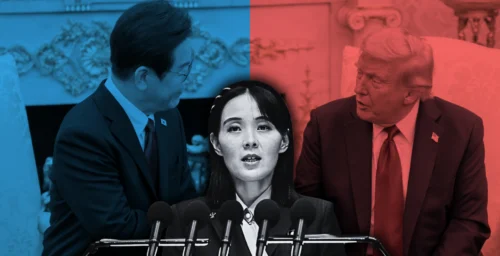
As the dust settles on the abbreviated joint military exercises between the United States and South Korea, a curious pattern has emerged from the North Korean propaganda machine. Kim Yo Jong, the influential sister of North Korean leader Kim Jong Un and a key mouthpiece for the regime, has unleashed a series of vitriolic statements that appear to redraw the lines of engagement on the Korean Peninsula.
Notably, while her rhetoric remained characteristically aggressive, the deliberate exclusion of the South Korean government—even as it sought to appease Pyongyang by halving the duration of the military drills—suggests a calculated attempt to isolate Seoul. By sidestepping the ROK administration while simultaneously challenging Washington, Kim Yo Jong is signaling that Pyongyang’s primary focus remains a return to leader-level diplomacy with the United States, effectively relegating Seoul to the sidelines of future security discussions.
The Chronology of Tension
The recent diplomatic friction unfolded against the backdrop of the U.S.-ROK large-scale military exercises, which concluded this past Friday. In an attempt to reduce regional tensions and perhaps encourage a return to the negotiating table, the South Korean administration under President Lee Jae Myung made the controversial decision to shorten the drills.
Wednesday’s Opening Salvo
On Wednesday, the Korean Central News Agency (KCNA) carried the first of Kim Yo Jong’s statements. It was a targeted strike against the narrative of “continued contact” propagated by the White House. Kim Yo Jong’s rhetoric challenged President Donald Trump’s assertions regarding backchannel communications, framing them as misleading or insufficient. By targeting the U.S. executive branch directly, she bypassed the usual diplomatic channels and the South Korean intermediary, establishing a direct, albeit hostile, line of discourse with Washington.
Thursday’s Calculated Silence
By Thursday, the shift in strategy became more pronounced. Despite the conclusion of the military exercises—a traditional flashpoint for North Korean ire—Kim Yo Jong refrained from focusing her primary grievances on the South Korean government. This silence was deafening. By ignoring the very administration that had just curtailed its military activity to accommodate Pyongyang, Kim Yo Jong effectively stripped Seoul of its agency. The message was clear: in the eyes of the Kim regime, the South Korean government is no longer the primary interlocutor in matters of regional security.
Analyzing the Strategic Shift
To understand the implications of this rhetoric, one must analyze the geopolitical context of the current administration in Seoul and the personality-driven diplomacy favored by the current U.S. presidency.
Bypassing Seoul
The South Korean government’s decision to halve the duration of the military exercises was an act of "strategic patience" designed to lower the temperature. However, Pyongyang’s reaction suggests that such concessions are viewed not as goodwill gestures, but as vulnerabilities. By ignoring Seoul, Kim Yo Jong is attempting to pressure the U.S. into a bilateral framework that excludes South Korean participation, mirroring the high-stakes summitry of the 2018–2019 era.
The Trump-Kim Dynamic
President Trump’s approach to the Korean Peninsula has historically favored personal relationships over institutional diplomatic processes. Kim Yo Jong’s latest tirades, which specifically challenge the U.S. President’s claims about "contact," suggest that Pyongyang is testing the resilience of that relationship. By questioning the validity of the President’s statements, she is attempting to goad the White House into a more direct response, potentially bypassing traditional State Department protocols.
Supporting Data: Regional Security and Military Posture
The recent exercises were intended to project strength and unity between Washington and Seoul. However, the data suggests a fraying of that unified front.

- Duration Reduction: The South Korean decision to reduce the military drills by 50% represents a significant shift in military policy. Analysts argue this was a "pre-emptive concession," intended to prevent the sort of ballistic missile testing that often accompanies such exercises.
- Rhetorical Frequency: Since the start of the year, Kim Yo Jong has issued more public statements regarding U.S. policy than regarding inter-Korean relations. This shift in volume is a quantifiable indicator of Pyongyang’s strategic pivot away from Seoul.
- The "Washington-First" Doctrine: Historical analysis of KCNA output shows a clear correlation between "leader-level" focus and diplomatic stagnation. When the North focuses on Washington, it indicates a desire to negotiate high-level sanctions relief, regardless of the political cost to the South.
Official Responses and International Reaction
The response from the international community has been one of cautious observation. The U.S. State Department has reiterated its commitment to "denuclearization and regional stability," while maintaining that the door for dialogue remains open. However, behind the scenes, diplomats are increasingly concerned about the exclusion of South Korea.
In Seoul, the administration is struggling to frame its policy of appeasement as a success. The silence from Pyongyang, rather than being seen as a diplomatic opening, is being viewed by opposition parties as a failure of the current administration’s "soft" approach. Domestic pressure is mounting on President Lee Jae Myung to clarify how the government intends to remain relevant if Pyongyang continues to treat the South as a non-entity.
The Broader Implications for Northeast Asia
The Erosion of the ROK-U.S. Alliance
The most dangerous implication of this diplomatic theater is the potential erosion of the ROK-U.S. alliance. If Washington chooses to engage in bilateral talks with Pyongyang while Seoul remains sidelined, the trust between the U.S. and South Korea could suffer. Such a scenario would play directly into the hands of North Korean strategists, who have long sought to create friction within the alliance.
The Risk of Miscalculation
As Kim Yo Jong continues to issue challenges to the U.S. President, the risk of a miscalculation increases. If the White House responds with a counter-narrative that is viewed as "disrespectful" or "dishonest" by the Kim regime, it could trigger a new round of long-range missile testing. The regime in Pyongyang is currently in a position where it feels it must maintain a posture of strength to gain leverage in a potential future summit.
Future Outlook
As we look toward the remainder of the year, the diplomatic landscape remains volatile. Kim Yo Jong’s statements serve as a reminder that North Korean policy is not driven by traditional international norms but by a rigid, hierarchy-obsessed worldview.
For the South Korean administration, the path forward is narrow. They are faced with a choice: either double down on their current policy of appeasement, hoping that Pyongyang will eventually see the utility in a tripartite conversation, or pivot toward a more robust security stance that aligns more closely with the U.S. Department of Defense’s traditional hawkishness.
The current trajectory suggests that as long as Washington keeps the door open for bilateral communication, Pyongyang will continue to treat Seoul as a secondary player, further complicating the prospects for a lasting peace on the peninsula. The challenge for international policymakers is to ensure that while the door to diplomacy remains open, it does not lead to a room where the most impacted party—South Korea—is left standing outside.
© Korea Risk Group. All rights reserved. This analysis is provided for informational purposes and does not constitute official government policy. Reproduction or distribution without prior written consent is strictly prohibited.

 Ammar Sabilarrohman
  Pevita Pearce
  Nana Wu
