 By Neng Nana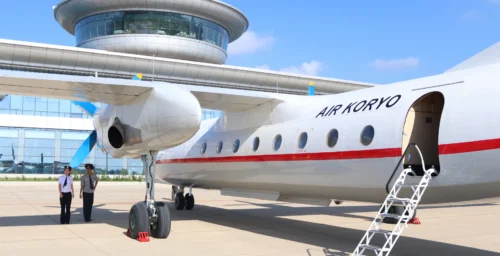
In a curious juxtaposition of propaganda and practical reality, North Korea’s state-sanctioned academic circles have recently broadcast a message of unprecedented inclusivity. According to a legal journal published by the nation’s premier educational institution, the Democratic People’s Republic of Korea (DPRK) is ostensibly open to visitors of every background. This proclamation, however, stands in stark contrast to the reality on the ground, where the country remains effectively sealed off from the global community, with very few exceptions.
The Academic Claim: A Universal Welcome?
The assertion originates from an article authored by Kim Chol U, featured in the latest edition of the Journal of Kim Il Sung University. In the piece, Kim argues that the DPRK’s doors are theoretically wide open, stating that "anyone" can visit the country "regardless of nationality, ethnicity, sex, age, political views, or religious beliefs."
For an observer of North Korean internal messaging, the inclusion of "political views" and "religious beliefs" as protected categories for tourists is particularly striking. The North Korean state is notoriously intolerant of dissenting political thought and non-sanctioned religious activity among its own citizens. Extending an invitation to foreigners holding potentially antithetical views appears to be a calculated effort to reframe the nation’s image on the international stage—a "soft power" maneuver intended to project stability and confidence.
However, the academic text acknowledges that these broad principles are subject to "exceptions." While the provided excerpt remains truncated, it hints at the familiar bureaucratic and security-based hurdles that have historically defined North Korean entry requirements.
Chronology: From Border Closures to Cautious Reopening
To understand the weight of this latest claim, one must look at the timeline of North Korea’s border policies over the last decade:
- 2018–2019: The Peak of Engagement: Following the 2018 summits between Kim Jong Un and then-U.S. President Donald Trump, tourism saw a brief period of growth. Agencies specializing in DPRK travel reported a surge in interest as the geopolitical climate appeared to thaw.
- January 2020: The COVID-19 Lockdown: As the global pandemic began, Pyongyang implemented one of the most draconian border closures in the world. Tourism ceased entirely, and even the movement of goods was severely restricted.
- 2023–2024: The "Russian Exception": As the world began to open, North Korea remained firmly shut to the West. However, a significant pivot occurred in 2024, when North Korea began allowing small, highly curated groups of Russian tourists to enter the country, signaling a deepening of ties between Moscow and Pyongyang.
- Late 2024–2025: Diplomatic Signaling: The publication of the article in the Journal of Kim Il Sung University suggests a desire by state authorities to signal a transition from a "closed fortress" to a "welcoming destination," at least in the eyes of the domestic readership and potential diplomatic partners.
Supporting Data: The Reality of Restricted Access
Despite the inclusive language of the Journal of Kim Il Sung University, the practical data paints a different picture.
Current Entry Requirements
At present, the DPRK operates under a system of extreme vetting. Foreigners wishing to enter must navigate a complex web of visa sponsorship, mandatory state-assigned guides, and strict limitations on movement. For the vast majority of the world, the country is inaccessible. The current "Russian-only" preference—or at least the overwhelming dominance of Russian visitors—demonstrates that "nationality" is indeed a factor in entry, contradicting the journal’s bold claims.
Security and Political Vetting
The DPRK’s legal framework regarding foreign visitors has always prioritized state security. Historically, those whose political or religious backgrounds were deemed "hostile" by the state were subject to arrest, detention, or expulsion. The scholarly claim that political views are no barrier ignores the reality of cases like Otto Warmbier, the American student whose 2016 detention and subsequent death served as a grim reminder of the high stakes involved in visiting the North.
Official Responses and State Rhetoric
The North Korean state apparatus rarely speaks with one voice, but when it does, the message is carefully calibrated. By publishing this claim in an academic journal, the regime is performing a dual function:

- For the Domestic Audience: It reinforces the narrative that the DPRK is a normal, modern state that interacts with the international community on its own terms, countering the "hermit kingdom" label.
- For the International Audience: It provides a talking point for state-affiliated travel agencies and foreign sympathizers to argue that the country is not discriminatory.
However, international observers and human rights organizations remain skeptical. The lack of an official statement from the Ministry of Foreign Affairs or the State Tourism Administration—the bodies that actually oversee entry—suggests that this academic article is more of a theoretical aspiration than a policy change.
Implications: Tourism as a Political Tool
The implications of this rhetoric are significant for several reasons:
1. Soft Power vs. Hard Security
The DPRK is attempting to leverage its isolation to cultivate a "mystique" that attracts a specific niche of tourism. By claiming universality, they hope to attract individuals who are disillusioned with Western political systems or those who harbor a curiosity about the world’s last remaining "socialist paradise."
2. Economic Necessity
With sanctions severely hampering the North Korean economy, tourism represents one of the few avenues for generating foreign hard currency. However, the regime is caught in a trap: it needs the money that tourism brings, but it fears the ideological contamination that comes with free-roaming foreign travelers.
3. The "Russian Model"
The current reliance on Russian tourism suggests that the DPRK is shifting its economic and political dependencies. Future tourism policy will likely not be based on "universality," but rather on political alignment. If a country is a strategic partner, its citizens will be welcomed; if a country is seen as a hostile entity, its citizens will remain persona non grata.
Conclusion: A Scholarly Mirage?
The assertion by Kim Chol U that North Korea welcomes all, regardless of political or religious orientation, is a fascinating exercise in state-sanctioned fiction. While it may provide fodder for debate within the ivory towers of Kim Il Sung University, it is fundamentally disconnected from the realities of the DPRK’s border control, security apparatus, and geopolitical strategy.
For now, the "open" North Korea remains a mirage. Travelers hoping to test the veracity of this academic claim would be wise to consider that in the DPRK, the law is whatever the state decides it is on any given day. Until the rhetoric is matched by substantive policy changes—such as the lifting of travel bans for Westerners, the easing of strict surveillance, and a relaxation of the "guaranteed" political vetting process—the country will remain one of the most difficult and dangerous places on earth to visit.
The academic journal’s claim should be viewed not as a policy manual, but as a strategic signal: North Korea is looking to diversify its visitor base, but it will do so strictly on its own terms, ensuring that any "openness" remains entirely under the shadow of the state.
 Ammar Sabilarrohman
  Pevita Pearce
  Nana Wu
