
 By Lina Hope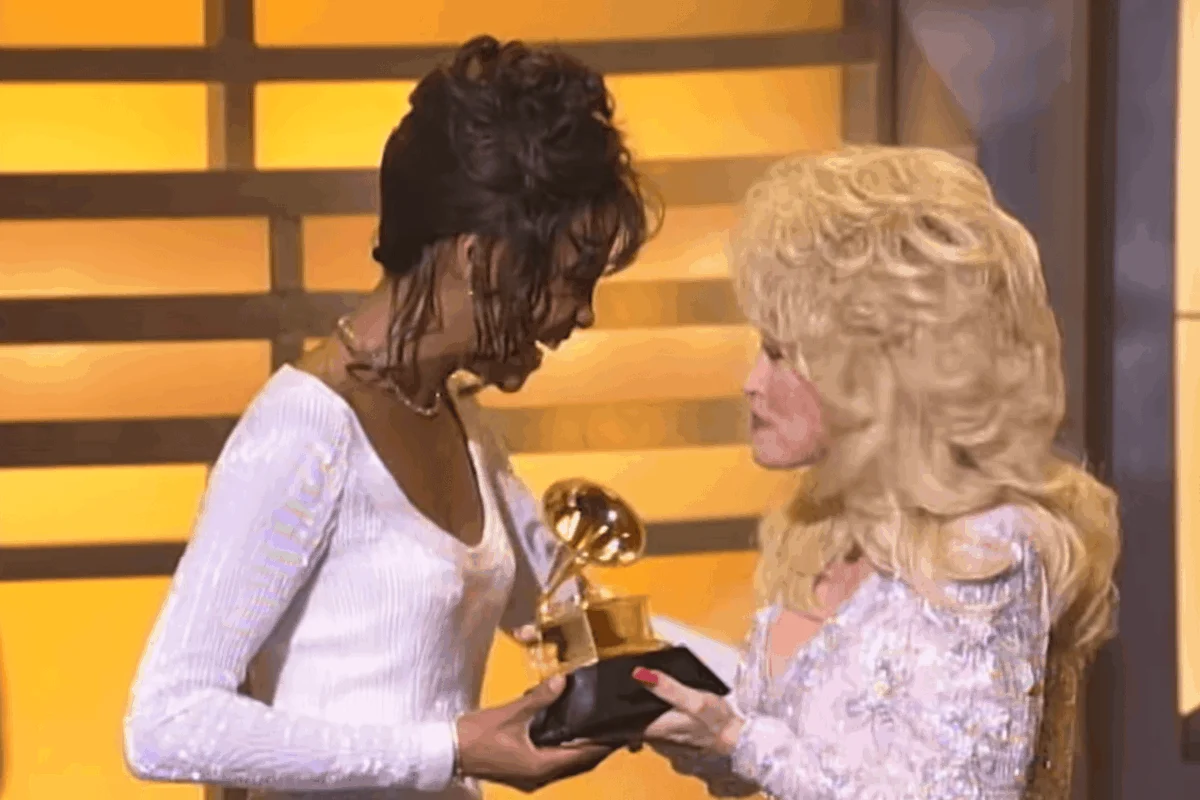
The enduring power of Dolly Parton’s songwriting prowess continues to resonate across generations, highlighted by two monumental chart achievements: Whitney Houston’s record-breaking rendition of "I Will Always Love You" and Beyoncé’s impactful reimagining of "Jolene." These reinterpretations, decades apart, underscore Parton’s extraordinary ability to craft timeless narratives that transcend genre and connect with a global audience, solidifying her legacy not just as a performer, but as one of music’s most influential lyricists.
Parton, a multifaceted icon whose career has spanned music, acting, philanthropy, and humanitarian efforts, has consistently demonstrated a remarkable talent for distilling complex human emotions into universally relatable lyrics. Her prolific catalog has served as the bedrock of her own illustrious career and has also propelled fellow superstars to significant milestones, most notably two distinct entries into the Billboard Hot 100 top 10. These reinterpretations, while distinct from their originals, showcase the profound adaptability and lasting appeal of Parton’s compositions.
"I Will Always Love You": A Soundtrack to Stardom
The most prominent example of Parton’s songwriting impact arrived in 1992 when Whitney Houston recorded "I Will Always Love You" for the soundtrack of her acting debut in the film The Bodyguard. The song’s placement within the film, accompanying a pivotal romantic moment between Houston and co-star Kevin Costner, and its prominent role in the closing credits, made it a crucial element of the movie’s success. However, the iconic rendition nearly didn’t happen.
Initially, Houston was slated to record a cover of Jimmy Ruffin’s "What Becomes of the Brokenhearted." This plan was thwarted by a series of unfortunate circumstances. As Maureen Crowe, the music supervisor for The Bodyguard, explained to the New York Post in 2022, slowing down Ruffin’s song transformed it into a "dirge." More significantly, Paul Young had released his version of "What Becomes of the Brokenhearted" in 1991, and it had already climbed to number 22 on the Billboard Hot 100. Crowe stated, "We couldn’t use that song because it would just seem like we ripped it off."
In light of these challenges, Parton’s "I Will Always Love You" was proposed as an alternative. This suggestion was met with enthusiasm by Houston, Costner, and Clive Davis, the head of Arista Records. While Houston’s version retained the emotional core of Parton’s original, it featured several key modifications that contributed to its distinct power. The inclusion of an a cappella opening, a slower tempo, and the addition of a third verse, often omitted in previous recordings, lent the track a new layer of vulnerability and intensity. These alterations, combined with Houston’s unparalleled vocal prowess, transformed the song into a global phenomenon.
The narrative behind Parton’s original composition is deeply personal. Written in 1974, it stemmed from her decision to leave "The Porter Wagoner Show" after a long and successful partnership, during which they recorded numerous duets. The song was a poignant farewell, a reflection of her gratitude and the complex emotions involved in moving on from a significant professional relationship.
The impact of both versions cannot be overstated. Parton’s original achieved significant success, topping the Billboard Hot Country Songs chart in 1974 and again with a re-recorded version in 1982. However, Houston’s rendition transcended even these impressive achievements. It became a cultural touchstone, spending an unprecedented 14 weeks at number one on the Billboard Hot 100. The song’s immense popularity earned it two Grammy Awards: Record of the Year and Best Pop Vocal Performance, Female. During the Grammy Awards ceremony in 1994, Parton herself had the honor of presenting Houston with one of the awards. Houston, in her acceptance speech, expressed profound gratitude, stating, "Dolly, of course, coming from you, this is truly an honor. Thank you for writing a beautiful song. Thank you so much for writing beautiful songs." This moment beautifully encapsulated the mutual respect and admiration between the two iconic artists.
"Jolene": A Modern Warning from a Country Classic
Fast forward to 2024, and another Parton classic, "Jolene," found new life and significant chart success through the innovative interpretation by Beyoncé on her album Cowboy Carter. This album, her first full-length exploration of country music and its adjacent sounds, saw Beyoncé reimagine the pleading narrative of "Jolene" as a formidable warning. Instead of the original’s plea, "I’m begging of you, please don’t take my man," Beyoncé’s rendition transforms it into a resolute declaration: "I’m warning you, don’t come for my man."
This shift in perspective, coupled with a heavier, drum-driven arrangement, positioned the song as a powerful cautionary tale and one of the most anticipated tracks on Cowboy Carter. Upon the album’s debut on the Billboard charts, Beyoncé’s "Jolene" entered the Hot 100 at number 7. This marked the third-highest debut among the album’s 23 entries that week, trailing only the lead single "Texas Hold ‘Em" and the duet "II Most Wanted" with Miley Cyrus, who happens to be Parton’s goddaughter.
Parton, though initially surprised by the stark contrast in interpretation, expressed her admiration for Beyoncé’s bold approach. In a 2024 interview with E! News, she remarked, "When they said she was going to do ‘Jolene,’ I expected it to be the regular one, but it wasn’t. I loved what she did to it. As a songwriter, you love the fact that people do your song, no matter how they do them. She wasn’t about to beg some woman like I did." This sentiment highlights Parton’s understanding and appreciation of artistic interpretation, recognizing that a song can evolve and take on new meaning in the hands of a different artist.
Beyoncé’s "Jolene" also made a significant impact on the country music charts, reaching number 3 on the Hot Country Songs chart in April 2024. This was its highest position since Parton’s original topped the chart in February 1974, precisely 50 years prior. This temporal symmetry further emphasizes the song’s enduring relevance.
The collaboration between Parton and Beyoncé extended beyond "Jolene." Parton made a guest appearance on Cowboy Carter, providing a spoken introduction for the track "Tyrant." This collaboration proved mutually beneficial, as "Tyrant" provided Parton with her first entry on the Billboard Hot R&B/Hip-Hop Songs chart, peaking at number 18. This marked a significant crossover moment for the country music legend, showcasing her ability to connect with audiences across diverse musical landscapes.
Following Dolly Parton’s passing on August 25, 2026, at the age of 80, Beyoncé shared a heartfelt tribute on social media. She wrote, "Dolly, you were the barometer. The North Star. Bold and brilliant. Talented and tenacious. I’m honored that I had the privilege to work with you. I will treasure that forever. Thank you for your profound impact on the world. You are truly one of one. Rest peacefully." This statement not only honored Parton’s memory but also reaffirmed the profound influence she has had on artists like Beyoncé, cementing her place as a foundational figure in music history.
The Enduring Power of a Songwriter’s Craft
Dolly Parton’s legacy is inextricably linked to her unparalleled skill as a songwriter. Her ability to craft narratives that are both deeply personal and universally resonant has allowed her songs to be reinterpreted and celebrated by artists across genres and generations. The chart success of Whitney Houston’s "I Will Always Love You" and Beyoncé’s "Jolene" serves as a powerful testament to this enduring influence.
These reinterpretations are more than just covers; they are dialogues between artists, each bringing their unique perspective and talent to Parton’s foundational work. Houston’s version amplified the song’s emotional weight and catapulted it to global pop superstardom, while Beyoncé’s reimagining injected a contemporary edge and a powerful feminist statement into a country classic. Both instances demonstrate the remarkable adaptability of Parton’s songwriting, proving that her lyrics and melodies possess a timeless quality that can be molded and transformed to speak to new audiences and address evolving cultural conversations.
The impact of these two songs extends beyond chart performance. They represent significant cultural moments, highlighting the power of music to connect, inspire, and provoke thought. "I Will Always Love You" became an anthem of love and loss, a staple at weddings and funerals alike, its power amplified by Houston’s transcendent vocal performance. "Jolene," in its new guise, became a symbol of female empowerment and resilience, its message resonating with a generation navigating complex relationships in the digital age.
As the music world continues to celebrate Dolly Parton’s extraordinary contributions, these chart-topping reinterpretations stand as shining examples of her lasting impact. They are not merely echoes of past glories but vibrant, living testaments to the power of a well-crafted song to transcend time, genre, and artistic boundaries, continuing to inspire and captivate audiences worldwide. Parton’s legacy as a songwriter is not confined to her own discography; it is woven into the fabric of popular music history through the iconic voices and visionary interpretations of artists who have found enduring magic within her words.

