
 By Nila Kartika Wati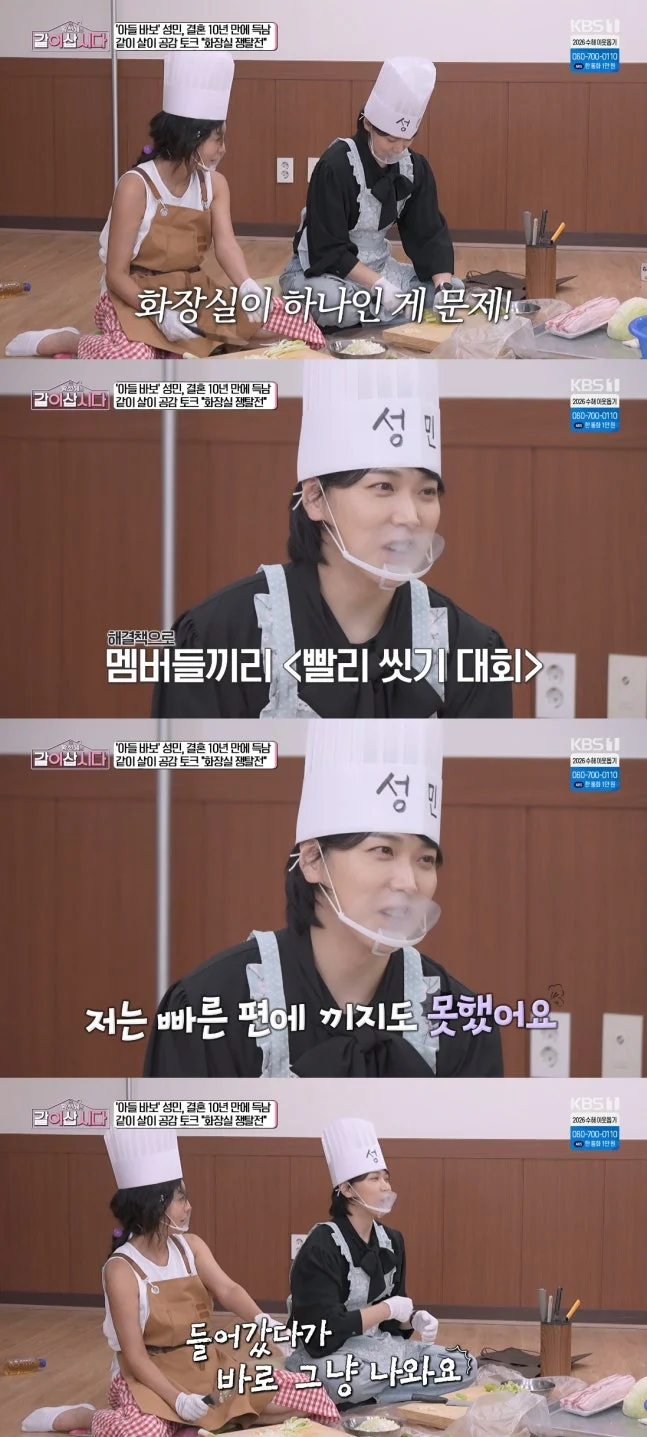
The Reality of Large-Scale Group Dormitories
During the episode, Sungmin joined the cast as a special assistant to help prepare a Thanksgiving feast. While discussing the dynamics of living in close quarters, Sungmin expressed a sense of nostalgia for the years he spent in a dormitory with his fellow Super Junior members. He noted that while there were inevitable inconveniences, the experience fostered a unique bond. When actress Hwang Shin Hye admitted that her own shared living experiences were often hampered by having only one bathroom, necessitating long wait times to wash up, Sungmin revealed the creative—and competitive—solution his group implemented to manage their morning routines.
According to Sungmin, the members of Super Junior initiated "shower contests" to expedite the process of getting ready for their demanding schedules. "We had quick shower contests because of the limited time and facilities," Sungmin explained. He further detailed that these contests were not merely for efficiency but were incentivized by rewards, stating that the member who finished their shower in the shortest amount of time would receive a prize.
The competitive nature of the group, which at its peak consisted of 13 active members, meant that speed was of the essence. Sungmin admitted that he was never among the fastest participants. He recalled his astonishment at certain members who seemed to possess an almost superhuman ability to cleanse themselves. "The fastest were like, ‘How can you shower that fast?’ They’d go in and come right back out," he remarked, highlighting the extreme measures idols take to maintain a rigorous professional itinerary.
Historical Context of Super Junior’s Living Arrangements
To understand the necessity of such contests, one must look at the history of Super Junior’s dormitory life. Debuting in 2005 under SM Entertainment, Super Junior was the first K-pop group to feature a double-digit membership count. This unprecedented scale presented significant logistical hurdles for the agency’s management staff. In the mid-2000s, it was common for large groups to be split across multiple apartment units within the same building or to occupy large, multi-room dormitories where privacy was a luxury.
In the early years of their career, Super Junior members famously lived in a dormitory in the Cheongdam-dong area of Seoul. Reports from that era suggest that as many as a dozen young men shared a single living space, often with only two bathrooms available. Given that a typical K-pop schedule involves waking up as early as 3:00 AM or 4:00 AM for hair and makeup appointments before music show recordings, the "bathroom bottleneck" became a genuine threat to their punctuality. The "shower contest" was a pragmatic, if humorous, adaptation to these pressures.

Comparative Dormitory Experiences in the K-Pop Industry
The "shower contest" anecdote is not unique to Super Junior but serves as a representative example of the broader K-pop "dormitory culture." This culture is a staple of the trainee system, designed to foster teamwork, allow for easy management by the agency, and ensure that members are readily available for group practice sessions.
Other groups have reported similar strategies. Members of the 13-member group SEVENTEEN have frequently discussed the "three-minute shower" rule they implemented during their early years to ensure everyone could prepare for schedules on time. Similarly, members of Girls’ Generation have spoken about the "rock-paper-scissors" tournaments held to determine the order of bathroom use.
However, the industry has seen a shift in recent years. As the K-pop global market has expanded and revenues have increased, the quality of dormitories for top-tier groups has improved significantly. Modern groups from major agencies like HYBE or JYP Entertainment are often provided with luxury apartments in high-end districts like Hannam-dong or Gangnam, featuring multiple bathrooms and private rooms. Sungmin’s reflections highlight a "golden era" of second-generation K-pop where shared hardship was a defining characteristic of the idol experience.
Sungmin’s Transition from Global Idol to Trot Singer
The context of Sungmin’s appearance on Let’s Live Together with Hwang Shin Hye also underscores his recent career evolution. After years of hiatus from Super Junior’s group activities following his marriage in 2014, Sungmin has successfully pivoted to the trot genre—a traditional form of Korean pop music that has seen a massive resurgence in popularity over the last five years.
His participation in the variety show signals his continued relevance in the Korean entertainment landscape, appealing to an older demographic that frequents KBS 1TV programming. By sharing "behind-the-scenes" stories of his idol days, Sungmin bridges the gap between his past as a global Hallyu star and his current identity as a versatile entertainer. His ability to laugh at the "inconveniences" of the past suggests a mature perspective on the sacrifices required to achieve international stardom.
The Psychological and Social Implications of Communal Living
Sociological analysis of K-pop dorm life suggests that these living arrangements are instrumental in creating the "group identity" that fans find so appealing. The "shower contests" mentioned by Sungmin are more than just a funny story; they represent a form of "gamification" of daily chores that helps alleviate the stress of a high-pressure environment.

By turning a potential source of conflict—limited bathroom access—into a competitive game with prizes, the members maintained group harmony. This internal management of resources is a critical skill for any group intended to last for decades, as Super Junior has. Having celebrated their 18th anniversary, the group remains one of the longest-running acts in K-pop history, a feat many attribute to the deep bonds formed during their years of sharing cramped quarters and competing in "shower contests."
Reactions and Broader Impact
The revelations made on the program have sparked a wave of nostalgia among "E.L.F." (Super Junior’s global fanbase). On social media platforms, fans have recirculated old clips of the members discussing their dormitory rules, noting that these stories humanize idols who are often seen as untouchable figures.
Industry experts suggest that the transparency regarding the "un-glamorous" side of idol life is a strategic move for veteran performers. It builds a sense of authenticity and relatability. For Sungmin, these anecdotes serve to maintain his connection with long-time fans while introducing his personality to new viewers who may only know him through his trot music.
Furthermore, the dialogue on Let’s Live Together highlights a generational bridge. When veteran actresses like Hwang Shin Hye and Yang Jung Ah share their own experiences of limited resources in the 1980s and 90s, it creates a shared narrative of "making do" that resonates across different eras of the Korean entertainment industry.
Chronology of Super Junior’s Dormitory Evolution
- 2005–2007: The group lived in a high-density dormitory setting with minimal privacy. This is the period when "shower contests" were most likely at their peak due to the sheer number of active members.
- 2008–2012: As the group achieved massive success with hits like "Sorry, Sorry," they moved to more spacious arrangements, often split between two floors of a luxury apartment building. This allowed for more bathrooms but maintained the communal living structure.
- 2013–Present: Most members moved into their own private residences as they reached their 30s. However, several members, most notably Kyuhyun and Eunhyuk, continued to live in the group’s dormitory for many years afterward, citing the convenience and the desire to avoid loneliness.
Conclusion
Sungmin’s lighthearted recollection of Super Junior’s shower contests offers a window into the disciplined and often grueling reality of K-pop’s formative years. It serves as a reminder that behind the synchronized choreography and polished music videos lies a world of logistical problem-solving and shared human experience. As the K-pop industry continues to evolve into a multi-billion dollar global phenomenon, these stories of communal living and "three-minute showers" remain a foundational part of the narrative that defines the genre’s legendary second generation. For Sungmin, these memories are not just about the inconvenience of a single bathroom, but about the camaraderie and competitive spirit that allowed Super Junior to become one of the most enduring names in music.

