
 By Lina Irawan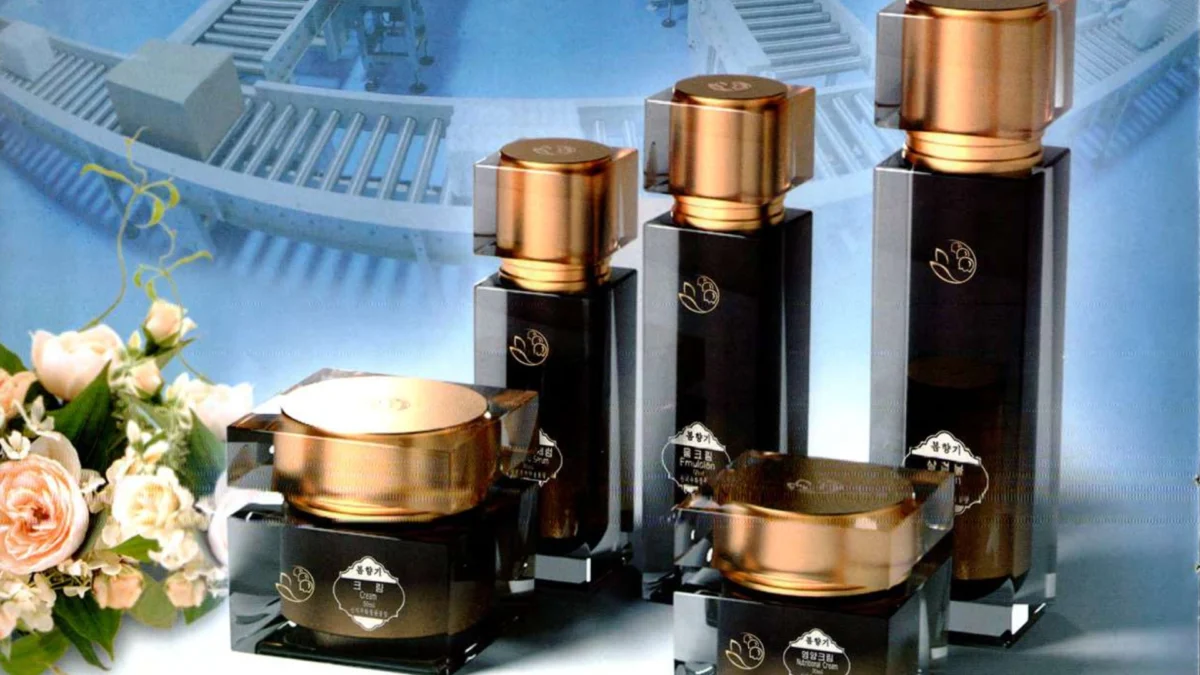
In an unexpected expansion of bilateral trade that signals deepening economic integration between Pyongyang and Moscow, North Korean luxury skincare products are poised to enter the Russian market. According to recent regulatory filings, the Sinuiju-based Korea Cosmetics Trading Company has established a formal partnership with a Moscow-based firm to distribute its flagship ginseng-based anti-aging line, Pomhyanggi (Spring Scent), to Russian consumers.
This development marks a significant shift in North Korea’s export strategy, moving beyond the traditional trade of raw materials and labor toward the promotion of "luxury" consumer goods in the Russian Federation. As both nations face intense international sanctions and diplomatic isolation, the move underscores a growing effort to bypass Western-led economic pressure through mutual cooperation.
Main Facts: The Ginseng Connection
The entry of Pomhyanggi into Russia is facilitated by a strategic partnership between the state-run Korea Cosmetics Trading Company and Invest Stroi, a small Russian firm headquartered in Moscow. Official documentation filed with Russia’s Federal Service for Accreditation (FSA) confirms that the products have undergone the necessary conformity assessments required to enter the Russian consumer market.
The Pomhyanggi brand is well-regarded within North Korea, often marketed as a premium domestic product that leverages the country’s traditional expertise in ginseng cultivation. Ginseng, a root historically prized in East Asian medicine for its perceived anti-aging and revitalizing properties, serves as the primary active ingredient in these creams. By targeting the Russian market, Pyongyang is clearly attempting to capitalize on the prestige associated with "exotic" North Korean botanical products, positioning them as a niche, high-end alternative to Western brands that have largely withdrawn from the Russian market following the invasion of Ukraine.
Chronology: A Growing Trade Corridor
The arrival of North Korean cosmetics is the latest step in a accelerating timeline of economic engagement between the two nations:
- 2015: Invest Stroi is incorporated in Moscow by Andrei Shvets, initially focusing on general construction and wholesale trade before pivoting to international import-export operations.
- 2022–2023: Following the intensification of the war in Ukraine and the resulting Western sanctions on Moscow, Russia and North Korea begin to publicly revitalize their bilateral economic ties.
- Early 2024: Reports emerge regarding the shipment of North Korean beer and other consumer goods into Russian retail channels.
- Mid-2026: Regulatory filings with the FSA indicate that Invest Stroi has successfully secured compliance certification for a range of North Korean cosmetic items, including anti-aging creams and serums.
- Late 2026: The formal announcement of the partnership between the Korea Cosmetics Trading Company and Invest Stroi marks the first time a North Korean beauty brand has officially sought a foothold in the Russian luxury retail sector.
Supporting Data: Understanding the Players
The Korea Cosmetics Trading Company
Based in the border city of Sinuiju, this state-run entity is a pillar of North Korea’s light industry sector. Tasked with earning foreign currency for the regime, the company manages the production, packaging, and export of several domestic beauty brands. The Pomhyanggi brand is their crown jewel, often featured in government-run brochures and propaganda as a symbol of North Korean technological and scientific advancement in the pharmaceutical and cosmetic fields.
Invest Stroi: The Conduit
Invest Stroi, under the direction of Andrei Shvets, serves as a classic example of the small, agile intermediaries often used to facilitate trade between sanctioned nations. While the firm was not previously known as a beauty distributor, its pivot to cosmetics suggests an opportunistic business strategy aimed at filling the void left by international cosmetic conglomerates like L’Oréal or Estée Lauder, which ceased operations in Russia.
Market Context
The Russian beauty market, which was valued at several billion dollars prior to 2022, has undergone a radical transformation. With the departure of major global brands, local retailers and small importers are increasingly looking toward "friendly" nations—including China, Iran, and now North Korea—to source consumer goods. The importation of ginseng creams is a low-risk, high-margin endeavor that allows both parties to test the viability of North Korean consumer products on a broader scale.
Official Responses and Diplomatic Silence
To date, the Kremlin has remained largely tight-lipped regarding the specific details of the Pomhyanggi import, categorizing it under the broader umbrella of "strengthening bilateral economic cooperation." Russian officials have emphasized that the trade is compliant with international norms, despite the obvious tension between these activities and the various United Nations Security Council (UNSC) resolutions that restrict luxury goods trade involving the DPRK.

Pyongyang’s state media, however, has subtly lauded the export as a victory for North Korean "self-reliance" and "high-quality manufacturing." By framing these products as "luxury," the DPRK is attempting to shift the international narrative away from its status as a pariah state toward a producer of sophisticated, high-end exports.
International observers and sanctions experts remain skeptical. The U.S. State Department and various independent monitoring groups have warned that any trade with North Korean state-owned entities carries significant risks of sanctions evasion. They argue that these cosmetic shipments may serve as a testing ground for larger-scale logistical cooperation between the two nations, potentially concealing the movement of dual-use goods or financing that supports Pyongyang’s nuclear ambitions.
Implications: A Shift in Sanctions Resilience
The significance of this partnership extends far beyond the skincare industry. The move represents several critical geopolitical and economic shifts:
1. Diversification of Revenue
For North Korea, the ability to export consumer products provides a mechanism for generating foreign currency outside of traditional coal or seafood smuggling. By selling branded goods, Pyongyang can build a consumer base, however small, and normalize its commercial presence abroad.
2. Filling the Consumer Vacuum
Russia’s retail sector is currently desperate for alternatives to Western consumer goods. While North Korean cosmetics are unlikely to replace premium European brands in the immediate term, they satisfy a demand for "alternative" luxury goods that allows the Russian government to project an image of economic normalcy and resilience in the face of international isolation.
3. The "Allied" Economic Bloc
This development is a tangible manifestation of the "Axis of Cooperation" between Moscow and Pyongyang. As these nations align their economies, the barrier for future trade—including in the sectors of technology, logistics, and potentially military-industrial components—becomes increasingly porous. The cosmetics trade is a "soft" form of economic integration that paves the way for "harder" forms of cooperation.
4. Challenges to the Sanctions Regime
The most concerning implication for the international community is the erosion of the UNSC sanctions architecture. When smaller firms like Invest Stroi are permitted to conduct business with state-run North Korean entities without significant repercussions, it emboldens other actors in the region to ignore restrictions. If the Pomhyanggi line finds success in Moscow, it is highly probable that other North Korean goods—textiles, electronics, and processed foods—will follow, creating a sustained economic pipeline that is increasingly difficult for Western intelligence agencies to monitor or disrupt.
Conclusion
The arrival of North Korean ginseng creams in Moscow is more than a trivial retail story; it is a signal of a new era in the Russia-DPRK relationship. By leveraging the prestige of traditional ingredients and the necessity of the Russian market, Pyongyang is effectively testing the limits of its international isolation. As this trade relationship matures, the world will be watching to see whether these luxury goods are merely a commercial curiosity or the harbinger of a more robust, and potentially destabilizing, economic partnership between two of the world’s most sanctioned regimes. For now, the "Spring Scent" of North Korean ginseng is set to perfume the aisles of Russian stores, serving as a fragrant reminder of the shifting geopolitical tides in Eurasia.

 Reynand Wu
  Laily UPN
