
 By Laily UPN
SEOUL — As President Donald Trump navigates the fallout of a controversial and taxing conflict with Iran, his administration is expected to pivot back toward the Korean Peninsula in a high-stakes bid to salvage his foreign policy legacy. According to Charles Kupchan, a former senior director for European affairs at the National Security Council, the President’s desire for a defining diplomatic "win" makes a renewed overture to North Korean leader Kim Jong Un not only possible but increasingly likely.
Speaking at the annual Global Korea Forum in Seoul on August 27, 2026, Kupchan—now a professor of international affairs at Georgetown University—characterized the ongoing war with Iran as a strategic "debacle." He argued that the political capital expended in the Middle East has left the White House desperate for a breakthrough that could reshape the narrative of his presidency before his term concludes.
The Strategic Calculus: From Tehran to Pyongyang
The logic behind a potential pivot to North Korea lies in the asymmetrical nature of Trump’s foreign policy goals. While the conflict in Iran has devolved into a grinding war of attrition, the North Korean file remains, in the view of many analysts, "unfrozen" territory where a singular summit or breakthrough could yield immediate, tangible headlines.
The "Debacle" Factor
Kupchan’s assessment of the Iran conflict as a "debacle" stems from the unexpected duration and economic cost of the campaign. For a President who campaigned on the promise of avoiding "endless wars," the Iran intervention has become a significant liability. To neutralize domestic criticism and project strength, the administration is reportedly looking for a "clean" diplomatic victory.
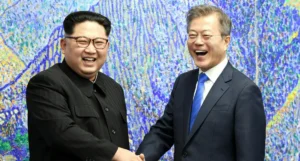
North Korea, despite its nuclear advancements, offers a different theater of operations. Unlike the multi-front complexity of the Middle East, the relationship with Pyongyang is highly personalized. Trump’s previous history of direct engagement with Kim Jong Un—ranging from the historic Singapore summit to the informal meeting at the DMZ—provides a pre-existing channel that the White House can reactivate with relative ease.
Chronology of Engagement: A History of High-Stakes Diplomacy
To understand why a return to North Korea is being signaled, one must review the cyclical nature of Trump’s engagement with the Kim regime over the last decade.
- 2018: The Singapore Summit: The inaugural meeting between the two leaders marked a paradigm shift in U.S.-DPRK relations, establishing a framework for denuclearization that, while ultimately stalled, set a precedent for direct executive-to-executive diplomacy.
- 2019: The Hanoi Impasse: The failure to reach a comprehensive agreement in Vietnam highlighted the structural hurdles of denuclearization, specifically the sequencing of sanctions relief versus nuclear dismantling.
- 2019: The DMZ Handshake: A spontaneous meeting that reinforced the "personal chemistry" narrative, though it failed to produce substantive progress in working-level negotiations.
- 2020–2025: The Long Chill: As global focus shifted toward the pandemic and subsequent geopolitical shifts in Europe and the Middle East, North Korea largely retreated into its shell, accelerating its missile testing programs.
- 2026: The Current Pivot: With the administration facing mounting pressure due to the Iran war, intelligence and diplomatic circles in Seoul suggest that the U.S. is quietly preparing a "Diplomacy 2.0" roadmap.
Supporting Data: The Shared Challenges of the Peninsula
Beyond the maneuvering of the Trump administration, the forum also highlighted the underlying structural issues facing the two Koreas. Pulitzer Prize-winning author Jared Diamond, who also contributed to the forum’s discourse, emphasized that despite the ideological chasm, the North and South share existential challenges that transcend politics.
Environmental and Demographic Risks
Diamond pointed to two critical areas where the two Koreas could, in theory, find common ground:
- Climate Change and Resource Management: The peninsula’s topography and weather patterns make both North and South equally vulnerable to rising sea levels, flooding, and agricultural instability.
- Demographic Collapse: Both nations are facing extreme population crises. South Korea’s fertility rate remains the lowest in the world, while North Korea’s aging workforce and food security issues pose long-term risks to the state’s sustainability.
These "non-political" areas of concern provide a potential "backdoor" for engagement, allowing for low-stakes cooperation that could serve as a confidence-building measure before tackling the nuclear issue.

Official Responses and Regional Implications
The prospect of a renewed U.S.-DPRK rapprochement has elicited a cautious, albeit nuanced, response from regional stakeholders.
The Seoul Perspective
The South Korean government, currently invested in maintaining the "Global Korea" initiative, has signaled support for any diplomatic pathway that lowers tensions. However, there is underlying anxiety that a "Trump-Kim" deal could be reached over the head of the South Korean government, potentially undermining Seoul’s security guarantees.
The Chinese and Russian Factor
Regional analysts note that the geopolitical environment of 2026 is vastly different from 2018. With China’s growing assertiveness and the deepening military ties between Moscow and Pyongyang, any U.S. outreach to North Korea will be viewed with deep suspicion by Beijing. If Trump seeks a deal, he must contend with a North Korea that is no longer as isolated as it once was, having found reliable partners in Russia to buffer against international pressure.
Implications: A High-Risk, High-Reward Strategy
If President Trump chooses to pursue this path, the implications are profound.
Domestic Political Impact
For the White House, a successful breakthrough—perhaps involving a freeze on long-range missile testing in exchange for significant humanitarian aid or a partial easing of non-nuclear sanctions—could provide the "win" needed to offset the optics of the Iran conflict. It would allow the administration to argue that their unorthodox style of diplomacy achieves what "establishment" politics could not.
Security Risks
The danger remains that such a deal would be "thin"—a superficial agreement that leaves North Korea’s nuclear arsenal intact while providing the regime with the international legitimacy it craves. Experts warn that a rushed diplomatic overture could alienate regional allies, specifically Japan and South Korea, who bear the direct burden of North Korea’s military posture.
The "Jared Diamond" Perspective: A Long-Term View
Ultimately, the forum underscored a stark reality: whether the U.S. engages or not, the two Koreas are tethered to the same landmass. As Jared Diamond noted, the long-term survival of both entities depends on their ability to manage the environmental and demographic pressures that do not respect the DMZ.
As we move into the final months of 2026, the world watches to see if the Trump administration will indeed attempt to trade the volatility of the Middle East for the uncertainty of the Korean Peninsula. While a summit might offer the optics of progress, the structural hurdles—ranging from regional alliances to the emboldened nature of the Kim regime—suggest that any future diplomacy will require far more than just "personal chemistry" to yield lasting stability.
© Korea Risk Group. All rights reserved. No part of this content may be reproduced, distributed, or used for commercial purposes without prior written permission from Korea Risk Group.
 Ammar Sabilarrohman
  Pevita Pearce
  Nana Wu
