
 By Layla Zulfa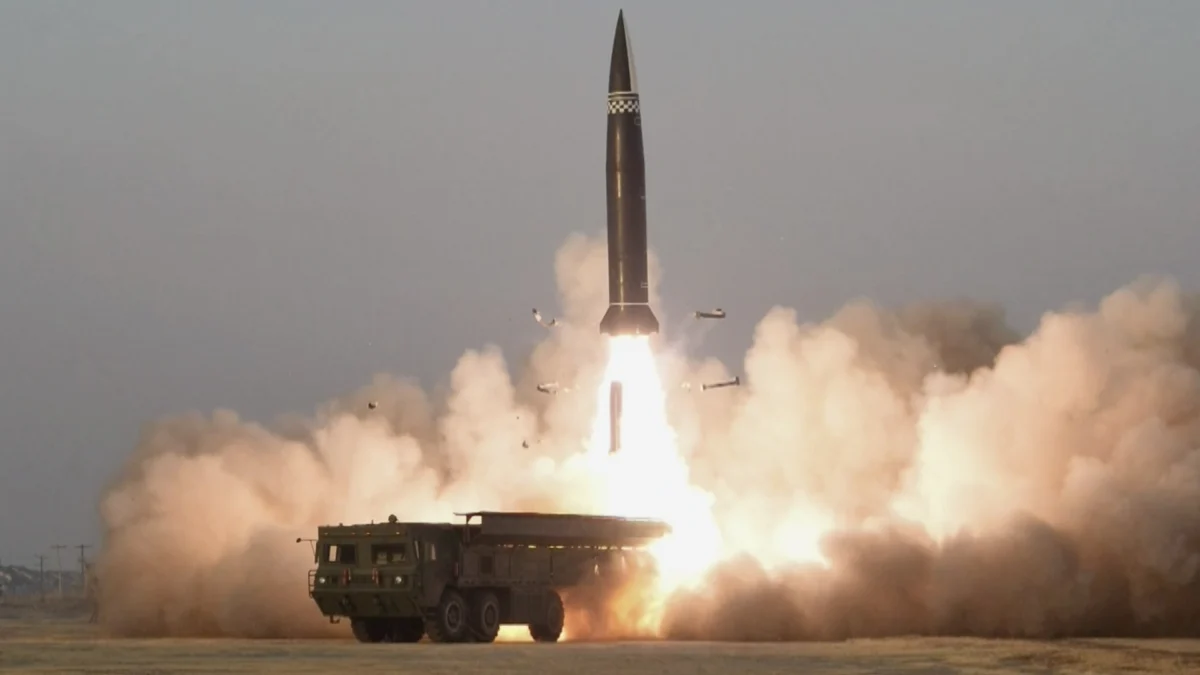
KYIV — As the protracted conflict in Ukraine enters a high-stakes phase of long-range attrition, the military-industrial alignment between Moscow and Pyongyang has taken a potentially ominous turn. According to the Defence Intelligence of Ukraine (DIU), Russia has initiated formal requests to acquire North Korea’s KN-30 ballistic missiles—a system far more formidable than the short-range ballistic missiles (SRBMs) currently being utilized on the Ukrainian battlefield.
This development marks a significant escalation in the burgeoning defense partnership between the two nations, signaling that Moscow’s appetite for foreign weaponry is not merely limited to replenishing current stocks, but is shifting toward acquiring high-yield, nuclear-capable delivery systems.
The KN-30: A Paradigm Shift in Payload Capacity
The DIU, in a public statement released on Thursday via its official Telegram channel, confirmed that Moscow has approached Pyongyang to secure the KN-30. Unlike the KN-23 and KN-24 variants, which have become staples of the Russian aerial campaign against Ukrainian infrastructure, the KN-30 represents a profound upgrade in destructive potential.
According to Ukrainian intelligence, the KN-30 is estimated to be three times more powerful than the KN-23/24 systems currently in operation. The most alarming metric cited by security analysts is the missile’s massive payload capacity: the system is reportedly designed to carry a 4.5-ton warhead. Such a payload is significantly higher than standard conventional warheads used in tactical SRBMs, suggesting the system is optimized for high-explosive impact or, potentially, the delivery of tactical nuclear weapons.
Andrii Cherniak, a representative of the DIU, noted in a recent media interview that while negotiations are active, there is currently no evidence that a physical transfer of these missiles has occurred. However, the intent behind the request underscores a shift in Moscow’s strategy—seeking to overwhelm Ukrainian air defense systems through sheer force and increased warhead lethality.
Chronology of North Korean Missile Proliferation to Russia
The trajectory of the Russia-DPRK military alliance has accelerated rapidly since the start of the full-scale invasion in 2022. The following timeline outlines the progression of this cooperation:
- Late 2022 – Early 2023: Initial intelligence reports surface suggesting that North Korea has begun supplying Russia with artillery shells and small arms to address critical shortages in the Russian Armed Forces.
- January 2024: U.S. and Ukrainian officials confirm the first combat use of North Korean-made KN-23 ballistic missiles by Russian forces against targets in Kharkiv.
- Mid-2024: Evidence mounts regarding the widespread use of KN-24 missiles, which utilize a solid-fuel propellant that allows for rapid deployment and shorter "launch-to-impact" windows, complicating Ukrainian interception efforts.
- August 2026 (Present): Ukrainian intelligence publicly identifies the Kremlin’s interest in the KN-30, a system that signifies an expansion from tactical battlefield support to high-payload strategic deterrence.
Supporting Data: Comparing the Systems
To understand the severity of the DIU’s report, one must compare the performance characteristics of the systems Moscow is currently fielding versus the system it is now pursuing.
The KN-23/24 Legacy
The KN-23 is frequently compared to Russia’s own Iskander-M missile. It is a road-mobile, solid-fuel SRBM with a range of approximately 400–600 kilometers. While effective at bypassing older air defense systems, its warhead capacity is typically restricted to roughly 500 kilograms.
The KN-30 Capability
The KN-30 represents a "heavyweight" class of missile. By requesting a system capable of carrying 4.5 tons, Moscow is effectively moving away from tactical precision towards strategic area-denial or massive-destruction capabilities. A 4.5-ton warhead is capable of leveling reinforced bunkers or critical industrial facilities that standard SRBMs would only damage.
Furthermore, the KN-30 is widely believed to be nuclear-capable. While the international community monitors whether Russia intends to use these for conventional bombardment, the dual-use nature of the missile creates an environment of extreme uncertainty and instability in the European theater.
Official Responses and International Fallout
The international reaction to the potential transfer of the KN-30 has been one of heightened alarm.

The View from Kyiv
Ukrainian officials emphasize that the transfer of such high-capacity weaponry is a direct violation of multiple United Nations Security Council resolutions that explicitly prohibit North Korea from exporting ballistic missile technology. Kyiv has argued that the "normalization" of this arms trade sets a dangerous precedent for global non-proliferation efforts.
"We are witnessing the creation of a ‘rogue axis’ that ignores international law to sustain a war of aggression," said a senior official in the Ukrainian Ministry of Defense. "If these missiles reach the battlefield, the threat to our civilian infrastructure and critical military hubs will multiply exponentially."
Moscow and Pyongyang’s Silence
Neither the Kremlin nor the North Korean Ministry of Foreign Affairs has confirmed the specific reports regarding the KN-30. Traditionally, both nations have denied the existence of arms transfers, labeling such reports as "Western propaganda" or "fabrications by the Kyiv regime." However, the deepening personal relationship between Vladimir Putin and Kim Jong Un, solidified by their mutual defense pact signed earlier this year, lends significant credibility to the DIU’s assessment.
Implications for Global Security
The prospect of KN-30 missiles appearing in the European theater carries profound implications for the future of the war and international stability.
1. The Challenge to Air Defense
Ukraine’s air defense architecture, bolstered by Western-supplied Patriot, NASAMS, and IRIS-T systems, has performed remarkably well against current threats. However, the KN-30’s massive payload and specialized flight trajectory could force Ukraine to deplete its interceptor stockpiles at a faster rate. If the KN-30 is designed with advanced penetration aids, it could force a re-evaluation of how Western allies provide defense systems to Kyiv.
2. The Erosion of Non-Proliferation
The transfer of high-tech ballistic missiles to a state engaged in a major conventional war fundamentally breaks the decades-long taboo against North Korea’s integration into the global arms market. This cooperation provides Pyongyang with the hard currency and technological feedback necessary to further refine its own nuclear deterrent, effectively making the world a more dangerous place far beyond the borders of Ukraine.
3. Escalation Risks
By seeking weapons with significantly higher destructive capabilities, Moscow is signaling that it is prepared to escalate the conflict to a level where the distinction between conventional and non-conventional warfare becomes blurred. This puts pressure on NATO and the United States to consider further aid, including potentially lifting restrictions on the range and type of weaponry Ukraine can use to strike launch sites deep within Russian territory.
Conclusion: A Turning Point in the War
The report by the Defence Intelligence of Ukraine regarding the KN-30 is not merely a logistical update; it is a warning. If Russia proceeds with this acquisition, it will solidify the most dangerous military alliance to emerge in the 21st century.
As the war of attrition continues, the focus shifts toward not only the volume of fire but the technological sophistication of the ordnance being deployed. With the KN-30, Russia is looking to secure a decisive, heavy-impact advantage. For the international community, the challenge is clear: preventing the proliferation of such systems is no longer just a diplomatic goal, but an urgent security imperative to prevent the conflict in Ukraine from spiraling into a wider, more devastating theater of global confrontation.
The coming months will be critical in determining whether these negotiations result in the deployment of these weapons or whether international pressure can once again force a recalibration of this dangerous partnership.


 Lina Irawan
  Reynand Wu
  Laily UPN
