
 By Pevita Pearce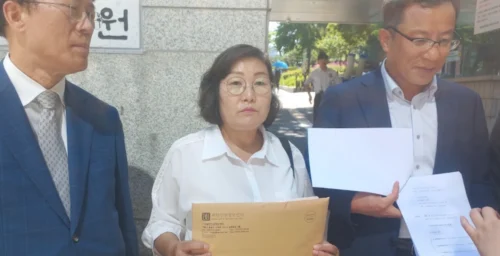
By Staff Reporter
In a landmark legal victory for human rights advocates and victims of the North Korean regime, a Seoul court has issued a ruling that holds the Democratic People’s Republic of Korea (DPRK) and its leader, Kim Jong Un, legally liable for the torture and sexual abuse of a North Korean defector. The Seoul Central District Court ordered the North Korean government to pay 50 million won (approximately $36,300) in damages to Choi Min-kyeong, a defector who endured five months of harrowing detention after attempting to escape the country.
The ruling, delivered on Friday, marks a significant step in the ongoing efforts by South Korean legal experts to challenge the perceived impunity of the Pyongyang regime. While the DPRK is unlikely to comply with the financial order, the symbolic weight of the verdict—and the judicial recognition of the state’s responsibility for crimes against its own citizens—sets a profound legal precedent.
The Facts of the Case: A Pattern of Brutality
The case brought by Choi Min-kyeong centers on her harrowing experience following a failed attempt to defect from North Korea. According to court filings and testimony provided by Choi’s legal team, her detention was characterized by systemic violence, psychological warfare, and sexual exploitation—practices frequently documented by international human rights organizations but rarely adjudicated in a court of law.
Choi testified that during her five-month incarceration, she was subjected to routine physical torture, including beatings, sleep deprivation, and forced labor. Most significantly, she alleged repeated sexual abuse by state security officers, an act she described as a tool of humiliation and control intended to break her spirit.
The Seoul Central District Court’s decision to award the full amount of 50 million won sought by the plaintiff underscores the court’s acceptance of the severity of these claims. While the court has yet to release the full written opinion, legal observers note that the ruling relies on the premise that the DPRK state apparatus is directly accountable for the conduct of its security forces, regardless of where the abuse occurred within its borders.
Chronology: From Detention to the Courtroom
To understand the gravity of this ruling, one must look at the long and arduous path Choi took to seek justice.
- Pre-2023 (The Detention): Choi Min-kyeong is apprehended while attempting to defect from North Korea. She is sent to a detention center, where she spends five months enduring what she describes as a "living hell." During this period, she is interrogated and subjected to systematic sexual and physical abuse.
- Post-Escape: Following her release or eventual escape from the North, Choi successfully makes the perilous journey to South Korea.
- April 2025: Choi begins working with human rights attorney Lee Young-hyeon, a prominent advocate for North Korean defectors. Legal preparations begin to hold the DPRK government liable in a South Korean court.
- July 2025: The case gains public attention as photos of Choi outside the Seoul Central District Court circulate, highlighting the courage required to face the regime legally.
- August 2026: The Seoul Central District Court rules in favor of Choi, ordering the DPRK to pay 50 million won in damages.
Supporting Data: The Systematic Nature of DPRK Abuses
The ruling in favor of Choi Min-kyeong is not an isolated incident but rather a drop in a vast ocean of documented human rights abuses. International bodies, including the United Nations, have repeatedly categorized the DPRK’s prison conditions as crimes against humanity.
The Role of the "State Security Department"
The abuses reported by Choi align with findings from the 2014 UN Commission of Inquiry on Human Rights in the DPRK. The report detailed how the Ministry of State Security and the Ministry of Social Security maintain an extensive network of prison camps (kwanliso) and detention facilities where torture is used as a standard investigative technique.
Statistical Context of Defector Experiences
Data gathered by the Database Center for North Korean Human Rights (NKDB) indicates that a significant majority of female defectors report some form of sexual harassment or abuse while in detention or during the trafficking process that often accompanies their escape. By litigating these cases, lawyers like Lee Young-hyeon aim to transform these statistics into actionable legal evidence.
Official Responses and Diplomatic Silence
As expected, the government in Pyongyang has remained characteristically silent regarding the Seoul court’s ruling. The DPRK does not recognize the legitimacy of South Korean courts, viewing such proceedings as "politically motivated provocations."

The South Korean Legal Perspective
Attorney Lee Young-hyeon, who has been instrumental in Choi’s case, emphasized the importance of this ruling during a press briefing. "The court has accepted that the DPRK government, represented by Kim Jong Un, bears direct responsibility for the atrocities committed within its prison system," Lee stated. "This is not just about the money; it is about establishing a legal record that these women were treated as human beings, and that their suffering was a result of state-sanctioned policy."
The Challenges of Enforcement
While the ruling is a legal milestone, the practical reality of enforcement remains daunting. Because the DPRK has no assets in South Korea that could be easily seized to pay the damages, the judgment remains largely symbolic. Critics argue that without mechanisms to enforce these rulings, they may fail to deter the regime. However, proponents argue that the documentation of these crimes is essential for future transitions, potential unification, or international tribunals.
Implications: A New Era for Human Rights Litigation?
The ruling carries significant implications for the future of North Korean human rights advocacy.
1. Expanding Legal Precedents
This case builds upon previous rulings where South Korean courts have allowed lawsuits against the DPRK and the Kim family. By consistently holding the regime accountable, the judiciary is creating a body of case law that could be utilized in the event of future diplomatic negotiations or a regime collapse.
2. Empowering Other Survivors
The bravery of plaintiffs like Choi Min-kyeong serves as a catalyst for other survivors. Fear of retaliation against family members remaining in the North has long silenced victims. However, as the legal community in Seoul demonstrates a willingness to take up these cases, there is a growing movement to encourage others to step forward and document their experiences under oath.
3. Diplomatic Pressure
While the DPRK remains isolated, the cumulative effect of international and domestic legal pressure can influence the global narrative. By framing the actions of the DPRK as standard legal cases—rather than just "political disputes"—the South Korean courts are forcing the international community to grapple with the state’s criminal conduct.
4. The "Kim Jong Un" Factor
By specifically naming Kim Jong Un as the representative of the state responsible for these abuses, the court is challenging the immunity of the North Korean leader. This directly confronts the regime’s cult of personality, suggesting that the "Supreme Leader" is accountable for the crimes committed by his subordinates.
Conclusion
The decision of the Seoul Central District Court to award 50 million won to Choi Min-kyeong is more than a financial settlement; it is a profound moral and legal indictment of the North Korean prison system. For victims like Choi, the court’s acknowledgement of their suffering provides a rare sense of validation.
As legal experts continue to navigate the complexities of suing a sovereign state that refuses to participate in the judicial process, one thing remains clear: the quest for justice for North Korean victims has entered a new, more assertive phase. Whether through future asset seizures or simply by building an unassailable archive of human rights abuses, the work initiated in this courtroom will serve as a foundational element for any future reckoning with the horrors of the Kim regime.
For now, the 50 million won represents a small, yet significant, down payment on a debt that the regime in Pyongyang will eventually have to reconcile with the rest of the world. As attorney Lee Young-hyeon continues to champion these cases, the message to the North Korean regime is clear: the wall of silence is crumbling, and the truth, no matter how deeply buried, will eventually be heard in a court of law.



 Layla Zulfa
  Basiran
