
 By Layla Zulfa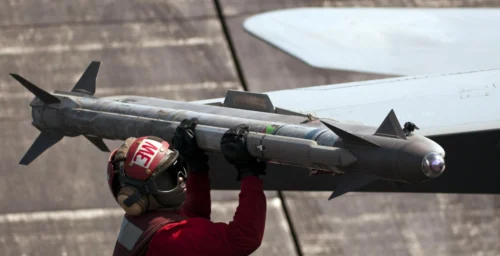
PYONGYANG/WASHINGTON – The delicate architecture of U.S.-North Korea diplomacy is facing renewed strain this week following a sharp condemnation from Pyongyang regarding a multi-million dollar arms package destined for South Korea. The North Korean Foreign Ministry labeled the U.S. State Department’s recent approval of the sale of advanced AIM-9X Sidewinder Block II missiles as a "hostile act" that threatens to destabilize the Korean Peninsula, even as President Donald Trump continues his efforts to maintain a channel of communication with the North Korean leadership.
The Core Conflict: Missile Sales and Human Rights
The friction stems from a State Department notification confirming the sale of 103 "ultra-modern" AIM-9X Sidewinder Block II air-to-air missiles to the Republic of Korea (ROK). The deal, valued at approximately $125 million, includes associated support equipment and logistical backing.
In a statement disseminated via the state-run Korean Central News Agency (KCNA), a spokesperson for the North Korean Foreign Ministry expressed outrage, framing the transaction not merely as a routine defense upgrade for an ally, but as a calculated provocation. The ministry specifically highlighted the dual-use nature of the missiles, noting that the AIM-9X, while primarily an air-to-air interceptor, possesses tactical capabilities that could be deployed against ground targets.
Furthermore, Pyongyang’s ire was directed at Washington’s ongoing financial support for organizations tasked with documenting human rights abuses within the DPRK. To the Kim Jong Un regime, these grants are perceived as a form of "ideological warfare" designed to undermine the internal stability of the North Korean state.
Chronology of Tensions: A Pattern of Reciprocal Friction
To understand the gravity of the current diplomatic standoff, it is essential to view this incident within the broader timeline of the 2026 U.S.-DPRK engagement cycle.
- January 2026: Initial overtures suggest a potential "thaw" in relations, with President Trump signaling a willingness to prioritize personal diplomacy to de-escalate regional tensions.
- April 2026: Working-level discussions on denuclearization frameworks appear to stall, as Pyongyang demands a "phased approach" to sanctions relief.
- June 2026: The U.S. maintains its "maximum pressure" posture regarding human rights, increasing funding for regional NGOs that track defectors and document conditions inside North Korean labor camps.
- August 2026: The U.S. State Department formally approves the sale of 103 AIM-9X Sidewinder missiles to South Korea, citing the need to bolster the ROK’s defensive capabilities against an increasingly sophisticated North Korean air force.
- Late August 2026: The North Korean Foreign Ministry issues a formal rebuke, calling the missile sale an "unforgivable betrayal" of the spirit of the ongoing outreach.
Supporting Data: Technical Capabilities and Strategic Context
The AIM-9X Sidewinder Block II represents a significant leap in lethality for the South Korean Air Force. Unlike earlier variants, the Block II features a redesigned fuse and a digital ignition safety device that improves ground-attack capability and provides "lock-on-after-launch" (LOAL) functionality.
Strategic Impact for the ROK
For the South Korean military, the procurement is viewed as an essential deterrent. Analysts at the Seoul-based Korea Institute for Defense Analyses suggest that the ROK Air Force (ROKAF) requires these systems to maintain parity with the modernization of the North’s own fighter fleet. The ability of the AIM-9X to engage targets at greater ranges and with higher off-boresight capability is a critical force multiplier for the ROK’s F-35 and F-15K squadrons.
Pyongyang’s Strategic Calculus
Pyongyang, however, views these acquisitions through the lens of a "zero-sum" security game. By characterizing the sale as "hostile," the regime is attempting to force a wedge between Washington and Seoul, framing the U.S. as a "foreign power" that is "fueling instability" for its own commercial gain—namely, the $125 million influx into the American defense industrial base.
Official Responses: A Diplomatic Tightrope
The Biden-Trump transition era has created a complex environment for U.S. policy. While the current administration aims to keep doors open for dialogue, it remains tethered to long-standing defense commitments.

The U.S. Position
A State Department spokesperson reiterated that the sale is "purely defensive in nature" and consistent with the U.S. commitment to the ROK’s security. The official noted that such sales are routine and undergo rigorous congressional oversight to ensure they maintain regional security without shifting the fundamental balance of power. Regarding the human rights funding, Washington maintains that it remains committed to shedding light on the humanitarian situation in the DPRK, regardless of the status of formal diplomatic talks.
The DPRK Perspective
Pyongyang’s rhetoric remains predictably acerbic. The KCNA statement emphasized that "the U.S. must realize that talking about peace with one hand while holding a dagger of aggression in the other will never succeed." The regime’s insistence that these moves are "hostile" is a classic rhetorical device, designed to maintain domestic mobilization and to provide a justification for further missile testing should the regime decide to move away from the current outreach efforts.
Implications: The Future of the "Trump Outreach"
The central question facing policymakers is whether this latest incident will lead to a rupture in the fragile diplomatic outreach.
Risk of Escalation
The risk of a "tit-for-tat" escalation is high. Historically, when Pyongyang labels a U.S. action as "hostile," it often follows with a series of short-range ballistic missile tests or a hardening of its stance in working-level negotiations. If the North Korean regime feels it cannot extract concessions regarding these arms sales, they may calculate that the "outreach" phase has reached a point of diminishing returns.
The Balancing Act
Conversely, many observers argue that the outreach remains robust enough to survive this flare-up. The fact that the North Korean statement was issued via a generic Foreign Ministry spokesperson—rather than a top-tier leader—suggests that Pyongyang may be keeping the door open for continued dialogue, provided they can use this incident as leverage in future negotiations.
The challenge for the U.S. remains the "two-track" approach: supporting the security of allies like South Korea while simultaneously attempting to engage a regime that views every defensive procurement as an act of war. As the year progresses, the success of this strategy will depend on whether Washington can convince Pyongyang that the AIM-9X sale is a product of regional necessity rather than an existential threat to the Kim regime.
Conclusion
The condemnation of the AIM-9X missile sale serves as a stark reminder of the underlying distrust that defines the U.S.-DPRK relationship. While the $125 million deal is a relatively standard defense transaction, its symbolic value in the eyes of the North Korean leadership is profound. As both sides navigate the complexities of the 2026 political landscape, the incident highlights the difficulty of achieving denuclearization when security guarantees for one side are interpreted as existential threats by the other.
Whether this rhetoric marks the end of a diplomatic cycle or simply a temporary speed bump will be determined by the actions of both capitals in the coming weeks. For now, the peninsula remains in a state of uneasy, armed peace, caught between the desire for engagement and the reality of entrenched strategic competition.


 Ammar Sabilarrohman
  Pevita Pearce
  Nana Wu
