
 By Suro Senen
By [Your Name/Journalistic Desk]
Satellite imagery captured over the coastal waters of Chongjin, North Korea, has unveiled a curious maritime development that experts believe offers a rare glimpse into the regime’s resource-starved industrial strategies. A 100-meter cargo vessel, grounded in the shallows near the city’s aging steel mill, appears to be the subject of a deliberate "ship-breaking" operation—a method of deconstruction that, while common in South Asia, is highly unusual for the Democratic People’s Republic of Korea (DPRK).
The Main Facts: An Intentional Grounding
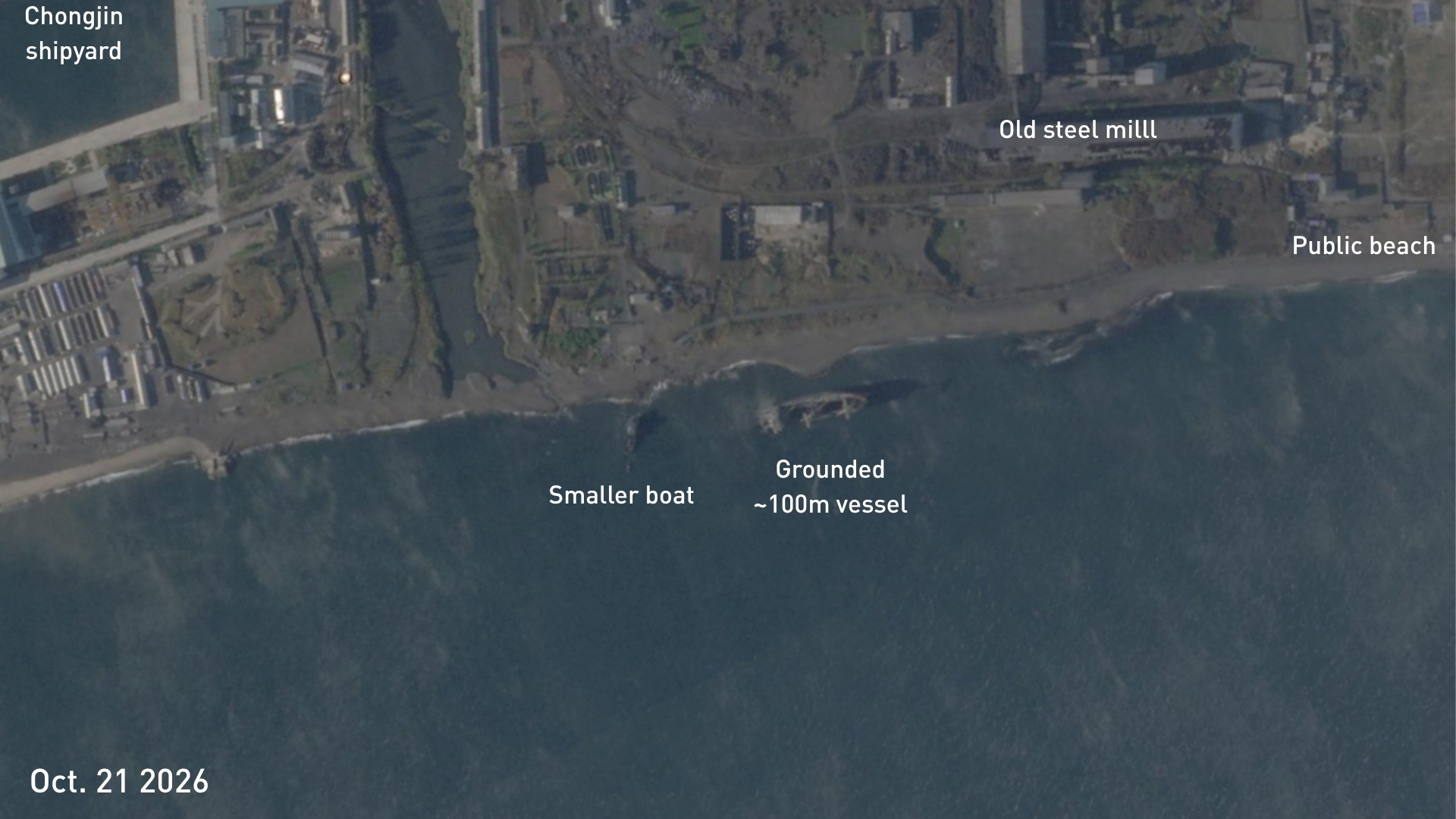
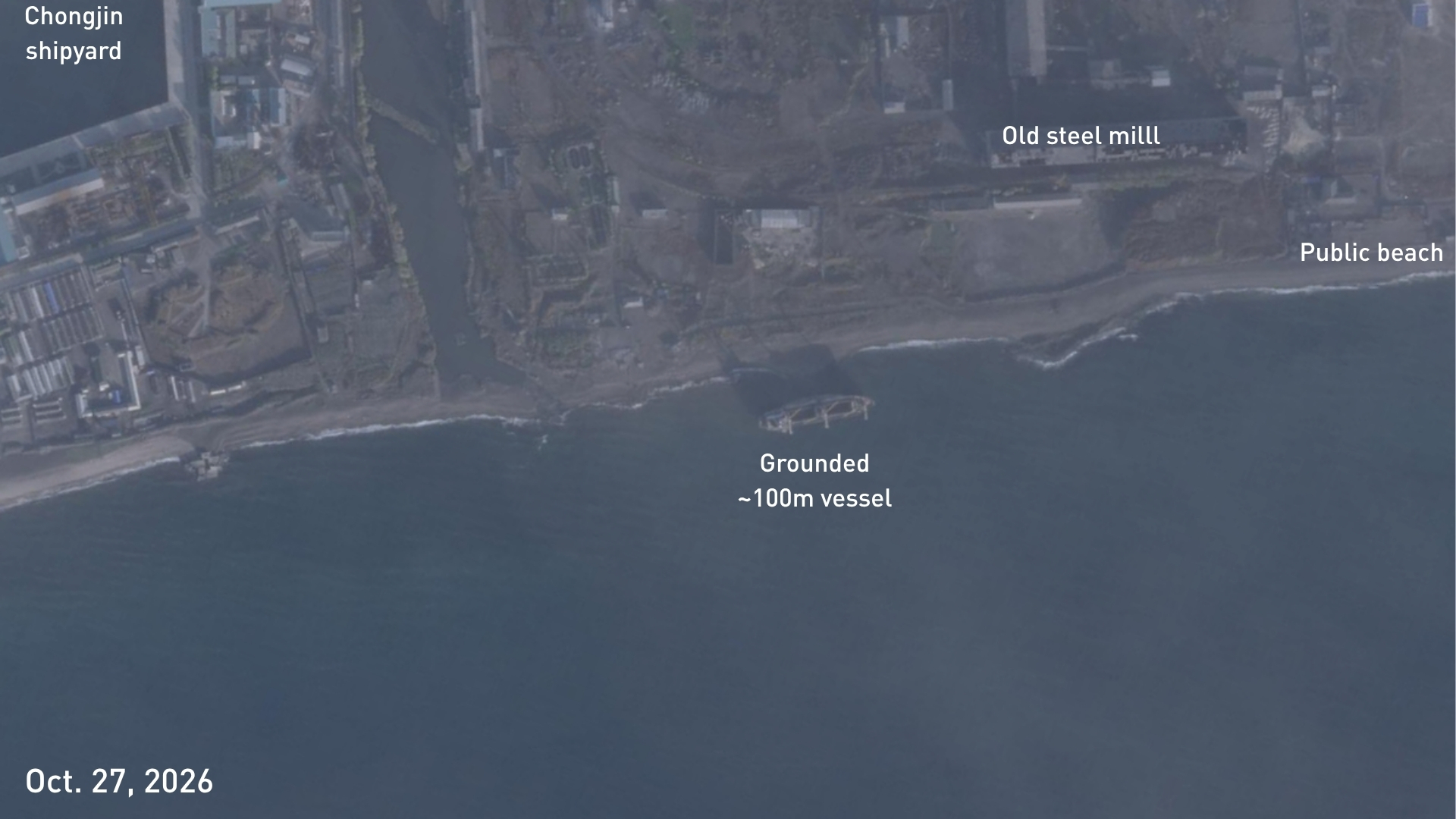
Between October 16 and 19, 2026, high-resolution imagery provided by Planet Labs revealed a 100-meter cargo ship positioned firmly in the silt and sand off the coast of Chongjin. Unlike typical maritime accidents, where a vessel’s position changes due to tides or failed rescue efforts, this ship has remained largely stationary for weeks.
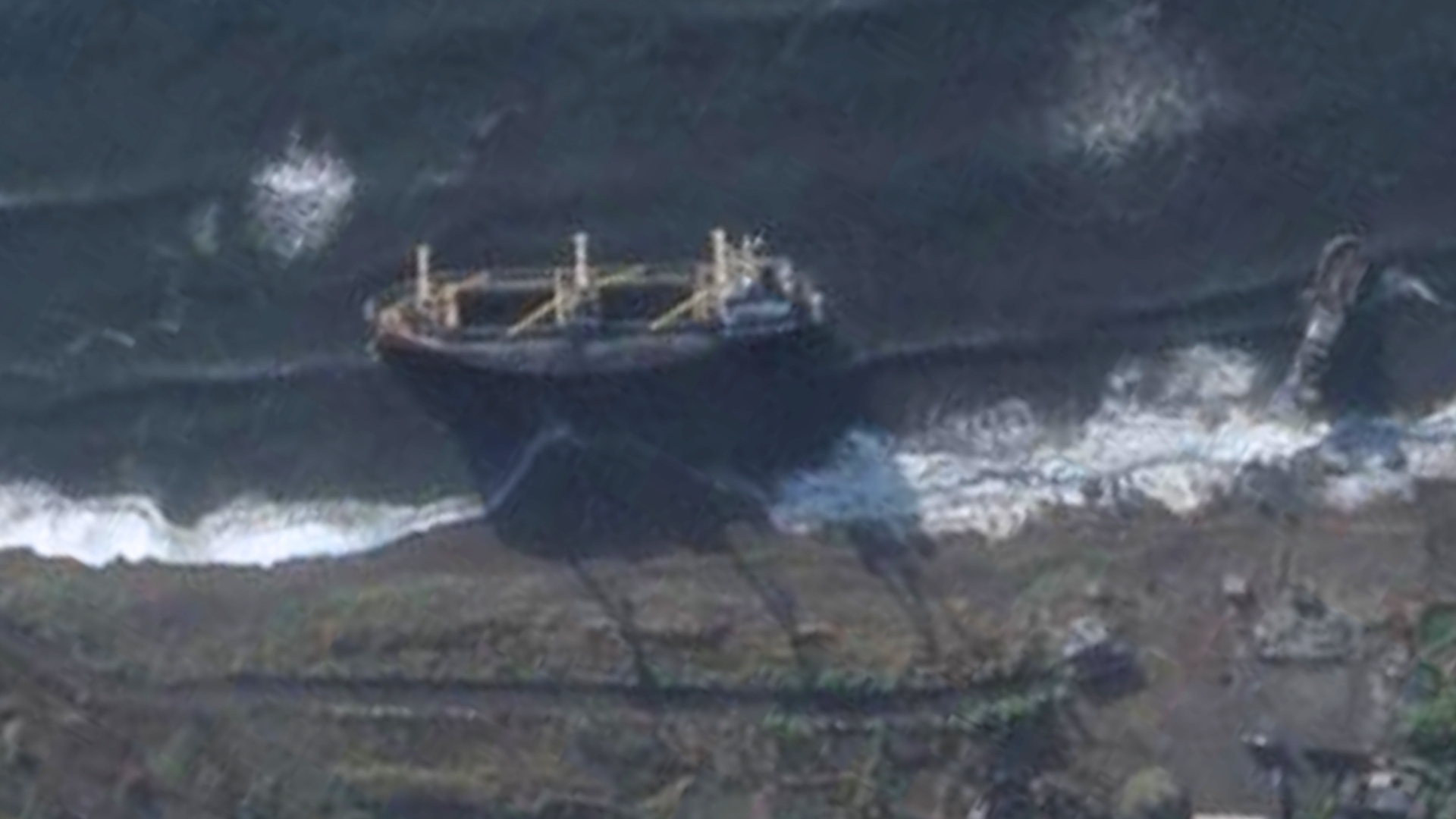
The proximity of the vessel to the city’s industrial infrastructure—specifically a decommissioned or aging steel mill—has led seasoned maritime analysts to conclude that this was not a navigational error. Neil Watts, a former South African naval officer and expert in tracking illicit North Korean maritime activity, posits that the vessel was steered onto the beach with the express intent of being dismantled for scrap metal.
"The close proximity to the steel mill and the apparent absence of adverse weather conditions, combined with a lack of any serious or professional attempts to salvage the vessel, strongly suggest that the intention is to scrap the ship," Watts explained. The move suggests a pivot in how Pyongyang manages its aging merchant fleet, prioritizing the reclamation of raw materials over the costly repairs required to keep such ships seaworthy.
A Chronology of the Operation
The transformation of the shoreline into an informal shipyard began in mid-October. Satellite analysis tracks the following sequence:
- October 16–19: The 100-meter cargo vessel first appears in imagery outside the Chongjin port, firmly grounded.
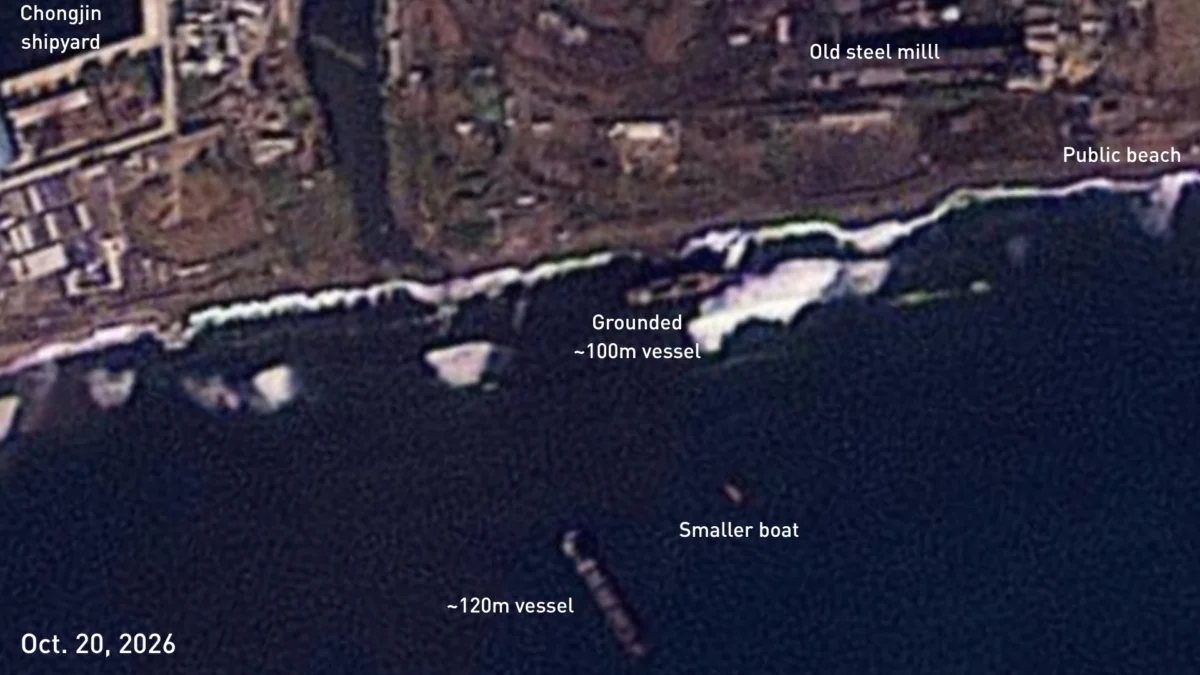
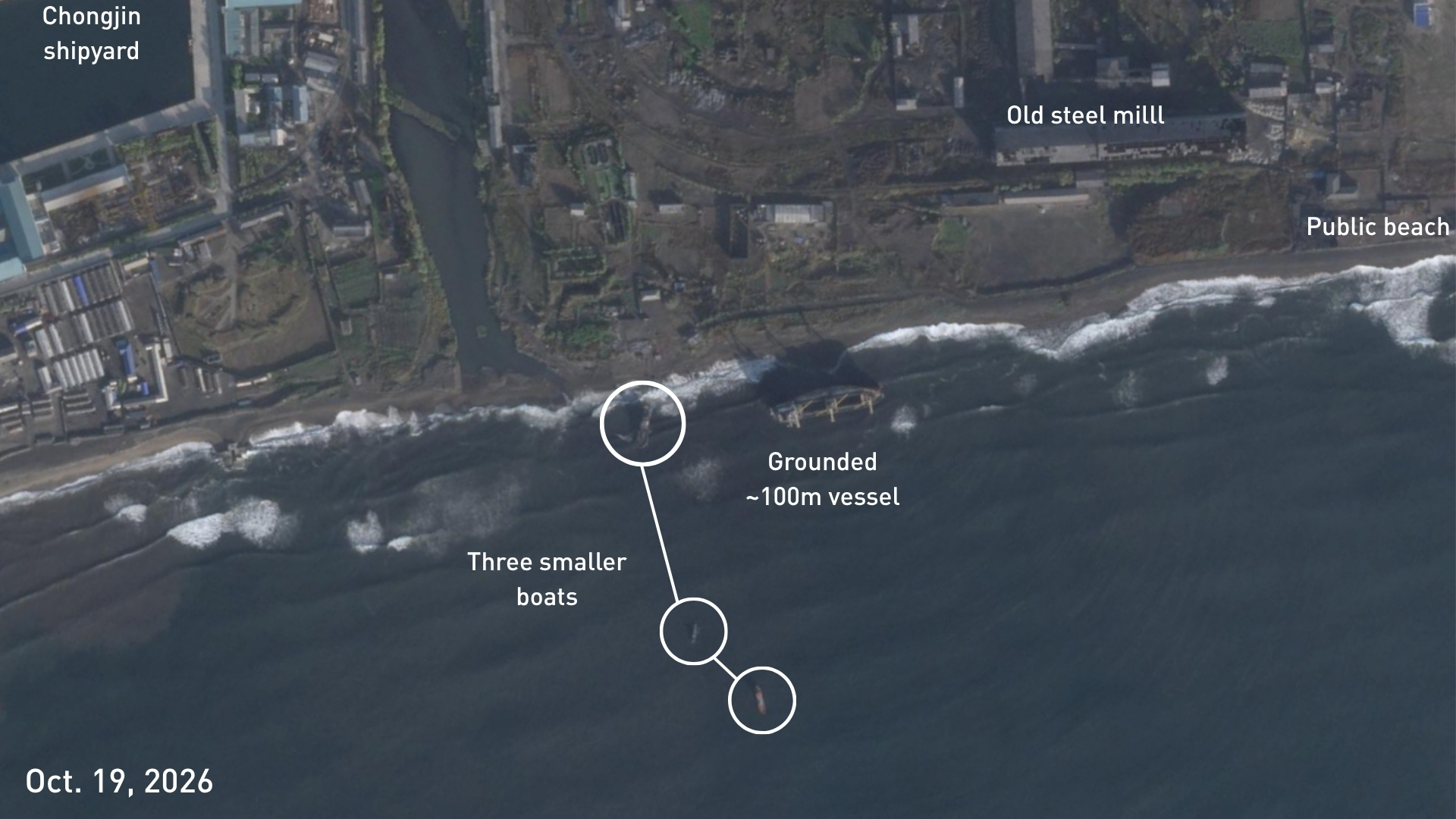
- October 19: Surveillance shows at least three smaller vessels maneuvering near the stranded ship. Seoul-based SI-Analytics reported that these vessels appeared to be involved in an unsuccessful or limited salvage effort, though the ship remained stuck.
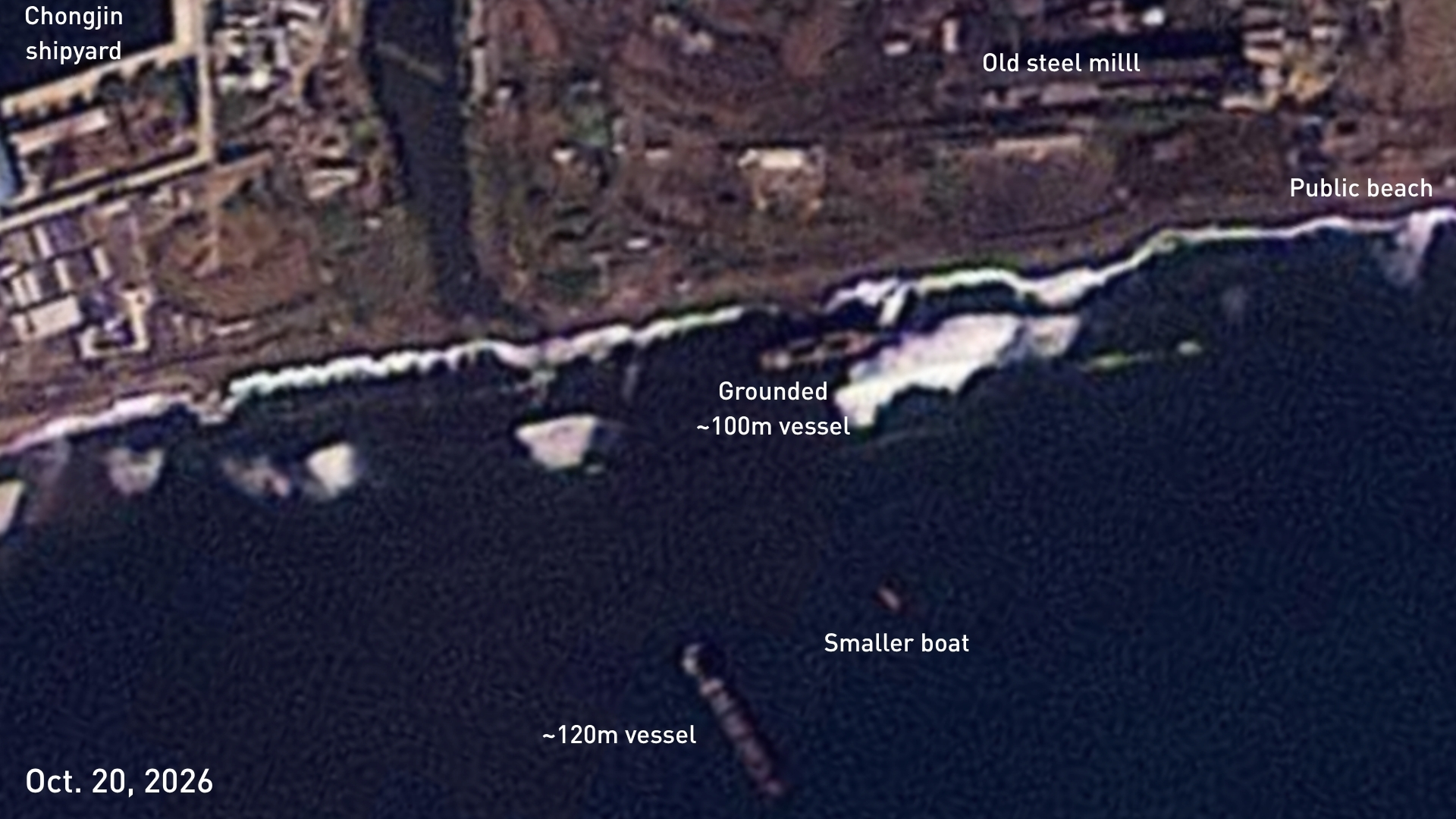
- October 20: A larger, 120-meter freighter—likely a ship previously identified within the harbor—approached the site, suggesting a coordinated effort to secure or prepare the grounded vessel for boarding.
- October 28: An auxiliary vessel, measuring approximately 70 meters in length, arrived at the site, further indicating that personnel were being ferried to and from the site.
- October 31 – November 3: The vessel remains in place. Ongoing activity by smaller boats suggests that while the hull is grounded, the process of stripping equipment and removing non-ferrous metals is likely underway.
The site itself is historically significant and politically sensitive. The grounding occurred near a public beach in Chongjin, an area that has previously been the focus of satellite monitoring due to its proximity to the city’s heavy industry and a site where a DPRK warship famously capsized during a failed launch ceremony in 2025.
Supporting Data: The Mechanics of Ship-Breaking
Ship-breaking, or ship recycling, is a hazardous and labor-intensive industry. In countries like Bangladesh, India, and Pakistan, ships are intentionally run aground at high tide. Once the tide recedes, workers descend upon the hull with torches and manual tools, stripping the vessel piece by piece.
For North Korea, this practice is largely unprecedented. Historically, the DPRK has sent its end-of-life vessels to foreign scrap yards—most notably the notorious ship-breaking beaches of Chittagong, Bangladesh—to earn foreign currency or clear their registry. The fact that Pyongyang is now conducting this on its own soil suggests two possibilities: a desperate need for domestic scrap steel to feed the Chongjin mill, or a desire to hide the fate of a vessel that may have been subject to international sanctions tracking.
Neil Watts notes that North Korea is notorious for operating vessels well beyond their logical operational lifespan. "These ships are often ‘ghost ships’ that appear scrapped on paper in one jurisdiction, only to be repurposed under a new name and flag to circumvent U.N. sanctions," Watts said. However, when a ship finally reaches the point of total mechanical failure, the cost of maintaining its "ghost" status likely outweighs the benefit of keeping it on the water.
Implications: Sanctions and the "Ghost Fleet"
The grounding of the vessel at Chongjin serves as a case study in the broader challenges of enforcing U.N. Security Council Resolution 2397. This resolution strictly prohibits the DPRK from purchasing or acquiring foreign vessels. Despite these mandates, North Korea has built a resilient, if deteriorating, merchant fleet by masking the identities of older ships.
The presence of this grounded vessel may be a "pointer to possible replacement by another illegally acquired vessel," according to experts. If the regime is clearing space in its harbor and sourcing materials for its domestic steel production, it could be prepping the logistics chain for a new, albeit illicit, arrival.
The implications of this incident are three-fold:
- Economic Resourcefulness: By recycling the ship domestically, the regime avoids the scrutiny of international port authorities that would inevitably occur if the ship were sold abroad for scrap.
- Sanctions Evasion: The "death" of a ship on the beach allows the regime to officially retire a vessel that may have been flagged for illegal activities, effectively erasing its history before it can be intercepted or seized.
- Industrial Sustainability: With North Korea facing chronic shortages of raw materials, the ability to dismantle 100 meters of steel and components provides a tangible, if small, boost to the regional economy around the Chongjin steel mills.
Official Responses and the Lack Thereof
As of this reporting, the North Korean government has maintained its standard silence regarding the event. Pyongyang rarely acknowledges its maritime operations, especially those involving vessels that may be connected to illicit trade or sanctions-busting schemes.
International bodies, including the U.N. Panel of Experts, have historically struggled to track the movement of such ships once they enter North Korean territorial waters. The imagery provided by independent firms like SI-Analytics and NK Pro remains the primary window into these activities.
Conclusion: A Sign of Things to Come?
The sight of a 100-meter vessel sitting motionless on the sands of Chongjin is a stark reminder of the unique, often hidden, mechanics of the North Korean economy. While the rest of the world looks at the vessel as a potential environmental or navigational hazard, it is likely viewed by local officials as a vital supply of steel and spare parts.
As the vessel is slowly picked apart by the laborers of Chongjin, it marks the end of a long, and likely illegal, journey. For the international community, the incident serves as a reminder that even as North Korea faces tightening sanctions, it continues to adapt its industrial and maritime behavior to survive, utilizing every scrap of metal and every available coastline to maintain its operations. Whether this is an isolated incident or the beginning of a domestic ship-breaking industry in the North remains to be seen, but as the satellite imagery continues to update, the world will be watching to see what replaces the ghost ship on the Chongjin shore.


 Asro
 Lina Hope
 Ammar Sabilarrohman

