
 By Nana Wu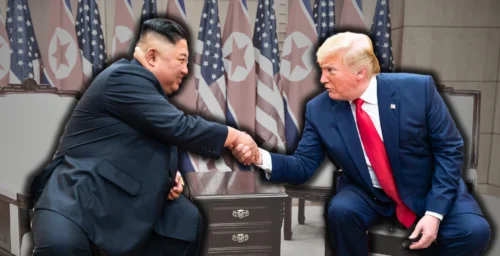
The landscape of Northeast Asian security is shifting once again as former U.S. President Donald Trump revives his signature "leader-to-leader" diplomatic outreach toward North Korea. Nearly eight years after the historic Singapore summit, the geopolitical environment has been radically transformed by deepened DPRK-Russia ties, advancements in Pyongyang’s nuclear arsenal, and a U.S. political climate defined by domestic strain and an uncertain international strategy.
As Trump signals a desire for another meeting with Kim Jong Un—pairing this overture with unilateral reductions in U.S.-South Korea military exercises—former U.S. officials and security experts are questioning whether this strategy is a pathway to genuine progress or a dangerous concession that strengthens a more confident North Korean regime.

Main Facts: A Strategy of Personal Diplomacy
President Trump’s current approach mirrors his 2018 playbook: prioritizing a perceived "very good relationship" with the North Korean leader over traditional, bottom-up diplomatic channels. By publicly floating the prospect of a summit and curtailing the scope of the Ulchi Freedom Shield exercises, Trump appears to be attempting to lure Pyongyang back to the negotiating table.
However, the response from Pyongyang has been markedly different than in years past. Rather than reciprocating with cautious optimism, North Korean officials—including Kim Yo Jong—have issued public denials of communication and sharp denunciations of the U.S.-ROK military alliance.

Analysts point to a fundamental power shift. In 2018, the "maximum pressure" campaign was in full swing. Today, the DPRK operates from a position of renewed confidence. By leveraging its growing military-technical cooperation with Russia and China, Pyongyang has effectively blunted the impact of international sanctions, leading to a clear recalibration: the North has signaled it will no longer engage on the subject of denuclearization, long the cornerstone of Washington’s policy.
Chronology of Engagement: From Singapore to the Present
The trajectory of U.S.-DPRK relations has been a series of peaks and valleys:

- June 2018: The Singapore Summit, the first-ever meeting between a sitting U.S. president and a North Korean leader, establishes a framework for potential peace.
- February 2019: The Hanoi Summit collapses abruptly. Former U.S. officials describe the event as an "abject failure" for Kim Jong Un, who arrived expecting sanctions relief and left with nothing, miscalculating Trump’s willingness to walk away from a "nothing burger" deal.
- June 2019: A symbolic meeting at the DMZ at Panmunjom keeps the window of dialogue open, but substantive progress stalls shortly thereafter.
- 2020–2025: A period of prolonged impasse, during which the DPRK focuses on military modernization and forging a "Russia-centric" international strategy.
- August 2026: Trump publicly pushes for a renewed summit and requests a reduction in the Ulchi Freedom Shield (UFS) exercises, sparking confusion in Seoul and debate among security experts.
Supporting Data: The Cost of the "Trump Doctrine"
The core concern among national security experts is the transactional nature of the current strategy. Evans Revere, a former senior State Department official, argues that Trump’s eagerness for a "win" ahead of pivotal domestic elections makes him vulnerable to exploitation.
"North Korea is exploiting President Trump’s eagerness for a summit," Revere notes. "By unilaterally scaling back military exercises, the U.S. has provided a major concession that weakens the U.S.-ROK alliance and diminishes deterrence capability, with Pyongyang simply pocketing the win and demanding more."

Furthermore, the lack of coordination regarding the UFS exercise reduction has been a point of friction. While some officials within the U.S.-ROK alliance argue that training value was still extracted, military experts like General Robert Abrams (Ret.) highlight that these exercises are the result of months of meticulous planning. Abrupt, top-down changes to these operations not only disrupt the training cycle but also complicate the transition of wartime Operational Control (OPCON), which relies on the certification of specific military milestones during these drills.
Official Responses: A Divided Assessment
The experts interviewed by NK News offer a range of perspectives on the viability of this new outreach:

- The Case for Diplomacy: Proponents of engagement, including those who emphasize the "fire and fury" rhetoric of the past, argue that any dialogue is better than none. Even if a summit produces no major breakthroughs, maintaining a channel for communication serves as a necessary mechanism to prevent miscalculation and lower tensions.
- The Reality of Leverage: Conversely, experts like Frank Aum argue that Pyongyang is currently "correcting the record." North Korea is unlikely to engage unless the U.S. makes specific, high-stakes gestures—such as abandoning the goal of denuclearization and offering concrete sanctions relief.
- The "Mafia Boss" Lens: Mintaro Oba, a former diplomat, characterizes Trump’s approach as a "mafia boss" model of alliance management. "Everything is transactional," Oba observes. "He believes he is owed loyalty for providing security, which inherently weakens the alliance and leaves us all more insecure."
Implications: Risks to the Alliance and Regional Security
The implications of this strategy are profound, particularly for the U.S.-South Korea alliance.
1. Erosion of Deterrence
The most immediate risk is the degradation of the joint military posture. As North Korea continues to test missiles and solidify its status as a nuclear-armed state, the U.S. moves to reduce its military presence—or the visibility of its exercises—could be perceived by Pyongyang as a signal of waning American commitment.

2. The Nuclear Normalization Trap
There is a growing fear that a new summit could result in the "de facto" acceptance of North Korea as a nuclear state. If Trump, in his pursuit of a headline-grabbing agreement, ignores the denuclearization objective, the resulting pact could provide North Korea with the international legitimacy it has sought for decades without requiring it to forfeit its weapons of mass destruction.
3. Diplomatic Messes
Sydney Seiler, a veteran of North Korean intelligence analysis, notes that while the alliance remains resilient, the "shock effect" tactics used by the administration create significant diplomatic friction. "Tactically, the president does things for leverage, and they can be disconcerting," Seiler explains. "You end up with a diplomatic mess to clean up afterward."

4. A Path Forward or a Dead End?
For a summit to be "meaningful," it would need to move beyond mere optics. A realistic, albeit unlikely, path would involve an interim agreement: North Korea offers a moratorium on long-range missile and nuclear testing and a freeze on the Yongbyon nuclear complex in exchange for partial sanctions relief. However, as General Abrams points out, Kim Jong Un is unlikely to agree to any meeting unless he secures written, binding concessions before the handshake even occurs.
Conclusion
As the United States heads toward another contentious election cycle, the prospect of a Trump-Kim summit remains a high-stakes gamble. For President Trump, it represents a potential "win" to shift the narrative away from domestic economic and foreign policy challenges. For Kim Jong Un, the calculus is more cynical: he has little to gain from a complex deal with an American leader who may be out of office in two years.

Ultimately, the current policy risks transforming the Korean Peninsula into an even more precarious theater. Whether this "playbook" will lead to a breakthrough or simply provide Pyongyang with more time to cement its nuclear status remains the defining question of the current diplomatic era. The cost of failure may not be limited to the U.S.-ROK alliance, but could fundamentally alter the security architecture of the entire Indo-Pacific region.

 Muslim
  Iffa Jayyana
  Lina Hope
