
 By Muslim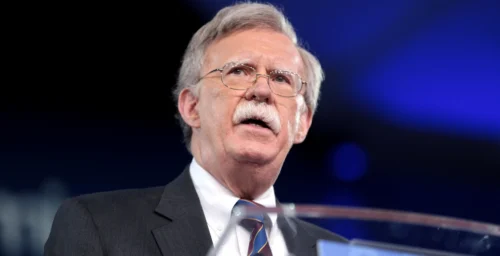
In a stark critique of potential future diplomatic overtures, former U.S. National Security Adviser John Bolton has issued a stern warning regarding the efficacy of renewed summitry between Donald Trump and North Korean leader Kim Jong Un. Speaking at a virtual symposium hosted by the Institute for Corean-American Studies (ICAS), Bolton characterized the prospect of a third summit as a move that could potentially inflict more damage upon American strategic interests than it could resolve.
Bolton, who served as a central figure in the administration’s initial engagement with Pyongyang, remains profoundly skeptical of the "personal relationship" narrative that has historically defined Trump’s approach to the DPRK. According to Bolton, the fundamental issue lies not in the charisma of the leaders, but in the lack of a rigorous, institutionalized strategy to address the reality of North Korea’s nuclear advancements.
The Strategic Void: Why Bolton Remains Skeptical
The crux of Bolton’s argument rests on the observation that the geopolitical landscape of the Korean Peninsula has shifted dramatically since the high-profile meetings in Singapore and Hanoi. Bolton suggests that Trump’s preoccupation with the "optics" of a meeting—the photo opportunities, the historic handshake, and the narrative of a breakthrough—often supersedes the necessity for concrete, verifiable denuclearization steps.
"I am very skeptical that any personal relationship can bridge the chasm between our fundamental security requirements and the survival strategy of the Kim regime," Bolton remarked during the symposium. He argues that by focusing on interpersonal rapport, the U.S. inadvertently validates the DPRK’s position on the global stage without extracting the concessions required to neutralize the threat posed by their expanding arsenal.
A Chronology of Engagement and Stagnation
To understand the weight of Bolton’s warnings, one must examine the tumultuous history of the U.S.-DPRK diplomatic efforts since 2018:
- June 2018 (Singapore Summit): The first-ever meeting between a sitting U.S. President and a North Korean leader. The joint statement promised a commitment to "complete denuclearization," though it lacked a definitive timeline or technical roadmap.
- February 2019 (Hanoi Summit): The high-stakes negotiations collapsed prematurely. The primary point of contention was the disparity between North Korea’s demand for extensive sanctions relief and the U.S. insistence on total, upfront nuclear disarmament.
- June 2019 (Panmunjom): A brief, symbolic meeting in the Demilitarized Zone (DMZ). While visually striking, this meeting failed to restart working-level negotiations.
- 2020–2023 (The Silence and the Pivot): Following the failure of the Hanoi summit, the DPRK signaled a shift toward internal development and a strengthening of its strategic ties with Moscow and Beijing.
- 2024–Present: North Korea has significantly accelerated its testing of intercontinental ballistic missiles (ICBMs) and short-range nuclear-capable projectiles, while simultaneously moving away from the premise of reunification with the South.
The Geopolitical Shift: The Role of Moscow and Beijing
Bolton’s skepticism is further fueled by the changing global alignment. In the years following the Hanoi summit, North Korea has emerged from its relative isolation by deepening its strategic partnership with Russia. This alignment, often dubbed the "New Cold War" dynamic, provides Pyongyang with a degree of diplomatic cover at the United Nations Security Council, where both Russia and China have increasingly exercised their veto power to shield the DPRK from further sanctions.
"The DPRK is no longer acting as a rogue state in isolation," Bolton noted. "They are now a functional part of an anti-Western axis. Any concession the U.S. offers today is not just to Kim Jong Un, but by proxy to his benefactors in Moscow and Beijing."

The integration of North Korean munitions into the Russian war effort in Ukraine serves as a grim testament to this shift. This alliance has provided Pyongyang with critical hard currency and, potentially, advanced aerospace technology, significantly bolstering their domestic military-industrial complex.
Supporting Data: The Expanding Nuclear Threat
The technical reality on the ground contradicts the optimism of past diplomatic "summits." According to recent intelligence reports and independent analysis, the DPRK’s nuclear capabilities have matured substantially:
- Warhead Miniaturization: Pyongyang has likely mastered the ability to mount nuclear warheads onto medium-range and potentially intercontinental ballistic missiles.
- Solid-Fuel Technology: The transition from liquid-fueled to solid-fueled ICBMs has significantly reduced the launch window, making the North’s arsenal far more resilient against pre-emptive strikes.
- Tactical Nuclear Weapons: The regime has explicitly shifted its doctrine to include the use of tactical nuclear weapons against South Korea and U.S. forces in the region, effectively lowering the threshold for nuclear conflict.
Bolton argues that these developments render the "old model" of summit-based diplomacy obsolete. The DPRK is no longer negotiating from a position of weakness looking for a way out of sanctions; they are negotiating from a position of perceived strength, viewing their nuclear status as a permanent, non-negotiable reality.
Official Responses and Political Implications
The discourse surrounding Bolton’s comments highlights a deep divide within the U.S. foreign policy establishment.
- Pro-Engagement Voices: Some analysts argue that even flawed diplomacy is superior to the total absence of communication. They suggest that keeping a dialogue open—even if purely symbolic—prevents misunderstandings that could lead to accidental conflict.
- The "Maximum Pressure" School: Bolton and his supporters represent the wing of the GOP that advocates for a return to "maximum pressure." They believe that sanctions and military posturing are the only levers that can influence the Kim regime, and that negotiations should only occur when the DPRK is on the verge of total economic collapse.
- Allied Perspectives: Seoul remains in a precarious position. While the current South Korean administration has leaned toward a hawkish stance, there is underlying anxiety that a sudden U.S.-led diplomatic pivot could leave South Korea exposed to the North’s conventional and nuclear threats.
Implications: A New Era of Deterrence?
If the prospect of a third summit is indeed more harmful than beneficial, the alternative, as suggested by Bolton, is a long-term strategy of containment. This would involve:
- Strengthening Trilateral Security: Deepening the military cooperation between the U.S., Japan, and South Korea to create a seamless, integrated missile defense shield.
- Sanctions Enforcement: A more aggressive pursuit of the "shadow fleets" and illicit ship-to-ship transfers that currently allow North Korea to bypass international financial restrictions.
- Strategic Clarity: Moving away from ambiguous diplomatic language and clearly communicating to Pyongyang the "red lines" that, if crossed, would result in an overwhelming response.
Conclusion
John Bolton’s warning serves as a sobering reminder of the limits of personal diplomacy in the face of autocracy. As the DPRK continues to weave itself into a larger, anti-Western geopolitical bloc, the window for a negotiated denuclearization—as it was envisioned in the early years of the Trump presidency—has likely closed.
The path forward, according to the former adviser, is not found in the warm embraces of a summit stage, but in the cold, methodical application of deterrence and the acknowledgement that the North Korean nuclear threat is a permanent feature of the modern security environment. Whether a future administration will heed this warning or attempt to reclaim the "magic" of 2018 remains one of the most significant questions facing U.S. foreign policy in the Pacific.

 Iffa Jayyana
  Lina Hope
  Pevita Pearce
