
 By Basiran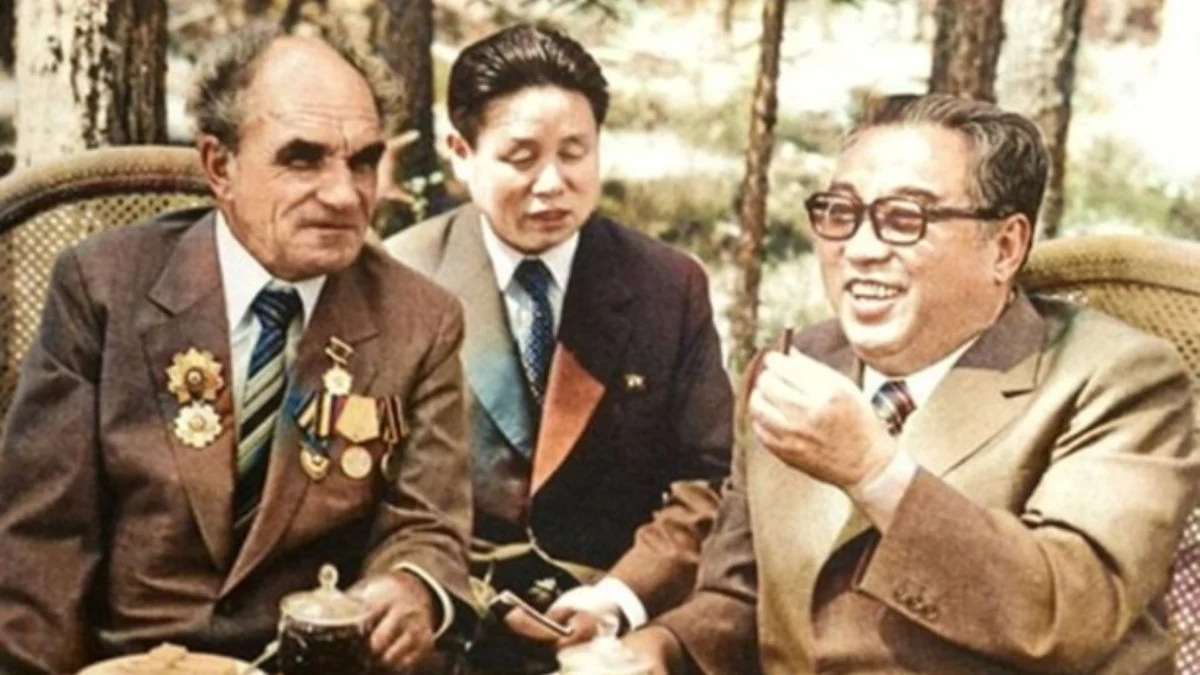
VLADIVOSTOK – In a move that underscores the rapidly deepening geopolitical and historical alignment between Moscow and Pyongyang, Russia has announced that the newly constructed automotive bridge spanning the Tumen River will be officially named after Yakov Novichenko, a Soviet officer famously credited with saving the life of North Korean founding leader Kim Il Sung.
The announcement, delivered by Russian Transport Minister Andrei Nikitin during the annual Eastern Economic Forum (EEF) in Vladivostok, serves as more than a mere infrastructure update. It functions as a potent diplomatic signal, reinforcing the narrative of "blood-forged" brotherhood that has defined the bilateral relationship since the Soviet era. While Minister Nikitin remained characteristically vague regarding the exact date of the bridge’s inauguration, he confirmed that the border crossing is expected to open "in the very near future," marking a critical expansion in the logistical capabilities between the two isolated allies.
The Historical Significance of Yakov Novichenko
To understand the weight of the decision to name a major piece of infrastructure after Yakov Novichenko, one must look back to the volatile atmosphere of post-liberation Korea in the 1940s.
In March 1946, during a rally in Pyongyang celebrating the anniversary of land reform, a member of the "White Clothes Society"—a clandestine, right-wing group opposed to the Soviet-backed installation of Kim Il Sung—threw a hand grenade toward the podium where the future North Korean leader was speaking.
Novichenko, a young Soviet lieutenant serving as a security detail, reacted instinctively. He caught the grenade in mid-air and, finding no place to throw it safely away from the crowd, threw himself onto the device. Miraculously, Novichenko survived the blast, though he suffered the loss of his right arm and sustained severe injuries.
For decades, the story of Novichenko has been a cornerstone of North Korean state propaganda, used to cement the idea that the survival of the DPRK was inextricably linked to the protection provided by the Soviet Union. By naming the new car bridge after him, Moscow is signaling a deliberate return to the historical foundation of the alliance, casting the modern-day cooperation between Vladimir Putin and Kim Jong Un as a continuation of a decades-old sacred bond.
Chronology: The Evolution of the Border Crossing
The project to construct a reliable, high-capacity automotive link between Russia and North Korea has been a long-gestating objective of the bilateral relationship.
- Pre-2010s: The primary transit point between the two nations remained the "Friendship Bridge," a rail-only structure that severely limited the flow of non-rail cargo.
- 2015: Discussions began to intensify regarding the need for a road bridge to facilitate automotive trade, as both nations sought to diversify their supply chains amidst increasing international sanctions.
- 2020–2022: The COVID-19 pandemic saw North Korea effectively seal its borders. Construction progress slowed significantly during this period of extreme isolation, though satellite imagery suggested that foundational work continued despite the lack of public updates.
- 2023–2024: Following the revitalization of diplomatic ties—highlighted by high-level summitry—work on the bridge accelerated. The project transitioned from a secondary diplomatic goal to a strategic necessity for the exchange of military and industrial goods.
- 2026 (Present): With the structure nearing completion, the focus has shifted to the logistics of customs, border control, and the ceremonial naming of the crossing.
Supporting Data: Infrastructure and Trade Logistics
The new bridge is designed to accommodate a significantly higher volume of freight than the existing rail bridge. While exact capacity figures remain classified, analysts note that the bridge is built to handle heavy-duty transport vehicles, indicating a shift toward road-based logistics.
The Strategic Necessity
The current border infrastructure relies almost exclusively on the rail link. This has historically created a bottleneck, as every shipment requires coordination with railway scheduling and localized customs inspections. By moving a portion of the trade—which includes fuel, grain, and potentially sanctioned dual-use technology—to road transport, the two nations can maintain a more "stealthy" and flexible supply chain.
Regional Integration
The bridge is situated in the Khasan region of Primorsky Krai. Its proximity to the Rajin-Sonbong Special Economic Zone in North Korea makes it a critical piece of the "Greater Tumen Initiative." If fully operational, it could link Russia’s Far Eastern rail hubs to North Korean ports, providing Russia with an alternative window to the Pacific that bypasses traditional, more transparent commercial routes.
Official Responses and Diplomatic Context
Minister Nikitin’s announcement at the Eastern Economic Forum was framed within the broader context of Russia’s "Pivot to the East." As Western sanctions continue to isolate the Russian economy from European markets, Moscow is looking to its neighbors in Asia to fill the vacuum.

"The development of our transport infrastructure with the DPRK is a priority for the Russian Federation," Nikitin stated. "This bridge is a symbol of our shared history and our shared future."
In Pyongyang, the state-run Korean Central News Agency (KCNA) has frequently referenced the "immortal deeds" of the Soviet soldiers who helped liberate Korea. The naming of the bridge is likely to be met with significant fanfare in the North Korean capital, where the state media is expected to use the development to further justify the strengthening of ties with Moscow as an act of historical necessity.
Observers in Seoul, however, view the development with concern. The South Korean Unification Ministry has noted that the expansion of physical infrastructure between Russia and North Korea facilitates the easier movement of illicit goods, including arms transfers, which violate multiple United Nations Security Council resolutions.
Implications: A New Era of Eurasian Connectivity
The inauguration of the Novichenko Bridge will have profound implications for the regional security architecture.
1. Circumvention of Sanctions
The primary concern for the international community is that the bridge provides a new, hard-to-monitor channel for the transfer of goods. Unlike shipping containers which can be tracked by international maritime monitoring services, road-based freight crossing a remote, land-locked border is notoriously difficult to police.
2. Strengthening the "Axis"
The naming of the bridge is a symbolic reinforcement of the security pact signed between Moscow and Pyongyang. It signals to the world that Russia no longer feels bound by the consensus that once kept North Korea at arm’s length. By enshrining the memory of a Soviet hero, Russia is legitimizing its current partnership with North Korea as a noble endeavor rooted in the history of the anti-fascist struggle.
3. Economic Dependence
For North Korea, the bridge represents a lifeline. With the country’s domestic economy struggling, the ability to import essential goods—particularly refined petroleum products and machinery—via road transport will provide the Kim regime with much-needed economic breathing room. Conversely, it creates a deeper dependence on Russia, effectively tying North Korea’s economic survival to the stability of the Russian Far East.
Conclusion: Bridging the Past and Future
The Yakov Novichenko Bridge is more than an engineering feat; it is a monument to the strategic realignment of the 21st century. By choosing to honor a figure from the 1940s, both Moscow and Pyongyang are reaching into their shared past to justify a controversial and deeply intertwined future.
As the bridge prepares to open, the world will be watching closely. Whether this new transit point serves as a conduit for legitimate cross-border trade or as a clandestine artery for prohibited military cooperation remains the central question. For now, the bridge stands as a physical manifestation of a partnership that is increasingly defining the geopolitical landscape of East Asia, proving that even in an era of high-tech warfare, the oldest alliances are often the ones that dictate the future.
As Minister Nikitin noted, the bridge will open "in the very near future"—a timeline that suggests the infrastructure is ready, but the political choreography of its unveiling is still being fine-tuned to maximize its symbolic impact. When the first trucks cross the Tumen River, they will do so under the name of a man who saved a leader, marking the beginning of a new chapter in the complex, often volatile, and increasingly essential relationship between the Russian Federation and the Democratic People’s Republic of Korea.

 Muslim
  Jia Lissa
  Nana Wu
